| Question | Short Answer |
|---|---|
| What is the first step for substrate ph: why it matters less than drainage (and when it doesn't)? | Start by matching the symptom to the plant, substrate, light, and season before changing watering or treatment. |
| What should be avoided? | Avoid changing several variables at once; correct the limiting factor and observe the plant before escalating. |
| Which care factor matters most? | Match the plant to its light, substrate, pot size, and season. |
| When should the plant be checked again? | Recheck after one to two weeks unless tissue is actively collapsing. |
Quick Answer
The short answer: Most succulents grow fine between pH 6.0-8.0. Drainage and watering matter far more than pH. Check root health and substrate moisture FIRST before worrying about pH.
Best first step: If a plant looks unhealthy, investigate: watering pattern → root condition → pests → light → THEN pH. Most "deficiency" symptoms resolve before you reach pH.
Avoid: Chasing perfect pH inside the safe range - it's wasted effort. Only fix pH if you have measurable readings outside 6.0-8.0 AND matching symptoms.
Substrate pH gets more attention than it deserves in succulent forums. The bottom line: most cultivated succulents grow well across pH 6.0 to 8.0, and pots that fail almost never fail because of pH. They fail because of waterlogged substrate, dead roots, or salt buildup. pH becomes a primary suspect only after drainage, watering, and root health have been checked. Here is the rest of the picture.
Part of the Beginner's Guide to Succulents.
What pH affects
pH is a measure of free hydrogen ions in the water held by your substrate. The scale runs from 0 (very acidic) to 14 (very alkaline), with 7 as neutral. In a pot, pH does not directly poison roots within the normal horticultural range. What it does is govern which forms of dissolved nutrients are available for the root to absorb.
Each macronutrient and micronutrient has a pH window in which it stays soluble and accessible. Outside that window, the element shifts to a chemical form that the root cannot take up, even though a soil test reports it as present. The element is locked out, chemically stranded in the substrate.
Two cutoffs matter most for succulents. Above pH 7.5, iron and manganese precipitate as insoluble oxides and hydroxides; the root cannot reach them. Below pH 5.5, calcium and magnesium become bound to organic matter and clay surfaces in a form unavailable to the plant. Phosphorus has the narrowest window, peaking near pH 6.5 and dropping at both extremes.
There is one detail that is rarely mentioned: a bone-dry substrate has effectively no pH effect on the plant. pH only matters when there is water in the pores carrying dissolved ions. A succulent in a fully dried mix is not absorbing any nutrients, so pH is doing nothing until you water again. Short pH excursions during a dry rest period rarely produce visible symptoms.
The pH range succulents tolerate
Most cultivated succulents accept a wider pH range than the literature suggests, because most have evolved on stony, mineral-rich substrates with naturally variable buffering.
Species from limestone-derived habitats sit on the alkaline-leaning side. The majority of cacti, many Aloe species from East African karst, and Mexican Crassulaceae from calcareous tablelands tolerate pH 6.5 to 8.0 without symptoms. Mammillaria, Echinocereus, and Ferocactus often grow on pure limestone outcrops where surface pH approaches 8.2, and root happily in container mixes carrying ground oyster shell or dolomite.
Species from acidic habitats prefer the lower side. Many epiphytic and rainforest cacti such as Selenicereus, Rhipsalis, and Schlumbergera grow on bark or in leaf-litter pockets where pH sits between 5.5 and 7.0. The same applies to some Aizoaceae from quartz fields where surface chemistry is silica-dominated rather than calcareous.
For the broader cultivated collection, the practical envelope is pH 6.0 to 8.0. A succulent in that band will not show pH-driven symptoms in any visible way. Drainage and watering practices matter far more, and chasing an "ideal" pH inside this band is wasted effort.
Why drainage matters more
Succulent roots die from anaerobic rot long before pH-driven nutrient lockout becomes a problem.
A pot that holds water for ten days at a chemically textbook pH 6.5 will still kill the plant. The roots run out of oxygen, anaerobic bacteria colonise the saturated substrate, and tissue death starts at the fine root tips. By the time you notice yellowing leaves, the lower root system is already gone. No nutrient reading explains that outcome; only the wet-dry cycle and substrate physics do.
By contrast, a slightly off-pH substrate that drains in two or three hours after watering is rarely a problem. The plant has plenty of root surface to absorb whatever soluble fraction is available, and the brief contact with marginally alkaline or marginally acidic water does not produce a deficiency over a single growing season.
This is why I treat pH as a late-stage variable in any diagnosis. If a succulent looks unwell, the order of investigation is:
- Watering pattern and substrate moisture (top vs bottom of the pot)
- Root condition (firm and white, or soft and brown)
- Pests at the root-substrate interface (root mealybugs, fungus gnat larvae)
- Substrate age and salt buildup
- Light and temperature
- Then pH and specific nutrient availability
Skipping the first five and reaching for a pH meter wastes weeks. Most "deficiency" symptoms resolve at step 1 or 2, before pH matters at all.
When pH actually causes problems
Three patterns reliably push container pH out of the comfort band.
The first is hard tap water used long-term. Water with pH 7.5 to 8.5 and a high calcium carbonate load deposits a fine layer of carbonate on the substrate after each watering. Over months and years, this raises substrate pH and accumulates as a white crust on terracotta and around drainage holes. Collections in southern Spain, the UK Midlands, and parts of Australia routinely drift towards pH 8.0 in old pots watered exclusively from the tap. The diagnostic on the plant is pale interveinal chlorosis on new growth: the classic signature of iron and manganese lockout above pH 7.5.
The second is tropical peat-heavy mixes that arrive with nursery plants. Peat oxidises in storage and use, releasing humic acids that drift the mix to pH 4.5 to 5.5. A succulent left in this kind of mix for a year or more often shows distorted new growth: hooked tips, twisted leaves, aborted apical meristems. The pattern is calcium and magnesium lockout below pH 5.5, sometimes overlaid with manganese toxicity at very low pH.
The third is heavy fertiliser regimes. Repeated use of ammonium-based feeds (the cheapest nitrogen source in many liquid fertilisers) acidifies substrate as nitrifying bacteria convert ammonium to nitrate. A succulent in a small pot getting weekly feed at half label strength can drop a full pH unit in two seasons. The visible result is again distorted new growth, often paired with brown root tips.
If you see one of these three patterns, pH is worth investigating. If you do not, it almost certainly is not the cause.
How to measure substrate pH
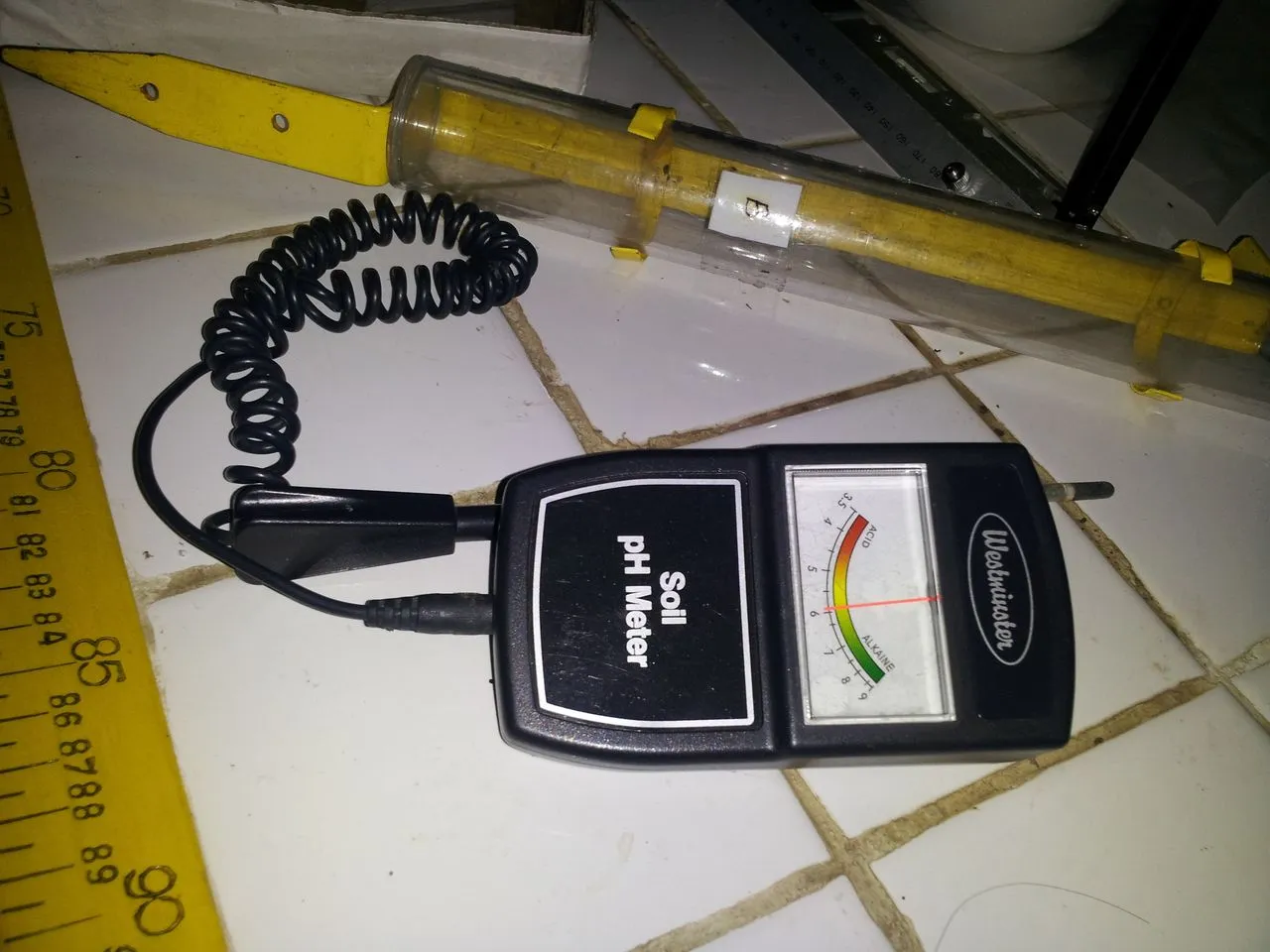
The cheap analog soil pH meters sold in garden centres are unreliable on the dry mineral substrates we use for succulents. They work by measuring conductivity between two metal probes, and conductivity collapses in low-moisture, low-clay mixes. Pushing one of these into a dry pumice-perlite mix will read whatever the last calibration drift produced, not the actual pH. The same meter pushed into wet peat reads more sensibly, which is why the manufacturers' product photos always show wet, organic-rich soil.
The reliable approach is a slurry test:
- Take a small substrate sample from the root zone (not the surface), roughly a tablespoon.
- Mix with two parts distilled or rainwater by volume in a clean glass: one part substrate, two parts water.
- Stir and let settle for one hour. Fines should drop, leaving relatively clear supernatant on top.
- Test the supernatant with either calibrated litmus strips (accurate to about 0.5 unit) or a pre-calibrated pen-style or benchtop electrode pH meter (accurate to 0.1 unit).
Use distilled or rainwater specifically. Tap water often carries enough alkalinity to bias the reading toward whatever your tap pH is, especially on small substrate samples.
If you do not own a meter and cannot get strips, there is a rough field test. A few drops of household white vinegar (acetic acid, around pH 2.5) on a dry substrate sample will fizz vigorously if the mix contains free carbonate, suggesting it is at least pH 7.5. A few drops of a strong baking-soda solution (around pH 8.5) on a separate sample, fizzing in turn, suggests the substrate is below pH 5. No reaction either way means the mix sits somewhere in the safe middle range. The test is qualitative, but it tells you whether to spend money on strips or a meter at all.
How to adjust pH (and when not to bother)
Adjust pH only after you have confirmed both of the following: (1) you have a measurable reading outside pH 6.0 to 8.0, and (2) the plant is showing symptoms consistent with that direction (chlorotic new growth above 7.5; distorted new growth below 5.5). Without both, do not touch pH.
To raise pH (alkaline correction):
- Fine dolomite lime (calcium magnesium carbonate) at 1 teaspoon per 5 litres of substrate raises pH by roughly 0.5 unit over four to six weeks. Work into the top layer at repotting.
- Calcium carbonate (agricultural lime, ground oyster shell) at the same rate is an alternative; it adds calcium without magnesium.
Avoid wood ash. It works in theory but is too alkaline (pH 10 to 12), too soluble, and too variable to dose safely on container succulents.
To lower pH (acid correction):
- Elemental sulphur at 1/4 teaspoon per 5 litres of substrate lowers pH by roughly 0.5 unit over six to ten weeks. Soil bacteria oxidise the sulphur to sulphuric acid; the reaction needs warmth and moisture, so winter applications act slowly.
- Iron sulphate works faster but adds iron, which can stain pots and surfaces. Reserve it for cases where you also need an iron correction.
Avoid using vinegar or commercial pH-down solutions designed for hydroponics. Both lower pH temporarily, but the effect washes out within a few waterings, and repeated application stresses the root system.
In most cases, the better correction is to repot. A fresh mineral mix at 50 to 70 percent inert aggregate (pumice, perlite, coarse grit) starts in the safe pH band, and switching to softer water (rainwater, or tap diluted with distilled) holds it there. Adjusting pH chemically inside an old, salt-loaded pot is treating one symptom while ignoring three larger problems. For how tap water hardness contributes to long-term pH drift, water quality tap vs rain covers the carbonate load from different supply sources.
The critical insight is worth repeating: substrate pH is a late-stage variable. Get drainage right first, water on a true wet-dry rhythm, and check roots and pests before reaching for a pH meter. Investigate pH only if a plant shows specific deficiency symptoms despite proper watering and a fresh substrate.
See also
- A Beginner's Guide to Succulents, for the watering, substrate, and light foundation that prevents most pH-look-alike problems.
- John Innes and succulents, for adapting traditional loam-based mixes that already buffer pH near the safe band.
- DIY substrate mixing, for blending pumice, perlite, grit and minimal organic matter to land inside pH 6.0 to 8.0 from the start.
- Water Quality Tap vs Rain — how carbonate hardness from tap water drives long-term pH drift in container substrate.
- Mineral Deficiency Symptoms — the leaf symptoms that confirm whether a pH issue is actually causing nutritional lockout.
FAQ
What happens if pH is too high (above 7.5)?
Iron and manganese become insoluble and roots can't absorb them. This causes interveinal chlorosis (yellowing between leaf veins) on new growth.
What happens if pH is too low (below 5.5)?
Calcium and magnesium become bound and unavailable. This causes distorted new growth - hooked tips, twisted leaves.
How do I test substrate pH properly?
Use a slurry test: 1 part substrate + 2 parts distilled water, let settle 1 hour, test with litmus strips or pH meter. Don't trust cheap analog meters on dry mineral mixes.
Should I adjust pH in my pots?
Only if you have a confirmed reading outside 6.0-8.0 AND matching symptoms. The better solution is usually to repot into fresh mineral mix with rainwater.
Frequently Asked Questions
What is the first step for substrate ph: why it matters less than drainage (and when it doesn't)?
Start by matching the symptom to the plant, substrate, light, and season before changing watering or treatment.
What should be avoided?
Avoid changing several variables at once; correct the limiting factor and observe the plant before escalating.
Which care factor matters most?
Match the plant to its light, substrate, pot size, and season. Most succulent failures trace to a mismatch between drying speed and the plant's current growth rate.
When should the plant be checked again?
Recheck after one to two weeks unless tissue is actively collapsing. Stable firmness and new growth are better signs than a fixed calendar interval.