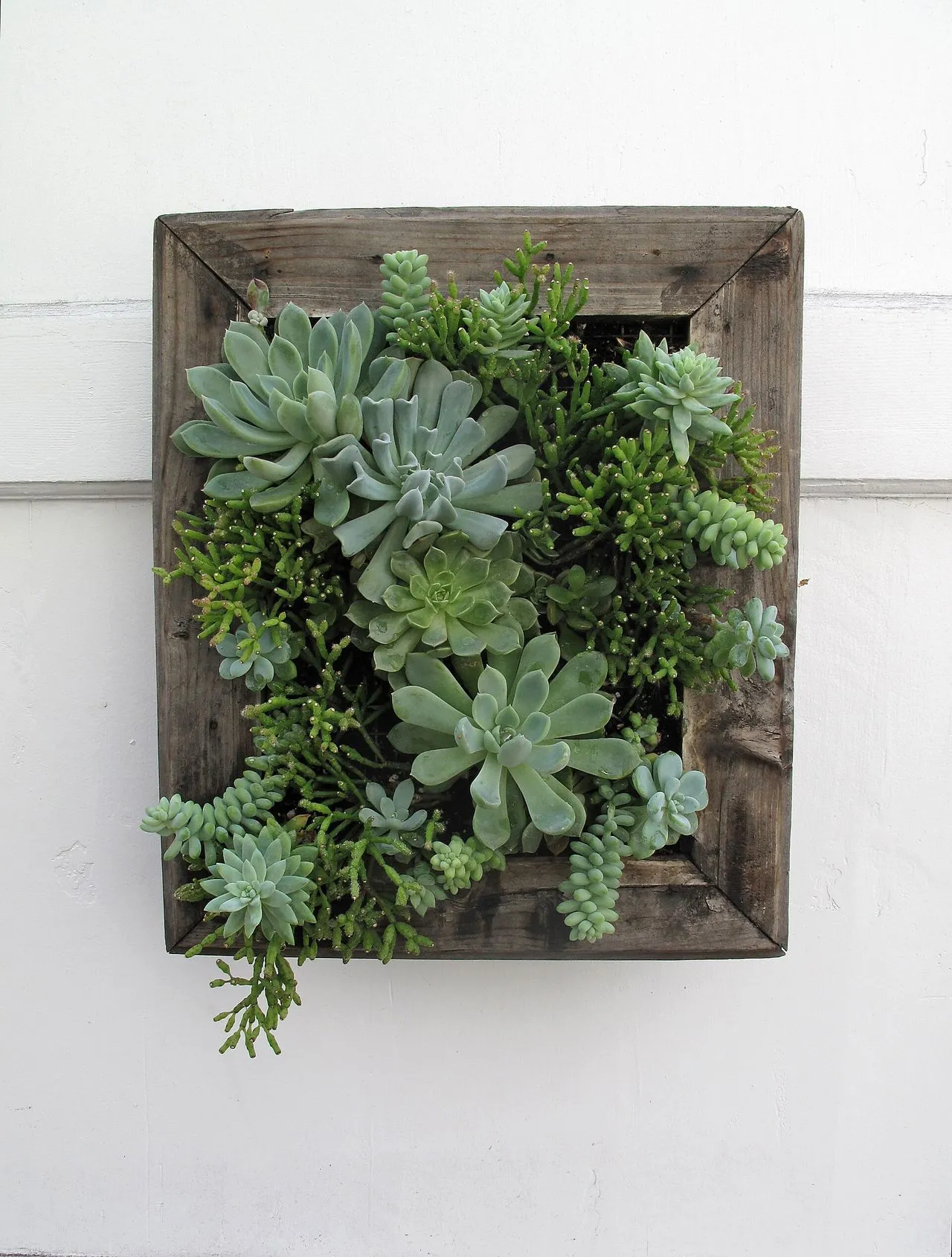
Substrate is the thing most new growers get wrong, and it kills more succulents than every pest and pathogen combined. "Well-draining" has a specific meaning: water poured on the surface exits the drainage holes in seconds, and the core of the pot is fully dry within 24 to 48 hours of a thorough soak. A mix that holds water for five days is lethal for a genus that evolved to dry out within two.
Quick Answer
- A good succulent mix is 50%+ mineral (pumice, grit, perlite). Organic matter should be under 30%.
- Water should drain through in seconds and dry completely within 24-48 hours.
- Standard mix: 50% pumice, 30% grit, 20% loam/compost. Add more pumice for moisture-sensitive genera.
I'm Dr. Elena Martín, a Certified Advanced Cactus & Succulent Horticulturist and former curator of the succulent collection at the Jardín Botánico de Córdoba. What follows is the working substrate protocol I use on a 400-plus-species collection: why free-draining substrate is non-negotiable, what each component does, a standard recipe, and how to adapt it per genus.
Why succulents need free-draining substrate
Succulents store water in leaves, stems, or caudex. They are adapted to drought, not moisture. Two mechanisms make waterlogged substrate lethal.
Root respiration. Roots consume oxygen and release CO2 like any living tissue. In saturated substrate the air spaces fill with water, oxygen diffusion slows by roughly four orders of magnitude, and root cells asphyxiate within 24 to 72 hours. Anaerobic conditions then favour Fusarium, Pythium, and Phytophthora, the soil pathogens that cause soft brown rot from the roots upward.
CAM physiology. Most succulents use Crassulacean Acid Metabolism. Stomata stay closed during the hot day and open at night to fix CO2 into malic acid. This only works when the plant is not water-stressed in the other direction. A plant sitting in wet substrate cannot transpire efficiently, cell turgor climbs, and in extreme cases leaves split. The textbook symptom is brown corky patches on lower leaves, known as edema.
Rot is the primary killer of cultivated succulents. It is almost never caused by a single dramatic over-watering; it is caused by substrate that never dries properly between waterings. The design target for a mix: after a thorough soak, field capacity within an hour, then roughly 15 percent volumetric moisture within 24 to 48 hours. Every component choice below serves that target.
The components of a succulent mix
A succulent substrate blends mineral (inorganic) and organic components. The mineral fraction provides air space, drainage, and structural stability. The organic fraction provides a water reservoir, cation-exchange capacity, and nutrients. For most genera the mineral fraction should be 60 to 80 percent by volume.
Pumice
Pumice is the gold-standard mineral component: a light, porous volcanic glass with interconnected pores at the 0.1 to 1 mm scale. A 3 to 5 mm particle holds roughly 35 percent of its volume in water, releases it slowly, and never breaks down. Unlike perlite it has weight, so it stays mixed. It is pH-neutral to mildly alkaline (7.0 to 7.5), which suits every genus covered here.
If you source one mineral component, source pumice. Look for horticultural grades sold for bonsai: 3 to 5 mm screened for 8 to 15 cm pots, and 1 to 3 mm for seedlings or leaf propagation trays.
In the US the easiest reliable source is a screened horticultural grade such as Bonsai Jack 1/4 inch horticultural pumice, which is pre-sifted to the 3 to 6 mm range this recipe calls for, with no dyes or additives. Landscape suppliers sell pumice cheaper in bulk, but it usually needs sieving before it matches that particle size.
As an Amazon Associate, we earn from qualifying purchases, at no extra cost to you.
Perlite
Perlite is expanded volcanic glass heated until it puffs. Porous, pH-neutral, cheap. Two weaknesses: it floats, so successive watering lifts it to the surface and leaves denser particles below, and it crushes in the hand, degrading into drainage-clogging fines over years. Use it as a budget pumice substitute or in propagation trays. For a long-lived collection, pumice is worth the extra cost.
Coarse sand and horticultural grit
"Sharp sand" or "horticultural grit" at 2 to 5 mm adds weight and drainage. Specification points: it must be riverbed-washed (sea sand carries salt that kills roots), lime-free (limestone grit drives pH above 8 and locks out iron and manganese), and graded rather than builder's sand. Builder's sand is too fine and packs into a cement-like layer. Aquarium gravel labelled silica or granite is usually acceptable.
Akadama
Akadama is a Japanese volcanic clay, fired but not fully vitrified. It is the reference aggregate for bonsai and has gained traction in serious succulent cultivation. It holds water inside each granule, releases it slowly, and darkens visibly when wet, a useful watering cue. It softens over three to five years and eventually breaks down, so it demands periodic repotting. Grade it 2 to 6 mm.
Kanuma, Turface, and decomposed granite
Kanuma is a softer, acidic Japanese pumice used for ericaceous plants; avoid it for succulents (pH 5.0 to 5.5 is too low). Turface is a calcined montmorillonite clay used on sports fields and sold as a soil amendment. It is cheaper than akadama, drains similarly, and works at 2 to 5 mm. Decomposed granite is cheap in the western US, adds weight and drainage, but holds no water; blend with pumice rather than using alone.
Bark fines and coco coir
Small-grade orchid bark (fir or pine, 3 to 8 mm) and coco coir chips add slow-release water retention and organic matter. Use sparingly. Over 15 percent of volume invites fungus gnats and slows dry-down. Coco coir is preferable to sphagnum peat on sustainability grounds, has a more neutral pH (5.8 to 6.8 vs. peat's 3.5 to 4.5), and rehydrates after full drying (peat does not).
Peat-free compost and loam
The organic backbone. A peat-free loam-based compost such as John Innes No. 2 provides a stable nutrient reservoir, modest cation-exchange capacity, and fine particles to bind the mineral fraction. Keep it to 30 percent or less. Pure compost in a succulent pot is a death sentence; 20 to 30 percent is enough to feed the plant between repotting events without compromising drainage.
What to avoid
Pure peat or peat-based multipurpose compost. Hydrophobic when dry, waterlogged for days after rehydration. The worst substrate you can pot a succulent in.
Garden soil. Carries weed seeds, pests, pathogens, and unpredictable pH and texture. Never use straight from the border.
Unamended cheap cactus mix. Most garden-centre cactus mix is 80 percent milled peat with a sprinkle of sand. Unamended, it behaves like a sponge. See the commercial-mix section for how to rescue a bag you already own.
pH considerations
The target range for almost every succulent is pH 6.0 to 7.0. Below 5.5, iron and manganese become over-available and aluminium toxicity starts; above 7.5, phosphorus and micronutrients lock out. Most "mysterious yellowing" in long-established pots is a pH problem, not a nutrient deficiency.
Tap-water hardness matters. Water at 200 to 400 ppm dissolved carbonate (the norm across most European cities and the US south-west) raises substrate pH by 0.1 to 0.3 units per year and leaves white crust on the soil surface. Fixes: rainwater or reverse-osmosis (RO) water. Both measure 10 to 30 ppm and buffer the substrate towards neutral. An under-sink RO unit pays for itself within a couple of years for a collection of any size.
A standard recipe
By volume:
- 50 percent pumice (or perlite if pumice is unobtainable), 3 to 5 mm
- 30 percent coarse sand or akadama, 2 to 5 mm
- 20 percent peat-free loam-based compost such as John Innes No. 2
Mix thoroughly while dry. The result should feel gritty, fall freely through your fingers, and not clump when dropped into a pot. This recipe suits Echeveria, Graptopetalum, Pachyphytum, Sedum, Crassula, Aeonium, and most soft rosette succulents.
Adapting the recipe
Haworthia and Gasteria. In the wild these grow under shrub shade in dappled light with more consistent root-zone moisture. Push the organic fraction to 30 to 40 percent, drop mineral to 60 to 70 percent. They repay slightly acidic substrate (6.0 to 6.5). See the complete Haworthia guide.
Agave and cold-hardy Sempervivum. Adapted to genuinely arid, mineral-rich rocky substrates. Push mineral to 70 to 80 percent, drop organic to 15 to 20 percent. Sempervivum tolerates far lower winter temperatures than Echeveria, and soggy substrate under frost is lethal.
Crassula. Standard recipe works. C. ovata and the large jade-type species prefer a slightly heavier mix (25 percent organic) to support stem mass; miniature C. muscosa and C. perforata prefer the standard or mineral-shifted blend. Detail in the complete Crassula guide.
Sedum. Extremely tolerant across mixes. For S. morganianum and trailing species, the standard recipe in an unglazed terracotta pot is close to ideal. For outdoor Sedum in beds, amend native soil with grit (see in-ground section). See the complete Sedum guide.
Juvenile plants and leaf propagation. Use 1 to 3 mm grades of pumice and akadama, skip compost entirely. Young roots are salt-sensitive and organic matter encourages damping-off in propagation trays. Step up to the standard mix once the plantlet has three or four leaves.
Echeveria. Standard recipe as written. Detail in the complete Echeveria guide.
Evaluating a commercial cactus or succulent mix
Ignore the label. Open the bag and look.
- Granulometry. Tip a handful onto a white plate. A visible mineral fraction of 3 mm-plus particles making up at least a quarter of the volume is a reasonable starting point. A uniform fine brown mass with a few pale grains is peat with marketing.
- Colour. Dark brown to black means peat-heavy. Grey or tan means a higher mineral fraction.
- Smell. Peat smells acidic and earthy. Loam smells mineral. Anaerobic or sour smells mean a wet-stored bag that is microbially compromised; do not use it.
- Water test. Fill a pot with the mix, pour 200 ml of water on top. If it ponds for more than a few seconds, the mix is too fine.
Assume every commercial mix needs amending with 50 percent additional mineral (pumice or grit) by volume unless it is explicitly sold as a bonsai or cactus-bonsai blend.
Amending garden soil for in-ground planting
For outdoor beds you cannot replace the soil column. You are improving texture to around 30 cm depth.
- Excavate the planting area to 30 cm.
- Incorporate 50 percent by volume of 5 to 10 mm horticultural grit.
- If the native soil is clay, add 10 percent coarse compost to improve structure.
- Mound the planting area 10 to 15 cm above surrounding grade to shed surface water.
- Top-dress with 2 to 3 cm of pumice or gravel around each plant's crown to keep stems dry.
A common mistake is digging a "pocket" of grit in heavy clay and planting into it. The pocket fills from the surrounding clay and becomes a bathtub. Amend the entire bed, or build a raised bed on top of the clay with free-draining mix throughout.
When to repot
Substrate breaks down. Organic fractions mineralise, pumice and akadama abrade into fines, and tap-water salts accumulate. Signs you should repot:
- Water ponds on the surface for more than 15 or 20 seconds.
- Substrate feels like powder rather than grit when rubbed.
- White crust on the soil surface or the pot rim.
- Three or more years since the last repot.
- Roots circle the drainage holes or emerge en masse through them.
Repot in early spring as growth resumes. Knock the old substrate off the roots, inspect for rot (cut blackened tissue back to healthy white or cream), callus trimmed roots for two to four days in a shaded dry spot, and pot into fresh dry substrate. Do not water for 5 to 7 days; this forces new root tips to exploit the new substrate rather than rot in the disturbance zone.
Fertilising
Succulents are low-fertility plants. Over-fertilising produces soft, rapid growth, rot susceptibility, and weaker leaf colour. Two approaches work.
Liquid feed. Balanced cactus fertiliser at quarter to half label strength, monthly from the start of growth (March in the northern hemisphere) until early autumn. Cactus feeds run lower in nitrogen and higher in potassium than houseplant feed, producing firmer and better-coloured growth. Stop feeding during dormancy. Winter-dormant plants fed in winter will etiolate under low light and may rot.
Slow-release pellets. A single top-dressing of coated granules (3 to 4 month or 5 to 6 month formulations) at repotting covers the growing season with no further intervention. Half the label rate is sufficient. The easier option for large collections.
Never feed a sick, dehydrated, or newly repotted plant. Damaged roots cannot regulate uptake, and fertiliser salts compound the damage.
Quick reference
- Target mineral fraction: 60 to 80 percent by volume for most genera.
- Standard recipe: 50 percent pumice, 30 coarse sand or akadama, 20 percent peat-free compost.
- Dry-down target: 24 to 48 hours from thorough soak to essentially dry root zone.
- pH target: 6.0 to 7.0.
- Water source: rainwater or RO where hard tap water is the norm.
- Repot every two to three years.
If in doubt, add more grit. Nearly every cultivation problem I am asked to diagnose by email traces back to a substrate that held water for too long. Very few trace back to one that drained too fast.
See also
- When to repot: the substrate refresh schedule and root-bound signals that trigger a soil change
- Drainage hole importance: why even the best mineral mix fails without an exit for excess water
FAQ
Can I use regular potting soil for succulents?No - regular potting soil holds too much water. Mix in 50%+ pumice, perlite, or grit to improve drainage.
What's the best soil for echeverias?Echeverias need fast drainage. Use 60-70% mineral (pumice, grit) with 30-40% organic matter.
How often should I repot?Every 2-3 years, or when the plant is rootbound. Repot in spring/early summer for best recovery.
Quick answer: what soil do succulents need?
Succulents need a mix that drains quickly but still holds a little moisture around the roots. If water sits in the pot for days, roots can rot. If the mix is all rock with no fine material, small plants may dry before they can recover.
When a gritty mix makes sense
Use a gritty mix for rot-prone succulents, shallow pots, humid rooms, or growers who tend to water too often. Bonsai Jack Succulent and Cactus Soil - Jacks Gritty Mix #111 is one ready-made option if you want a mineral-heavy mix without blending pumice, bark, and grit yourself. As an Amazon Associate, we earn from qualifying purchases, at no extra cost to you.
How to tell the mix is too dense
After watering, the pot should feel lighter within a few days. If the surface stays wet, the pot smells sour, or lower leaves turn translucent, move the plant into a faster draining mix and check the roots before watering again.
Frequently Asked Questions
Can I use regular potting soil for succulents?
No - regular potting soil holds too much water. Mix in 50%+ pumice, perlite, or grit to improve drainage.
What's the best soil for echeverias?
Echeverias need fast drainage. Use 60-70% mineral (pumice, grit) with 30-40% organic matter.
How often should I repot?
Every 2-3 years, or when the plant is rootbound. Repot in spring/early summer for best recovery.
What is the first step for succulent soil: a practical guide to substrate, mixing, and drainage?
Water should drain through in seconds and dry completely within 24-48 hours.