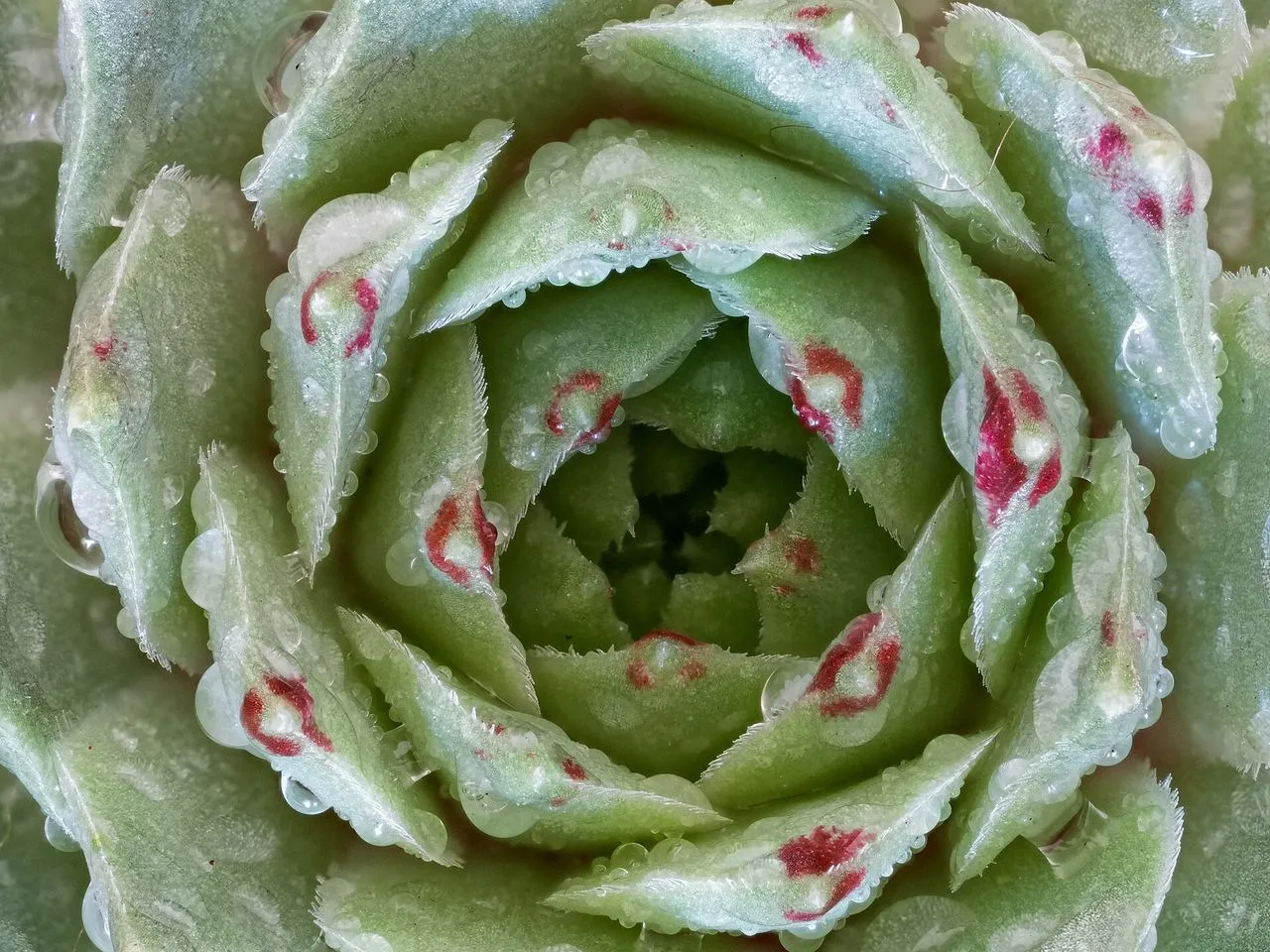
Echeveria is a genus of roughly 150 accepted species of leaf-succulent perennials in the family Crassulaceae, native to semi-arid regions from Texas down through Mexico and into northern South America. For decades they have been among the most collected of all soft succulents, and their tight rosettes and pastel leaf colours drive a significant share of the ornamental-plant trade today. The World Checklist of Vascular Plants maintained by the Royal Botanic Gardens, Kew recognises the genus Echeveria DC. with its type species E. coccinea. This guide covers what you need to know to identify, grow, and propagate them well — and where to go for cultivar-specific care.
I'm Dr. Elena Martín, a Certified Advanced Cactus & Succulent Horticulturist and former curator of the succulent collection at the Jardín Botánico de Córdoba. Most of what follows comes directly from what I've seen work (and fail) in cultivation across Mediterranean and temperate climates over the last decade.
Taxonomy and Natural Range
The genus was described in 1828 by the Swiss botanist Augustin Pyramus de Candolle, named for the 18th-century botanical illustrator Atanasio Echeverría y Godoy. Species diversity peaks in central and southern Mexico — particularly in the states of Oaxaca, Puebla, and Hidalgo — where Echeveria plants occupy rocky outcrops, canyon walls, and pine-oak woodland edges at elevations between 600 m and 3,200 m.
In the wild these are not desert plants. Most species experience a cool, dry winter followed by a summer monsoon, and that seasonal rhythm is what your cultivation routine should imitate. The habitat range matters for one practical reason: a Oaxacan high-elevation species like E. laui behaves very differently from a lowland species like E. gibbiflora. When a published care instruction says "Echeveria prefer..." it is almost certainly over-generalising.
Identification and Morphology
All Echeveria share a single diagnostic feature: a ground-level rosette of fleshy, sessile leaves arising from a short unbranched stem. Other diagnostic characters:
- Leaves. Usually obovate to spathulate, entire-margined, 2–15 cm long depending on species. Surfaces can be glabrous (E. elegans), densely pubescent (E. setosa), or covered in a waxy bloom called epicuticular farina (E. laui, E. cante). The farina is a structural feature — do not rub it off handling the plant; it will not regenerate on that leaf.
- Inflorescence. A lateral scape (sometimes multiple), 10–60 cm tall, bearing a cyme of urn-shaped or tubular five-petalled flowers, typically red, orange, or pink on the outside and yellow inside. Flowering usually happens in spring to early summer.
- Offsets. Most species produce axillary offsets (pups) at the base as they mature. Some, like E. gibbiflora, remain solitary rosettes for years before any offsets appear.
The key difference between Echeveria and commonly-confused genera: Sempervivum (hens-and-chicks) has perfectly symmetric spirodistichous rosettes, is frost-hardy to USDA zone 3, and the monocarpic mother rosette dies after flowering. Graptopetalum and their intergeneric hybrids (×Graptoveria) share the rosette form but have star-shaped rather than urn-shaped flowers. If you are unsure what you have, look at a flower: Echeveria flowers are unmistakable.
For specific species identification see the cultivar pages linked later in this guide.
Cultivation
Light
Echeveria want bright, direct light for at least 5–6 hours a day. In a home setting that means the brightest south-facing window you have. Indoor plants that receive less than this begin etiolating: internodes lengthen, new leaves become smaller and thinner, and the rosette loses its compact symmetry. Etiolation is reversible only if caught early — you can cut off the rosette and root the top (see Propagation), but the old stem will not re-compact.
Outdoors in summer, most species tolerate full sun if the transition is gradual. Move a greenhouse-grown plant directly into unfiltered sun and it will sunburn within hours; the white patches that result are permanent cell-wall damage.
One exception worth calling out: farina-coated species such as E. laui and E. cante take direct sun without issue — the wax layer is literally a physiological sunscreen.
Substrate
Any free-draining mineral mix works. My standard recipe is 50% pumice or perlite, 30% coarse sand (3–5 mm grit), and 20% peat-free loam-based compost such as John Innes No. 2. The aim is a substrate that holds moisture for 24–48 hours then dries completely. Pre-packaged "cactus mix" from general garden centres is usually too peat-heavy for these species and needs amending with at least 50% additional mineral grit.
pH preference is slightly acidic to neutral (pH 6.0–7.0). Hard tap water over years will raise pH and lock out micronutrients; water with rainwater or RO water where possible.
Water
The single most common killer of container-grown Echeveria is chronic over-watering. A useful rule of thumb, but one more reliable than most: water when the top 3–4 cm of substrate reads dry on a moisture meter, not on a schedule. In cool indoor conditions in winter that may mean once every 3–4 weeks; in active summer growth outdoors, once a week. Always water thoroughly — until water exits the drainage holes — and discard any water sitting in the saucer within 30 minutes.
Avoid letting water sit in the rosette for more than a few hours. Rot of the growth point is unrecoverable. Water the substrate, not the plant.
Temperature
Most cultivated species tolerate 5°C–35°C. Below 5°C leaves may drop or rot; above 35°C sustained growth ceases and the plant enters summer dormancy. Frost will kill unprotected tissue at around −2°C. High-altitude species (E. laui, E. agavoides subsp. multifida) tolerate brief −4°C events if dry; do not generalise this to all Echeveria.
Humidity
Ambient humidity of 30%–50% is ideal. Higher humidity combined with poor ventilation invites fungal problems; lower humidity is usually fine as long as watering is adequate. These plants do not benefit from misting — the wax-coated leaves shed mist droplets and any water pooling in the rosette is a liability.
Propagation
All commonly cultivated Echeveria are propagatable four ways; leaf and offset are the most reliable.
Leaf propagation
Detach a mature, undamaged leaf from the lower rosette with a clean gentle twist. You need the entire base of the leaf — a torn leaf will not root. Let the cut surface callus (dry over) for 3–7 days in shade. Lay the leaf on lightly damp substrate, base not touching the surface. Keep warm (20°C–25°C) and bright but out of direct sun. After 2–4 weeks small roots and a miniature rosette appear at the base. The parent leaf will wither once the new plantlet is established — do not detach it early.
Success rate varies by species. E. elegans and E. runyonii propagate easily; E. laui is notoriously slow and unreliable from leaf.
Offset division
Mature rosettes produce clonal offsets around the base. Wait until an offset is at least a third the size of the parent, then use a sharp sterile blade to cut it at the base, leaving as much of the small stem as you can. Callus for 3–5 days, then pot up in the standard substrate. Offsets establish within 2–3 weeks.
Stem cutting / beheading
Appropriate for etiolated specimens or any time you want to rejuvenate a leggy plant. Cut the rosette off the top of the stem with 2–3 cm of stem attached, leave to callus for 5–10 days, then pot up. The leftover stem will often produce multiple new rosettes along its length — a useful side effect.
Seed
Possible but slow. Echeveria are self-incompatible, so you need two unrelated plants flowering simultaneously for viable seed. Germination takes 2–3 weeks under humidity; seedlings take 2–4 years to reach mature size. Worth it only if you are breeding or maintaining a wild-collected accession.
For a worked example of leaf propagation, see Echeveria agavoides propagation.
Pruning and Maintenance
Echeveria do not require pruning in the shaping sense that Western horticulturists typically mean. There are three routine maintenance tasks:
Dead leaf removal. Brown, papery leaves at the base are normal as the rosette grows. Pull them off with a gentle downward tug when they detach easily. Do not cut them — a partial cut leaves a wet wound that invites rot.
Spent inflorescence removal. Once the flower stalk finishes blooming, cut it at the base with sterile secateurs. Leaving a dying scape on the plant diverts resources and occasionally invites aphids.
Corrective pruning of etiolated plants. If the central rosette has stretched, behead the top as described under Propagation. This is the only way to restore compact form.
Do not routinely trim healthy leaves; each leaf represents significant stored photosynthate that the plant will use during dormancy.
Common Problems
| Symptom | Likely cause | Fix |
|---|---|---|
| Lower leaves yellow and mushy | Over-watering / root rot | Unpot, inspect roots, cut away blackened tissue, re-root dry |
| Lower leaves dry and papery | Normal senescence | No action needed |
| Rosette elongating, internodes visible | Etiolation (under-lit) | Move to brighter light; behead if severe |
| White cottony tufts in leaf axils | Mealybug | Cotton swab dipped in 70% isopropyl alcohol; inspect weekly |
| Brown corky patches | Edema (sustained waterlogging) | Reduce watering; improve substrate drainage |
| Soft brown spots that spread | Fungal soft rot | Cut out affected tissue, drench with fungicide, dry out |
| Tiny webs, stippled leaves | Spider mite (low humidity) | Rinse thoroughly; predatory mites if persistent |
For a deeper look at why a specific symptom is appearing, see why Echeveria lose their bottom leaves.
Notable Species and Cultivars
The genus contains too many species to cover in one guide. These are the ones most worth knowing — follow the links for full cultivation profiles.
- Echeveria elegans — the "Mexican snowball"; extremely forgiving, the usual entry point for collectors.
- Echeveria agavoides — pointed-leaf species resembling a miniature agave; exceptional in rock-garden-style containers.
- Echeveria laui — the "holy grail" species for many collectors; heavy farina, slow growth.
- Echeveria lilacina — "ghost echeveria"; pale lavender leaves, excellent for indoor light.
- Echeveria desmetiana — blue-silver cultivar sometimes sold as E. peacockii.
- Echeveria runyonii — "topsy turvy" with characteristic curled-under leaves.
- Echeveria 'Perle von Nürnberg' — the best-known pink-purple cultivar; a hybrid of E. gibbiflora 'Metallica' × E. elegans.
- Echeveria pulidonis — crisp red leaf margins; compact form.
- Echeveria gibbiflora — one of the largest-leaved species; parent of many hybrids.
- Echeveria 'Afterglow' — large pastel-pink hybrid by Don Worth.
- Echeveria 'The Rose' — cabbage-like cultivar, notable for its tight whorl.
Where to buy healthy plants
The best nurseries supplying Echeveria in Europe are members of the British Cactus & Succulent Society's affiliated growers list. In the USA the Cactus and Succulent Society of America maintains a similar directory. Beware of online sellers listing "rare" species at commodity prices; many are misidentified offsets of common hybrids. A healthy plant arrives with firm roots, symmetric rosette, and no mushy or suspiciously pristine-waxy leaves that have been artificially "refarinated".
If you are new to the genus, buy E. elegans first. Everything you learn on it will apply to everything else.
If you are arriving at succulents for the first time, the beginner's guide to succulents covers the cross-genus basics — light, water, substrate, and the common early mistakes — and is the right starting point before any single-genus deep dive.
Echeveria care at a glance
Most Echeveria need bright light, excellent drainage, and deep watering only after the potting mix dries. If a rosette stretches upward, fades, or spaces out between leaves, increase light gradually rather than moving it straight into harsh afternoon sun.
Soil and pot checklist
Use a pot with a drainage hole and a gritty cactus or succulent mix amended with pumice, perlite, or mineral grit. Heavy peat-based soil that stays wet is one of the fastest ways to cause soft leaves, root rot, and lower-leaf collapse.
FAQ: should I remove lower leaves?
Remove only leaves that are fully dry, papery, or rotting. Healthy lower leaves naturally feed the plant during drought or adjustment, so pulling them too early can stress the rosette.
Quick answer
Echeverias need bright light, fast-draining soil, and deep but infrequent watering. The biggest problems are weak indoor light, soil that stays wet too long, and water trapped in the rosette. If the plant stretches, leans, or loses color, fix light and drainage before adding fertilizer.
As an Amazon Associate, we earn from qualifying purchases, at no extra cost to you. A gritty mix helps more than most people expect; Miracle-Gro Succulent Potting Mix is a simple option when your current soil stays damp for days after watering.
How to keep echeverias compact indoors
Stretching usually means the plant wants more light. Move it to your brightest window, rotate it every week, and avoid watering more to make up for weak growth. More water will not fix a light-starved rosette; it usually makes the stem softer.
Water the soil, not the rosette
When you water, soak the potting mix and let the extra drain out. Try not to leave water sitting between the leaves, especially in cool rooms. Wait until the mix is dry before watering again. A pot with a drainage hole makes this much easier.
FAQ
Why is my echeveria growing tall?
It is stretching toward stronger light. Increase light gradually and rotate the pot. If the stem is already long and bare, you may need to behead and reroot the rosette after the plant is healthy.
Why are the lower leaves turning mushy?
Mushy lower leaves usually point to wet soil or a pot that drains poorly. Check the roots, remove collapsed leaves, and let the mix dry before watering again.
Frequently Asked Questions
How many species of Echeveria are there?
Roughly 150 accepted species, with ongoing taxonomic revision. The World Checklist of Vascular Plants at the Royal Botanic Gardens, Kew, is the current authoritative reference.
Is Echeveria hard to grow?
No, provided you understand it is not a desert cactus. Most cultivated species need bright light, free-draining substrate, and a wet-dry watering cycle. Chronic over-watering is the single most common killer.
What is the difference between Echeveria and Sempervivum?
Echeveria are tender Mexican rosettes; Sempervivum are frost-hardy European rosettes. Echeveria flowers are urn-shaped on a lateral scape; Sempervivum mother rosettes die after flowering. Sempervivum tolerates USDA zone 3, Echeveria typically zone 9b.
Can Echeveria grow indoors?
Yes, with the brightest south-facing window in your house. Below five to six hours of bright direct light per day they begin to etiolate (stretch). A supplemental grow-light running 14 hours per day fills the gap during winter.