| Question | Short Answer |
|---|---|
| How many leaves should an Echeveria lose per month? | A healthy mature rosette loses one to three leaves per month during active growth, more in late autumn as the plant consolidates for dormancy. |
| Should I cut off yellowing leaves on my Echeveria? | No. |
| Why are my Echeveria's lower leaves mushy? | Mushy yellow lower leaves indicate over-watering and incipient root rot. |
| Why is my Echeveria stretching and dropping bottom leaves? | Etiolation — insufficient light. |
Lower-leaf drop in Echeveria is one of the most common questions new collectors ask, and in most cases it is not a problem. The rosette grows from the centre outward and sheds mature leaves from the base; the process is analogous to a palm or a monocarpic agave in miniature. The question is whether the rate and appearance of the drop are normal or diagnostic of something else.
Part of the Complete Echeveria Guide.
Normal basal senescence
Every mature Echeveria rosette sheds its oldest leaves. A healthy plant loses one to three leaves per month during active growth, more in late autumn as the plant consolidates tissue for dormancy. The diagnostic signs of normal senescence:
- Leaves affected are only the lowest one or two whorls.
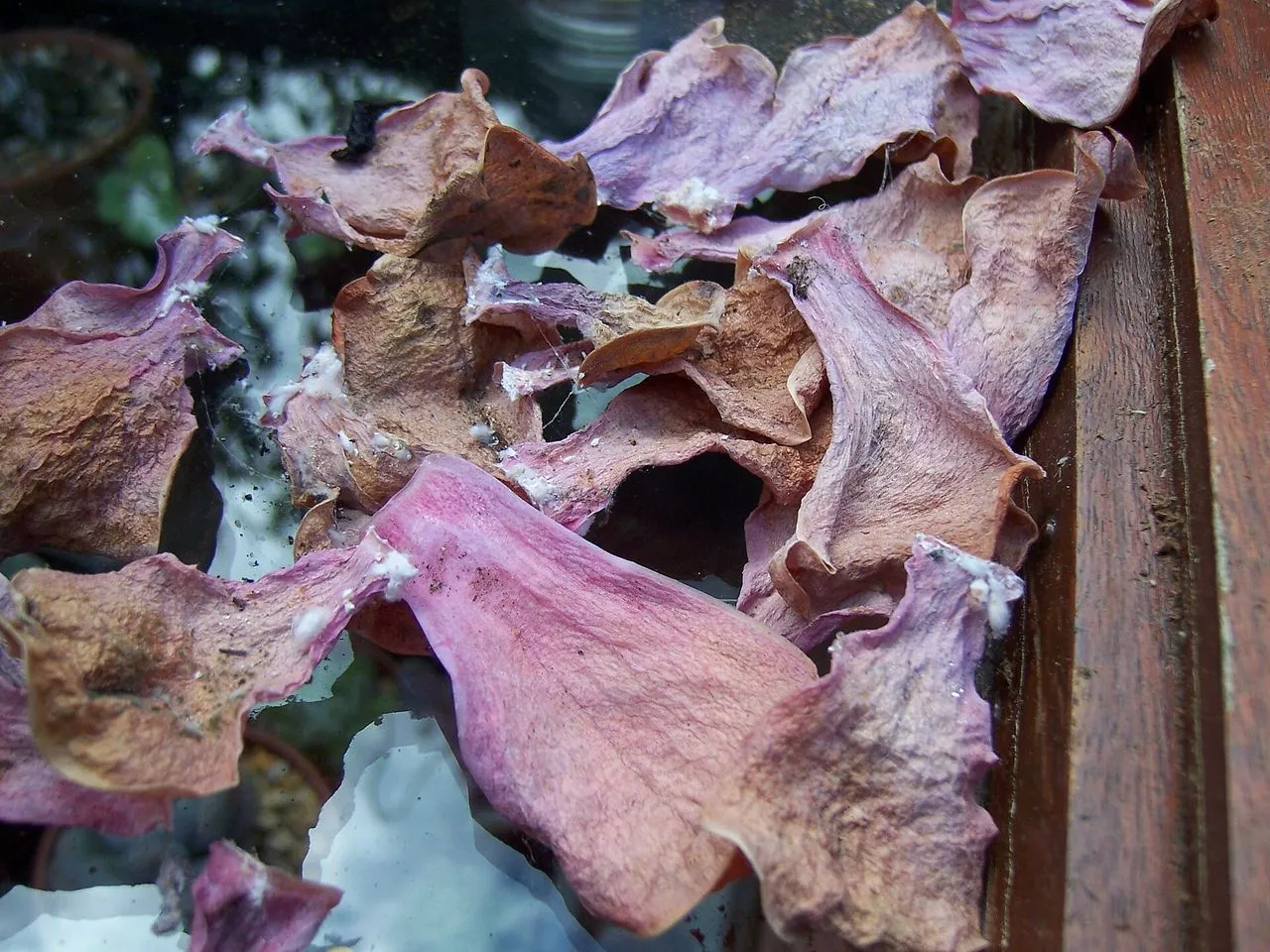
- They dry from the tip inward to a papery, translucent brown.
- They detach with a light tug or fall on their own.
- The rest of the rosette remains firm and symmetric.
No action is needed beyond gently pulling off detached leaves to prevent them rotting against the stem.
Over-watering and incipient root rot
The most common pathological cause. Lower leaves that go yellow and mushy, then translucent, rather than papery, indicate water is moving into the leaves because the roots can no longer regulate uptake. Unpot the plant, knock off the substrate, and inspect the roots. Healthy Echeveria roots are white to pale tan, firm, and smell faintly of damp soil. Blackened, wet, or foul-smelling roots indicate rot and must be cut back to healthy tissue with a sterile blade.
After cutting, let the plant dry bare-root in shade for five to seven days, then re-pot into fresh, dry mineral mix and do not water for another week. A plant caught early recovers fully; one where rot has reached the stem base rarely does and should be beheaded (see pillar for the procedure).
Under-watering and chronic drought stress
The opposite cause. Lower leaves shrivel, wrinkle lengthwise, and drop while still soft rather than becoming papery. The plant has been drawing on stored water in the lower leaves because the root zone has been dry too long. Soak the substrate thoroughly, allow to drain, and resume a proper water schedule. Do not overcompensate with frequent light waterings; a single thorough soak rehydrates the plant fully.
Etiolation and the shedding that follows
Low-light stretching causes internodes to extend, and the lower leaves eventually lose contact with light and the plant sacrifices them. You will see long visible stem between leaves and a rosette of smaller-than-normal new leaves at the top. The lower-leaf loss is the visible symptom, not the cause. The cause is light. Move the plant to brighter light. If the stretching is severe, behead the rosette (see pillar) — the leftover stem will produce compact new rosettes.
Mealybugs and other pests
A less common cause but easily missed. Mealybugs nest in the leaf axils at the base of the rosette where the lower leaves attach to the stem. Infested leaves yellow and drop prematurely. Check carefully with a torch for white cottony tufts between the leaves. Treat with a cotton swab dipped in 70% isopropyl alcohol on each visible insect, repeat weekly for a month, and isolate the plant from others during treatment. The full inspection and treatment protocol is in Echeveria mealybug treatment.
Root mealybug is harder to spot and shows the same leaf symptoms. A plant that continues to drop leaves despite appropriate watering and no visible above-ground pests should be unpotted and the root ball checked for white waxy residue.
Sudden leaf drop after a move
Relocating an Echeveria from one light or humidity regime to another frequently triggers a short burst of lower-leaf drop over the following two to three weeks. This is not a pathology; the plant is shedding leaves calibrated for the old light level. Let it settle without intervention, water only when the substrate is dry, and the drop will stop.
What not to do
Do not cut lower leaves that are only partially yellowing. A partial cut leaves a wet wound that invites rot. Wait until the leaf detaches with light pressure, or is fully papery, then remove it. Do not increase watering in response to leaf drop — this is the single most common way a recoverable situation becomes root rot.
See also
- Echeveria elegans — a species that handles basal leaf drop especially gracefully because of its dense clumping habit.
- Echeveria agavoides propagation — the beheading procedure as a corrective.
- Echeveria 'Perle von Nürnberg' — a cultivar prone to leggy growth and the characteristic lower-leaf drop that follows.
Frequently Asked Questions
How many leaves should an Echeveria lose per month?
A healthy mature rosette loses one to three leaves per month during active growth, more in late autumn as the plant consolidates for dormancy. Only the oldest one or two whorls should be affected.
Should I cut off yellowing leaves on my Echeveria?
No. A partial cut leaves a wet wound that invites rot. Wait until the leaf is fully papery or detaches with light pressure, then remove it.
Why are my Echeveria's lower leaves mushy?
Mushy yellow lower leaves indicate over-watering and incipient root rot. Unpot, cut away blackened roots with a sterile blade, dry bare-root in shade for five to seven days, then re-pot in fresh dry mineral mix.
Why is my Echeveria stretching and dropping bottom leaves?
Etiolation — insufficient light. The plant sheds shaded lower leaves as it elongates upward. Move to brighter light; if the stretch is severe, behead the rosette and re-root the top.