Genus Reference
Sempervivum
Hens-and-chicks: hardy alpine rosettes for cold climates and living walls.
The Complete Sempervivum Guide: Identification, Cultivation & Propagation
Complete Sempervivum guide for hens and chicks: outdoor sun, gritty soil, drainage, winter hardiness, offsets, monocarpy, and why indoor growing usually fails.
Read the guide →Species & Cultivars
All articles in this section
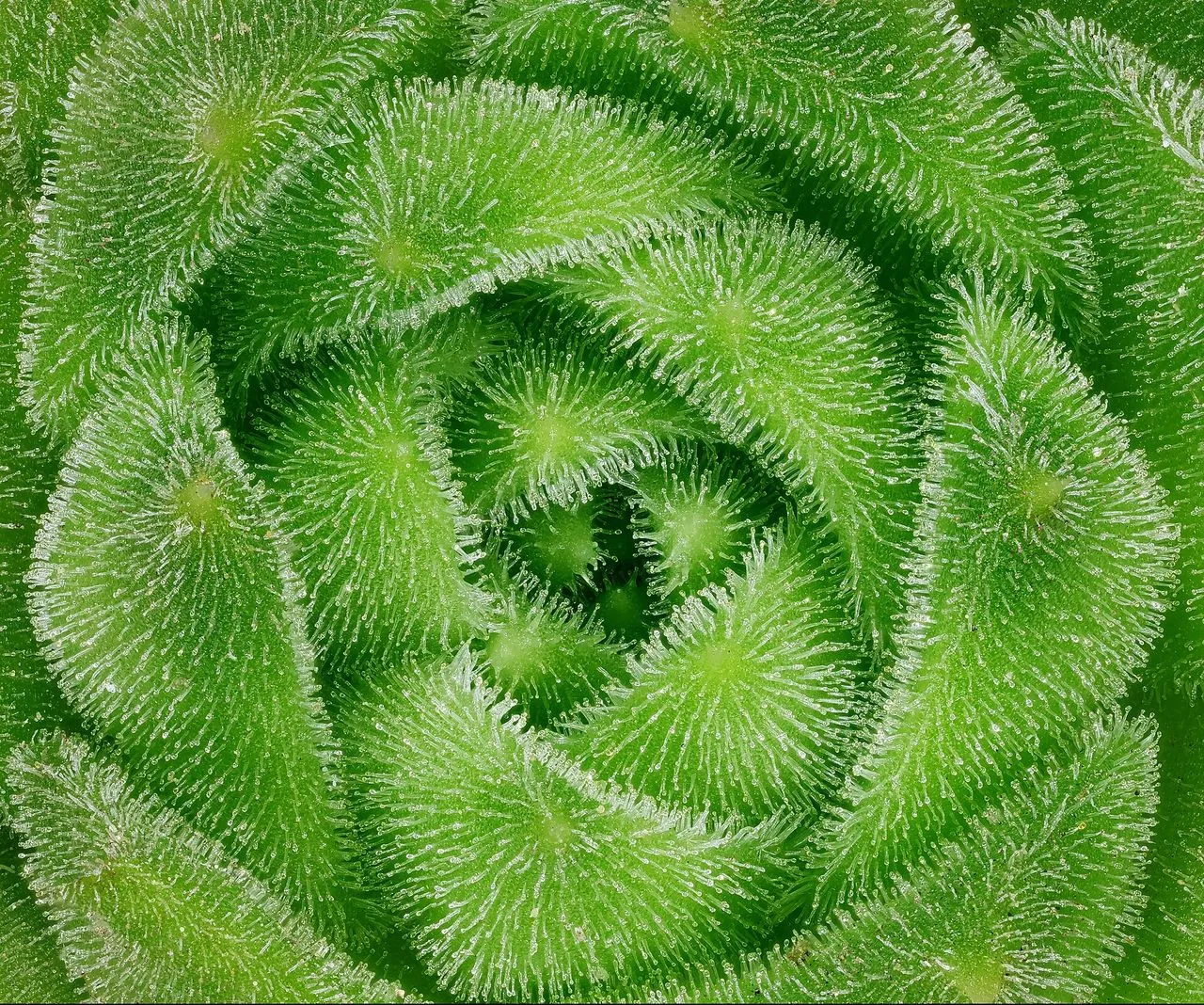
Hens and Chicks Mother Dying After Flowering: What's Normal
The mother rosette in hens and chicks (Sempervivum) always dies after flowering. This is normal monocarpy, not disease.
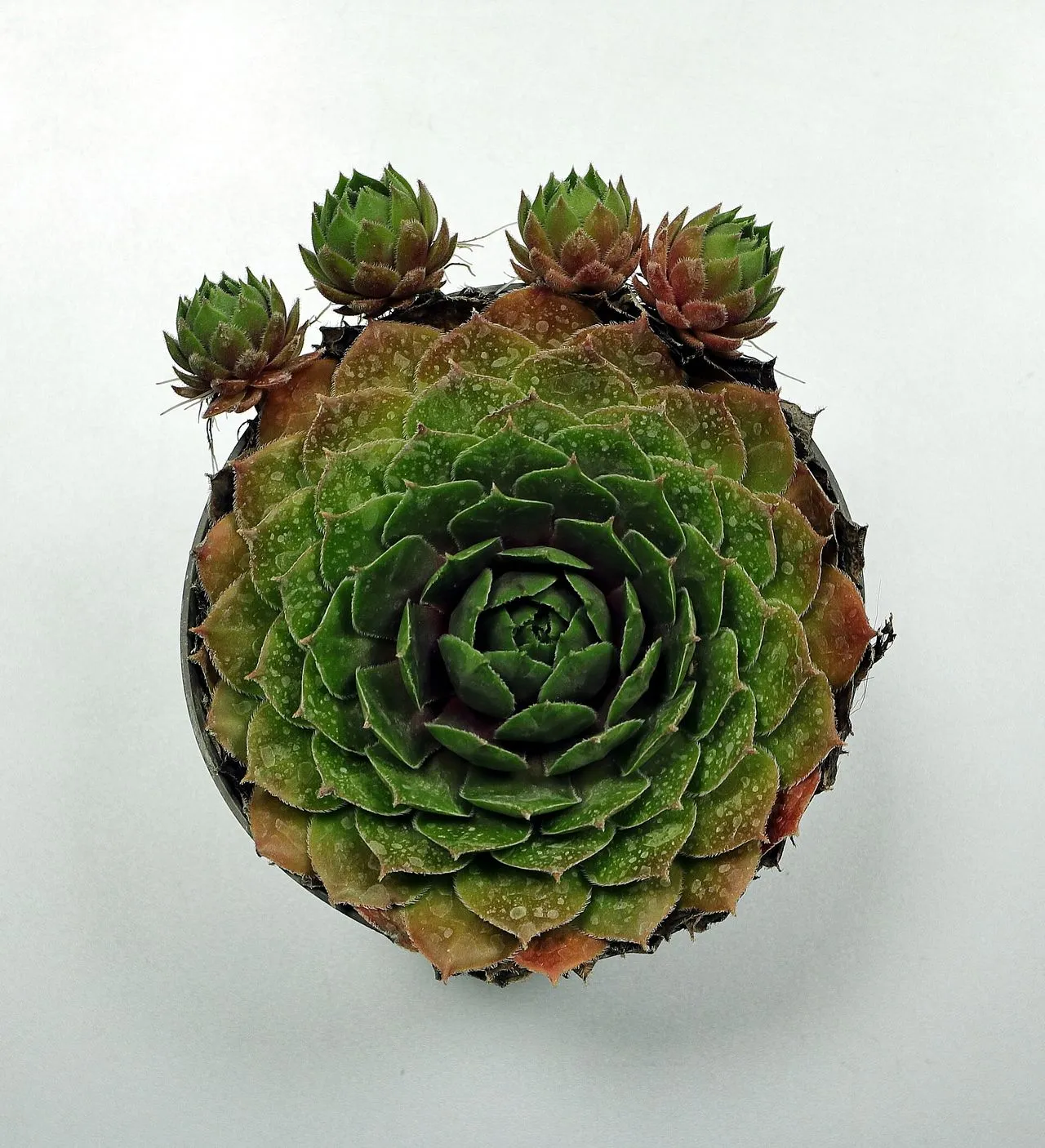
Sempervivum Turning Brown: Causes and What to Do
Sempervivum rosettes turn brown from sunburn, winter frost damage, drought, root rot, or the natural death of a monocarpic flowering rosette.
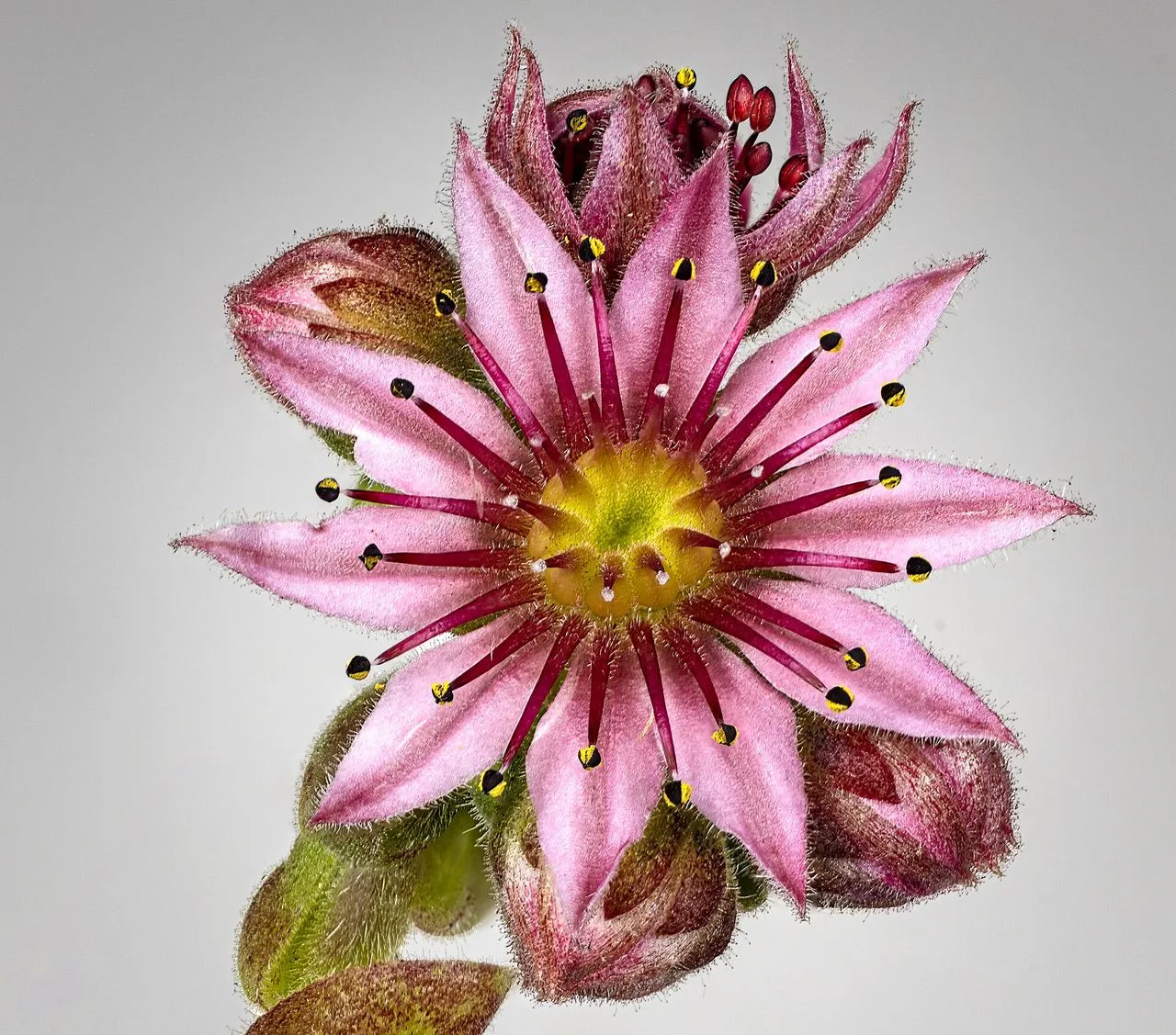
Sempervivum Pests: Identification Guide for All Common Pests
Identification guide to every significant pest of Sempervivum: mealybug, root mealybug, aphid, spider mite, scale, fungus gnats, and Endophyllum rust.
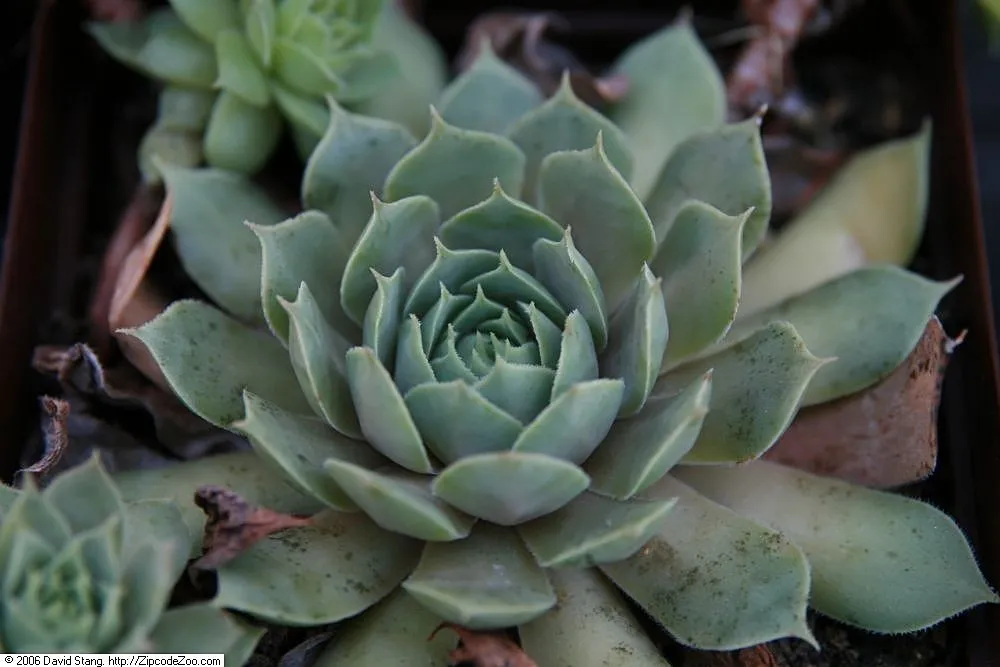
Aphids on Sempervivum: Identification, Damage, and Treatment
Aphids on Sempervivum cluster at stem bases, inside tight rosettes, and on flower spikes.
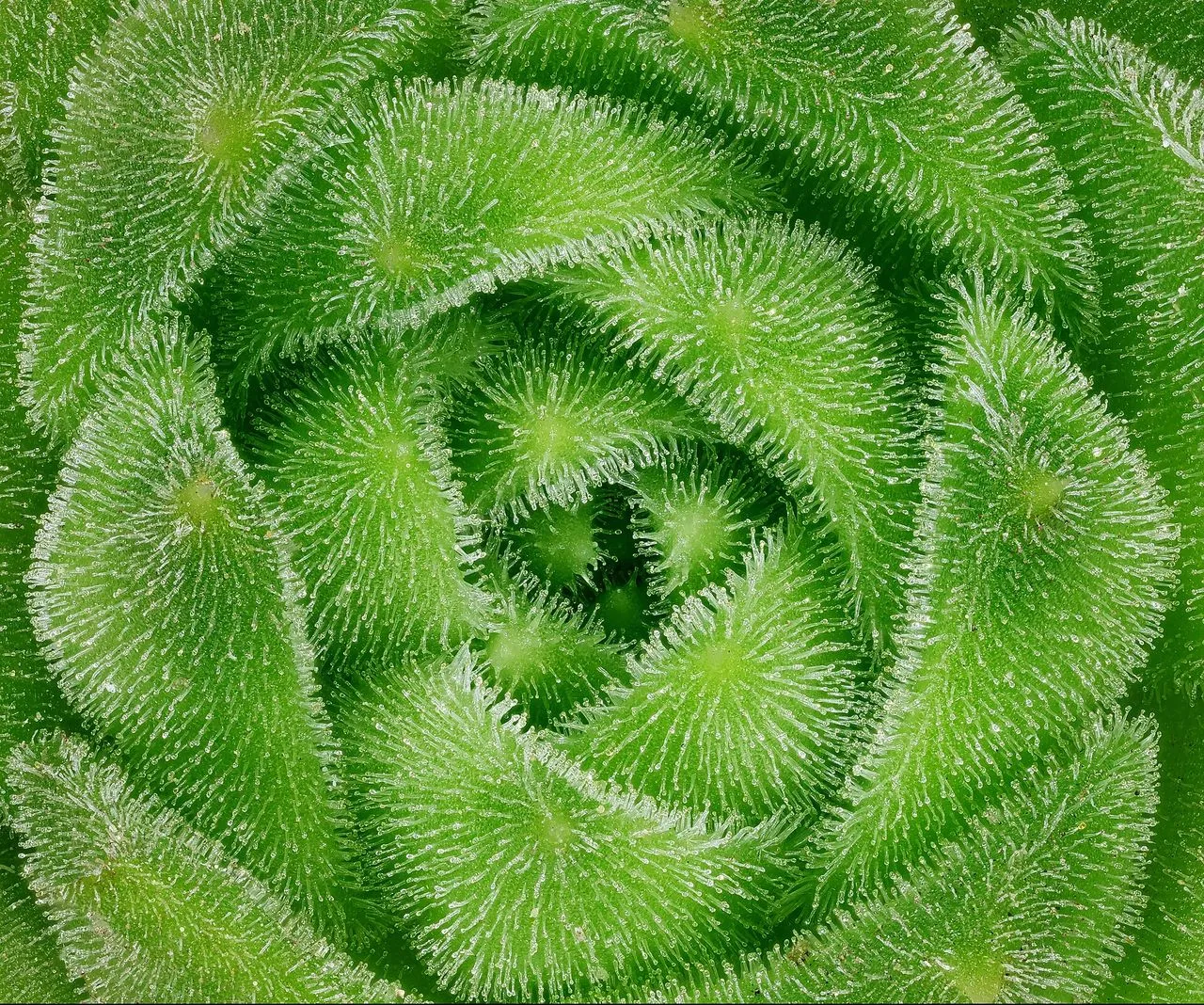
Sempervivum Not Producing Chicks: Why and What to Do
Sempervivum not producing offsets is usually caused by insufficient light, a very young plant, slow-offsetting species, or root damage.
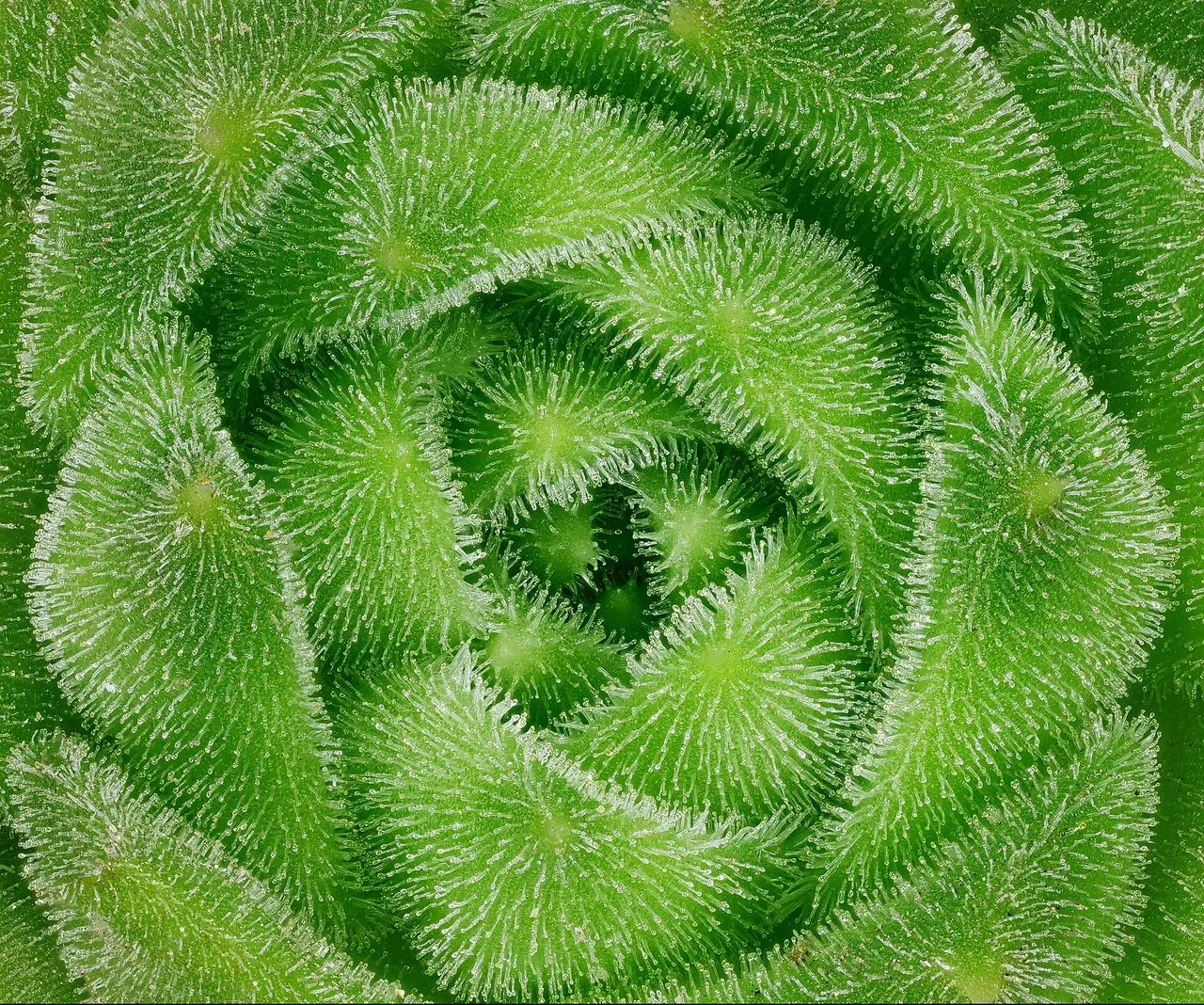
Sempervivum Color Fading: Why Red and Purple Pigment Disappears
Sempervivum colors fade when light drops, water stays too steady, roots struggle, or seasons change. Learn what is normal and how to bring color back safely.
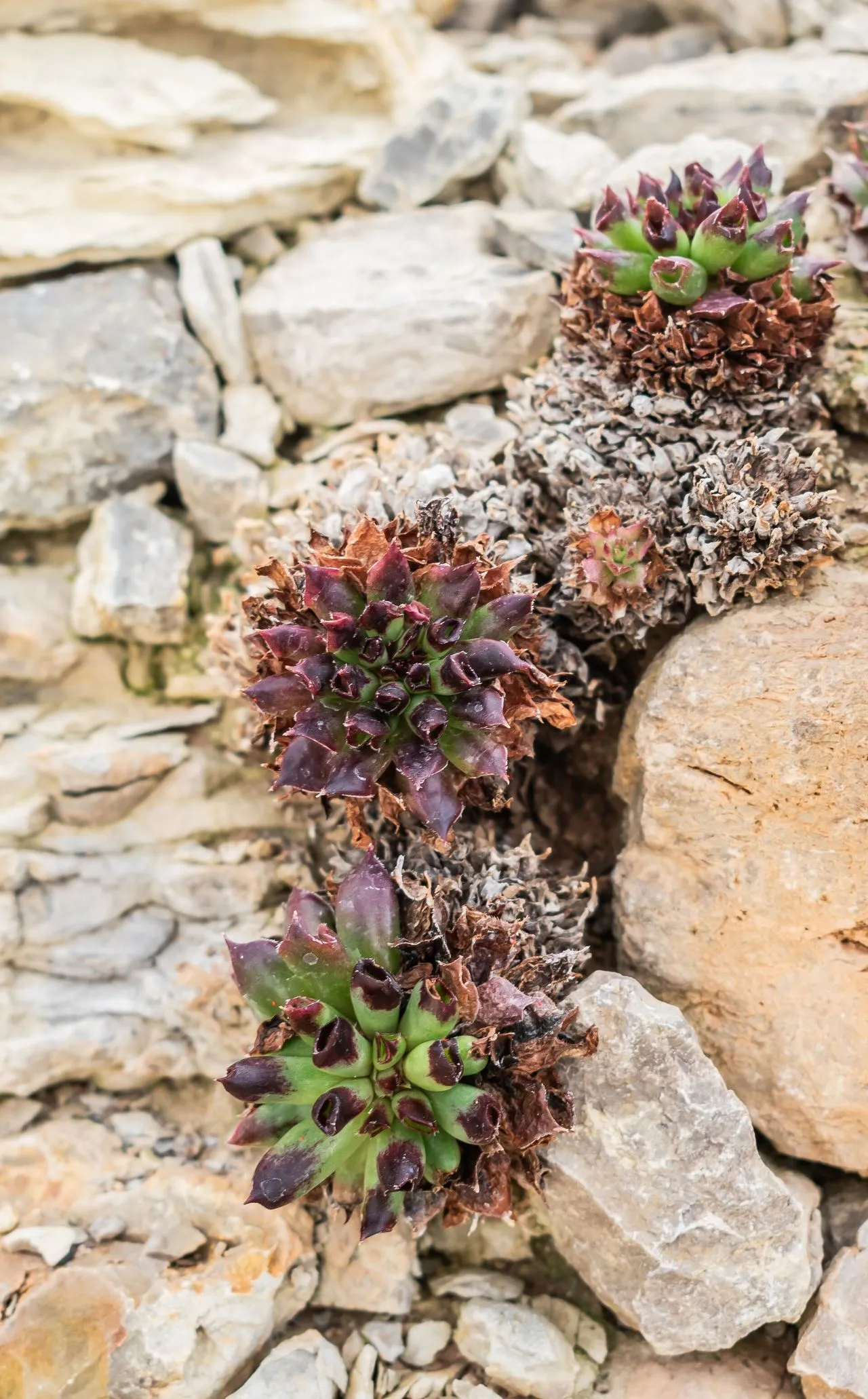
Sempervivum Leaves Soft: Rot vs Drought — How to Tell the Difference
Soft leaves in Sempervivum can mean drought or rot — opposite causes with opposite fixes.
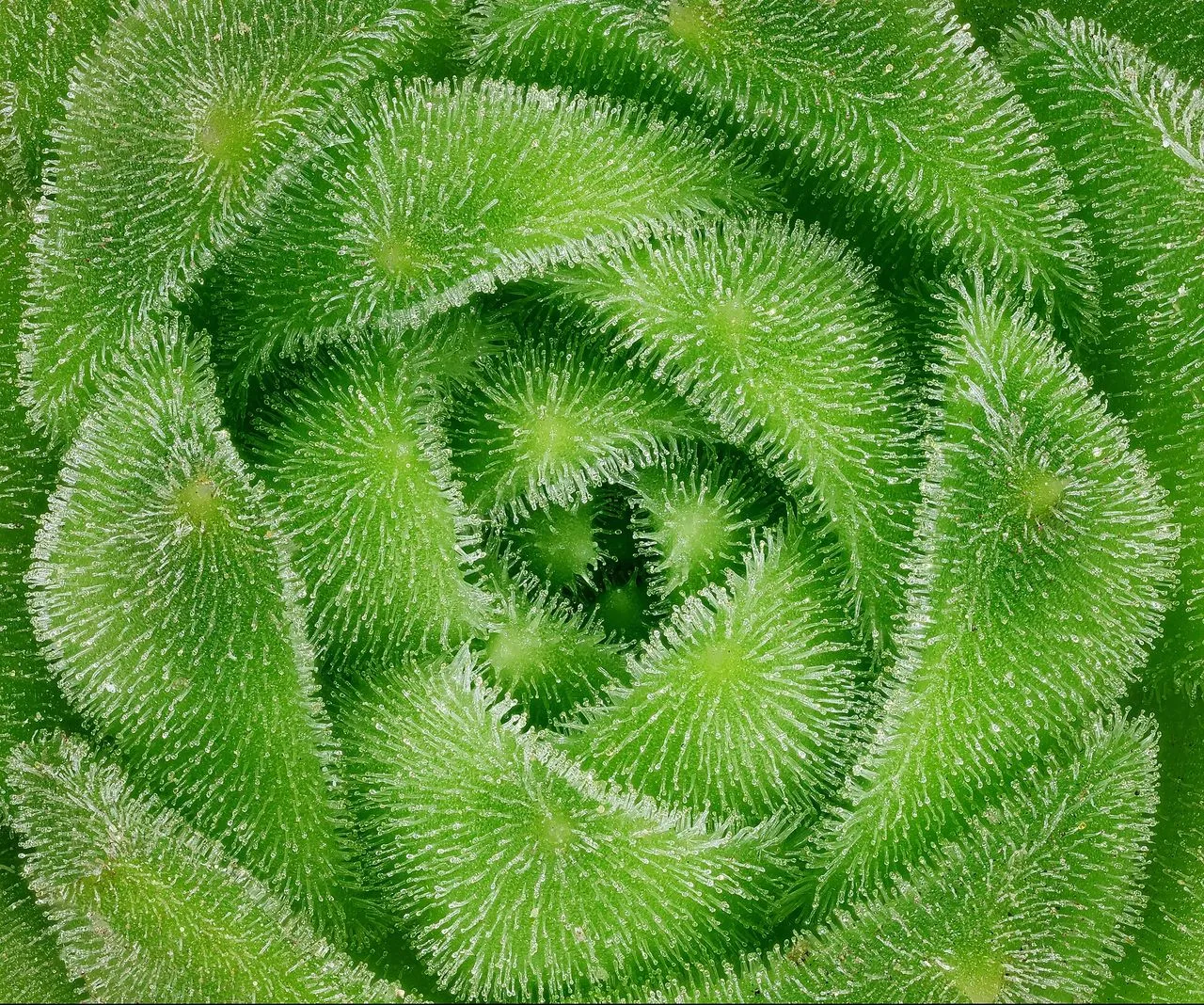
Sempervivum Leaves Papery and Thin: Drought or Root Failure?
Papery, translucent, or parchment-thin leaves in Sempervivum indicate the advanced end of the water-deficit spectrum.
Sempervivum Leaves Curling: Cold, Drought, and Heat Stress
Sempervivum leaves curl inward as a protective physiological response to cold, drought, or heat stress.
Sempervivum Winter Damage: Assessment and Recovery
Sempervivum is frost-hardy to −20°C or below, but winter damage still occurs — usually from wet-then-freeze cycles, container freeze-through, late…
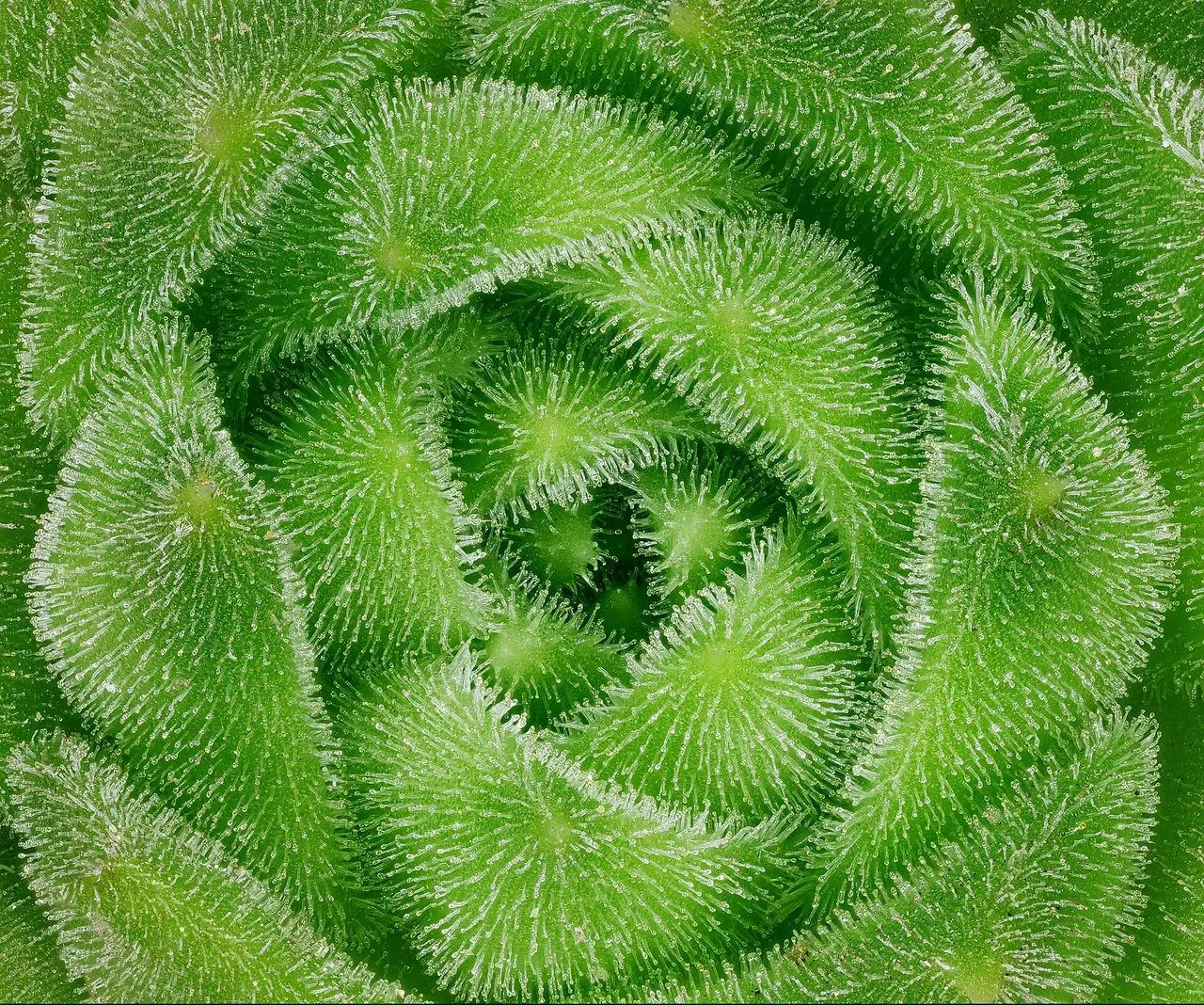
Sempervivum Rotting in Summer: Causes and Prevention
Sempervivum can rot in summer despite being alpine and drought-tolerant.
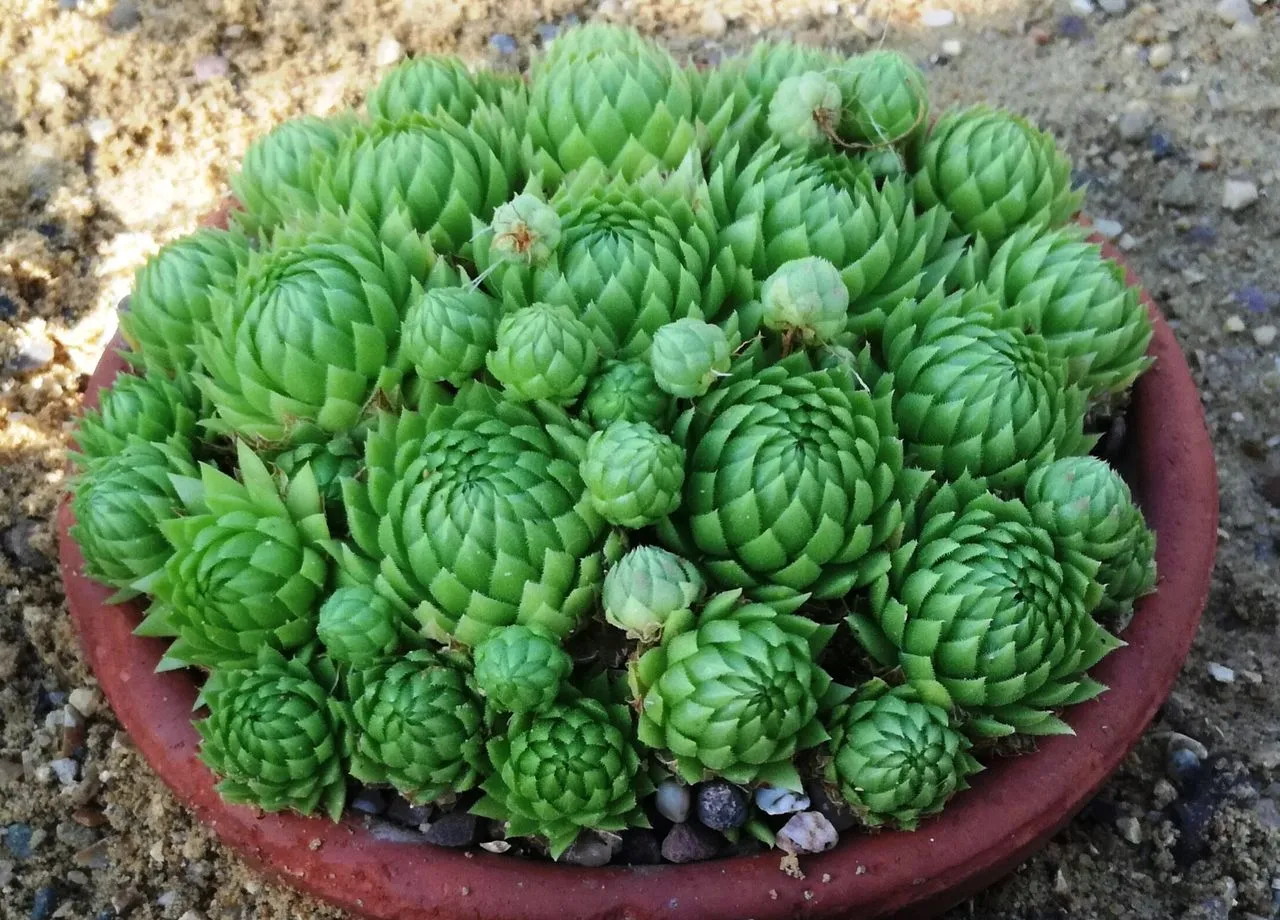
Jovibarba allionii: An Outlier Among the Houseleeks
Profile of Jovibarba allionii from the Alps, the rolling hens-and-chicks segregate from Sempervivum, fully hardy to -25 °C with tube-shaped yellow flowers.
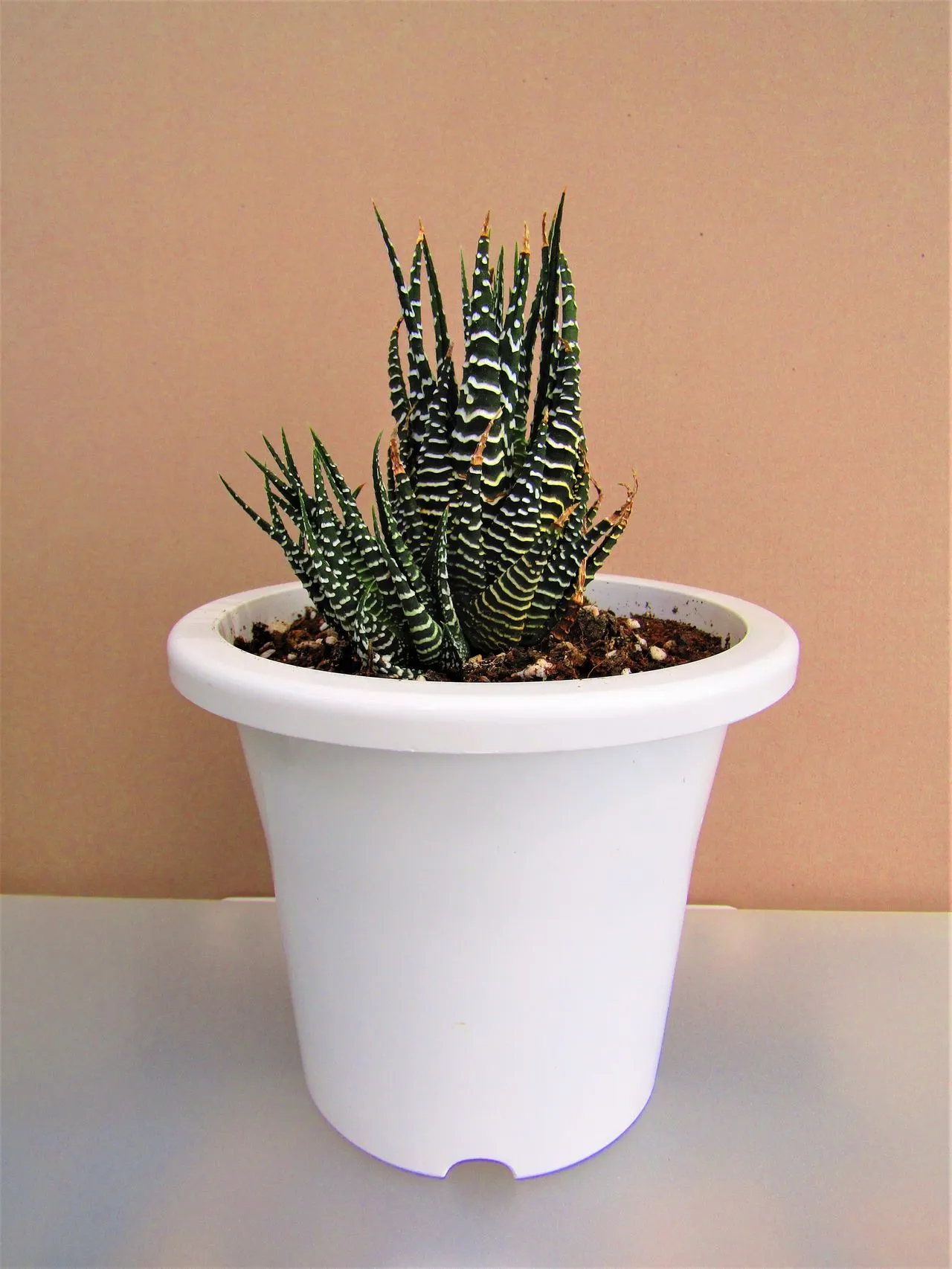
Sempervivum 'Mahogany': Cultivar Profile & Care
Cultivar profile of Sempervivum 'Mahogany', a hybrid houseleek flushing deep brown with red tips in summer, fully frost-hardy and freely offsetting outdoors.
Sempervivum cebenense: The Cévennes Houseleek
Identification and cultivation notes for Sempervivum cebenense Coste, a compact pubescent species endemic to the Cévennes range in southern France.
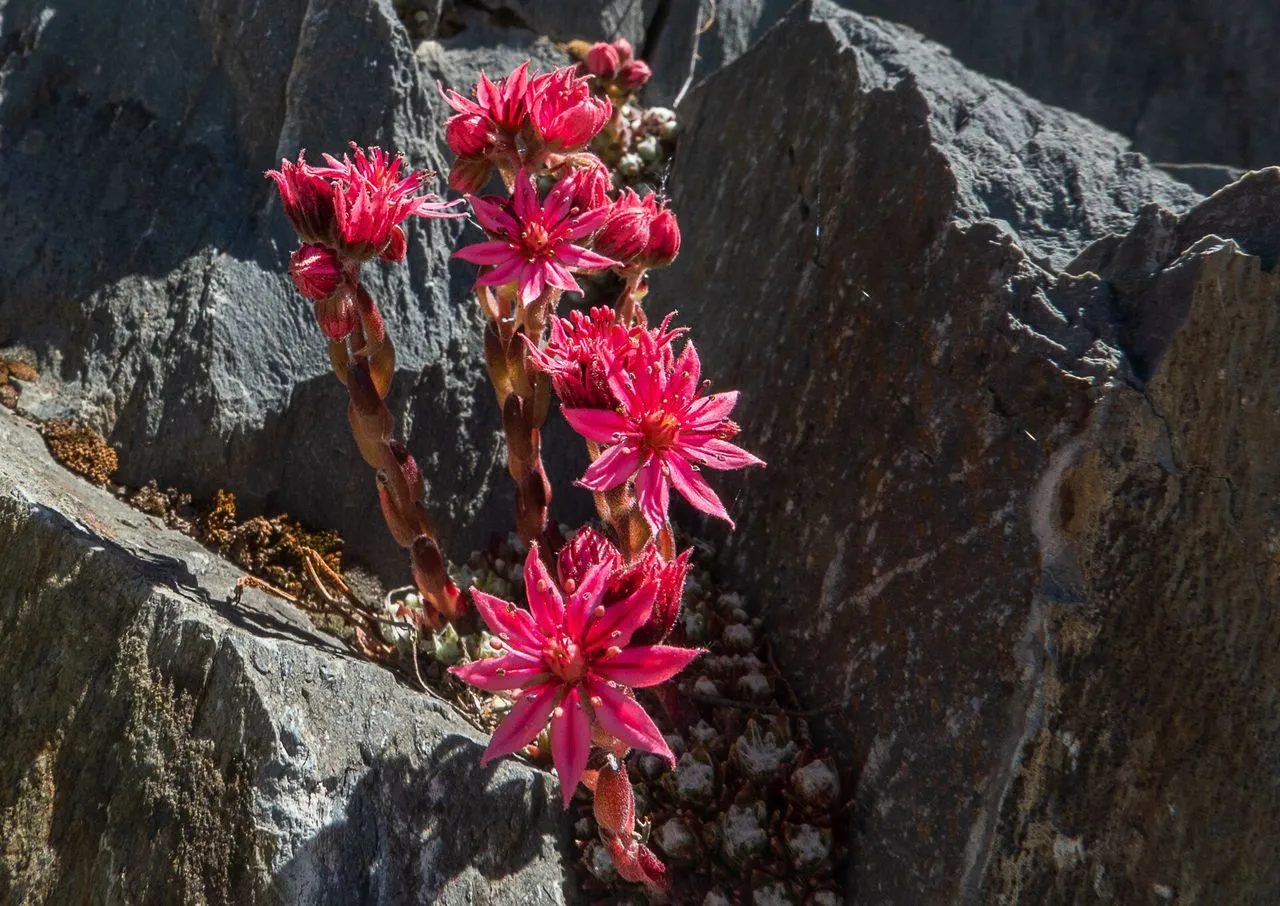
Cobweb Sempervivum: The Arachnoideum Group
An introduction to cobweb sempervivums, the Sempervivum arachnoideum group and its hybrids, characterised by white trichome webbing between leaf tips.
Sempervivum 'Kalinda': The Symmetric Pink-Tipped Houseleek
Identification and cultivation notes for Sempervivum 'Kalinda', a symmetric rosette cultivar with soft pink leaf tips on green leaves.
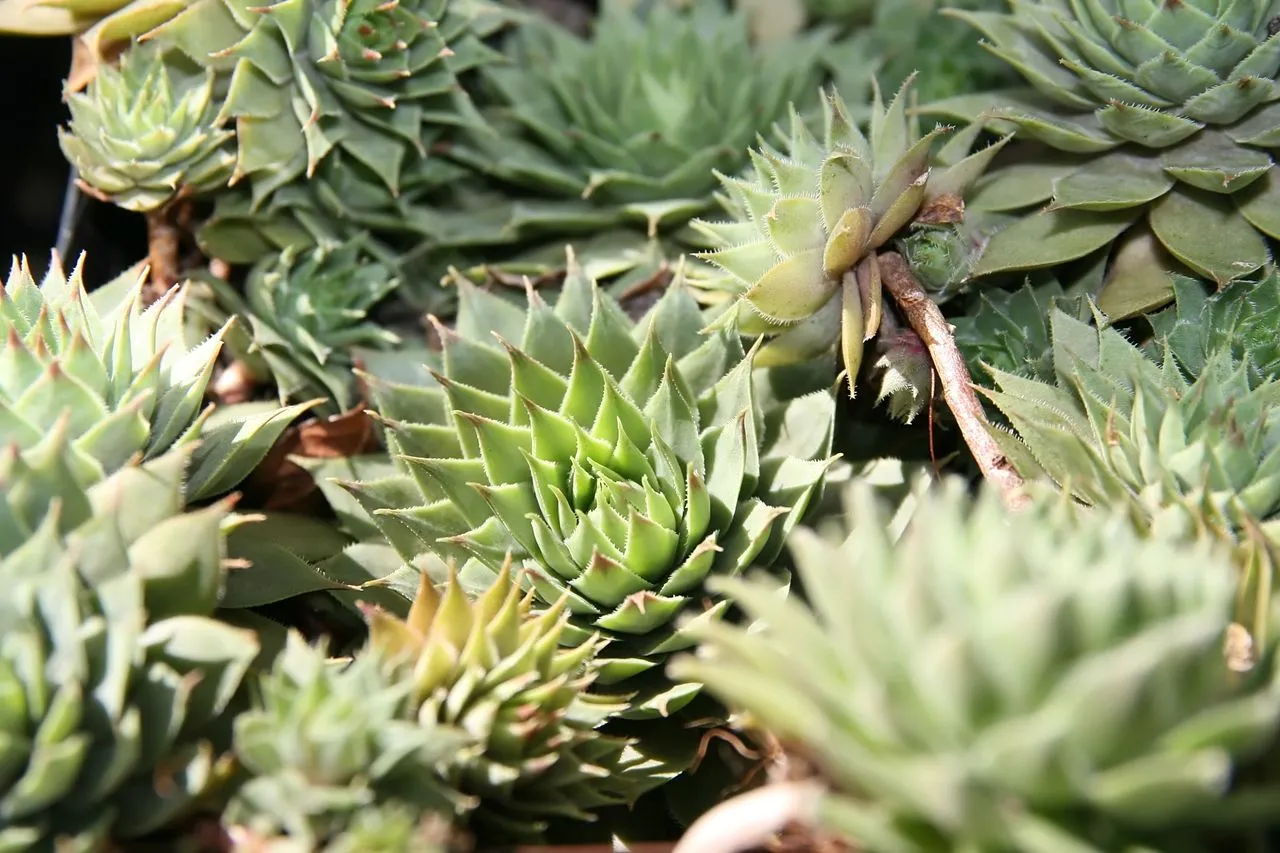
Sempervivum 'Red Beauty': The Crimson Houseleek
Identification and cultivation notes for Sempervivum 'Red Beauty', a vivid red-pigmented cultivar that intensifies in autumn and cold weather.
Sempervivum tectorum: The Common Houseleek
Identification, cultivation, and propagation notes for Sempervivum tectorum L., the type species of the genus and the classic European roof houseleek.
Sempervivum 'Gold Nugget': The Golden-Leaved Houseleek
Identification and cultivation notes for Sempervivum 'Gold Nugget', a yellow-gold pigmented cultivar in the Chick Charms series.
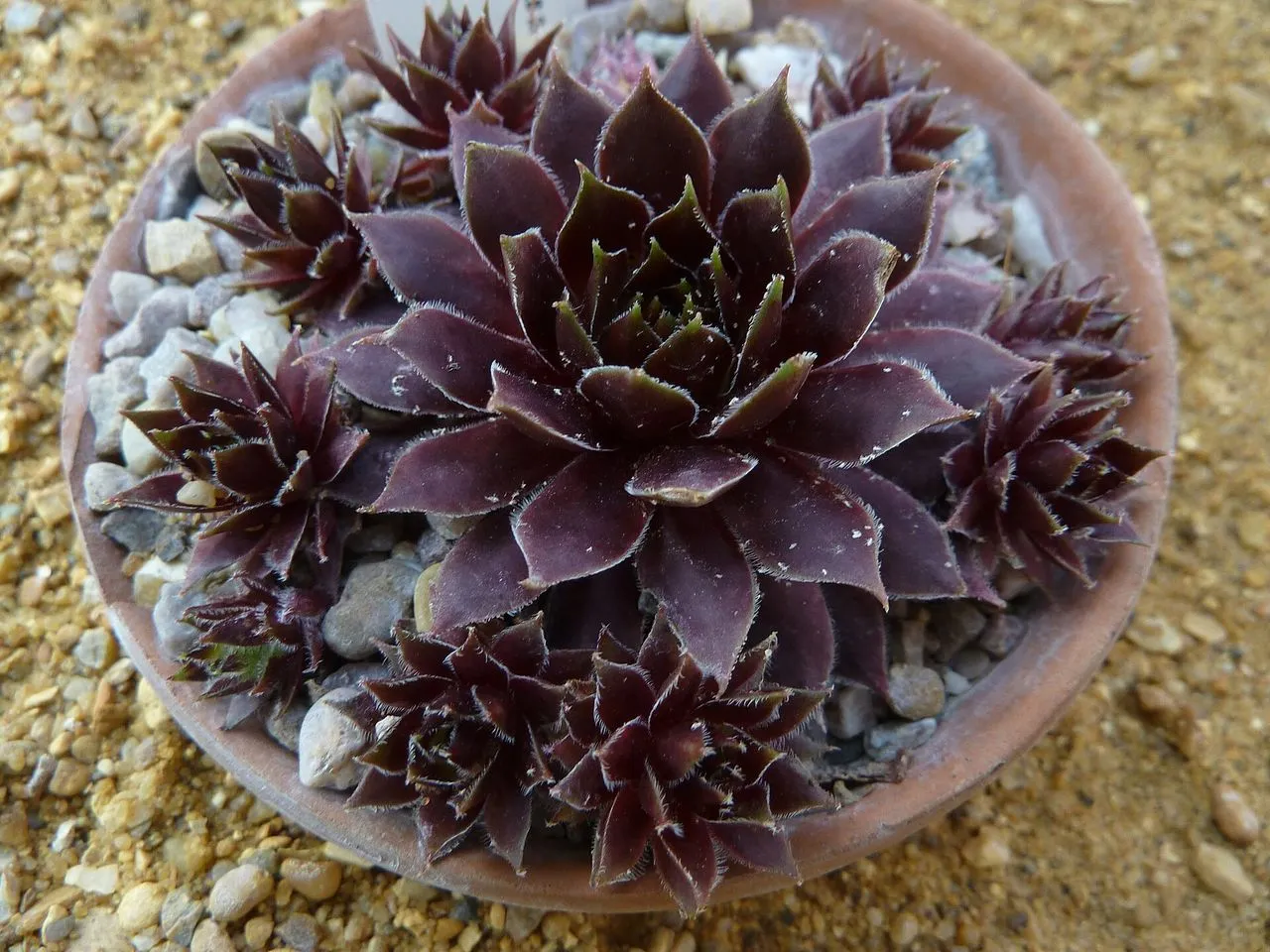
Sempervivum 'Black': Near-Black Pigmented Cultivars
Identification and cultivation notes for the near-black Sempervivum cultivars traded as 'Black', including 'Black Prince', 'Black Mini', and similar…
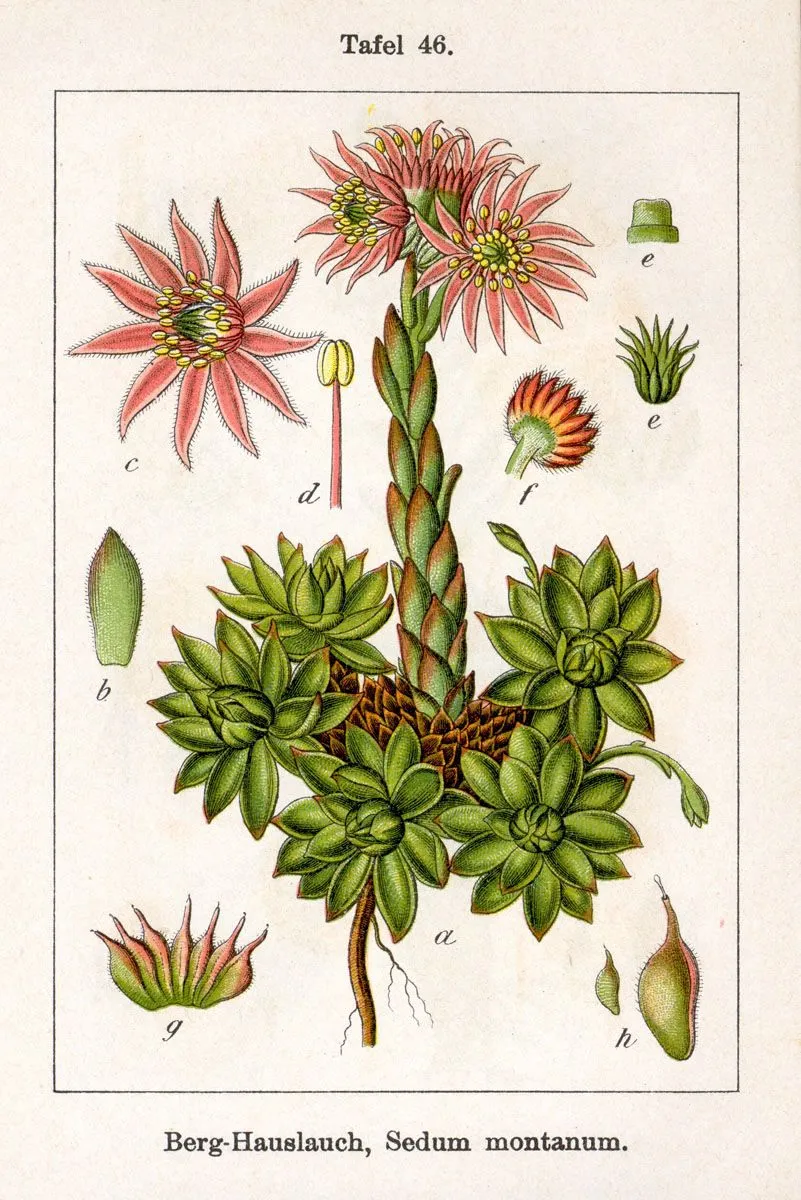
Why Is My Sempervivum Dying? A Diagnostic Guide
A diagnostic workup for a Sempervivum that appears to be dying, covering the three main causes: monocarpic flowering, winter rot, and rust infection.
Sempervivum Chick Charms: The Commercial Cultivar Series
Overview of the Sempervivum Chick Charms series bred by Chris Hansen at Great Garden Plants, its breeding approach, and notable selections.
Sempervivum 'Oddity': The Tubular-Leaved Curiosity
Identification and cultivation notes for Sempervivum 'Oddity', a cultivar with distinctively tubular, inward-curled leaves.
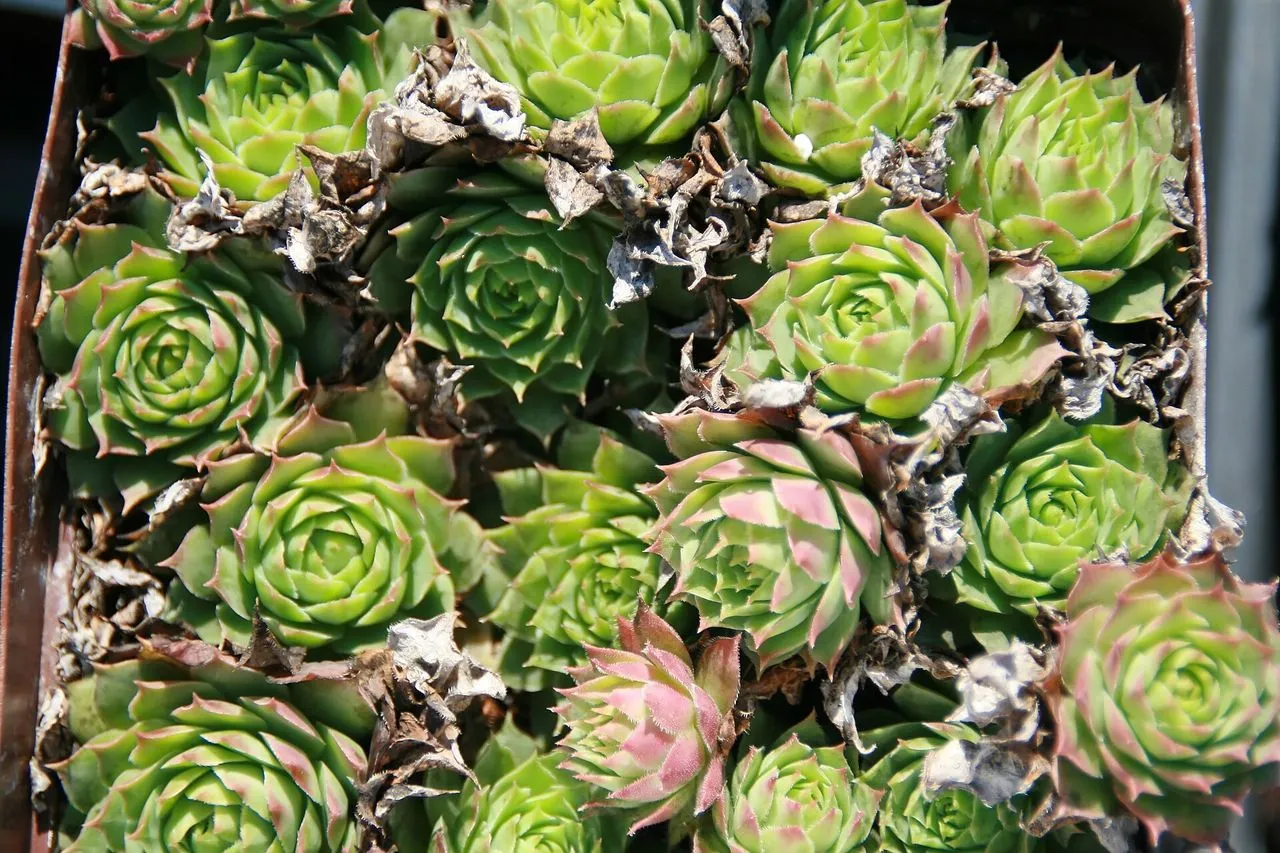
Sempervivum 'Ruby Heart': The Red-Centred Houseleek
Identification and cultivation notes for Sempervivum 'Ruby Heart', a green-and-red two-toned cultivar with an intensely pigmented rosette centre.
Sempervivum 'Pilatus': The Swiss Alpine Selection
Identification and cultivation notes for Sempervivum 'Pilatus', a compact red-tipped alpine cultivar named for Mount Pilatus in the Swiss Alps.
Sempervivum arachnoideum: The Cobweb Houseleek
Identification, cultivation, and propagation notes for Sempervivum arachnoideum L., the alpine cobweb houseleek whose rosettes are webbed with white…
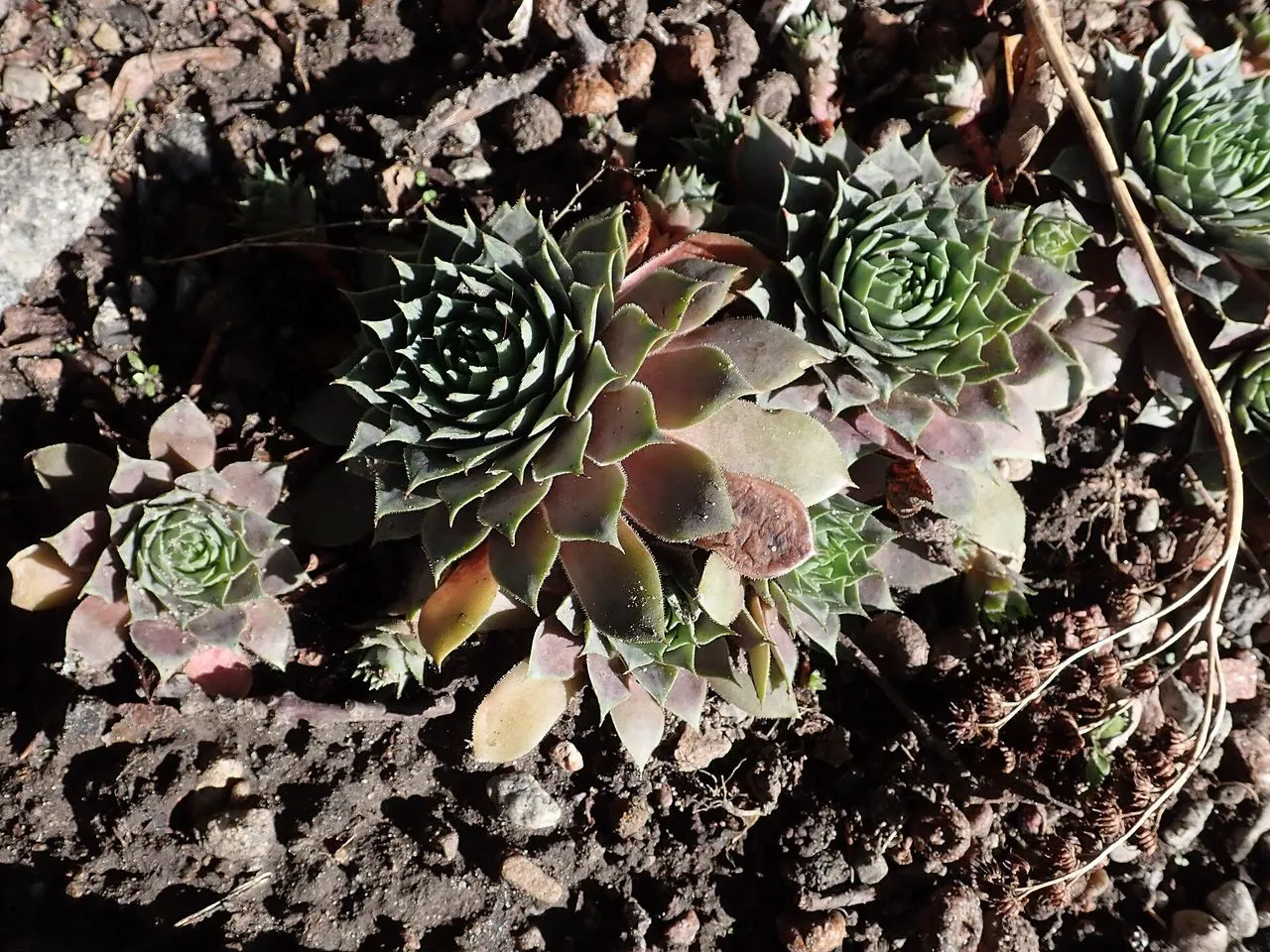
Sempervivum 'Pacific Blue Ice': The Blue-Glaucous Houseleek
Identification and cultivation notes for Sempervivum 'Pacific Blue Ice', a blue-glaucous cultivar from the Pacific Northwest breeding programme, noted…
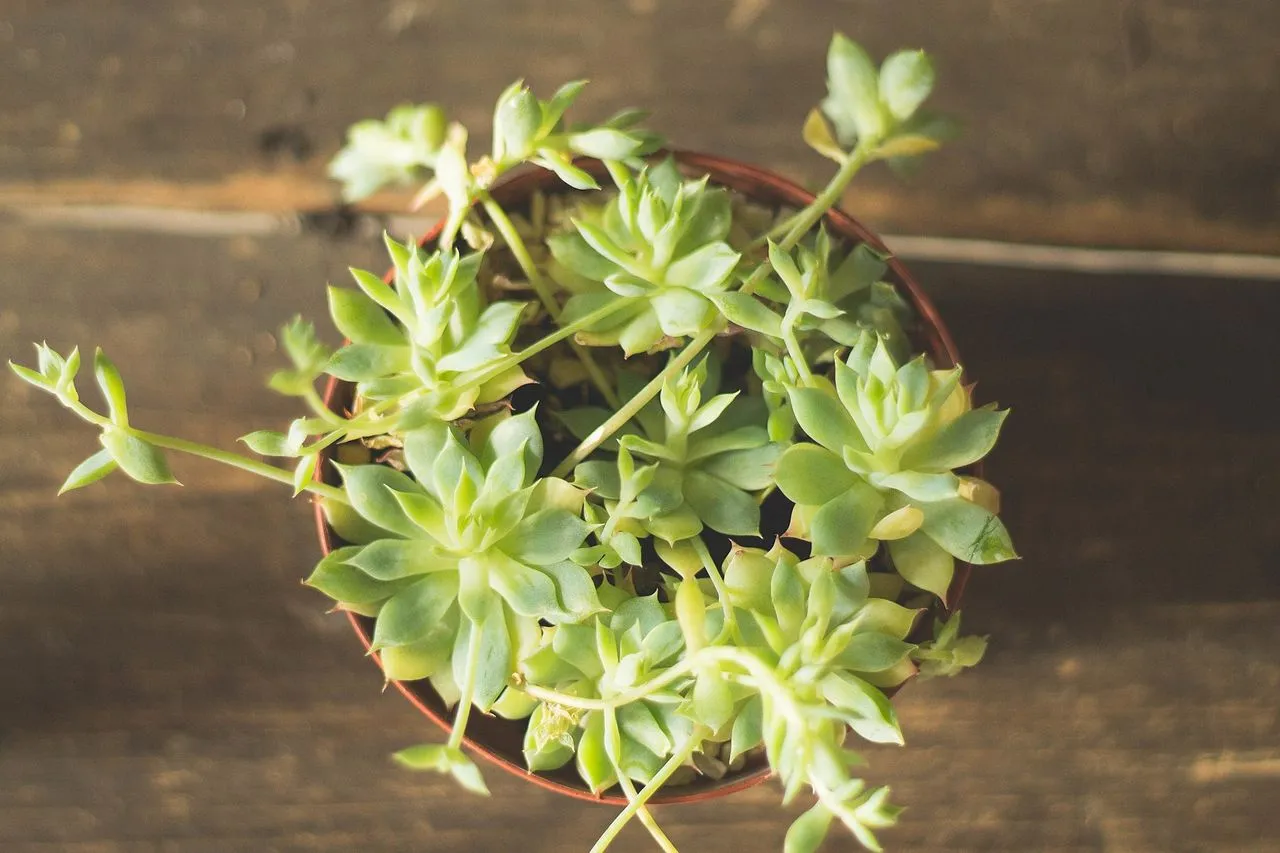
Etiolated Sempervivum: Diagnosing and Fixing Light Starvation
How to diagnose etiolation in Sempervivum, distinguish it from monocarpic flowering, and what to do once the rosette has stretched.
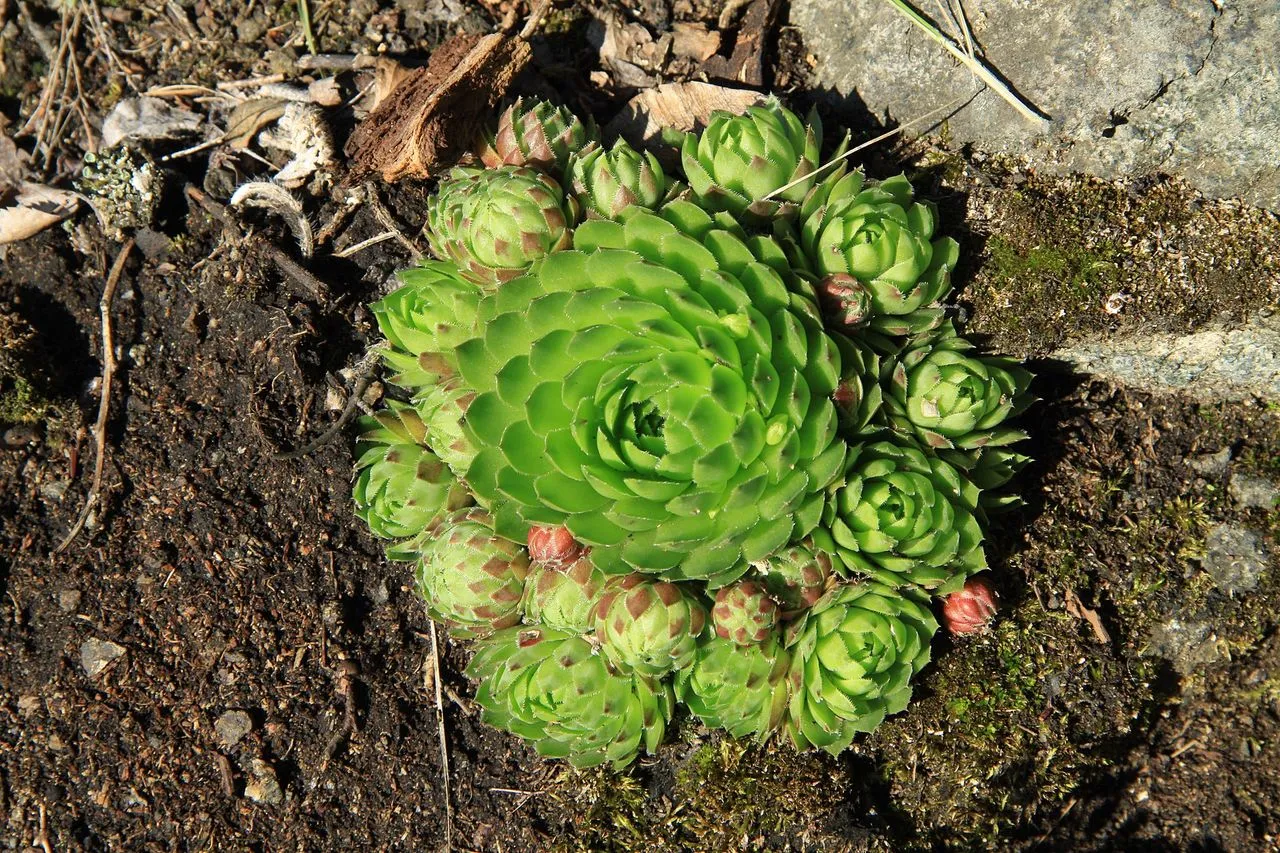
Sempervivum globiferum: The Rolling-Chicks Houseleek
Identification, cultivation, and propagation for Sempervivum globiferum, the species whose chicks detach as free-rolling balls.
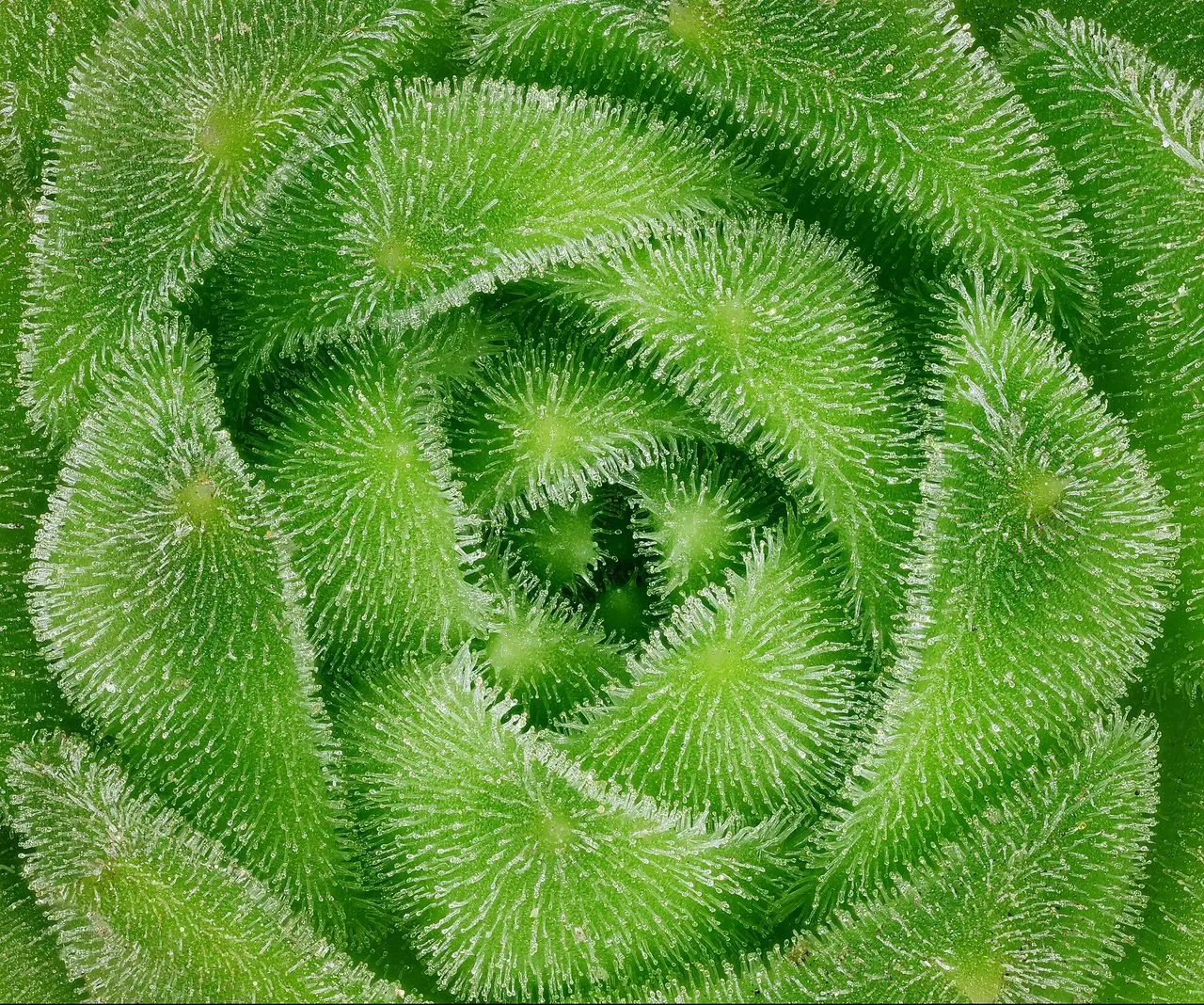
Sempervivum montanum: The Mountain Houseleek
Identification and cultivation notes for Sempervivum montanum L., a compact, intensely cold-hardy European alpine houseleek.
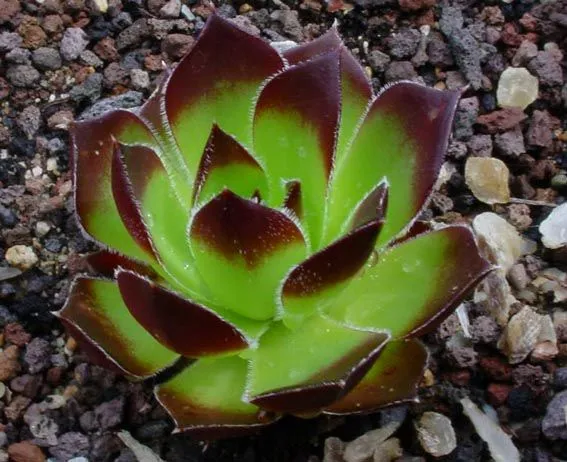
Sempervivum heuffelii: The Crown-Dividing Houseleek
Identification, cultivation, and propagation for Sempervivum heuffelii, the crown-dividing Balkan houseleek with its distinct non-stolon offset habit.