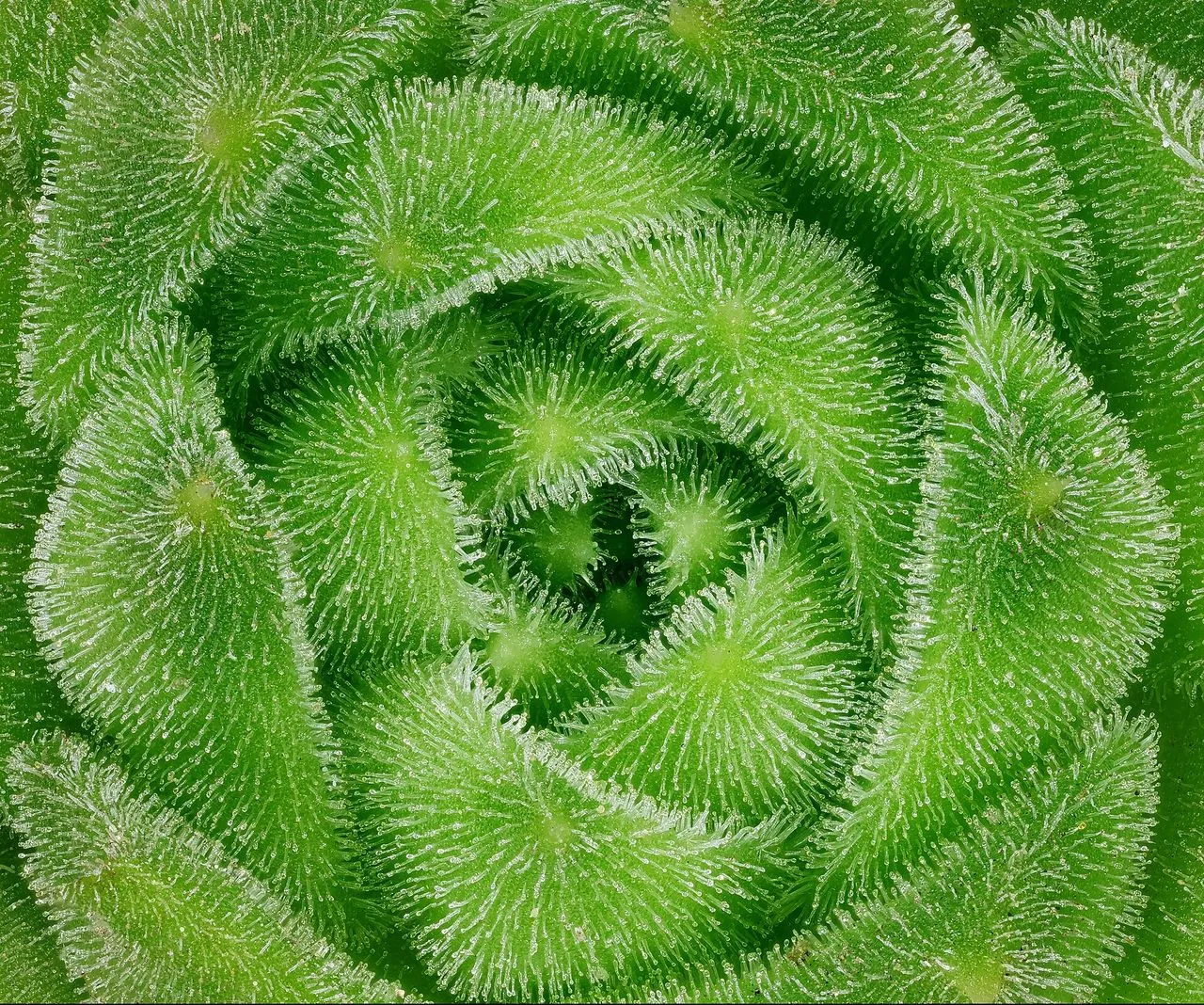
Sempervivum is a genus of roughly 40 accepted species of evergreen leaf-succulent perennials in the family Crassulaceae, native to the mountains of Europe and western Asia. They are the only commonly cultivated succulents that will sit outdoors through a Scottish or Scandinavian winter and re-emerge unharmed in spring. The World Checklist of Vascular Plants maintained by the Royal Botanic Gardens, Kew recognises the genus Sempervivum L., published by Linnaeus in 1753, with the type species S. tectorum. This guide covers what you need to know to identify them, grow them in the outdoor positions they actually want, and multiply them from the offsets they produce almost on autopilot.
I'm Dr. Elena Martín, a Certified Advanced Cactus & Succulent Horticulturist and former curator of the succulent collection at the Jardín Botánico de Córdoba. Most of what follows comes from my own alpine troughs and the collection I managed, and from explaining, repeatedly, that the "hens-and-chicks" your American friend keeps outside in Minnesota is not the same "hens-and-chicks" your nursery sells you in California.
Taxonomy and Natural Range
The name Sempervivum is Latin for "always alive", a reference to the plant's refusal to die in conditions that kill almost anything else. Species diversity is concentrated along the main European mountain arcs: the Alps, the Pyrenees, the Carpathians, the Balkan ranges, the Caucasus, and the higher parts of the Iberian peninsula. A few species extend into Anatolia and northern Iran. In the wild they colonise rock crevices, scree slopes, and shallow soils over bedrock, typically at elevations between 1,000 m and 3,000 m.
Two taxonomic notes matter for anyone buying these plants.
First, Jovibarba is a closely related segregate genus that was historically split from Sempervivum on floral characters (bell-shaped, ciliate-margined, usually 6-merous yellow flowers versus the star-shaped 12-merous pink-to-red flowers of true Sempervivum). Molecular work has since pulled some Jovibarba species back into Sempervivum. Kew's current treatment places S. globiferum (formerly Jovibarba globifera) inside Sempervivum, while S. heuffelii remains taxonomically contested and is still traded under both names. For the grower the practical consequence is that plants labelled "Jovibarba" are functionally sempervivums with slightly different flower structure and, in the case of S. heuffelii, a different propagation habit.
Second, the common name "hens-and-chicks" is used in North American horticulture for both Sempervivum and Echeveria. These are not close relatives. Echeveria is a New World genus from Mexico that will not survive hard frost. Sempervivum is a European alpine genus that thrives in freezing conditions. If you are buying unlabelled plants, assume nothing from the common name. The complete Echeveria guide covers the other half of this confusion.
Identification and Morphology
All Sempervivum share a dense, symmetrically flat rosette of fleshy, sessile leaves arising from a short unbranched stem, with clonal offsets produced on short above-ground stolons around the base. Diagnostic characters:
- Rosettes. Flatter and more geometrically regular than Echeveria. Phyllotaxy is spirodistichous: leaves are arranged in two interlocking spirals, giving the species its characteristic pressed-flower symmetry when viewed from above. Diameter ranges from under 1 cm (S. arachnoideum var. minus) to about 15 cm (S. tectorum).
- Leaves. Obovate to lanceolate, often pointed, 1–5 cm long, usually with a ciliate (hair-fringed) margin. Surface can be smooth, pruinose, or covered in white cobweb-like trichomes (S. arachnoideum). Leaf tips in many cultivars are pigmented red, purple, bronze, or near-black through anthocyanin accumulation, intensifying with cold and UV stress.
- Inflorescence. A stout terminal scape 10–40 cm tall, bearing a flat-topped cyme of star-shaped, 10–16-petalled (usually 12) flowers, typically pink, red, or yellow. This is the key floral distinction from Echeveria, whose flowers are urn-shaped with 5 petals. If you are holding an open flower and counting petals, 12 means Sempervivum, 5 means Echeveria.
- Offsets. Produced on short horizontal stolons, giving the "hen with chicks" appearance from which the English name derives. A mature plant in good conditions produces 5–20 offsets per season.
- Monocarpy. Every flowering rosette dies after it sets seed. This is a defining genus-level trait and is covered in its own section below.
For specific species identification see the cultivar pages linked later in this guide.
Cultivation
Light
Sempervivum need full, direct sun. A minimum of 6 hours of unfiltered sunlight is the threshold below which rosettes lose colour and compactness. Plants grown in partial shade revert to pure green, rosettes flatten and loosen, and the ornamental value disappears. This is not a houseplant genus. A plant kept indoors year-round will survive for a while but will never look like the catalogue photograph, because anthocyanin-driven colour is a UV-stress response and modern window glass filters most of the useful wavelengths.
Outdoor plants in summer will sometimes "close up" into tight red or purple rosettes. That is not stress damage, it is the plant at its ornamental peak. For the tight blackened form you see in specialist photos, see Sempervivum 'Black'.
Substrate
Use more grit than you would for any other succulent genus. My standard alpine mix is 60% pumice or horticultural grit (3–6 mm), 20% coarse sand, and 20% loam-based compost (John Innes No. 2 or equivalent). The finished substrate should look and feel like a gritty scree, not a potting mix. The aim is a medium that drains within seconds of watering and never stays saturated at the roots, because the combination that kills Sempervivum is cold wet roots in winter, not cold alone.
pH preference is slightly acidic to neutral (pH 6.0–7.0), with the exception of S. calcareum and close relatives, which come from limestone substrates and tolerate alkaline conditions up to pH 8. Hard tap water is acceptable for this genus. Top-dressing with 1–2 cm of coarse grit around the collar of each rosette keeps moisture away from the leaves and suppresses liverworts.
Water
Drought tolerance in this genus is exceptional. Plants in the ground in temperate climates rarely need supplementary watering. Container plants do, but infrequently: when the top 3–4 cm of substrate reads dry on a moisture probe, water thoroughly, then leave them alone until the substrate is dry again. In active spring and autumn growth that might be once every 7–10 days. In summer semi-dormancy and in winter, water minimally or not at all.
The failure mode to watch for is winter wet. A plant that is happy at −20 °C in dry snow will rot at +2 °C in wet compost. If you are growing them in containers in a mild maritime winter, move the pots under an unheated glass cover to keep the crowns dry. The plants do not need the warmth; they need the roof.
Temperature
This is the genus's defining cultivation advantage. Most species are hardy to USDA zone 4 (−30 °C minimum), and several (S. montanum, S. wulfenii) are reliable into zone 3 (−35 °C). There is no "tender" Sempervivum in general cultivation. Summer heat above 30 °C is tolerated but triggers a protective rosette closure and growth pause, which is normal and not a sign of distress.
Humidity
Ambient humidity is effectively irrelevant outdoors where these plants belong. Indoor cultivation, which I do not recommend, is limited more by light than by humidity.
Placement
The use case that plays to this genus's strengths is outdoor, at eye level, on poor substrate. Rock gardens, alpine troughs, green roofs, stone walls, and cracks in paving are all appropriate. S. tectorum takes its epithet from the medieval tradition of planting houseleeks on thatched and tiled roofs, both as a fire-prevention charm and as self-maintaining green coping. A shallow stone trough of 5–10 cm of alpine mix on a sunny patio, planted with mixed cultivars and top-dressed with grit, will thrive for 15 years with no intervention beyond removing dead rosettes.
Propagation
Offsets (chicks)
The primary and overwhelmingly easiest method. A mature rosette ("hen") produces 5–20 offsets ("chicks") per growing season on short stolons that lift the chick a few centimetres above the substrate. Once a chick has produced its own roots, which typically takes 4–8 weeks after it first appears, sever the stolon with sharp sterile scissors and either leave the chick in place or lift and replant it. No callusing period is needed because the stolon connection is structurally designed to detach. Establishment takes 2–3 weeks.
A single healthy mother rosette will saturate a 20 cm pot with chicks in one season. Divide aggressively; it is how the genus wants to be grown.
Seed
Possible but of interest mainly to hybridisers. Seed is minute and requires surface sowing on moist grit. Germination takes 2–4 weeks at 15–20 °C. Seedlings take 3–4 years to reach flowering size, and because most named cultivars are hybrids, seed-grown progeny will not come true to type.
Leaf propagation
Unlike Echeveria, Sempervivum leaves do not reliably produce plantlets when detached. The occasional leaf will callus and form a tiny rosette over several months, but the success rate is under 10% in my experience. Do not rely on this method. If you want more plants, use offsets.
S. heuffelii exception
Uniquely in the genus, S. heuffelii does not produce offsets on stolons. Instead the rosette slowly divides at the crown, and propagation is by careful splitting of the whole plant with a sharp blade, each division taking a portion of the root stock. See Sempervivum heuffelii for the specific technique and the taxonomic history behind it.
Monocarpy and the Flowering Rosette
Every Sempervivum rosette that flowers dies afterwards. This is the single most misunderstood characteristic of the genus. New growers watching a three-year-old mother rosette elongate vertically, produce a dramatic flower stalk, bloom, and then collapse into a brown husk reliably assume something has gone wrong. Nothing has gone wrong. The plant has completed its life cycle.
The mechanism is straightforward. A rosette that has accumulated enough reserves enters reproductive mode: the apical meristem, which had been producing leaves, switches to producing a scape. The rosette stretches upward, the central leaves become smaller and more bract-like, and after several weeks of growth the plant flowers for 2–4 weeks. Seed matures over the following 4–6 weeks. The individual rosette has by this point committed all its stored energy to reproduction and cannot revert to vegetative growth. It senesces and dies.
The plant as a clonal colony, however, does not die. By the time the mother flowers, she has typically produced dozens of offsets over the preceding years, each of which is genetically identical and carries the colony forward. The correct response to a flowering rosette is either to let it bloom for its ornamental and pollinator value, then remove the dead rosette and let the surrounding chicks fill the gap, or to cut the scape off at the base as soon as it appears, which sometimes (but not reliably) allows the rosette to revert to vegetative growth for one more season.
A common misdiagnosis is to see a stretching rosette and assume etiolation. Flowering stretch is irreversible; etiolation stretch is reversible. The distinguishing sign is reduced bract-like leaves up the central stem, which indicates flowering, versus full-sized leaves at lengthened internodes, which indicates etiolation. See etiolated Sempervivum for the symptomatic workup, and why Sempervivum die for the full post-flowering picture.
Common Problems
| Symptom | Likely cause | Fix |
|---|---|---|
| Orange-brown pustules on leaves | Rust (Endophyllum sempervivi) | Remove and destroy affected rosettes; do not compost; improve airflow |
| Mother rosette stretches and collapses | Monocarpic flowering (end of life) | No action needed; offsets continue the colony |
| Rosette elongates with full-sized leaves | Etiolation (insufficient light) | Move to full sun; no recovery on stretched tissue |
| White cottony tufts in leaf axils | Mealybug | Cotton swab in 70% isopropyl alcohol; inspect weekly |
| Papery skins around roots when unpotted | Root mealybug | Bare-root, wash, repot in fresh dry substrate |
| Distorted new growth, sticky residue | Aphid (on flower scapes especially) | Rinse off with water; insecticidal soap if persistent |
| Rosette soft, black at centre, collapsing | Rot from winter wet | Unrecoverable; remove, save clean offsets, improve drainage |
| Foliage green and loose, no red pigment | Too much shade / too much water | Full sun; drier substrate |
| Leaves shrivel, thin, rosette flattens | Severe drought (rare) | Water thoroughly once; plant will rehydrate within 48 hours |
Rust in particular is worth flagging. Endophyllum sempervivi is a species-specific rust fungus that overwinters in the rosette itself and is not eradicated by fungicide; affected plants must be destroyed. Do not accept rust-bearing plants from any nursery.
Notable Species and Cultivars
The genus contains too many cultivars to cover in one guide; there are over 7,000 registered. These are the ones most worth knowing. Follow the links for full cultivation profiles.
- Sempervivum tectorum — the common houseleek; the type species of the genus; the one historically planted on European roofs.
- Sempervivum arachnoideum — the cobweb houseleek, with white trichome webbing between leaf tips; alpine native.
- Cobweb Sempervivum — an introduction to the S. arachnoideum group and the hybrids derived from it.
- Sempervivum montanum — mountain houseleek; a compact, very cold-hardy alpine species.
- Sempervivum heuffelii — winter-resting, crown-dividing, and taxonomically distinct from the rest of the genus.
- Sempervivum globiferum — formerly Jovibarba globifera; chicks detach as free-rolling balls rather than on stolons.
- Sempervivum cebenense — compact pubescent species endemic to the Cévennes range in southern France.
- Sempervivum 'Black' — one of the darkest near-black-pigmented cultivars.
- Sempervivum 'Ruby Heart' — red-centred rosettes with green outer leaves.
- Sempervivum 'Pacific Blue Ice' — blue-glaucous selection from the Pacific Northwest breeding programme.
- Sempervivum 'Red Beauty' — intensely red-pigmented cultivar, particularly vivid in autumn.
- Sempervivum 'Gold Nugget' — gold-yellow pigmented cultivar in the Chick Charms series, unusual in a genus dominated by reds and purples.
- Sempervivum 'Kalinda' — symmetric rosette cultivar with soft pink leaf tips on green leaves.
- Sempervivum 'Oddity' — distinctive tubular, inward-curled leaves; a useful demonstration of how far cultivar selection has pushed leaf morphology.
- Sempervivum 'Pilatus' — compact red-tipped alpine cultivar named for Mount Pilatus in the Swiss Alps.
- Sempervivum Chick Charms — a commercial cultivar series from Chris Hansen; reliably colourful and widely available.
Where to buy healthy plants
In Europe, the British Cactus & Succulent Society's affiliated growers and the specialist nurseries registered with the Alpine Garden Society are reliable sources. In North America, the Sempervivum Fanciers Association maintains a directory. A healthy plant arrives with firm pale roots, a tight symmetric rosette, no rust pustules, and no excessive brown leaves at the base. Supermarket plants are often fine genetically but have typically been grown soft under polytunnel conditions and need 2–3 weeks of hardening off before full sun.
If you are new to the genus, buy S. tectorum or any named S. arachnoideum hybrid first. Plant it outdoors in a gritty position, leave it alone, and watch what a colony of these plants actually does over three years. Everything else you want to grow in the genus will behave similarly.
If you are arriving at succulents for the first time, the beginner's guide to succulents covers the cross-genus basics — light, water, substrate, and the common early mistakes — and is the right starting point before any single-genus deep dive.
The one thing sempervivums cannot forgive: wet feet
Almost every failed sempervivum dies from moisture, not cold. These alpine rosettes tolerate deep frost when dry but rot quickly in water-holding compost. Plant them in a gritty succulent soil mix — or cut regular potting soil with at least half mineral grit — and choose containers that dry out fast, such as unglazed terracotta pots with drainage holes. Outdoors, a slope, crevice, or raised trough beats flat ground.
Propagation quick-start: from one hen to a colony
Each mother rosette (the hen) produces offsets (chicks) on short stolons. Once a chick is roughly a third of the hen’s size, snip the stolon, let the cut end dry for a day, and press it into gritty substrate. Offsets root within a few weeks in the growing season and are genetically identical to the parent, so favourite colours stay true. Remember that each rosette is monocarpic: it flowers once and dies, but the surrounding chicks fill the gap.
As an Amazon Associate, we earn from qualifying purchases, at no extra cost to you.
The soil test that matters for hens and chicks
Sempervivum roots resent wet compost more than cold weather. Water a test pot, wait five minutes, then tilt it. If water still sits in the mix or the surface stays muddy, add more mineral grit. For small collections, a ready gritty mix such as Bonsai Jack Succulent and Cactus Soil Gritty Mix can work well in troughs and shallow pots. In big outdoor beds, it is usually cheaper to build a similar texture with pumice, grit, and a small amount of compost.
As an Amazon Associate, we earn from qualifying purchases, at no extra cost to you.
Quick answer: how to grow Sempervivum
Sempervivum need outdoor light, gritty soil, and weather. They are cold-hardy succulents, not houseplants that want warm shade all year. Give them a shallow pot or rock-garden pocket, keep the crown above wet soil, and let the mix dry between watering.
What soil does Sempervivum need?
Use a gritty mix that drains fast and does not collapse into mud after a few waterings. A good Sempervivum mix should leave air around the roots and dry near the crown quickly after rain. Regular peat-heavy potting soil is where many rot problems start.
For containers, a ready gritty mix such as Bonsai Jack Succulent and Cactus Soil Gritty Mix can work well when the pot has drainage holes and the plant is grown outdoors in strong light. As an Amazon Associate, we earn from qualifying purchases, at no extra cost to you.
FAQ
Can Sempervivum grow indoors?
Usually not for long. They may sit indoors for a season, but warm rooms and weak light lead to stretching, fading, and crown problems.
Why are my hens-and-chicks rotting?
Rot usually comes from wet crowns, heavy soil, poor drainage, or too little airflow. Lift the rosette slightly above the soil line and switch to a grittier mix.
Quick answer: how do you keep Sempervivum healthy?
Give Sempervivum strong sun, sharp drainage, and lean soil. Water deeply only when the soil has dried, keep water from sitting in the rosettes, and avoid rich indoor potting mix. Outdoors, most losses come from winter wetness rather than cold itself.
Drainage is the winter protection
As an Amazon Associate, we earn from qualifying purchases, at no extra cost to you. Sempervivum can handle cold far better than soggy roots. If yours grow in pots, use a gritty outdoor succulent soil mix, raise containers off wet ground, and make sure meltwater can leave fast.
FAQ: can Sempervivum grow indoors?
It can survive indoors for a while, but it usually stretches without strong light and a cool rest. A bright outdoor spot with fast drainage is much better for long-term shape and color.
The pot setup that prevents most Sempervivum problems
Most Sempervivum failures start with the container, not the plant. Use a shallow pot with drainage holes, fill it with a gritty mix, and keep the crown above the soil line. A wide pot is better than a deep one because the roots stay aerated and offsets have room to spread.
- Use outdoor sun, but move pale or newly bought plants into stronger light gradually.
- Skip heavy indoor potting soil. It stays wet around the crown for too long.
- In winter, protect from trapped rain more than from cold.
As an Amazon Associate, we earn from qualifying purchases, at no extra cost to you. For repotting, compare gritty cactus and succulent soil mixes here: helpful product options on Amazon