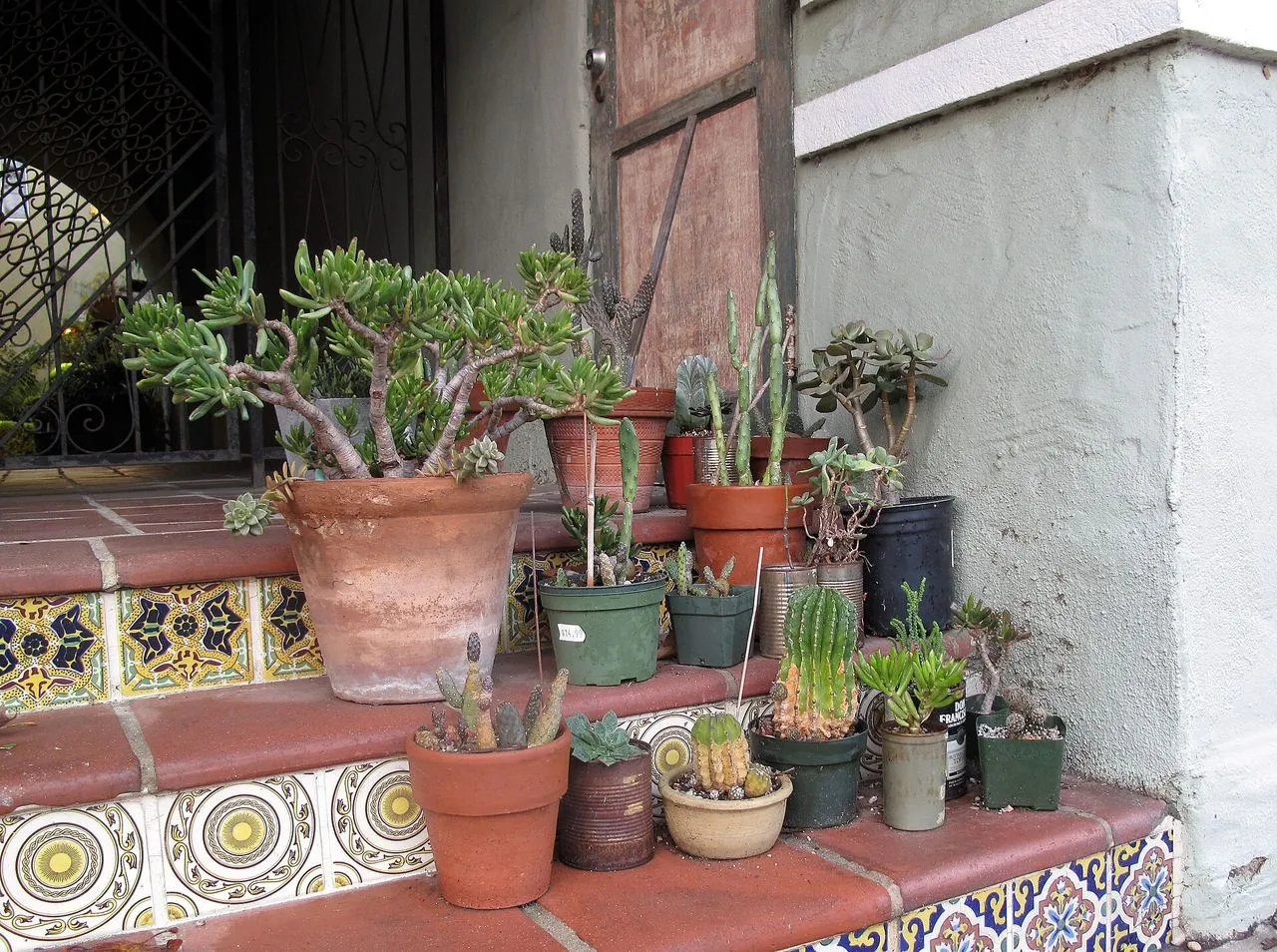
If you have just brought home your first succulent, or you are standing in a garden centre trying to decide whether to, this is the guide for you. The goal here is narrow and practical: to tell you what a succulent actually is, which kinds you are most likely to end up with, what you must get right for them to thrive, and where new owners tend to go wrong. Every section links to a deeper guide you can follow once you have the basics in place.
Quick Answer
- Succulents need five things: maximum light (bright indirect or direct), infrequent watering (when soil is fully dry), fast-draining soil, drainage holes in pots, and warm temperatures above freezing.
- The five common beginner mistakes: overwatering (the #1 killer), too little light, wrong soil, pots without drainage, and ignoring pests.
- Choose echeverias or sempervivums for your first succulent - they are the most forgiving and widely available.
I'm Dr. Elena Martín, a Certified Advanced Cactus & Succulent Horticulturist and a former curator of the succulent collection at the Jardín Botánico de Córdoba. Most of what follows comes directly from watching what works and what fails in home cultivation, across Mediterranean and temperate conditions, over about a decade. Succulents are genuinely forgiving plants, but "forgiving" is not the same as "indestructible". A little structure at the start saves a lot of guesswork later.
What "Succulent" Actually Means
"Succulent" is a horticultural category, not a scientific one. It describes any plant that has independently evolved to store water in thickened tissue, usually in the leaves, sometimes in the stem, occasionally in the roots. The word comes from the Latin succus, meaning juice or sap. That is the whole of the definition. It says nothing about where the plant sits in the tree of life.
This matters because succulence has evolved separately in many unrelated plant families. At Prickly Petals the genera we cover sit across four of them:
- Crassulaceae is the stonecrop family, and most of what people think of as "a succulent" lives here. This family contains Echeveria (rosette-forming Mexican perennials), Crassula (including the jade plant, Crassula ovata), Sedum (stonecrops and ground-covering types), Sempervivum (the hardy European houseleeks), and Kalanchoe. These are the ones you most often meet.
- Asphodelaceae is where Aloe and Haworthia live. These are not close relatives of the Crassulaceae rosettes, despite looking a bit similar. They are monocots, which you can see in their parallel-veined leaves.
- Asparagaceae, subfamily Agavoideae, contains Agave. Large, architectural, sometimes dangerous, and mostly for outdoors.
- Asteraceae is the daisy family, and yes, a handful of its genera are succulent. Senecio and the related Curio sit here; Senecio rowleyanus, the string of pearls, is the best-known example.
Cacti, by the way, are succulents. The family Cactaceae is just one succulent family among many. The defining feature of a cactus is the areole, a small cushion-like structure from which spines and flowers emerge. No areoles, not a cactus. An Euphorbia with spiny stems is a succulent, but it is not a cactus; it is a euphorbia, and its sap is a skin irritant.
The practical takeaway is that "succulent care" as a single topic is a useful starting point, but the further you go the more the answer becomes "it depends on the genus". This guide will give you the overlap, and the linked guides will give you the specifics.
The Genera You Are Most Likely to Meet First
These are the five or six names that account for perhaps 90% of what a new owner ends up buying. Each one has its own complete guide.
Echeveria are the tidy Mexican rosettes in pastel blues, greens and purples that dominate wedding-display plant shelves. They are forgiving but not indestructible, and in dim light they stretch and lose their shape within weeks.
Crassula includes the classic jade plant (Crassula ovata), the species most likely to be your grandmother's houseplant. Woodier and slower-growing than most of the others, and long-lived once established.
Sedum are a large and diverse genus of stonecrops. Trailing species like Sedum morganianum (burro's tail) are popular for hanging baskets; ground-covering species are workhorses in outdoor rockeries.
Sempervivum are the European houseleeks, sometimes called hens-and-chicks. These are the hardy ones. If you have a cold balcony and you want something that lives through winter outside, start here.
Kalanchoe are often sold in bloom at supermarkets, with dense clusters of small red or yellow flowers. The widespread florist kalanchoe is Kalanchoe blossfeldiana; the large paddle-leaved K. luciae is also increasingly common.
Slightly further out, you will also meet Aloe (the medicinal Aloe vera plus hundreds of ornamental species), Haworthia (small rosetted monocots that tolerate indoor light better than almost anything else here), Agave (architectural, mostly outdoor, slow), and the succulent Senecio species. Each of those genera is covered in its own guide.
The Five Things You Need to Get Right
If you only remember five things from this guide, make it these.
1. Light
Succulents want bright light, and most want direct sun for at least part of the day. In a home setting the rule of thumb is simple: the brightest window you have, usually south-facing in the northern hemisphere. Haworthias and a handful of others tolerate less, but for the common rosettes and jade-type plants, bright direct light is not optional.
The mechanism matters. A succulent in insufficient light cannot photosynthesise enough to support compact growth, so it responds by stretching towards the light source. Internodes (the gaps between leaves along a stem) lengthen, new leaves come in smaller, and the rosette loses symmetry. This is called etiolation, and it is not a cosmetic problem; it is the plant telling you it is in metabolic deficit. Once a stem has etiolated, that section never reverts. You can only behead and start over.
2. Water
Succulents hold water in their leaves so they can survive long dry periods. They do not tolerate sitting in damp soil. The correct watering pattern is a wet-dry cycle: water thoroughly, until water runs out of the drainage holes, then do not water again until the substrate has dried out completely. In indoor winter conditions that can mean once every three to four weeks. In active summer growth outdoors, once a week.
Do not water on a calendar. Learn to feel (or measure) the substrate moisture instead. A cheap moisture meter gives you a direct reading; a wooden skewer pushed to the bottom of the pot, left a moment, and then checked for damp soil clinging to it, works just as well. The top of the pot is not representative; the bottom is.
Most of the common species take a winter rest and need very little water in the coldest months. Kalanchoes and some aloes are partial exceptions. Check the genus guide.
3. Substrate
Free-draining, mostly mineral. The purpose of the substrate is to hold water for roughly 24 to 48 hours and then dry completely. A peat-heavy general-purpose potting mix stays wet far too long and is the single biggest killer of container succulents.
My default mix is around 50% pumice or perlite, 30% coarse horticultural grit (3 to 5 mm), and 20% a peat-free loam-based compost such as John Innes No. 2. Pre-packaged "cactus and succulent" mixes from general garden centres are usually better than standard potting soil but still benefit from at least 50% additional mineral grit. See the full soil guide for a breakdown of components and pH.
4. Container
Use a pot with a drainage hole. This is the single non-negotiable rule of container succulent growing. A pot without drainage is a bath. The plant sits in standing water at the bottom of the pot, roots rot anaerobically, and the plant is dead before you notice anything wrong with the top.
Between materials, terracotta and unglazed ceramic breathe through their walls and help the substrate dry. Glazed ceramic and plastic do not; they are fine, but you water less often. Size matters too: a pot only slightly larger than the root ball is ideal. An oversized pot holds a volume of wet substrate the roots cannot reach, which extends drying time and increases rot risk.
Decorative "cover pots" with no drainage are fine as outer sleeves if you remove the inner nursery pot to water, drain it fully, and then return it. They are not fine as the only container.
5. Time
Succulents grow slowly. That is the whole evolutionary point of being succulent: a plant that stores water and takes its time can survive in places faster-growing plants cannot. Your echeveria is not going to double in size this summer. Your jade plant might put on 2 to 4 cm of new growth in a good year.
This has two consequences for a beginner. First, repotting is not a monthly task; most of these plants are happy in the same pot for two to four years. Second, if a plant looks unchanged for a month, that is not a problem. Succulents measured over weeks look static; measured over seasons, they are anything but.
The Five Most Common Beginner Mistakes
1. Watering on a schedule
"Water every Sunday" is the single most reliable way to kill a succulent. Evaporation rate depends on pot size, substrate composition, temperature, humidity, and light. None of those are constant week to week. Replace the calendar with a substrate check. Water when the substrate is dry, not when it is Sunday.
2. Buying etiolated stock at the end of winter
Supermarkets and general garden centres stock succulents continuously, but they do not always keep them under adequate light. A plant that has spent two months under fluorescent indoor retail lighting in February has already etiolated. You cannot fix this in your living room; the damage is structural. Look for compact rosettes with tight internodes, firm leaves, and colour appropriate to the species. Buy from nurseries that overwinter their stock under proper light, and be especially careful in late winter and early spring.
3. Potting in decorative no-drain containers
The concrete cube with no hole, the glass terrarium, the teacup. These are all slow-death containers. If you must use a decorative vessel, treat it as an outer sleeve only, with the plant in a proper nursery pot inside. Or drill a drainage hole. There is no third option that ends well.
4. Combining species with different light needs
A beginner will often plant a mixed dish: an echeveria, a haworthia, an aloe, a sedum, all in the same pot. The problem is that these do not want the same light. An echeveria wants direct sun; a haworthia scorches in direct sun. Whichever you optimise for, something is unhappy. For most owners, most of the time, a single-genus arrangement is more robust. See the arrangements guide for workable combinations and the criteria that make them work.
5. Giving up on the first reset
Succulents often look alarming when they first come home. Lower leaves dry out as the rosette grows upwards; this is normal senescence and not a problem. Some species enter summer dormancy and shed leaves or pause visible growth; this is also normal. Freshly repotted plants can sulk for weeks. Be slow to intervene. Many plants labelled as "dying" on support forums are simply acclimatising to a new position, a new pot, or a change of season. Reduce watering, ensure the light is adequate, and wait.
How to Tell if a Succulent Is Actually Thriving
A thriving succulent has:
- A compact form. For rosette species, no visible internode stretch; for stemmed or trailing species, short gaps between leaves and no unnatural reach towards a window.
- Firm leaves. Leaves should feel turgid between finger and thumb. Soft or wrinkled leaves indicate under-watering; translucent or mushy leaves indicate over-watering.
- Colour appropriate to the species. Many succulents develop stronger colouration, sometimes called "stress colour", in high light. A flushed pink or red Echeveria in summer sun is healthy. A pale, etiolated one in winter is not. Learn the species's normal look.
- Stable roots. When you repot, healthy roots are pale, firm, and extend into the substrate. Black, mushy, or hollow roots indicate rot.
One or two wobbly indicators does not mean the plant is ill; look for the pattern.
A Decision Tree for Your First Succulent
Pick by the light you actually have, not by the light you wish you had.
- Full-sun balcony or outdoor garden, including winter outdoors: Agave (if you have the space and a deep pot), Sempervivum (fully frost-hardy, happy in a shallow outdoor trough). Start here if you garden outdoors.
- South-facing window with several hours of direct sun: Echeveria, Crassula ovata, most Sedum, the florist Kalanchoe. The classic beginner setup.
- East- or west-facing window, partial direct sun: Most Aloe, many Sedum, compact Kalanchoe. Slightly slower growth but workable.
- North-facing window or mediocre indoor light only: Haworthia. This is the genus that genuinely thrives in lower light. Gasteria, its close cousin, is similar.
- Very low light (interior rooms, basements): Probably not succulents at all. Consider Sansevieria (Dracaena trifasciata) or a pothos. You will spend less time fighting biology.
Where to Go From Here
Once you have picked a plant and an appropriate spot, go deep on the genus. Each of the guides below covers identification, cultivation, propagation, and problem diagnosis for a single genus, and will tell you exactly where any generalisation in this guide does or does not apply.
- The Complete Echeveria Guide
- The Complete Crassula Guide
- The Complete Sedum Guide
- The Complete Sempervivum Guide
- The Complete Kalanchoe Guide
- The Complete Aloe Guide
- The Complete Haworthia Guide
- The Complete Agave Guide
- The Complete Senecio Guide
For the cross-genus craft pages, see the soil guide, the indoor growing guide, and the arrangements guide.
Work through one plant well before you work through five plants badly. Everything you learn on a healthy Echeveria elegans or Crassula ovata transfers to the rest of the collection you will inevitably accumulate.
FAQ
How often should I water my first succulent?Water only when the soil is completely dry - typically every 1-2 weeks in summer and every 3-4 weeks in winter. The "soak and dry" method is safest: water thoroughly until it drains from the bottom, then wait until the soil is fully dry.
What type of pot should I use?Always use a pot with drainage holes. Terracotta is best for beginners as it wicks away excess moisture. Avoid decorative pots without holes and glazed pots unless you repot regularly.
My succulent is getting mushy leaves - what's wrong?Mushy leaves indicate overwatering. Reduce watering frequency immediately, ensure the pot has drainage holes, and check if the roots have rotted. Cut away any rotted tissue and let the plant dry out before watering again.
Beginner checklist: the four things succulents need most
Start with bright light, a pot with drainage, a gritty fast-draining mix, and watering only after the mix has dried. Most beginner problems come from changing all four variables at once or watering on a calendar instead of checking the soil.
First week after bringing a succulent home
Place it in bright indirect light for a few days, check that the pot drains freely, and wait to water unless the soil is fully dry. If the plant was indoors at a shop, increase direct sun gradually to avoid scorch.
FAQ: how do I know if I watered too much?
Soft translucent leaves, blackened stems, fungus gnats, or soil that stays wet for many days are warning signs. Let the mix dry, increase airflow and light, and repot into a grittier mix if the roots remain soggy.
Frequently Asked Questions
How often should I water my first succulent?
Water only when the soil is completely dry - typically every 1-2 weeks in summer and every 3-4 weeks in winter. The soak and dry method is safest: water thoroughly until it drains from the bottom, then wait until the soil is fully dry.
What type of pot should I use?
Always use a pot with drainage holes. Terracotta is best for beginners as it wicks away excess moisture. Avoid decorative pots without holes and glazed pots unless you repot regularly.
My succulent is getting mushy leaves - what's wrong?
Mushy leaves indicate overwatering. Reduce watering frequency immediately, ensure the pot has drainage holes, and check if the roots have rotted. Cut away any rotted tissue and let the plant dry out before watering again.
What is the first step for a beginner's guide to succulents: what they are and how to keep them alive?
The five common beginner mistakes: overwatering (the 1 killer), too little light, wrong soil, pots without drainage, and ignoring pests.