Quick Answer
The short answer: Akadama is a Japanese volcanic clay that holds more water (50-60%) than pumice (30%) and has nutrient-holding capacity (CEC). Use 20-40% in mixes for Lithops, seedlings, or pH-sensitive Echeveria.
Best first step: Use pumice as your main substrate - akadama is more expensive and breaks down in 3-5 years vs pumice's 5-10 years.
Avoid: Akadama in outdoor frost-exposed pots - it shatters when water inside freezes. Use only for indoor or heated-greenhouse plants.
Akadama is the brown-orange granular substrate that bonsai growers swear by, and that succulent forums periodically rediscover as a "secret" mineral component. The bottom line: akadama is excellent for the 10 to 20 percent of a succulent collection that genuinely benefits from its specific water-holding and nutrient-retaining behaviour. For the rest, pumice is cheaper, longer-lasting, and equally effective. Here is the rest of the picture.
Part of the Beginner's Guide to Succulents.
What akadama is
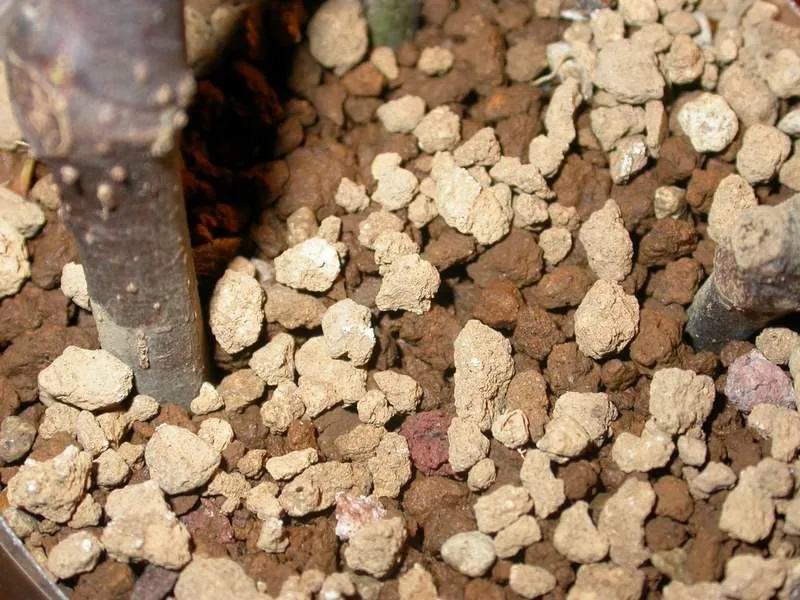
Akadama is a porous, slightly weathered volcanic clay-loam mined from the Kanto region of Japan. The deposits formed from ancient ash falls that compacted, oxidised to a characteristic rust colour, and then weathered into stable granules over thousands of years. Bonsai growers have used it for substrate work since at least the early twentieth century, and the Japanese horticultural trade now grades, bakes, and bags it for export.
The physical numbers explain why it behaves the way it does. Density sits at 0.6 to 0.9 g/cm³, depending on grade and moisture state, which is light enough to keep large pots manageable. Particle size runs from roughly 1 mm in fine grades up to 15 mm in the coarsest bonsai grade. Total porosity reaches 70 to 80 percent, which is high; this is what gives akadama its capacity to soak up and release water.
Water holding sits at 50 to 60 percent by volume after a thorough soak. This is the figure that matters in the field. Pumice, the usual mineral comparison, holds about 30 percent. So a litre of akadama in a saturated pot is carrying close to twice the water of the same litre of pumice, and that water remains accessible to fine roots for longer.
The pH is slightly acidic, at 6.0 to 6.5. Cation exchange capacity (CEC) reaches 15 to 25 meq per 100 g, which is in the low-clay range but vastly above pumice (effectively zero CEC) or perlite. CEC is the substrate's ability to hold positively charged nutrients (calcium, magnesium, potassium, ammonium) on its surface and release them gradually to roots. Akadama retains nutrients between feeds. Pumice does not.
The trade-off is durability. Akadama breaks down to fines over three to five years in a regularly watered pot, faster in freezing climates. Pumice typically holds its structure for five to ten years. Once akadama collapses, the fines clog pore space and the substrate behaves like wet clay, which is the opposite of what a succulent root needs.
How akadama compares to pumice
Pumice is the default mineral substrate in serious succulent cultivation, so the honest comparison runs against it rather than against perlite or grit.
| Property | Akadama | Pumice |
|---|---|---|
| Density (g/cm³) | 0.6 to 0.9 | 0.5 to 0.7 |
| Water holding (% volume) | 50 to 60 | ~30 |
| Porosity (% total) | 70 to 80 | 70 to 85 |
| CEC (meq/100 g) | 15 to 25 | ~0 |
| pH | 6.0 to 6.5 | 6.5 to 7.5 |
| Lifespan in pot | 3 to 5 years | 5 to 10 years |
| Price (20 L bag) | €30 to €50 | €15 to €25 |
Three of those rows favour akadama: more water-holding, more nutrient retention, and a slightly acidic pH that benefits a small subset of species. Three favour pumice: longer pot life, lower price, and lower water retention (which is what most succulents actually want). The right substrate depends on which side of that ledger your specific plant sits.
The pricing gap matters at scale. A 200 L collection rebuild in pumice costs roughly €150 to €250 in mineral aggregate. The same rebuild in akadama costs €300 to €500, and you will repeat the exercise in three to five years instead of five to ten. A grower with 50 pots can absorb that. A grower with 500 cannot.
Where akadama actually shines
Four use cases earn akadama its place in a succulent collection.
The first is summer-growing genera that benefit from steady moisture between waterings. Lithops, Conophytum, and seedling-stage Astrophytum cultivars all root better in a mix carrying 30 to 40 percent akadama than in pure pumice, because the granules buffer the wet-dry cycle. The plants get a longer accessible-moisture window during their active phase, and the slightly acidic pH supports nutrient uptake during their narrow growth seasons. For a full account of pH effects on nutrient availability thresholds, substrate pH covers the lockout windows for iron, calcium, and phosphorus.
The second is seed propagation. The moisture stability of akadama dramatically improves germination of slow species. Lithops seedlings, which germinate over weeks rather than days, lose far fewer cotyledons in a 70 percent akadama surface mix because the substrate stays evenly damp instead of crusting and re-wetting. The same applies to Tylecodon, Adromischus, and many Aizoaceae where the seedling root must travel several millimetres into substrate before it can bridge a true dry period. Pure pumice surfaces dry too fast for these species; peat surfaces stay wet too long and rot the radicle.
The third is species that need pH 6.0 to 6.5 for nutrient uptake. Some Echeveria hybrids show interveinal chlorosis on alkaline tap water (above pH 7.5), and shifting their substrate to a 30 percent akadama blend, combined with rainwater, often clears the symptom faster than chemical pH adjustment. The acidic granules act as a slow buffer against carbonate buildup from hard water.
The fourth is bonsai-style display. The brown-orange granules complement glazed Tokoname pots and rusted shino-style containers in a way that white pumice does not. For show plants, exhibition rosettes, and Instagram-friendly arrangements, the aesthetic case for akadama is real and worth the cost.
Where it fails
Four use cases where akadama is the wrong choice.
The first is general cactus collections. Most cacti want less water-holding, not more. A 50 percent akadama mix under a Mammillaria or Ferocactus in a temperate climate will sit moister than the plant prefers, and the extra CEC does little for species that evolved on lean, mineral-poor substrates. Pumice is the right call here, every time.
The second is winter-resting plants. Akadama's water-holding becomes a liability in cold weather. A pot that holds 50 percent moisture by volume in a 5 °C greenhouse stays wet for weeks, which is exactly the condition that kills Echeveria roots and rots the apex of Adenium. The same plant in pumice would dry within days and ride out the rest period without incident.
The third is outdoor freezing climates. Water absorbed by akadama freezes inside the granule. The expansion shatters the pore structure, and a single cold winter can collapse a 30 percent akadama mix to clay sludge. Pumice, with thicker granule walls and lower water content per unit, handles freeze-thaw cycles for years. If your pots see frost, akadama belongs only in indoor or heated-greenhouse mixes.
The fourth is long-term bulk substrate. Akadama breaks down to fines in roughly four to six years, faster under heavy watering or root pressure. A potted Agave that lives in the same pot for a decade should not be planted in a substrate that turns to clay halfway through its tenure. The repotting cost in time and disturbance outweighs the early-stage benefits.
Akadama grades and Japanese vs cheap imports
Not all akadama is the same product, and grade differences are larger than most growers realise.
Japanese hard-baked akadama, sold under labels like Ibaraki Akadama or "double red line", is fired during processing to harden the granules. The hard grade resists collapse for closer to five years and tolerates the wet-dry cycle without producing fines for the first two seasons. Expect to pay €40 to €60 per 20 L bag for genuine hard-baked Japanese product, often via specialist bonsai suppliers rather than general garden centres.
Soft-baked or unbaked Japanese akadama is cheaper, around €25 to €35 per 20 L, but starts breaking down within a year of regular watering. It is acceptable for short-term seedling work where you intend to repot anyway, less defensible for long-term species pots.
Cheap "pseudo-akadama" and kanuma-akadama blends sold at €20 to €30 per 20 L are usually mainland Asian clay-loams sourced from non-Kanto deposits, sometimes mixed with kanuma (a similar but lighter and softer Japanese pumice-clay). These products vary in CEC, water-holding, and grain hardness, and they collapse fastest. If the bag does not specify Japanese origin, hardness grade, and a clear region, treat it as a one-season substrate at best.
The price gap between hard-baked Japanese product and the cheapest imports is roughly 2x, but the lifespan gap is closer to 4x. On a per-year-of-use basis, hard Japanese akadama is the better value if you have decided you need akadama at all.
How to use it in succulent mixes
Where akadama earns a place, the typical formulation is 20 to 40 percent akadama, 40 to 60 percent pumice, and 10 to 20 percent lava rock or coarse grit. The pumice provides the long-term structural backbone; the akadama provides moisture buffering and nutrient retention; the lava rock or grit prevents compaction and helps drainage at the lower portion of the pot.
For Lithops and Conophytum show pots, push akadama to 35 to 40 percent and use a fine grade (1 to 4 mm) so the granules sit comfortably between fine roots. Top-dress with pure pumice or fine grit to reduce surface evaporation and keep the plant body off damp substrate.
For seedling trays, run 50 to 70 percent fine-grade akadama on top of a 30 to 50 percent pumice base. The high-akadama surface stabilises germination moisture; the pumice base keeps the tray draining properly so it does not turn into a wet plug.
For Echeveria species sensitive to alkaline tap water, 30 percent medium-grade akadama (3 to 6 mm) blended into an otherwise mineral mix tends to stabilise pH for the first 18 to 24 months. After that, plan to repot if symptoms return.
Skip akadama entirely for cacti collections, winter-resting Aeoniums, outdoor frost-exposed pots, and any large container you do not plan to repot in the next four years. The case for pumice is stronger in those scenarios, and the cost saving funds genuinely useful upgrades elsewhere in the collection.
See also
- A Beginner's Guide to Succulents, for the broader substrate, watering, and light foundation that determines whether akadama would help your specific plants at all.
- Pumice vs perlite, for the comparison between the two cheaper mineral substrates that handle 80 to 90 percent of succulent cultivation without needing akadama at all.
- DIY substrate mixing, for ratios and sourcing notes when blending pumice, akadama, lava rock, and minimal organic matter into a working succulent mix at home.
- Lava Rock Substrate — the dense ballast component used alongside akadama in Aloe and Agave display mixes.
- Coir and Sphagnum Uses — the organic alternatives for seedling work where akadama alone dries too fast.
FAQ
Is akadama worth the extra cost?
For most succulents, no. Pumice is cheaper and lasts longer. Akadama helps Lithops, seedlings, and pH-sensitive plants, but the cost isn't justified for general use.
How long does akadama last in a pot?
3-5 years before it breaks down to fines that clog drainage. Hard-baked Japanese akadama lasts longer than cheap imports.
Can I use akadama for cacti?
No. Cacti want less water-holding, not more. Akadama's 50-60% water retention is too wet for most cacti.
What's the difference between Japanese akadama and cheap imports?
Japanese hard-baked akadama (€40-60 per 20L) lasts 4-5x longer than cheap pseudo-akadama (€20-30). Check for "hard-baked" or "Ibaraki" on the label.
Quick answer: is akadama good for succulents?
Akadama can work for succulents when it is part of a gritty, fast draining mix. It holds some moisture without staying swampy, which helps fine roots. It is less useful for growers who overwater, use pots without drainage, or keep plants in cold, dim rooms.
How to use akadama without keeping roots too wet
Start with akadama as one part of the mix, not the whole pot. Pair it with pumice, lava rock, coarse sand, or another mineral ingredient. If the pot still feels heavy after several days, the mix is holding too much water for most succulents.
Bottom watering changes the timing
As an Amazon Associate, we earn from qualifying purchases, at no extra cost to you. A shallow bottom watering tray can make gritty mixes easier to hydrate evenly, but do not let pots sit for hours. Soak until the top layer turns slightly damp, then drain the tray and wait until the pot feels light before watering again.
Which succulents need extra drainage?
Haworthia, gasteria, small aloes, and many echeverias often like a mineral mix, but they still need airflow and a drainage hole. Cacti and rot-prone succulents may need even more pumice or lava rock than akadama. Watch the plant, not the recipe.
Which succulents need extra drainage?
Frequently Asked Questions
What is the first step for akadama in succulent mixes: bonsai substrate, tested?
Start by matching the symptom to the plant, substrate, light, and season before changing watering or treatment.
What should be avoided?
Avoid changing several variables at once; correct the limiting factor and observe the plant before escalating.
Which care factor matters most?
Match the plant to its light, substrate, pot size, and season. Most succulent failures trace to a mismatch between drying speed and the plant's current growth rate.
When should the plant be checked again?
Recheck after one to two weeks unless tissue is actively collapsing. Stable firmness and new growth are better signs than a fixed calendar interval.