Quick Answer
The short answer: Lava rock is heavier and longer-lasting than pumice but holds slightly less water. Use 10-30% in mixes for top-dressing and specimen pots needing ballast.
Best first step: Use red lava with warm-toned Echeveria (like 'Lipstick'), black lava with cool-toned rosettes (like 'Peacockii'). Add 30% to the bottom of tall pots for weight.
Avoid: Above 30% - the mix dries too fast. Use for top-dressing and heavy pots, not fine seedling work.
Lava rock is the third common mineral aggregate in serious succulent substrate, after pumice and akadama. It is heavier, denser, and longer-lasting than pumice, with almost no nutrient retention. Use it as a 10 to 30 percent component in mineral mixes, as a structural anchor in heavy specimen pots, and as top-dressing where colour and weight matter. Here is the rest of the picture.
Part of the Beginner's Guide to Succulents.
What lava rock is
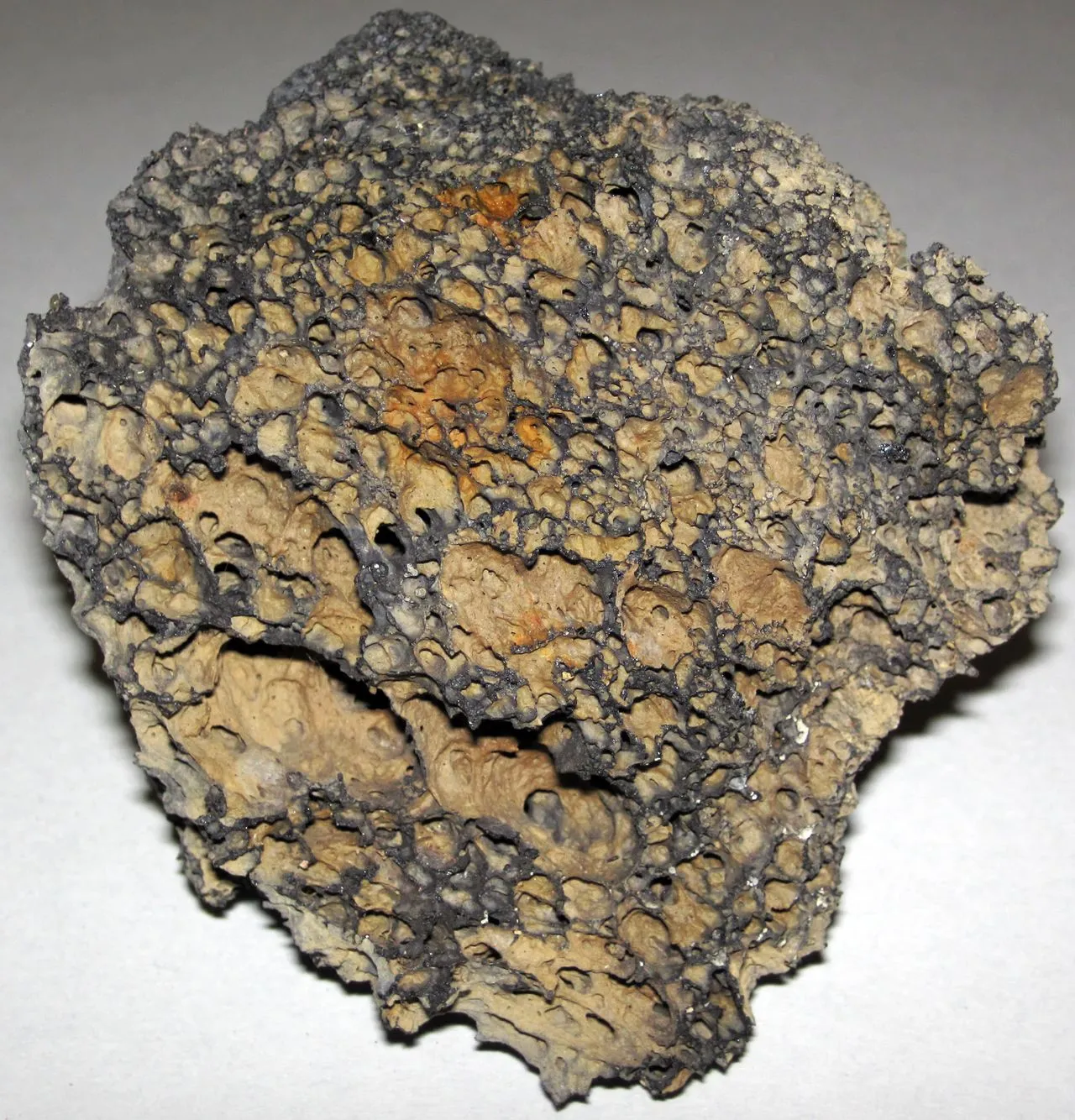
Lava rock sold for horticulture is volcanic scoria, a dense, vesicular extrusive igneous rock formed when basaltic or andesitic lava erupts, traps gas bubbles in the cooling melt, and solidifies into a porous mass. Geologists distinguish scoria from pumice mainly by density and silica content. Pumice is silica-rich (rhyolitic or dacitic), low in iron, and so frothy it sometimes floats. Scoria is iron- and magnesium-rich (basaltic), denser, and sinks. Both are useful substrates for the same reason: thousands of internal pores hold water by capillarity while the mineral matrix stays inert.
The horticultural product is mined from cinder cones and old lava flows, dried, and crushed to defined particle ranges. Major commercial sources include the Mauna Loa system in Hawaii, the Etna fields in Sicily, the Auvergne in central France, Iceland's basalt provinces, and several Indonesian volcanic belts.
Physical numbers worth memorising:
- Density: 0.7 to 1.4 g/cm³ depending on grade and moisture, heavier than pumice at 0.5 to 1.0.
- Total porosity: 50 to 65 percent, lower than pumice at 70 to 80.
- Water holding by pot volume: 25 to 30 percent at field capacity.
- Particle sizes commonly available: 5 to 25 mm, with finer grades (1 to 3 mm) less commonly stocked at retail.
- Working life in a pot: 10 to 15 years or more, longer than pumice at 5 to 10.
- pH: 6.5 to 7.5, near neutral.
- Cation exchange capacity: very low, effectively zero. The substrate does not buffer or store nutrients between feeds.
How it compares to pumice
Pumice is the closest substrate to compare against, since both are inert volcanic mineral aggregates with similar pore structure. The differences are real but smaller than the marketing sometimes implies.
| Property | Lava rock (scoria) | Pumice |
|---|---|---|
| Density (g/cm³) | 0.7 to 1.4 | 0.5 to 1.0 |
| Porosity (% total) | 50 to 65 | 70 to 80 |
| Water holding (% pot volume) | 25 to 30 | ~30 |
| Lifespan in pot | 10 to 15+ years | 5 to 10 years |
| Particle range (typical retail) | 5 to 25 mm | 1 to 15 mm |
| Price (20 L bag, EU) | 20 to 40 EUR | 15 to 25 EUR |
| Colour | Red, orange, or black | Grey, tan, buff |
| Floats in water | No | Briefly yes |
Lava holds slightly less water for the same pot volume, weighs roughly 50 percent more, costs about 30 to 50 percent more per litre, and lasts roughly twice as long before its structure starts to break down. For a static collection where pots stay outdoors and the same substrate sits for a decade, that durability premium pays for itself. For propagation flats, seedling trays, and short-lifecycle work, pumice is the more economical pick.
Where lava rock shines
Three scenarios where lava rock earns the price difference.
The first is top-dressing. Red and orange lava grit reads as habitat under rosette succulents whose foliage carries warm tones, particularly Echeveria agavoides 'Lipstick', E. 'Romeo', stressed Aloe hybrids with red leaf tips, and the russet flush on Aeonium 'Sunburst'. Black lava sits well under cool grey or blue rosettes (Echeveria peacockii, E. colorata, glaucous Agave species) where pumice can feel chalky. The colour pairing is genuine, not a marketing claim, and a thin layer of 5 to 10 mm lava finishes a pot the way nothing else does.
The second is heavy or top-heavy specimen pots. A 30 cm Agave parryi in a 25 cm terracotta pot can lever the rim hard when wind catches it, and a top-heavy Echeveria gibbiflora on a long stem behaves similarly. A substrate that includes 30 percent lava rock at the lower portion of the pot adds 1 to 3 kg of ballast over pure pumice and reduces the chance of a dramatic tip on a windy balcony. The same effect helps tall columnar cacti and tree-form Pachypodium stay upright.
The third is bonsai-influenced display work. Many succulent show growers borrow from bonsai aesthetic principles: shallow Tokoname-style pots, mineral-only substrate, and visible top-dressing as part of the composition. Lava rock has a long history in that tradition and complements glazed and unglazed bonsai pots in a way that brighter aggregates cannot. For Crassula ovata trained as a small tree, for an Adenium obesum in a flat oval pot, or for any hand-selected Haworthia truncata in a craft container, lava is part of the visual language. For pot sizing and ballast strategy in heavy specimen containers, pot size selection covers depth-to-diameter ratios that keep top-heavy plants stable.
Where it falls short
Four scenarios where lava rock is the wrong choice.
The first is fine-particle work. Most retail lava rock is 5 mm and up. Seedling trays, Lithops and Conophytum surfaces, and any pot under about 6 cm diameter want substrate in the 1 to 3 mm range, and that grade is hard to source for lava. Specialist bonsai suppliers carry it, but at a price premium that rarely makes sense at small scale. Pumice or akadama at fine grades is the practical default for delicate sowings.
The second is shipping economics. Lava is heavy. A 20 L bag weighs 14 to 28 kg, against 10 to 20 kg for the same volume of pumice. For mail-order substrate, that weight pushes parcels into higher courier brackets, and the per-litre delivered cost can climb 20 to 40 percent over the bag price. If you live near a hardware-style garden centre that carries lava in bulk, this issue disappears. If you order online, factor it in before assuming the per-bag price.
The third is cosmetic runoff. Red lava can leach a faint orange tint into watering runoff for the first one or two waterings after a fresh repot. The colour is iron oxide rinsing off surface fines, it stains nothing structural, and it fades within a week. It can stain a pale saucer or a porous outdoor planter, however, so rinse new lava in a colander before mixing if that matters for your display.
The fourth is root handling at repot. Lava particles often have sharp, glassy edges from the crushing process, and pumice does not, to the same degree. When you tease a tight rootball apart for repotting, lava rock can nick fine roots more readily than pumice does. The damage is usually trivial and heals within weeks, but for delicate species (small Aloinopsis, mature Pleiospilos, established Conophytum clumps) the gentler choice is a pumice-led substrate.
Red lava (scoria) vs black lava
The two common colours are not only decorative. They reflect real mineral differences that matter at the margins.
Red and orange lava is scoria with oxidised iron. The original basalt contained ferrous iron (Fe²⁺); after eruption and weathering, atmospheric oxygen converted the iron to its ferric form (Fe³⁺), which gives the rust colour. Mauna Loa in Hawaii, Etna in Sicily, Lanzarote in the Canaries, and the Auvergne in France all produce red and orange scoria of this kind. The oxidation typically reduces density slightly (0.7 to 1.2 g/cm³ is the common range) and increases surface roughness, which is why red lava grips fine roots particularly well.
Black lava is denser scoria where the iron remained in its reduced ferrous state, often because the rock cooled buried within a flow rather than at the open surface. Iceland, Indonesia, and parts of the Cascade Range produce black lava in commercial quantities. Density runs higher (1.0 to 1.4 g/cm³), particles tend to feel slightly smoother, and the colour reads as dark grey to true black depending on grade. Black lava holds its appearance over years of UV exposure where some red lavas can fade to a muted brick colour after several seasons in full sun.
Practically, red lava is the better choice for warm-toned arrangements and where root grip matters. Black lava is the better choice for cool-toned displays, for pots that spend years in full direct sun, and for the heaviest ballast applications. Either colour functions identically as substrate; the choice is mostly aesthetic and weight-driven.
How to use it in succulent mixes
Lava rock works as a component, not a complete substrate. Pure lava is too coarse and too low in surface fines to support fine root colonisation in most species, and the lower water-holding compared to pumice means a pure lava pot dries faster than is ideal for anything other than the most drought-adapted cacti.
The standard formulation is 10 to 30 percent lava rock with the remainder split between pumice (the structural backbone) and either a small organic fraction or akadama where appropriate. Two reliable starting points:
- General succulent mix: 60 percent pumice (3 to 8 mm), 25 percent lava rock (5 to 10 mm), 15 percent coarse coir or composted bark fines. Suits Echeveria, Crassula, Sedum, mid-sized Aloe, and most non-cactus rosette succulents.
- Cactus and lithops-adjacent mix: 70 percent pumice (2 to 6 mm), 20 percent lava rock (3 to 8 mm), 10 percent fine grit or sieved decomposed granite. Suits Mammillaria, Ferocactus, mature Astrophytum, and other low-water taxa.
For top-dressing alone, a thin layer of 5 to 10 mm lava (red or black to match the plant) over an underlying pumice-led mix is the simplest finished look. The top-dressing also keeps the upper substrate from crusting and reduces splash damage during watering.
Avoid pushing lava above 30 percent. Beyond that ratio the substrate dries too fast between waterings and the weight makes large pots harder to handle, with no offsetting gain in plant performance.
Sourcing and pricing
In Europe, hardware-style garden centres often stock lava rock as a landscaping or barbecue product, the same material used in gas-fired grills. Expect 20 to 30 EUR per 20 L for unscreened landscape lava, which usually arrives in a wide particle range with a fines fraction worth sieving out before use. Brico Dépôt, Leroy Merlin, OBI, and Hornbach typically carry one or two grades.
Specialist bonsai suppliers (Kaizen Bonsai in the UK, Bonsai Empire's network across Europe, Cactus Center in Spain, Bonsai-Plaza in the Netherlands) sell pre-screened, graded lava rock in defined particle ranges, usually 1 to 3 mm, 3 to 6 mm, 6 to 10 mm, and coarser. Prices run 30 to 50 EUR per 20 L, sometimes higher for fine grades. The premium covers the screening labour, consistent particle size, and lower fines content. For top-dressing and small pots, the bonsai-grade product is worth the cost. For bulk substrate use, landscape-grade lava plus a kitchen sieve gets you 80 percent of the way at half the price.
Two products marketed as "lava rock" are worth scrutiny before purchase. The first is decorative crushed lava sold for fish tanks, which is often sealed with epoxy or a coating to reduce dust, and the coating partially blocks the pores. The second is "lava sand" sold for horticultural soil amendment, which is too fine to function as an aggregate and will compact rather than aerate. Read the bag, and when in doubt, pick up a particle and check that it feels rough, porous, and unsealed.
See also
- A Beginner's Guide to Succulents: how mineral fractions, pot weight, and watering rhythm fit together for the long-term collection.
- Pumice vs perlite: the comparison between the two cheaper mineral substrates that handle most adult succulent pots without lava rock at all.
- DIY substrate mixing: ratios and sourcing notes when blending pumice, lava rock, akadama, and minimal organic matter into a working succulent mix at home.
- Akadama for Succulents — the moisture-retaining Japanese clay used alongside lava in select display mixes.
- Top Dressing Materials — how lava grit particle size and colour options finish a specimen pot.
FAQ
Is lava rock better than pumice?
Not necessarily - pumice is lighter, cheaper, and easier to find in fine grades. Lava rock lasts longer (10-15 years vs 5-10) and adds weight for top-heavy plants.
Does lava rock affect watering frequency?
Yes - lava holds slightly less water than pumice, so expect slightly faster dry times. Keep below 30% of the mix to avoid this becoming a problem.
Can I use lava rock for Lithops or seedlings?
No. Most retail lava is 5mm+ - too coarse for small pots and seedling work. Use fine pumice or akadama (1-3mm) instead.
Why does red lava stain my saucer?
Iron oxide rinses off the surface fines for the first 1-2 waterings. Rinse new lava in a colander before mixing, or accept the tint on porous pots.
Frequently Asked Questions
What is the first step for lava rock as a succulent substrate component?
Start by matching the symptom to the plant, substrate, light, and season before changing watering or treatment.
What should be avoided?
Avoid changing several variables at once; correct the limiting factor and observe the plant before escalating.
Which care factor matters most?
Match the plant to its light, substrate, pot size, and season. Most succulent failures trace to a mismatch between drying speed and the plant's current growth rate.
When should the plant be checked again?
Recheck after one to two weeks unless tissue is actively collapsing. Stable firmness and new growth are better signs than a fixed calendar interval.