| Question | Short Answer |
|---|---|
| What is the first step for pot size selection: why bigger is often worse? | Start by matching the symptom to the plant, substrate, light, and season before changing watering or treatment. |
| What should be avoided? | Avoid changing several variables at once; correct the limiting factor and observe the plant before escalating. |
| Which care factor matters most? | Match the plant to its light, substrate, pot size, and season. |
| When should the plant be checked again? | Recheck after one to two weeks unless tissue is actively collapsing. |
Quick Answer
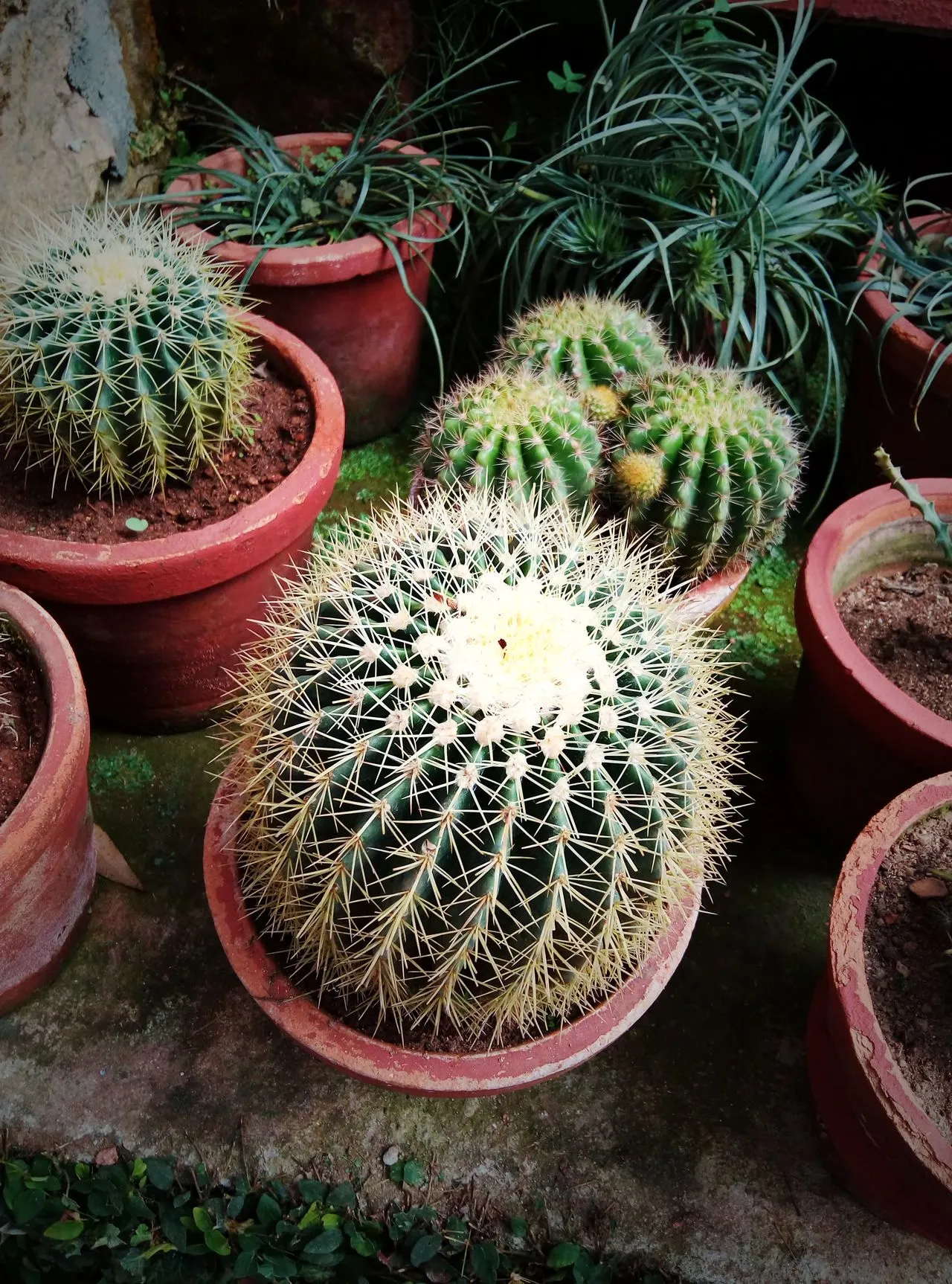
The short answer: A succulent pot should be only 1-2 cm wider than the plant's rosette or rootball diameter. A 6 cm rosette needs an 8 cm pot, not a 15 cm decorative bowl.
Best first step: Measure your plant's widest point and choose the smallest pot that accommodates it plus 2 cm. If in doubt, size down.
Avoid: Using decorative bowls or "the next size up" from garden centre racks - this is the #1 cause of root rot in healthy succulents.
Most beginners size pots for the plant they imagine in two years, not the plant they have today. The hobbyist intuition is "give the roots room to grow", and for a fast tropical aroid that intuition is correct. For a succulent it is the single most common reason a healthy plant rots within a season of arrival. The bottom-line answer: a pot for a succulent should be the smallest container the rootball will fit in plus 2 cm in any direction, never 5 cm wider on principle and never "the next size up the rack". Here is the rest of the picture.
Part of the Beginner's Guide to Succulents.
Why a bigger pot drowns small roots
The mechanism is mineral, not mystical. A pot holds substrate; substrate holds water; the root system is what dries the substrate back out between soakings by drinking and by transpiring through the leaves. A small root system in a large mass of substrate cannot pull moisture out of the lower zone fast enough. The deep substrate stays at field capacity for days or weeks after each soak, oxygen is excluded from the lower rootball, and the fine feeder roots in that zone die.
Death by overpotting is rarely dramatic. The plant looks fine for the first month, sets a flush of new top growth (the upper substrate dried, the surface roots functioned, all looked well), and then collapses three to four months later when the rot that started in the unreachable lower zone reaches the crown. The owner blames "overwatering". The pot was the problem.
A correctly sized pot puts the active root system in contact with most of the substrate volume. The wet-dry cycle stays short, oxygen reaches every part of the rootball between waterings, and root-tip growth is steady. A 6 cm Echeveria 'Lola' rosette in a 9 cm internal-diameter pot dries from soaked to bone in 5 to 8 days indoors at typical room conditions. The same plant in a 25 cm decorative bowl "for impact" sits damp at the bottom for two to three weeks. Three months later it is mush.
Sizing by growth form
Three honest categories cover most of the trade.
Rosette succulents like Echeveria, Graptopetalum, Aeonium, Sempervivum, and small Aloe. Measure the rosette diameter at its widest point. The pot interior diameter should sit 1 to 2 cm wider than the rosette. A 6 cm rosette wants an 8 cm pot, an 8 cm rosette wants a 10 cm pot, and so on. For a specimen E. 'Lola' or E. 'Perle von Nürnberg' with a mature 6 to 10 cm rosette, an 8 to 12 cm internal diameter is correct. Going wider is not "for the roots", since the root system of these plants is shallow and fibrous and stays inside a footprint roughly equal to the rosette projection. Wider only adds wet substrate the plant cannot drink.
Columnar cacti like Cereus, Pilosocereus, Cleistocactus, young Trichocereus, and the trade's column Euphorbia. Measure the stem diameter at the base. The pot interior diameter should equal the stem diameter plus 2 to 3 cm. A 5 cm column wants a 7 to 8 cm pot. Columnars are top-heavy and the temptation is to overpot for ballast; the better answer is a heavier material (terracotta) or an outer cachepot weighted with grit, not a wider planting pot full of unused substrate.
Specimen Agave and large Aloe. Measure the rosette base diameter, the point where the lowest leaves meet the caudex or stem. The pot interior diameter equals the base diameter plus 2 to 3 cm. A 12 cm base wants a 14 to 15 cm pot. Agave species in particular send fleshy storage roots laterally across a relatively shallow zone; they do not need a deep cylinder of substrate to anchor them, and they punish overpotting with the same lower-zone rot as any rosette.
Depth, not just diameter
Diameter governs how much substrate sits beside the rootball. Depth governs how much sits beneath it. The two need separate calls.
Fibrous-rooted rosettes (most Echeveria, Graptopetalum, Sempervivum, Sedum) want a pot depth roughly 1 to 1.5 times the diameter. A 10 cm wide pot at 12 to 15 cm deep is right. Going deeper only adds a saturated zone the shallow root system never reaches.
Tap-rooted cacti (most Mammillaria, most Astrophytum, Ariocarpus, many Lophophora) want a pot depth around 2 times the diameter. A 10 cm wide pot at 20 cm deep gives the descending tap room to grow without coiling against the base. A Mammillaria zeilmanniana in a 7 cm wide pot needs roughly 14 cm of depth, not the 6 to 8 cm of a typical squat azalea pan. Depth matters more than width for these species; an undersized depth pinches the tap and the plant stalls for a year while it tries to redirect storage tissue laterally.
Caudex-forming species (some Pachypodium, Adenium, Euphorbia obesa) sit between the two. A 1.5 times depth-to-diameter ratio works for most, with deeper pots for any species whose taproot is the visible feature you want to grow downward over time.
The volume-vs-frequency trade-off
A correctly sized pot dries fast. That is the whole point, and it has a cost: you will water more often than someone who has overpotted and got away with it for the first season. A 9 cm pot of mineral substrate around an 8 cm Echeveria dries in 5 to 8 days indoors in summer. The same plant in an "easier" 18 cm pot might stretch to 14 to 18 days between waterings.
The shorter cycle is not a bug. It is the wet-dry rhythm the plant evolved to live in. Roots respire, take in oxygen between waterings, and grow in pulses tied to that cycle. A pot that holds water for 14 days starves the lower roots of oxygen for 9 of them. A pot that dries in 6 days delivers oxygen to the whole rootball for 4. The trade-off is your watering can, and that is a fair price to pay.
If your watering schedule cannot match the small-pot rhythm (you travel, you tend a large collection on a single weekly cycle, you grow indoors in low light where dry-down is slow), choose a slightly larger pot rather than a slightly drier one, and accept that you are biasing the system toward forgiveness rather than optimum. Do not cross the 2 cm rule by 5 cm to compensate; cross it by another centimetre and use a more mineral substrate to keep dry-down honest.
Repotting up: 2 cm increments
When a plant truly outgrows its pot (the substrate dries within 2 to 3 days of a thorough soak when it used to hold for 7 to 10, roots emerge en masse from drainage holes, or the plant tilts and wobbles in the pot), step up by 2 cm in interior diameter. Not 5 cm. Not "the next size up the rack". A 10 cm pot becomes a 12 cm pot, then a 14 cm pot one to three years later, not a 15 cm pot today.
Two centimetres is enough room around the existing rootball for one season of fresh-substrate root growth without leaving an unreachable saturated halo. The plant colonises the new mineral mix in a few months, the wet-dry cycle stabilises, and the rhythm continues. A 5 cm step puts the rootball in the centre of a damp ring the plant cannot drink from, which is the same overpotting problem we started with, dressed as a fresh repot.
There is no need to repot annually. Two to four years between size-ups is normal for slow-growing rosettes and most cacti. The 2 cm rule applies whenever you do step up.
Common mistakes
The decorative-bowl error. Putting a 5 cm rosette into a 25 cm ceramic bowl "for impact" is the textbook killer. The bowl holds two to three litres of substrate the plant cannot dry. The first soak saturates the bottom; nothing pulls it back; rot starts within weeks. If you want a wide succulent arrangement, plant a wide arrangement: five or seven rosettes spaced so their projections cover the substrate surface, so that collectively they dry the bowl. One small plant in a big bowl is not minimalism; it is a slow-motion drowning.
The "next size up" trap. Garden centres stock pots in 2 cm or 3 cm jumps for nursery sizes (8, 10, 12, 14 cm) and larger 5 cm jumps for decorative ranges (15, 20, 25 cm). When you graduate from nursery sizes to decorative sizes you trip from a 14 cm pot straight to a 20 cm pot, a 6 cm leap that overpots the plant. The fix is to stay in nursery-pot sizing inside an outer cachepot, or to source 16 cm and 18 cm planting pots specifically.
Pot diameter measured at the rim. Many decorative pots taper sharply inward below the rim. The relevant figure is the interior diameter at the substrate surface, not the rim. A pot labelled 15 cm at the rim may hold only 12 cm of substrate width at the surface. Measure where the plant actually sits.
Depth ignored on tap-rooted species. A Mammillaria in a shallow azalea pan grows for one season, then stalls when the tap meets the floor. The plant looks alive but does not gain volume. Repot into a pot with the right depth-to-diameter ratio and the species resumes growth within a season.
Substrate volume mistaken for "good drainage". A large pot does not drain better than a small one. Both have the same drainage hole at the bottom; both depend on the substrate for fast wet-to-dry transit. A bigger pot with the same substrate holds more water for longer. If drainage is the worry, fix the substrate (more pumice or grit, less peat or composted bark), not the pot size. For the physics of drainage holes and why sealed bases compound the problem, see drainage hole importance.
See also
- A Beginner's Guide to Succulents: the foundation for light, water, and substrate decisions that frame any pot-size choice.
- When to repot a succulent: the six honest signals that tell you the plant has actually outgrown its pot, before you reach for the trowel.
- Terracotta vs glazed vs plastic: how pot material changes the dry-down speed of the size you have chosen.
- Succulent Soil and Substrate — the fast-draining mix that makes any correctly sized pot work at its best.
- Indoor Succulent Care — seasonal watering adjustments that pair with pot sizing for healthy root cycles.
FAQ
Does pot size affect how often I need to water?
Yes, directly. A correctly sized 9 cm pot dries in 5-8 days, while the same plant in an 18 cm pot can take 14-18 days. Smaller pots need more frequent watering, but this short wet-dry cycle is what succulents need for healthy roots.
Will a bigger pot help my plant grow faster?
No. Larger pots hold more substrate, which stays wet longer and can suffocate roots. The plant may show temporary top growth while lower roots rot silently below.
Can I use a deep pot for a shallow-rooted Echeveria?
Avoid it. Deep pots create a saturated zone at the bottom that shallow fibrous roots cannot reach. A depth of 1-1.5× the pot diameter is ideal for rosette succulents.
Should I repot my succulent every year?
No. Most slow-growing rosettes and cacti need repotting every 2-4 years. Repot only when roots emerge from drainage holes, the plant wobbles, or dry-down speed changes dramatically.
Frequently Asked Questions
What is the first step for pot size selection: why bigger is often worse?
Start by matching the symptom to the plant, substrate, light, and season before changing watering or treatment.
What should be avoided?
Avoid changing several variables at once; correct the limiting factor and observe the plant before escalating.
Which care factor matters most?
Match the plant to its light, substrate, pot size, and season. Most succulent failures trace to a mismatch between drying speed and the plant's current growth rate.
When should the plant be checked again?
Recheck after one to two weeks unless tissue is actively collapsing. Stable firmness and new growth are better signs than a fixed calendar interval.