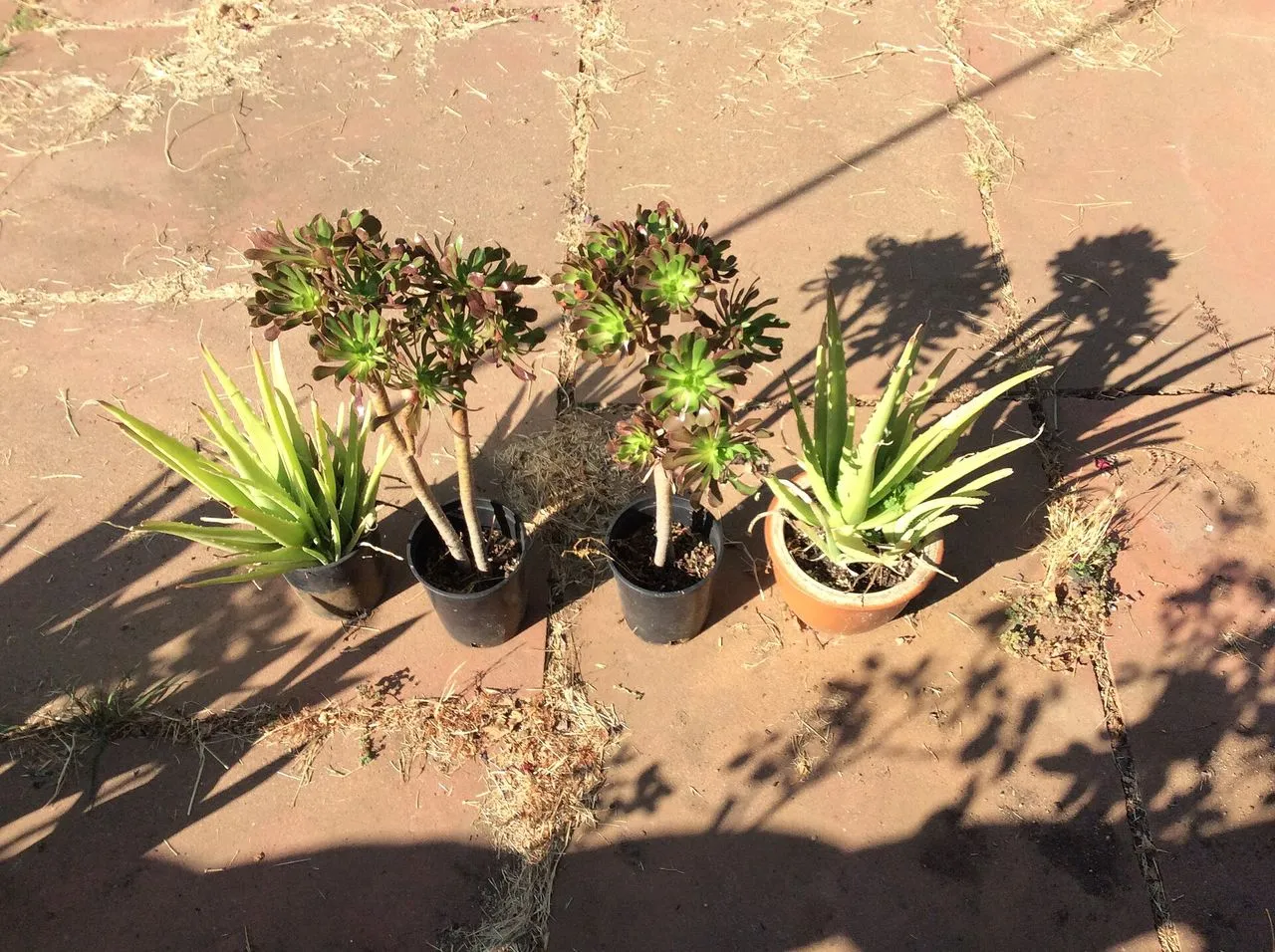
A succulent arrangement is any planting that combines two or more succulent species in a single container: a dish garden, a closed-glass terrarium, a mounted vertical frame, a living wreath. The form is popular, sold by the thousand at garden centres and wedding florists, and most arrangements are composed to look spectacular on the day they are planted and then decline steadily for the next six to twelve months. The majority are re-composed or discarded inside a year.
Quick Answer
- Choose species with matching water, light, and temperature needs - mixing drought-tolerant and moisture-loving succulents in one arrangement leads to failure.
- Use a gritty, fast-draining substrate and ensure all containers have drainage holes. Terrariums without drainage are high-risk.
- Plan for disassembly within 2-3 years - arrangements are temporary displays that need periodic rebuilding as plants grow.
That outcome is not inevitable. It comes down to decisions made at the planting stage: which species go together, what container, what substrate, how densely you plant. Get those right and an arrangement can hold its form for two or three years, at which point the plants have outgrown the composition and you disassemble deliberately rather than lose specimens to rot.
I'm Dr. Elena Martín, a Certified Advanced Cactus & Succulent Horticulturist. I built multi-plant display pieces for the Jardín Botánico de Córdoba's public collection for six years, and I have disassembled a lot more of them than I have planted.
The compatibility problem
The single largest cause of arrangement failure is mismatched species. Almost every pre-made arrangement sold at a garden centre pairs plants that cannot share a care regime. One of them will fail within months, and then the gap invites rot in its neighbours.
Light requirements. Haworthia and Gasteria evolved under bush shade in South Africa and scorch in the unfiltered sun that Echeveria and Sedum demand. Combine them and you have two bad choices: bright direct light burns the Haworthia, moderate light etiolates the Echeveria. Decide where the finished arrangement will live, then pick species whose native light needs match. See the Haworthia guide and the Echeveria guide.
Water requirements. Crassulaceae are summer-growing, watered weekly in warm months and kept nearly dry in winter. Many Senecio and some Aeonium species are the opposite: they grow in the cool wet season and go dormant through summer. A single watering schedule starves one and drowns the other across the year. Stay within one growth cycle, most commonly summer-growing Crassulaceae (Echeveria, Sedum, Crassula, Sempervivum).
Growth rates. A Sedum morganianum fragment planted as a small trailing accent will swamp a slow-growing Haworthia cooperi within a single growing season, shading it and smothering its crown. Match vigour as well as requirements. The species pillars (Sedum, Crassula, Senecio) flag relative growth rates.
The simple rule: all plants in an arrangement should want the same light, the same watering rhythm, and grow at roughly the same rate.
Container choice
With a drainage hole
The horticultural default. A pot with a drainage hole flushes salts on every watering, dries evenly, and forgives overwatering that a closed vessel does not. Preferred materials are unglazed terracotta (porous walls accelerate drying) and shallow glazed ceramic with a central hole. Keep the container 6 to 10 cm deep. Succulent roots are lateral, not vertical, and deeper substrate below the root zone stays wet and anaerobic.
Without drainage
Closed terrariums, sealed glass bowls, cork domes, decorative china without a hole. Popular because they are beautiful, unforgivingly hostile to long-term succulent growth. There is no way to flush excess water or salts, no gas exchange beyond the surface, and the substrate column turns anaerobic within weeks.
Techniques that help but do not solve it: a base layer of coarse pumice (2 to 3 cm), a sprinkle of horticultural charcoal above to adsorb organic breakdown products, a grittier mineral substrate above that. These buy months, not years. A no-drainage arrangement is a three-to-six-month installation. Designed that way, it can be lovely. Sold as a permanent home, it is a slow-motion failure.
Substrate
For arrangements I use a mix roughly 10 percent grittier than the general-purpose cactus mix described in the succulent soil guide: 60 percent pumice or perlite, 25 percent coarse grit (3 to 5 mm), 15 percent peat-free loam compost such as John Innes No. 2. The reason for extra mineral content is straightforward. Multiple plants share a single substrate volume, which means less root mass per unit of substrate and slower evaporation per plant than a single-specimen pot. The substrate dries more slowly than you expect.
For closed containers, go grittier still, 70 percent pumice at minimum, and water infrequently in small volumes.
Design principles
Thriller, filler, spiller
Borrowed from container gardening, and the rule works just as well with succulents. Each arrangement contains three roles:
- Thriller. One tall, architectural focal plant. Upright Crassula ovata (jade plant), a mature Aeonium arboreum, or a large rosette like Echeveria gibbiflora.
- Filler. Medium rosettes and mounding species that occupy the middle ground. Echeveria elegans, Crassula rupestris, Graptopetalum paraguayense.
- Spiller. Trailing species that cascade over the rim. Sedum morganianum (burro's tail), Senecio rowleyanus (string-of-pearls), Crassula pellucida.
A dish garden with all three roles reads as a composed picture from any angle. One with only rosettes reads as a tray of plants.
Colour and texture
Succulents offer a wide colour range within a compatible care group: silver-blue Echeveria laui, burgundy Aeonium 'Zwartkop', chartreuse Sedum rupestre 'Angelina', grey-pink Graptoveria hybrids. Compose with complementary pairings, not identical tones. Texture contrast matters as much as colour: a farina-coated rosette next to a glossy-leaved Crassula reads as deliberate; two matt rosettes together read as muddled.
Odd numbers and triangular placement
Three thrillers at the points of a triangle look more composed than two flanking a centrepiece or four in a grid. Odd numbers prevent the eye from pairing elements. Use the same rule for the filler layer.
Density
Most DIY arrangements overreach here. A freshly planted arrangement packed leaf-to-leaf looks finished on day one and stays that way for about six months. After that, compressed plants have no room to grow and shade each other out. Plant at 70 to 80 percent visual coverage and accept a slightly sparse look at the start. The alternative is to plant densely, photograph it immediately, and accept a six-month installation.
Planting procedure
- Unpot and root-wash. Nursery substrate is typically peat-heavy and holds water differently from your mineral mix. Shake off loose material; for larger root balls, rinse under a gentle tap until the peat is gone. Bare roots go into your mix.
- Callus if damaged. If you cut or tore roots significantly, leave the plant on a dry surface in shade for 24 to 48 hours so cut surfaces dry over. Planting wet cut tissue is the most common cause of post-planting rot.
- Dry-plant. Fill the container to within 2 cm of the rim with dry substrate. Open a planting hole with a chopstick or dibber. Set the plant in, cover the roots, tamp gently. Wet substrate packs tighter and leaves fewer air pockets around new roots.
- Work tight spaces. A bamboo skewer or long tweezers is invaluable for tucking Sedum rosettes into gaps without crushing neighbours.
- Top-dress. A 1 cm mineral top-dressing (chicken grit, decomposed granite, fine pumice) hides substrate, stabilises small plants, reflects light to lower leaves, and suppresses moss in closed containers.
- Wait seven days before watering. Disturbed roots need time to callus. Watering immediately drives bacteria into wounded tissue. After the wait, water thoroughly from the side, not over the crowns.
Specific arrangement types
Dish gardens
Shallow open bowls, terracotta pans, rectangular troughs. The most forgiving format, and what I recommend for anyone new. Choose three to seven plants depending on size, apply the thriller/filler/spiller rule, expect a six-to-twelve-month display before intervention. Best indoors on a bright windowsill or outdoors in a sheltered spot; see indoor succulent care for light diagnostics.
Vertical and wall frames
A shallow frame backed with hardware cloth, filled with substrate, planted through the mesh with cuttings. They work, with caveats. Vertical frames dry unevenly (top dries faster than bottom) and need near-weekly watering in warm months by laying the frame flat and soaking. Use only drought-tolerant rosette species and short trailing Sedum. Avoid Haworthia and Gasteria. Expect to re-plant the worst specimens annually.
Living wreaths
A moss-wrapped wire frame planted through gaps. The only species I recommend for long-term living wreaths is Sempervivum (hens-and-chicks): frost-hardy, propagates readily by offsets, copes with seasonal moisture swings, tolerates shallow rooting. Wreaths built from soft Echeveria or Graptoveria are compost within two months of being hung outdoors.
Closed glass terrariums
A sealed or near-sealed glass vessel is not a long-term home for any succulent. Humidity inside a closed terrarium is routinely above 80 percent, which is ideal for Botrytis and bacterial soft rot and the worst environment for xerophytes. They exist as a fashion because they photograph beautifully. If a client insists, build it, charge for it, and tell them honestly it is a three-month centrepiece.
Fairy gardens
Decorative miniature landscapes with small figurines. Really about plant choice. Stick to small-leaved Crassula (C. muscosa, C. marnieriana), creeping Sedum (S. hispanicum, S. album), and small Sempervivum. Same compatibility rules as any other arrangement.
Maintenance
Water to the lowest common denominator. Water at the frequency of the most drought-tolerant species, not the thirstiest. A single Sedum in an otherwise Haworthia arrangement will look slightly thirsty; watering at Sedum frequency rots every Haworthia in the bowl. Spot-water the thirsty one with a pipette at its base if needed.
Prune for composition. Every four to eight weeks, inspect for plants outgrowing their space. Take tip cuttings from spillers to keep them in scale, pull dead leaves from rosette bases (do not cut), re-root any cuttings you like into gaps.
Replace. Some specimens will fail. Every three to six months swap out any plant that has etiolated, rotted, or grown too large, and refresh the top-dressing.
Common problems in arrangements
| Symptom | Cause | Fix |
|---|---|---|
| Several plants etiolating together | Light compromise chosen to suit the most shade-tolerant species | Relocate the arrangement or rebuild with matched-light species |
| White cottony patches spreading between plants | Pseudococcus mealybug, which moves rapidly through crowded compositions | Isolate, treat every plant with 70% isopropyl, monitor weekly for six weeks |
| Soft black collapse at the base of a single specimen | Rot, often in a no-drainage container or after overwatering | Remove the entire plant plus 2 cm of surrounding substrate, allow the gap to dry, replant with a callused cutting |
| Central focal plant dwarfing the rest | Thriller outgrew the composition | Behead it, re-root the top separately, leave the stump to resprout multiple smaller rosettes |
| Substrate surface staying visibly damp for days | Substrate too organic, or container too deep for the root mass | Rebuild with a grittier mix; move to a shallower container |
Three combinations you can copy
Sun — outdoor terracotta bowl, full south-facing
- Thriller: Aeonium arboreum 'Zwartkop' (one, centre-rear)
- Fillers: Echeveria agavoides 'Lipstick' (three, triangular), Crassula ovata (one, small specimen)
- Spillers: Sedum rubrotinctum (two clumps), Senecio radicans (one, front)
- Substrate: 60% pumice, 25% grit, 15% loam compost
- Watering: weekly in summer, monthly in winter
Bright indoor window — shallow ceramic dish, east or south indoor
- Thriller: Echeveria 'Perle von Nürnberg' (one, off-centre)
- Fillers: Graptopetalum paraguayense (two), Crassula perforata (one)
- Spillers: Sedum morganianum (one, edge), Senecio rowleyanus (one, opposite edge)
- Substrate: 55% pumice, 30% grit, 15% loam compost
- Watering: every 2 to 3 weeks; drop to monthly October to February
Cold-hardy outdoor — alpine trough, unheated
- Thriller: Sempervivum tectorum large clone (one, centre)
- Fillers: Sempervivum arachnoideum (three), Jovibarba heuffelii (two)
- Spillers: Sedum album (edge clumps), Sedum spurium 'Voodoo' (front)
- Substrate: 70% mineral (pumice plus grit), 30% loam; top-dress with slate chippings
- Watering: rainfall only once established; shelter from winter wet with a glass cover if you have more than two consecutive wet weeks
Design for the site, not the shop shelf, match the species to each other, and plant loose enough that the composition has somewhere to go. Do those three things and the arrangement will outlive the wedding, the dinner party, and the first photographs, which is what makes it worth planting.
FAQ
Can I mix different types of succulents in one arrangement?Only if they share matching water, light, and temperature needs. A haworthia and an echeveria have different watering requirements - keeping them together means one will suffer. Group species by their growth cycle and origin.
My terrarium is developing condensation and mold - what went wrong?Closed-glass terrariums lack drainage and trap moisture. This creates perfect conditions for fungal growth. Use open-mouth containers or add a layer of activated charcoal below the substrate to absorb excess water.
How often should I disassemble my arrangement?Plan for 2-3 years before the plants outgrow the space. Disassemble proactively in spring or early summer when plants are actively growing and can recover from root disturbance.
Frequently Asked Questions
Can I mix different types of succulents in one arrangement?
Only if they share matching water, light, and temperature needs. A haworthia and an echeveria have different watering requirements - keeping them together means one will suffer. Group species by their growth cycle and origin.
My terrarium is developing condensation and mold - what went wrong?
Closed-glass terrariums lack drainage and trap moisture. This creates perfect conditions for fungal growth. Use open-mouth containers or add a layer of activated charcoal below the substrate to absorb excess water.
How often should I disassemble my arrangement?
Plan for 2-3 years before the plants outgrow the space. Disassemble proactively in spring or early summer when plants are actively growing and can recover from root disturbance.
What is the first step for succulent arrangements: design, planting, and keeping them alive?
Use a gritty, fast-draining substrate and ensure all containers have drainage holes. Terrariums without drainage are high-risk.