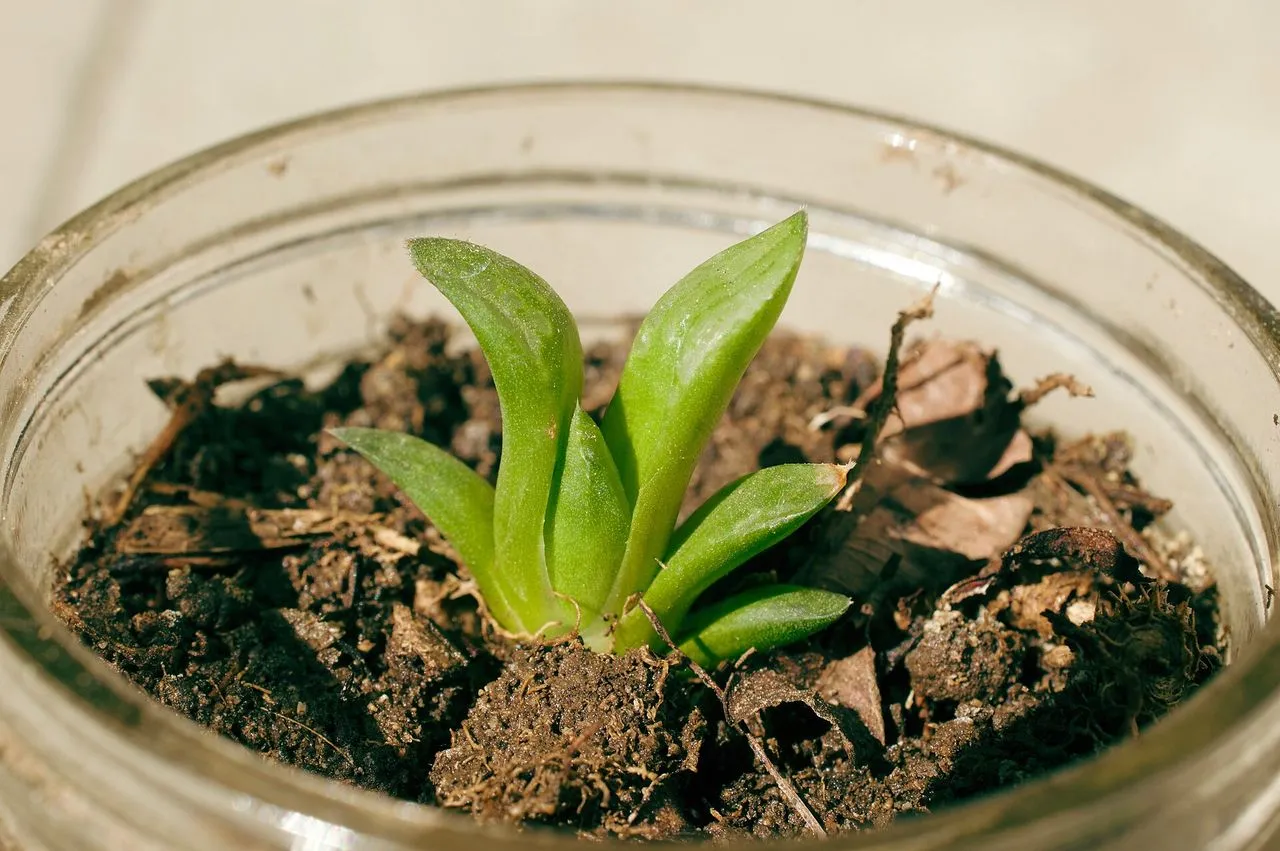
Haworthia is a genus of small, rosette-forming leaf succulents in the family Asphodelaceae, native almost exclusively to South Africa. What most growers still call "haworthias" is, taxonomically, three genera: Haworthia Duval (sensu stricto), Haworthiopsis G.D.Rowley, and Tulista Raf. The World Checklist of Vascular Plants maintained by the Royal Botanic Gardens, Kew recognises all three, with roughly 160 accepted species between them. If you are buying a plant labelled Haworthia fasciata or Haworthia pumila, what you actually own is now Haworthiopsis fasciata or Tulista pumila. The horticultural trade has been slow to catch up. This guide covers the whole group as gardeners encounter it.
I'm Dr. Elena Martín, a Certified Advanced Cactus & Succulent Horticulturist and former curator of the succulent collection at the Jardín Botánico de Córdoba. Haworthias were my gateway into the family and remain, for my money, the single best genus for anyone with a shaded windowsill and a tendency to forget the watering can.
Taxonomy and Natural Range
The genus Haworthia was described in 1809 by Henri Auguste Duval, named for the English botanist Adrian Hardy Haworth. For two centuries it sat as a sprawling catch-all of about 160 South African species with wildly divergent leaf forms. In 2013 the classic soft-leaved, window-topped species were retained in Haworthia proper, while the hard-leaved tubercled species were moved to Haworthiopsis (Gordon Rowley) and a handful of large, firm-leaved species were placed in Tulista (following Manning, Boatwright and colleagues). The split is supported by molecular phylogeny and flower morphology, and it matters in practice: the three genera have genuinely different cultivation preferences.
Distribution is concentrated in the Western and Eastern Cape provinces, with satellite populations in the Free State, Limpopo, southern Namibia, Lesotho, Eswatini and southern Mozambique. Most species grow in winter-rainfall or bimodal-rainfall zones at elevations between sea level and 1,800 m, often tucked under rocks, between grass tussocks, or with only the leaf tips protruding from the soil. That growth posture matters for cultivation: it explains both their low-light tolerance and their absolute intolerance of midday summer sun on exposed foliage.
The soft-leaf vs hard-leaf divide is the one piece of taxonomy every grower should internalise. Soft-leaf species (true Haworthia) have translucent apical windows and fleshy, easily bruised leaves. Hard-leaf species (now Haworthiopsis) have opaque, stiff leaves decorated with raised white tubercles. Tulista species are larger, firmer and often solitary. They ask for similar things but not identical things.
Identification and Morphology
Three features diagnose the broad Haworthia group.
- Leaf windows. The defining feature of soft-leaf species. The leaf tip is translucent, silica-rich apical tissue buried just below ground level in the wild. Light penetrates the window to photosynthetic chlorenchyma inside the leaf, while the plant's bulk remains shielded from UV and desiccation. Point a torch at the side of a Haworthia cooperi leaf and you can see straight through it. No other Asphodelaceae genus does this.
- Tubercles on hard-leaves. Haworthiopsis species (the "Zebra Plant" H. fasciata, H. attenuata, H. limifolia, H. coarctata) carry raised white pearly bumps or bands on the outer leaf surface. These are structural calcium-silica deposits in the epidermis, not pigmentation, and they do not rub off.
- Two-lipped tubular flowers. All three genera share a small white-to-cream flower with a distinctly zygomorphic, two-lipped corolla mouth on a wiry unbranched or sparsely branched raceme. This is the single feature that separates the group from Aloe, which has cylindric actinomorphic flowers. If the inflorescence is tall, branched and bears brightly coloured cylindric flowers, you are looking at an Aloe or Gasteria, not a Haworthia.
Plants typically form rosettes 4–15 cm in diameter, stemless or short-stemmed, often clumping. A few species (Haworthiopsis coarctata, H. reinwardtii) develop elongated columnar stems with tightly packed spiralled leaves. Most are slow to very slow growers: a 5 cm offset can take three to five years to reach adult size.
Cultivation
The genus-defining cultivation fact is that haworthias tolerate, and often prefer, light levels that would etiolate an Echeveria or Sedum within weeks. They are partial-shade plants. Treat them like you would treat a Sansevieria or a forest cactus, not like you would treat a Crassula.
Light
Bright indirect light is the default. An east-facing windowsill, a south-facing window set back one metre, or a position under a sheer curtain all work. Soft-leaf species (H. cooperi, H. cymbiformis, H. retusa, H. bayeri) burn fast in direct summer sun. The leaves turn reddish-brown, then pale, then develop irreversible white scar patches within a few hours of unshaded midday exposure. Hard-leaf Haworthiopsis species tolerate rather more direct sun and will often colour up attractively (bronze, red-brown) in strong light without damage. Tulista species sit somewhere in between.
A practical test: if the leaves of your soft-leaf haworthia are pale lime-green and slightly translucent, light is correct. If they are saturated dark green and the rosette is opening out flat, you are under-lit. If they are reddish or bleached white, move the plant immediately.
Substrate
A gritty mineral mix suits all three genera. I use 60% pumice or perlite, 20% coarse sand (2–4 mm), and 20% peat-free loam-based compost such as John Innes No. 2. Haworthias root into tighter, narrower pots than most succulents; a pot 1–2 cm wider than the rosette is usually right. Too much unoccupied substrate stays wet and invites rot.
pH preference is mildly acidic to neutral (6.0–7.0). Annual top-dressing with fresh grit prevents the surface of the substrate becoming compacted and mossy, a common problem in low-light positions.
Water
Haworthias are root-sensitive and will rot quickly in waterlogged substrate. The reliable rule: water thoroughly when the top 3–4 cm of substrate reads dry on a moisture probe, then do not water again until it reads dry again. In cool indoor conditions that is typically every 2–3 weeks in winter and every 7–10 days in active summer growth. Always water the substrate, never the rosette. Water pooling between leaves at the growth point causes soft rot within 48 hours.
A quirk worth knowing: soft-leaf haworthias go partially dormant in peak summer (July–August in the northern hemisphere) and actively grow in autumn through spring. If yours looks sad in August, water less, not more. This is the reverse of most succulents.
Temperature
Comfortable range 10°C–30°C. Below 5°C most species stop growing; below 0°C frost damage is likely. A few Haworthiopsis species tolerate brief -3°C events if bone dry, but I would not rely on it. Above 32°C, close the blinds and cut watering. Sustained heat combined with any substrate moisture triggers root rot faster than cold does.
Humidity
Ambient 30%–60% is fine. Haworthias do not benefit from misting. Good air movement matters more than moisture in the air, especially in winter when substrate dries slowly.
Propagation
Three reliable methods, in descending order of success.
Offset division
The primary method for almost every species. Mature rosettes of H. cooperi, H. cymbiformis, Haworthiopsis fasciata, H. attenuata and most others produce clonal offsets (pups) at the base. Wait until an offset has at least two or three of its own roots. Gently tease the substrate aside to check. Cut at the stolon with a sharp sterile blade, allow the cut to callus for 3–5 days in shade, then pot in standard substrate. Offsets establish within 2–4 weeks and resume growth within a season.
Leaf propagation
Works reasonably well for soft-leaf species, unreliably for hard-leaf Haworthiopsis, and poorly for Tulista. Detach a healthy leaf with a clean twist, taking the entire base. Callus 5–10 days. Lay on damp grit, out of direct sun, at 20°C–25°C. Expect a 30–50% success rate for H. cymbiformis and H. cooperi; under 10% for Haworthiopsis fasciata. New plantlets take 6–12 months to reach a potting-on size.
Seed
Slow and of limited practical interest unless you are maintaining a documented accession. Haworthias are largely self-incompatible, so two unrelated flowering plants are needed. Germination under humidity at 20°C–25°C takes 2–4 weeks. Seedlings take 3–5 years to reach flowering size. Hybridisation between species is extremely common in collection settings, so label rigorously.
Division of clumps (lifting the entire plant and separating at natural divisions) is a fourth option for columnar Haworthiopsis coarctata and H. reinwardtii where individual offsets are hard to isolate.
Common Problems
| Symptom | Likely cause | Fix |
|---|---|---|
| Soft translucent leaves collapsing from the base | Root rot from over-watering | Unpot, cut back to firm white root tissue, dry 5 days, repot in dry grit |
| Pale bleached or scarred leaf tips | Sunburn (especially soft-leaf species) | Move to shadier position; damage is permanent but plant recovers |
| White cottony tufts in leaf axils | Mealybug | Cotton swab with 70% isopropyl alcohol; re-inspect weekly for 6 weeks |
| Waxy white clusters on roots when repotted | Root mealybug | Bare-root, wash roots, soak in systemic insecticide, repot in fresh substrate |
| Aphids massed on flower stalk | Aphid (common on inflorescences) | Cut and discard the stalk if bloom is over; spray with dilute insecticidal soap if not |
| Rosette stretching, leaves thinning | Etiolation (too dark) | Move to brighter indirect light gradually over 1–2 weeks |
| Brown corky patches at leaf base | Edema from chronic waterlogging | Reduce watering; improve substrate drainage |
| Leaves closing up and greying | Under-watering in growth season | Water thoroughly; recovery takes 1–2 weeks |
| Black soft spot at growth point | Crown rot (water pooled in rosette) | Almost always fatal; remove healthy offsets if any remain |
Haworthias are among the pest-free succulents, with mealybug (foliar and root) by far the most common problem. Fungal issues are almost always secondary to over-watering.
Notable Species
The group contains more species than any single guide can profile. These are the ones worth knowing. Follow the links for full cultivation details.
- Haworthia cooperi. soft, bulbous, translucent-tipped leaves; the archetypal window-leaved species.
- Haworthia cymbiformis. boat-shaped leaves, prolific clumping; the classic beginner soft-leaf.
- Haworthia retusa. flat-topped "star window" rosettes pressed against the soil.
- Haworthia obtusa. close relative of H. cooperi, famously translucent.
- Haworthia bayeri. prized by collectors for intricate window reticulation; slow, demanding.
- Haworthia emelyae. patterned window tops; variable and collectable.
- Haworthia mirabilis. recurved leaves, strong seasonal colour shifts.
- Haworthia mutica. broad, glassy window faces; among the most prized soft-leaves.
- Haworthia pygmaea. miniature rosettes with pebbled window surfaces.
- Haworthiopsis fasciata. the "Zebra Plant"; banded white tubercles on the outer leaf only.
- Haworthiopsis attenuata. often confused with H. fasciata; tubercles on both leaf surfaces.
- Haworthiopsis limifolia. "fairy washboard"; ridged concentric leaf bands.
- Haworthiopsis coarctata. columnar, spiralled leaves; ages into striking architectural forms.
- Haworthiopsis reinwardtii. similar columnar habit with finer tubercle rows.
- Haworthiopsis tessellata. mosaic-patterned flat leaves; very drought tolerant.
- Haworthia venosa. reticulated upper leaf surface; tough and easy.
- Haworthia cuspidata. nursery hybrid, probably H. cymbiformis × H. retusa; exceptionally robust.
- Tulista pumila. large, solitary rosette to 20 cm; firm pearled leaves.
- Fasciated haworthia forms. cristate mutations prized by collectors.
- Variegated haworthias. cream and yellow chimeral sports; slow and sun-sensitive.
- Haworthia x Gasteria hybrids. intergeneric crosses (×Gasterhaworthia) with traits from both.
- Haworthia flowering and bloom cycles. what to expect when the wiry scape appears.
Closing
Haworthias are the best succulent genus for anyone without a blazing windowsill. They ask for shade, coarse mineral substrate, restrained watering, and a calendar that allows for a peculiar summer slowdown. Give them that and they will clump quietly for decades. If you are starting, buy Haworthia cymbiformis or Haworthiopsis fasciata. Both are cheap, forgiving, and teach you everything that applies to the more demanding soft-leaves and collector species later.
If you are arriving at succulents for the first time, the beginner's guide to succulents covers the cross-genus basics — light, water, substrate, and the common early mistakes — and is the right starting point before any single-genus deep dive.
What substrate should haworthias actually be in?
Most haworthia losses trace back to soil that holds water too long, not to the watering can itself. Standard cactus soil from a garden center is usually still too peaty. You want a mix that is mostly mineral: pumice or perlite, coarse sand, and only a small organic fraction.
If you would rather not blend your own, a pre-made gritty mix such as Bonsai Jack Gritty Mix #111 drains fast enough that a slightly heavy hand with water stops being fatal. Repot into it in spring, water thoroughly, and let the pot dry out completely before the next drink. Roots recover from drought far more often than they recover from rot.
As an Amazon Associate, we earn from qualifying purchases, at no extra cost to you.
Quick answer: how to care for Haworthia
Give Haworthia bright filtered light, not a dark shelf and not sudden harsh sun. Use a gritty mix, water thoroughly, then wait until the pot dries. If the plant stretches upward, move it closer to light in stages. If the base turns soft, unpot it and check the roots.
Soil matters more than watering tricks
Haworthia roots need air between waterings. A gritty mix such as Bonsai Jack Succulent and Cactus Soil Gritty Mix helps small pots dry more evenly than peat-heavy potting soil. As an Amazon Associate, we earn from qualifying purchases, at no extra cost to you.
Why is my Haworthia stretching?
Stretching is almost always a light problem. The rosette opens up, leaves point upward, and the plant reaches for the window. Increase light gradually and rotate the pot, but do not remove healthy leaves just because the shape has changed.
Frequently Asked Questions
Are Haworthia, Haworthiopsis, and Tulista the same plant group?
They are the horticultural haworthia group, but the 2013 split placed soft windowed species in Haworthia, hard tubercled species in Haworthiopsis, and larger firm-leaved species in Tulista. The distinction matters because their light and growth rhythms differ.
How much light do haworthias need indoors?
Bright indirect light is the default. An east window, a south window set back 1 m, or a sheer-curtained position keeps soft-leaf species compact without bleaching their windows.
How often should haworthias be watered?
Water thoroughly only when the top 3–4 cm of substrate reads dry. In cool indoor conditions that is often every 2–3 weeks in winter and every 7–10 days during active growth.
What is the best propagation method for haworthias?
Offset division is the most reliable method across the group. Leaf propagation works better for soft-leaf species than for hard-leaf Haworthiopsis, while seed is slow and mainly useful for documented accessions.
How often should you water Haworthia?
Water when the potting mix has dried through, not on a fixed weekly schedule. In bright warm weather that may be every week or two; in winter or low light it can take much longer.