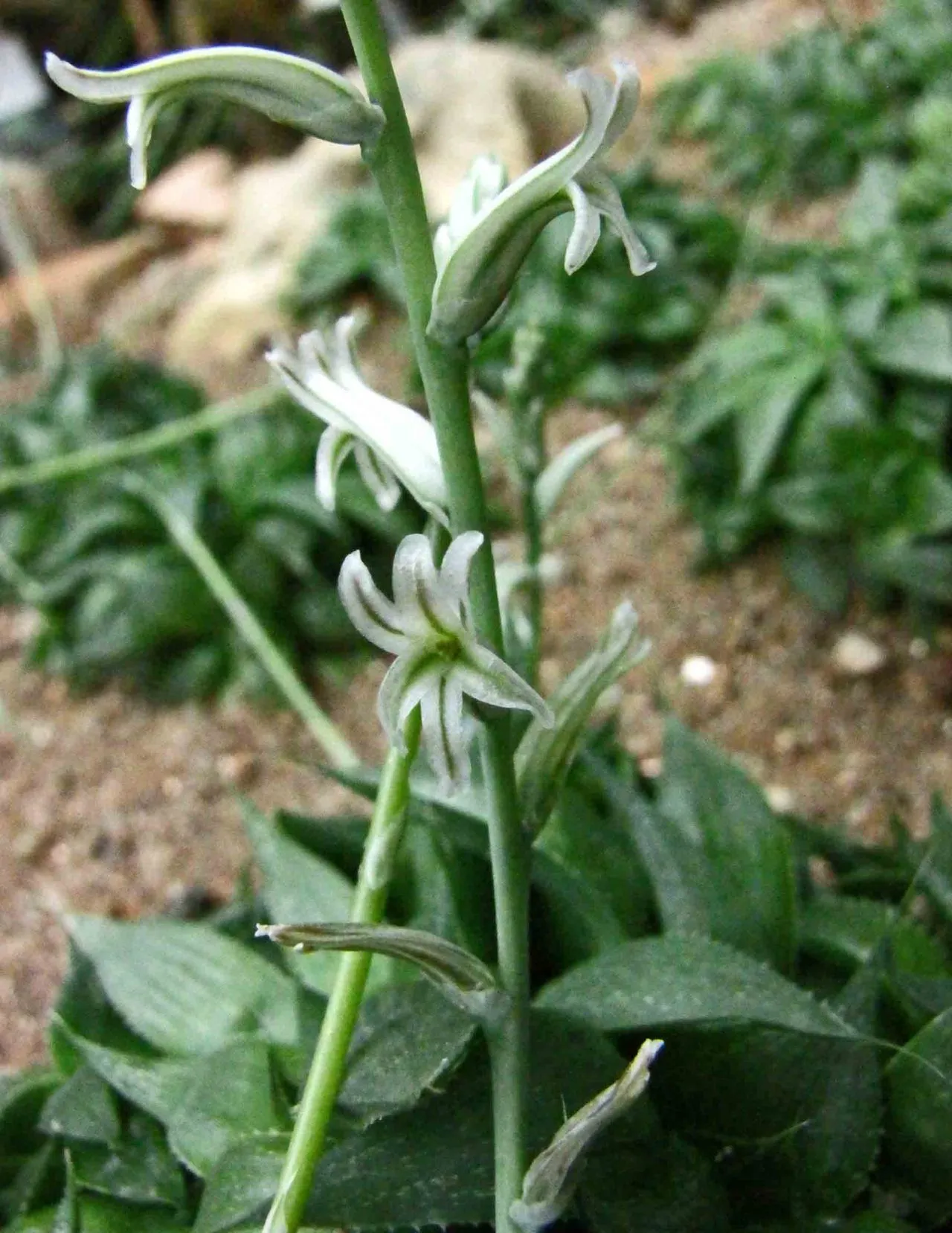
A Haworthia that looks the same week after week is often doing exactly what it should. The genus is slow, seasonally dormant, and adapted to scrape by in nutrient-poor soils under partial rock cover. What looks like a plant refusing to grow is frequently a plant that is resting, recovering, or simply growing at a pace invisible without monthly photographs. The question to ask is not "why has it stopped?" but "what is the normal growth rate for this genus at this time of year in these conditions?"
Part of the Complete Haworthia Guide.
Summer dormancy
The most common reason for apparent growth stalling in Haworthia is summer dormancy, and it is not a problem. Most species in the group originate from the summer-dry regions of the Western Cape of South Africa, where rainfall is winter-biased or bimodal. When temperatures rise above 28–30 °C, these plants slow or stop active growth to conserve water and energy. The dormancy is not complete hibernation — the plant photosynthesises, transpires, and maintains itself — but new leaf production slows to near zero and offset formation typically pauses.
In Northern Hemisphere indoor cultivation, this slowdown is most obvious from June through August. In a heated indoor environment without strong seasonal temperature variation, dormancy cues may be weaker or more diffuse, but the plant will still slow in response to changing day length and cumulative heat. Do not attempt to force growth during this period with extra fertiliser or water. The plant will resume when conditions shift. Reducing watering slightly during dormancy is advisable — the reduced metabolic rate means the plant uses water more slowly, and an over-wet dormant plant is more susceptible to rot.
Insufficient light
Light is the single most controllable factor affecting Haworthia growth rate indoors. The genus tolerates low light better than most succulents, but "tolerates" and "thrives" are not the same thing. A haworthia in deep shade — a corner shelf, a north-facing windowsill in winter, a bathroom without natural light — survives at a reduced metabolic rate. Growth slows to nearly nothing because the plant cannot produce enough carbohydrates to build new tissue.
The diagnostic sign of light limitation is the quality, not absence, of growth. If new leaves that do appear are thinner, paler, more widely spaced, or pointed toward the light source, the plant is photosynthesising below its optimum. A compact rosette of firm, correctly coloured leaves is receiving adequate light; a loose, stretched rosette with thin new growth is not.
The correction is to move the plant progressively into brighter indirect light. An east-facing window, a south window set back 60–100 cm, or a grow light providing 150–250 µmol/m²/s PAR at the leaf surface for 12–14 hours per day will restart growth in most cases within 4–6 weeks. Do not move directly from deep shade to a bright south window — step up light intensity over 10–14 days to avoid sunburn on leaves calibrated for low light.
Root damage and depleted root system
A plant with compromised roots cannot sustain active growth regardless of light or fertiliser. Root damage from root rot, severe drought, root mealybug, or rough handling during repotting reduces the plant's ability to absorb water and nutrients. Growth stalls as the plant diverts resources toward root regeneration rather than leaf production.
This cause is identifiable by unpotting. Healthy roots are firm and pale. Dead roots from rot are black or brown and hollow. Root mealybug is revealed by white cottony deposits among the roots. After any root problem is resolved — rot removed, mealybug treated, damaged roots trimmed — growth should resume within 4–8 weeks as the new root system establishes.
A haworthia with few living roots is not gaining new growth, but it is also often not visibly sick. The leaves hold their water, the rosette looks fine, and the only indicator is the absence of new leaf production. Monthly root inspections at repotting time catch root decline before it becomes severe.
Exhausted or compacted substrate
A Haworthia growing in the same substrate for several years runs into two problems: nutrient depletion and structural collapse. Peat-based mixes break down over time, becoming hydrophobic when dry and anaerobic when wet. Fine roots may be alive but operating at low efficiency in substrate that barely transmits water. The plant grows slowly not because of dormancy or light, but because root function is impaired by poor soil structure.
Repotting into fresh mineral mix with adequate inorganic content — at least 50% pumice, perlite, or coarse grit — typically restarts growth within a growing season. The first 4–8 weeks after repotting may show continued stalling while fine roots re-establish in the new medium; this is normal. Do not repot during summer dormancy or mid-winter — spring and autumn are the most effective times for haworthia repotting.
Temperature too cold
Haworthias slow significantly below 10 °C and stop growing below 5 °C. A plant on a cold windowsill in winter may be receiving adequate light but is too cold to metabolise efficiently. This is not dormancy in the classical sense — it is simple temperature limitation. The fix is to move the plant to a position where temperatures stay above 10 °C, or to accept slower growth through winter and monitor for resumption in spring.
The risk during cold-induced growth stalling is overwatering. The plant uses water slowly when cold, and a wet substrate at low temperature is the primary recipe for root rot. If growth has stalled due to cold, reduce watering sharply and resume when temperatures recover.
Natural growth rate variation between species
Not all Haworthia groups grow at the same rate. Hard-leaf Haworthiopsis species such as H. fasciata and H. attenuata grow steadily but not quickly — adding 3–4 leaves per month during active periods. Soft-leaf window species such as H. cooperi, H. retusa, and H. truncata grow more slowly and some collector species (H. maughanii, H. bayeri, H. pygmaea) are notably slow even under optimal conditions. Tulista pumila produces one or two leaves per season.
A plant that appears not to be growing may simply be growing at its genetic rate — compare notes on aloe vs haworthia identification if species identity is uncertain, which is slower than any other houseplant genus most growers encounter. If the plant is firm, correctly coloured, and producing new leaves from the centre — however slowly — it is healthy.
How to assess growth stalling
| Observation | Most likely cause |
|---|---|
| No new growth, June–August, plant otherwise healthy | Summer dormancy |
| No new growth, winter, windowsill below 10 °C | Cold temperature |
| New growth present but thin, pale, reaching toward light | Insufficient light |
| No new growth, leaves shriveling despite watering | Root damage (rot or mealybug) |
| No new growth, substrate compacted, plant > 3 years unrepotted | Exhausted substrate |
| No new growth after recent repotting | Normal post-repotting adjustment |
| No new growth, species is inherently slow | Natural species growth rate |
Risk and severity
Dormancy and slow growth rate carry no risk. Light limitation and cold are correctable without lasting damage. Root damage suppressing growth can progress to plant death if untreated, particularly if root rot continues to advance. Treat a plant that has not grown for more than one full active-season growing period (spring and autumn combined) with increasing suspicion — inspect roots at minimum.
Solutions
Summer or winter dormancy
Reduce watering. Maintain bright indirect light. Do not fertilise. Wait for the next active growth period — spring onset or autumn cooling in the Northern Hemisphere.
Insufficient light
Move to bright indirect light progressively over 10–14 days. East window or grow light supplementation is often the simplest fix for indoor plants without good window access.
Root damage
Unpot, diagnose (rot vs mealybug vs physical damage), treat appropriately, and repot into fresh mineral mix. Allow 4–8 weeks for root re-establishment before expecting new leaf growth.
Exhausted substrate
Repot in spring or autumn into a fresh 50:50 mineral-to-organic mix or 60:40 mineral-heavy mix. Do not repot during dormancy.
Cold temperature
Move to a warmer position above 10 °C. Reduce watering while temperatures are low and increase gradually as temperatures rise.
Prevention
Repot every 2–3 years into fresh mineral-dominant substrate. Maintain light levels above the minimum — a south or east window, or a grow light, keeps indoor plants in active rather than maintenance mode. Keep temperatures above 10 °C during the main growing seasons. Accept summer dormancy as part of the plant's natural rhythm rather than treating it as a failure. Take monthly photographs of the rosette; what is invisible week-to-week becomes clear over a 6-month sequence.
See also
- Indoor succulent care — managing light, heat, and watering for haworthias in a home environment.
- Beginner's guide to succulents — substrate, drainage, and watering fundamentals that keep haworthias in active growth.
- Haworthia fasciata — one of the most commonly grown Haworthiopsis species and a good benchmark for typical growth rates.
Frequently Asked Questions
How fast do Haworthias grow?
Slowly. A healthy adult haworthia may add 2–4 new leaves per month during active growth in spring and autumn. A 5 cm offset can take three to five years to reach adult size. Do not compare to fast-growing genera like Echeveria.
Do Haworthias go dormant?
Yes. Most species slow significantly or stop growing during the peak summer heat (July–August in the Northern Hemisphere) and again during mid-winter cold. This is normal and healthy. Forcing growth through dormancy with fertiliser or water does more harm than good.
Why is my Haworthia not producing offsets?
Offset production depends on the species, age, light, and root health. Young plants rarely offset. Low light and root damage suppress offsetting. Some species — particularly Haworthiopsis attenuata — offset prolifically; others like H. truncata and H. maughanii offset rarely or not at all.
Can repotting stop a Haworthia from growing?
Yes, temporarily. Repotting disrupts fine roots, and the plant pauses while new roots establish — typically 4–8 weeks. Repotting into a pot that is too large or substrate that stays wet too long can extend the pause indefinitely.