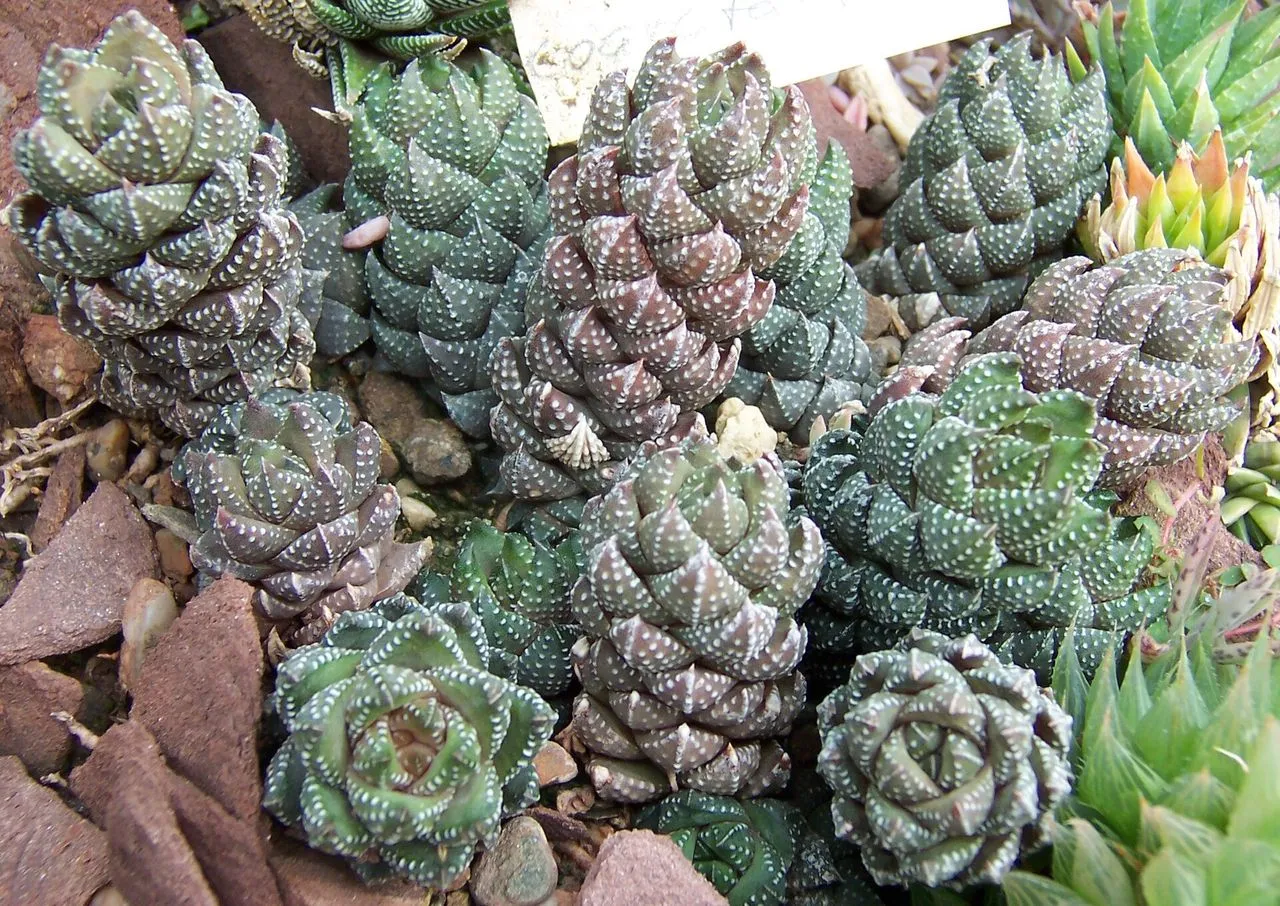
Shriveling in Haworthia is one of the more deceptive symptoms in the genus because it looks identical whether the plant needs more water or whether it needs the opposite of more water. A shriveled leaf has lost turgor — the internal water pressure that keeps succulent tissue plump. But turgor can drop because the soil is too dry, or because roots are damaged and cannot deliver water even when the soil is wet. Acting on the wrong assumption turns a minor problem into a major one.
Part of the Complete Haworthia Guide.
Under-watering and drought stress
The most straightforward cause of shriveling is simple drought. Haworthia draws on water stored in its leaves to support photosynthesis and growth, and when the root zone stays dry for too long, the older and lower leaves surrender their stored water first to protect the growing centre. The leaves lose their plump firmness, wrinkle lengthwise, and may feel soft or leathery rather than crisp.
Drought-caused shriveling is identifiable by context: the substrate is bone dry through the full pot depth, the pot feels very light, and the leaves — though wrinkled — are not wet or discoloured with rot. Soft-leaf species such as Haworthia cooperi and H. cymbiformis show shriveling faster than hard-leaf Haworthiopsis species because they store more water in their large, succulent leaves and deplete those reserves quickly in heat.
The fix is one thorough soak: fill the pot slowly until water exits the drainage holes cleanly, then allow it to drain fully. Do not mist. Do not give repeated small waterings — the goal is to wet the full substrate depth so roots across the pot can draw water. Most drought-shriveled haworthias firm back up within 48–72 hours of correct watering. Leaves that were already wrinkled for several weeks may not fully recover their shape, but new growth from the centre will be normal.
Root rot causing failed water uptake
The diagnostic trap with haworthia shriveling is that a plant with root rot can look exactly like a drought-stressed plant, despite sitting in wet compost. When roots die, they stop functioning. The leaves shrivel because water cannot reach them, but the substrate moisture is irrelevant — dead roots cannot absorb it. Watering more in this situation saturates the remaining healthy root tissue, worsens anaerobic conditions, and accelerates further root decline.
Suspects for root-rot-induced shriveling include: a substrate that has been wet for more than 10 days without drying, cool temperatures below 12 °C that slow root respiration, peat-heavy compost that compacts and retains moisture, and saucers left with standing water. The leaves shrivel, sometimes with yellowing or translucency, and there may be a sour smell from the soil surface.
Diagnosis requires unpotting. Remove all substrate gently and inspect the roots. Healthy roots are firm and pale tan to white. Dead roots from root rot are black, brown, hollow, or slimy, and detach without resistance. Cut all dead roots back to clean tissue with a sterile blade. Dry the plant bare-root in shade for 5–7 days, then repot into fresh, dry mineral mix. Withhold water for a week to allow cut sites to callus before resuming a cautious watering schedule.
Root mealybug infestation
Root mealybug (Rhizoecus spp.) is an underground pest (see root mealybug identification for confirmation) that causes progressive shriveling with no obvious above-ground explanation. The insects colonise the root zone, feeding on root tissue and exuding white waxy secretions that disrupt water and nutrient uptake. The plant slowly declines: leaves shrivel, growth stalls, and inspecting the foliage reveals nothing unusual. The substrate dries at a normal rate, the plant does not smell sour, and the upper growth appears pest-free.
Diagnosis requires unpotting and examining the root zone carefully. Root mealybug colonies appear as small, white or cream insects no more than 2 mm long, surrounded by cottony white waxy deposits on and between the roots. The substrate itself may contain cottony residue.
Treatment is more intensive than for root rot. Remove all old substrate, wash roots with a dilute insecticidal soap solution or systemic insecticide drench appropriate for soil use, allow to dry for 3–5 days, then repot into completely fresh substrate in a clean pot. Do not reuse the old pot or substrate without sterilising both first. Check the plant again 4–6 weeks later, as eggs can survive initial treatment.
Heat stress and dry air
In very high temperatures — above 33–35 °C — combined with dry air, low humidity, and direct sun, even a well-watered haworthia can shrivel temporarily. This reflects a rate-of-loss problem: the leaves are losing water faster through transpiration than the roots can supply it, even with an intact root system. This shriveling is usually short-lived and tied to obvious environmental conditions, such as a heatwave, a very hot windowsill in afternoon sun, or proximity to a heating vent.
Shade the plant and ensure good airflow around it without direct warm-air drafts. Check the substrate moisture and water if it is dry. Avoid misting, which does not help and can cause spotting on soft-leaf species. The shriveling typically resolves within 24 hours once temperatures normalise. If shriveling persists despite normal temperatures and correct watering, move the diagnosis toward root issues.
Repotting stress and root re-establishment
After repotting, particularly if roots were trimmed or if the plant was bare-root for an extended period, a Haworthia can shrivel for 2–4 weeks while new fine roots establish contact with the fresh substrate. The existing root mass may not immediately take up water efficiently in an unfamiliar mix. This shriveling is temporary and corrects itself as root activity resumes.
Do not respond to repotting shriveling with increased watering. A reduced root system has less surface area and needs less water, not more. Overwatering a freshly repotted haworthia with reduced roots risks rot before new roots can establish. Keep the plant in bright indirect light at 18–22 °C, water once sparingly after 7 days, then resume normal dry-down cycles. The shriveling should resolve over 2–4 weeks as new white root tips become visible.
How to identify the cause
| Symptom | Substrate condition | Root inspection | Most likely cause |
|---|---|---|---|
| Leaves wrinkled, pot light and dry | Bone dry through full depth | Pale, firm roots | Under-watering |
| Leaves wrinkled, pot heavy and wet | Wet or damp | Black/brown/slimy roots | Root rot |
| Leaves wrinkled, no improvement after watering | Dry or normal | White cottony wax on roots | Root mealybug |
| Shriveling during heatwave, resolves in cool | Any | Firm roots | Heat/transpiration stress |
| Shriveling after repotting, no other symptoms | Appropriate moisture | Trimmed but healthy roots | Repotting shock |
Risk and severity
Drought shriveling is the lowest-risk cause and reverses quickly with correct watering. Root rot causing shriveling is more serious because it is progressive — the longer it goes untreated, the more root and stem tissue is lost. Root mealybug is the most difficult to eradicate completely and can re-emerge several weeks after initial treatment if not dealt with thoroughly.
A shriveled haworthia with a firm centre rosette and an identified cause is almost always recoverable. A shriveled haworthia where the centre growth is also soft or collapsing has crossed into crown rot, which is much harder to reverse.
Solutions
Drought
Water thoroughly until water runs from the drainage holes. Drain completely. Return to a schedule of watering when the top 3–4 cm of substrate is dry. In summer growth conditions that may be every 7–10 days; in cool winter conditions every 14–21 days.
Root rot
Unpot, cut all dead roots, dry bare-root for 5–7 days in shade, repot into dry mineral mix. Wait 7 days before the first cautious post-repotting watering.
Root mealybug
Remove all substrate, treat roots with insecticidal soap drench or systemic insecticide labelled for soil use, allow to dry, repot in fresh substrate in a cleaned pot. Re-inspect after 4–6 weeks.
Heat stress
Shade the plant from direct sun, ensure airflow, water if substrate is dry. No further intervention needed once temperatures drop.
Repotting shock
Water once sparingly 7 days after repotting. Wait for visible new root tips before resuming normal watering frequency. Bright indirect light at 18–22 °C speeds root establishment.
Prevention
Use a fast-draining mineral mix that dries within 7–14 days indoors. Choose a pot only 2–3 cm wider than the root ball — oversized pots stay wet too long relative to the small root system. Water thoroughly but infrequently, letting the substrate dry fully between waterings. Inspect for root mealybug annually when repotting. Avoid placing plants near heating vents or in full summer sun without acclimatisation. When repotting, minimise root damage and allow the plant to settle before returning to normal watering frequency.
See also
- Root rot diagnosis — the cross-genus root inspection and recovery guide.
- Root mealybug identification — how to find and confirm Rhizoecus infestations.
- Haworthia cooperi — a soft-leaf species particularly prone to shriveling in drought and after repotting.
Frequently Asked Questions
Why is my Haworthia shriveling even though I water it?
The roots are likely damaged and cannot deliver water to the leaves. Unpot and inspect — root rot or root mealybug are the two most common causes of shriveling despite adequate or excessive watering.
How do I rehydrate a severely shriveled Haworthia?
If roots are healthy, water thoroughly until water exits the drainage hole. If roots are damaged, treat the root problem first. Placing a dehydrated but healthy plant in a tray of water for 30 minutes (bottom watering) can help rehydrate a severely compacted substrate.
Will shriveled Haworthia leaves recover?
Leaves shriveled by drought usually firm up within 48–72 hours after correct watering. Leaves shriveled by root damage recover as new roots establish, but severely affected leaves may dry off rather than recover.
Can I leave my Haworthia shriveling for a week?
A drought-stressed but otherwise healthy haworthia can tolerate a week of mild shriveling without permanent damage. Root damage causing shriveling should be addressed within a few days, as ongoing root loss narrows recovery options.