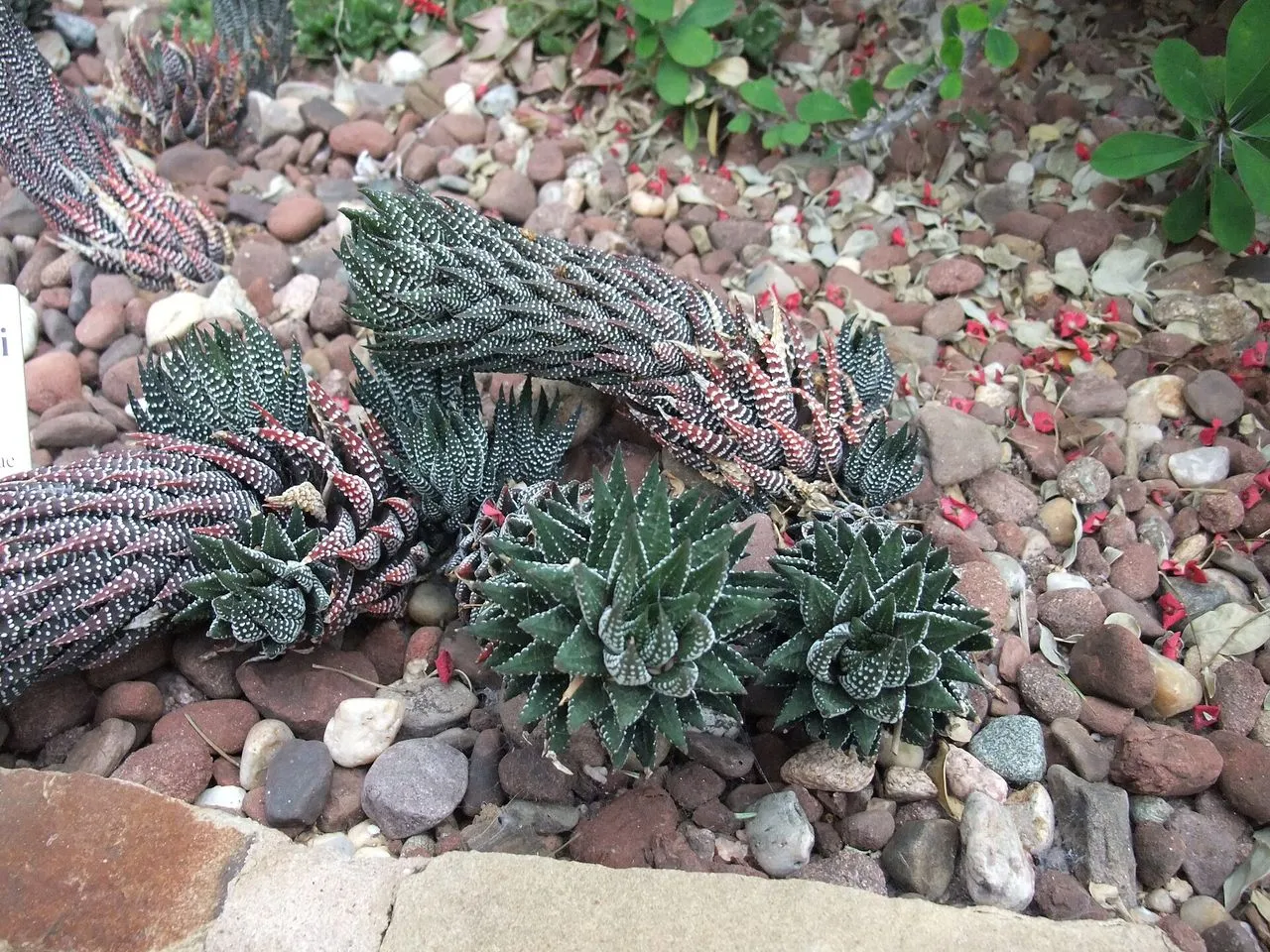
Black leaf tips on Haworthia range from a minor cosmetic issue requiring no action to an active crown rot that can destroy the growing centre of a rosette within days. The distinguishing factor is not the colour — all these conditions produce black tissue — but the texture and location of the blackening, the smell of the affected area, and the history of conditions the plant has been through.
Part of the Complete Haworthia Guide.
Crown rot from standing water in the rosette
This is the most common cause of black tips in Haworthia and the most serious. The rosette's funnel shape collects water at the crown, and if that water sits in the leaf axils rather than evaporating or draining, the warm, moist conditions encourage Botrytis, Fusarium, and other opportunistic pathogens to colonise the soft leaf tissue at the tips. Soft-leaf species with high water content — H. cooperi, H. cymbiformis, H. bayeri — are most vulnerable. The disease moves inward from the tips of inner leaves, blackening and liquefying them.
Diagnostic features of crown rot: the crown of the rosette smells sour or rotting; inner leaves are soft, wet, and dark at their tips while outer leaves may still appear normal; touching the leaf tips produces black liquid. The blackening is soft, not papery.
Remove the plant from direct overhead watering and eliminate any practice of misting the rosette. If crown rot is identified early — only two or three inner leaf tips affected — remove the affected leaves at the base with sterile tweezers, allow the rosette to dry completely in shade for 3–5 days, and do not water from above again. If crown rot has reached the growing centre and the central bud is soft and black, the rosette is lost. Remove offsets from the base if available, or cut into the plant above the rot and re-root any firm healthy sections.
Prevent crown rot by watering at the soil level rather than overhead, ensuring good airflow around the rosette, and not placing the plant in humid enclosed spaces. Bottom watering — placing the pot in a shallow tray of water for 20–30 minutes, then fully draining — eliminates crown wetting entirely and is the safest method for high-humidity environments.
Cold damage and frost
Leaf tips are the most exposed part of the rosette and the first to show frost damage. When temperatures drop below 0 °C, ice crystals form in the leaf tissue. The initial appearance is a glassy, water-soaked patch at the tip; within 24–72 hours this dries to a brown or black, papery or collapsed tip, depending on how long the plant was exposed.
Cold-damaged tips on Haworthia are typically dry and collapsed rather than mushy. The diagnosis is confirmed by the history: a cold night, a frosty window, the plant left outdoors in autumn. Soft-leaf species with their high cell-water content freeze faster and show more severe tip damage than hard-leaf Haworthiopsis species.
Cold-damaged black tips do not spread. Once the plant is returned to temperatures above 10 °C and withheld from watering for two weeks, the damaged tips dry off completely and stop advancing. Remove fully dry, papery black tips only when they detach cleanly. Do not cut into firm green tissue, and do not remove partly damaged leaves before they have fully dried.
Sunburn advancing to necrosis
Mild sunburn typically presents as reddish-brown or white bleached patches on the upper leaf surface. In severe cases — prolonged direct midday sun in summer — the UV-exposed tissue progresses from bleached to black as the necrosis deepens through all cell layers. This most commonly affects the outer edges and tips of leaves most exposed to the light source.
Sunburn necrosis is dry, papery, and fixed. It does not spread after the plant is moved to shade. The black tips from sunburn are distinctly crisp, not wet, and there is no sour smell. Compare with crown rot, where the tissue is soft and the smell is specific. Move the plant to bright indirect light and acclimatise any future light increases over 10–14 days rather than immediately placing the plant in full sun.
Fungal tip dieback
In persistently humid conditions — overcrowded collections, poorly ventilated growing spaces, or shade houses with low airflow — Haworthia can develop fungal tip dieback from pathogens such as Botrytis cinerea. This presents as dry, grey-black tips on the outer leaves, spreading inward slowly over weeks rather than progressing as fast as crown rot. The tips are not wet, but they are not as cleanly papery as cold or sunburn damage — they may have a dusty or grey-brown appearance.
Treatment involves improving airflow, reducing humidity, removing affected tips with sterile scissors, and applying a copper-based or systemic fungicide as a preventive drench on the soil (not on the leaves) if the dieback continues. The primary corrective is environmental — a well-ventilated growing space is more effective than any chemical intervention.
How to distinguish the causes
| Appearance | Texture | Smell | History | Most likely cause |
|---|---|---|---|---|
| Black tips, inner leaves first | Soft, wet, mushy | Sour, rotting | Watering into crown, high humidity | Crown rot |
| Black tips, outer leaves | Dry, papery | No odour | Cold event below 0 °C | Cold/frost damage |
| Black tips on sun-facing sides | Crisp, dry | No odour | Direct sun exposure | Sunburn necrosis |
| Grey-black tips, spreading slowly | Dry but dull | Musty | Humid, low airflow environment | Fungal tip dieback |
Risk and severity
Crown rot is the highest-risk cause. It can destroy the growing centre of a rosette in as little as 3–5 days in warm, humid conditions. Cold damage and sunburn are cosmetic injuries that stop advancing once conditions change. Fungal tip dieback is moderate risk — slow to progress but difficult to eradicate completely without environmental changes.
Act immediately if the crown smells sour or inner leaf tips are soft. Wait and observe if black tips are dry, papery, and on the outer leaves only.
Solutions
Crown rot (early stage — outer leaves only)
Remove affected leaves at the base with sterile tweezers. Dry the rosette in shade with good airflow for 3–5 days. Do not water from above again — switch to bottom watering at the pot base or soil surface only.
Crown rot (advanced — growing point soft)
Remove the plant from the pot. Cut above the rot into firm, green tissue. Discard the base. Allow the cut face to callus for 5–7 days in dry shade, then root the cutting in dry mineral mix. Check for offsets at the base that may have escaped infection.
Cold damage
Bring the plant to above 10 °C. Do not water for two weeks. Allow damaged tips to dry completely before removing. If the growing centre remains firm after 5–7 days, the plant is recoverable.
Sunburn necrosis
Move to bright indirect light. The black tips will not spread. Acclimatise to any stronger light exposure over 10–14 days in future.
Fungal tip dieback
Improve airflow around the plant. Remove affected tips with sterile scissors. Apply copper fungicide soil drench if dieback continues. Separate the plant from crowded neighbours.
Prevention
The single most important prevention measure for Haworthia black tips is never watering into the rosette. The bottom watering vs top watering guide explains both methods and when each applies. Water at the soil level or use bottom watering. Ensure good airflow around the crown, particularly in humid growing conditions. Protect from temperatures below 3–4 °C. Avoid sudden increases in direct sun exposure. Inspect crown leaves monthly for the earliest signs of soft tissue or sour smell — early intervention in crown rot is straightforward; advanced crown rot is not.
See also
- Sunburn diagnosis and recovery — assessing and preventing sunburn across succulent genera.
- Stem rot diagnosis — what to do when rot progresses from tips into the central stem or crown.
- Haworthia cooperi — the soft-leaf species most susceptible to crown rot in humid indoor conditions.
Frequently Asked Questions
Are black tips on Haworthia serious?
Dry, papery black tips on the lowest leaves are cosmetic and can be left alone. Mushy, spreading black tips in the crown centre are crown rot — serious and requiring immediate intervention.
Will black tips on Haworthia leaves spread?
Dry black tips from cold or sunburn do not spread. Black tips caused by crown rot or fungal tip dieback can spread, especially in wet, humid conditions. Monitor over 3–5 days — advancing spread requires treatment.
Should I cut off the black tips on my Haworthia?
Only if the black tissue is fully dry and the cut tip will be clean and dry. Do not cut into living tissue. If the whole leaf tip is mush, remove the leaf at the base rather than cutting partway through a diseased leaf.
Can black Haworthia tips recover and turn green?
No. Necrotic black tissue is dead and will not regenerate. The goal is preventing spread to healthy tissue and correcting the underlying cause so new growth is undamaged.