| Question | Short Answer |
|---|---|
| Can I save a plant with stem rot? | Yes, if you catch it early and cut above the rot. |
| What's the difference between stem rot and root rot? | Root rot stays in the roots. |
| How do I know if stem rot is in the stem? | Black/mushy tissue visible above the soil line. |
| What is the first step for stem rot in succulents: diagnosis, beheading and recovery? | Cut above the rot until you see clean white tissue. |
Stem rot is the stage beyond root rot: the point at which blackened, softened tissue has moved out of the root zone and into the stem itself. The distinction matters because root rot leaves the stem intact and recoverable with a straightforward unpot-and-trim; stem rot requires a harder decision. Catch it early and a beheading cut succeeds in roughly 80% of cases. Let it climb above the lowest leaf node and that figure drops to below 30%. Here is the rest of the picture.
Quick Answer
- Stem rot shows as black, mushy tissue moving up the stem. Act immediately - this is serious.
- Cut above the rot until you see clean white tissue. Let callus 5-10 days, then root as a cutting.
- Success depends on how early you catch it - below the lowest node gives ~80% recovery, above gives ~30%.
Part of the Beginner's Guide to Succulents.
What Stem Rot Is
Root rot and stem rot are related but distinct problems. Root rot describes decay confined to the root system, with the stem still intact. Stem rot describes the situation where a pathogen has colonised the stem tissue itself, either by progressing upward from a rotted root base or by entering the stem directly through the crown or a surface wound.
Two main pathogen types cause stem rot in succulents. The first is bacterial soft rot, driven primarily by Pectobacterium carotovorum (formerly classified as Erwinia carotovora). This pathogen produces enzymes that dissolve pectin in plant cell walls, causing rapid, wet, mushy collapse with a strongly putrid smell. In warm conditions above 22 °C (72 °F), Pectobacterium can advance 2-4 cm up a susceptible stem per day.
The second type is fungal stem rot, most commonly Fusarium oxysporum or Fusarium solani. This moves more slowly and produces a drier, reddish-brown discolouration rather than a wet collapse. The smell is less dramatic but still noticeably wrong: somewhere between damp earth and a stale, earthy sharpness. Fusarium is more prevalent in cool, persistently damp conditions and often co-occurs with the later stages of root rot.
Both types frequently originate in the crown of rosette-forming plants, where a central cup collects and holds water after overhead watering or rain. Echeveria and Aeonium are particularly prone: their tight central crowns trap water at the point where the youngest leaves meet the stem, exactly the close-packed, persistently moist environment these pathogens prefer. At the other end of the susceptibility range, Sansevieria (Dracaena trifasciata) has no crown cup and thick, waxy stem tissue that resists bacterial entry. Most Sedum species have open rosette architectures that shed water readily and are correspondingly much less affected.
How to Identify It
The earliest above-ground sign is translucent yellowing at the base of the innermost leaves, the ones closest to the stem centre. These leaves have not dried out; they have become waterlogged from below. They feel faintly soft and their colour shifts from the normal solid green or blue-grey to a slightly watery, semi-transparent appearance.
This differs from two things that are sometimes confused with early rot. Normal senescence removes the outermost, oldest leaves first: they shrivel and dry from the outside inward, leaving a dry papery husk with no smell and no upward progression. Sunburn produces dry, papery, white or pale tan patches on the upward-facing surface of exposed leaves where direct sun has hit; the underlying tissue is firm and the damage does not spread.
The direction of travel is the key identifier. Stem rot blackening moves upward from the soil line, not downward from the leaf tips. Press gently along the lower stem with two fingers. Firm tissue feels rigid and springs back. Rotted tissue compresses noticeably and may feel hollow. A healthy stem smells faintly earthy or of nothing in particular. Bacterial stem rot has a smell you will not forget: strongly of decomposing matter. Fungal rot smells stale and musty.
Cosmetic black tipping on old root ends is localised, firm, and dry. Dry black patches at old leaf scars are similar. Stem rot is wet, progressive, and smells. If you are unsure, unpot the plant and make a small cross-section cut into the suspicious area at the stem base. Pale green or white interior means the tissue is healthy. Brown, tan, or hollow interior means you need to act now.
Why It Appears
Water pooling in the rosette crown. Overhead watering or rain deposits water in the central cup of rosette-forming genera. In still air above 20 °C (68 °F) this water sits rather than evaporating, keeping the crown damp for hours. This is near-ideal for Pectobacterium proliferation, and it is why bottom watering is a sensible default for Echeveria and Aeonium through the main growing season.
Mechanical entry points. Any break in the stem surface, a torn leaf from rough repotting, a snail trail, a propagation cut made without sterilisation, gives bacteria and fungal spores a direct route past the waxy epidermis. Once conditions are moist, infection can establish within hours of the wound forming.
Contaminated cutting tools. A blade used on a rotted plant, wiped on a cloth, and then used on a healthy one transfers active Pectobacterium inoculum directly. This is one of the most common routes of spread in home collections. Every propagation cut should begin with a blade wiped clean with 70% isopropyl alcohol, and the blade should be wiped again between individual cuts.
Root rot progressing upward. Advanced root rot that has reached the base of the stem is the most common precursor to true stem rot. By the time blackening is visible at the soil line, the rot has typically been active for weeks. Managing the earlier root-rot stage before it enters the stem is always preferable to any intervention at this point.
Scale and mealybug entry wounds. Scale insects and mealybugs create small feeding punctures in the stem surface. Ants farming these insects keep the affected area moist with honeydew. Both conditions accelerate bacterial entry. A heavy scale infestation on an Echeveria during the growing season is a meaningful stem rot risk, not an aesthetic inconvenience.
Beheading Protocol
Behead when: the blackening is visibly progressing upward, you can find a section of stem above the rot line that looks firm and pale on cross-section, and the growing tip is still intact. The earlier you cut, the better the odds.
When to discard instead. If the growing tip at the rosette centre is soft, collapsed, or discoloured, the meristem is gone and the plant cannot regenerate regardless of what you do below it. If every cross-section from the root base to the lowest leaf attachment point shows brown or hollow tissue, there is nothing viable to callus. In either case, discard the stem, but detach any firm outer leaves first; they can still be used as leaf cuttings.
The cut. Use a sharp blade (a scalpel or Stanley knife works well) sterilised with 70% isopropyl alcohol. Make the first cut at least 3 cm above the uppermost visible blackening. Inspect the cross-section: it should be a clean pale green or white throughout. If you see any brown staining in the centre, move the cut higher, re-sterilise the blade, and repeat. Continue until every cross-section is completely clean. Losing two more centimetres of stem is preferable to callusing a cut that still carries infection.
Callusing. Set the cut stem upright on a clean, dry surface in open air. Not in substrate, not in a propagation bag. Keep it at 18-24 °C (64-75 °F) with no water contact whatsoever. Allow 7-14 days; larger-diameter stems need the full two weeks. The cut surface should appear visibly dry and slightly sealed before the stem goes into substrate.
Replanting. Use a mineral-heavy mix: 50% pumice, 30% horticultural grit, 20% lean loam is workable. Do not water for two weeks after planting. After that initial period, use bottom watering: set the pot in a shallow tray of water for ten minutes, then remove it. This wets the root zone from below without ever moistening the crown or the callused stem cut. Resume normal watering only once new white root tips appear at the drainage hole, typically 3-6 weeks after planting.
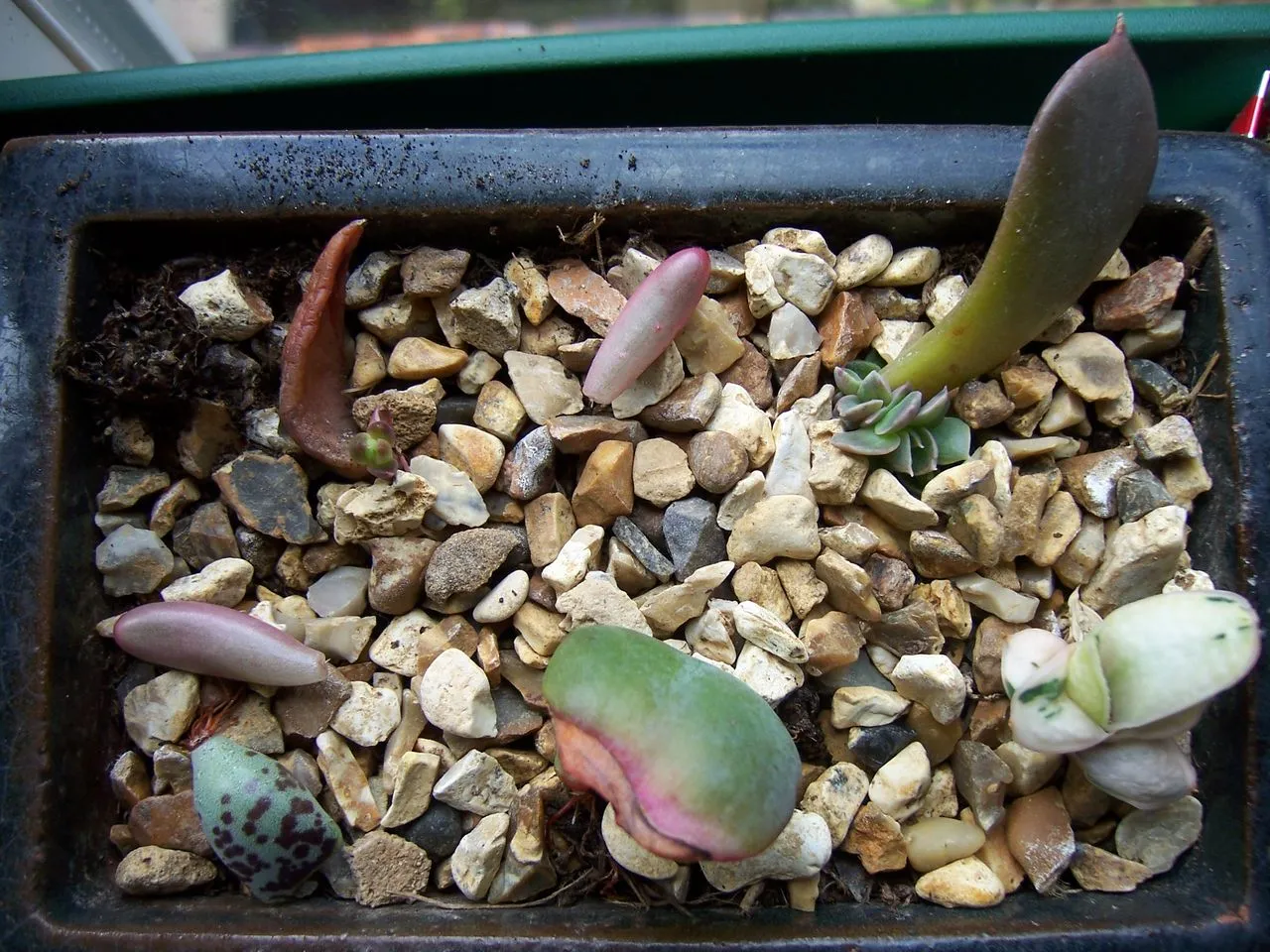
The original root mass. If some roots on the remaining stub are still firm (this happens when the rot was caught early), the stump may produce new offsets from dormant basal buds over the following weeks. More reliably, any firm outer leaves removed during the cut process can be propagated as leaf cuttings: callus them for 2-3 days on a dry surface, then lay on dry mineral substrate. Roots typically appear in 3-6 weeks.
When the Plant is Beyond Saving
Any one of these three conditions means the plant cannot be recovered.
The growing tip at the rosette centre is soft, collapsed, or discoloured. The meristem is gone; without it the plant cannot produce new leaves or an offset regardless of how much healthy stem remains below.
Every cross-section from the root base to the lowest leaf attachment point shows brown or hollow interior. There is no firm tissue to callus and no root-forming zone to rebuild from.
The smell throughout the entire stem is strongly putrid and the stem feels hollow under finger pressure along its whole length. This pattern indicates Pectobacterium infection that has already outpaced any possible cutting response. In warm indoor conditions, this stage can be reached within 48-72 hours of the first visible signs.
Before discarding entirely, check the outer leaves. A single firm, undamaged Echeveria leaf laid on dry mineral substrate can produce a new rosette in 8-12 weeks. It is worth the two minutes to detach and save any viable leaves before the rest goes in the bin.
How to Prevent It
Water at substrate level, not overhead. For Echeveria and Aeonium in particular, keep the central crown dry. If you do water overhead, tilt the pot immediately after and pour out any water pooled in the crown. Bottom watering, setting the pot in a shallow tray for 10 minutes then removing it, is a cleaner default for any tight-crown rosette through the growing season.
Sterilise cutting tools between every plant. One contaminated cut is enough to carry active Pectobacterium to a healthy stem. A small spray bottle of 70% isopropyl alcohol at your potting bench takes ten seconds per blade and costs almost nothing.
Check for scale and mealybugs every time you water. Catching an infestation at two or three insects rather than at colony scale prevents the entry wounds and damp honeydew environment that enable secondary bacterial infection to take hold.
Keep the substrate cycling properly. Persistently damp substrate at the base of the stem is the underlying permissive condition for almost every stem rot case. A mix that drains in under ten seconds and dries completely within 48-72 hours after watering removes this condition. The beginner's guide covers substrate composition and pot sizing in full; getting those two decisions right does more to prevent stem rot than any reactive treatment.
See also
- A Beginner's Guide to Succulents, covering the wet-dry watering cycle, substrate composition, and pot sizing.
- Soil and Substrate for Succulents, with mineral percentages, component options, and pH targets in full.
- Growing Succulents Indoors, covering the indoor conditions (reduced light, slower substrate drying) that raise rot risk year-round.
FAQ
Can I save a plant with stem rot?Yes, if you catch it early and cut above the rot. Cut to clean white tissue, callus 5-10 days, then root as a cutting.
What's the difference between stem rot and root rot?Root rot stays in the roots. Stem rot moves up into the stem. Stem rot is more serious and requires beheading.
How do I know if stem rot is in the stem?Black/mushy tissue visible above the soil line. Act immediately - success rate drops sharply once rot passes leaf nodes.
Frequently Asked Questions
Can I save a plant with stem rot?
Yes, if you catch it early and cut above the rot. Cut to clean white tissue, callus 5-10 days, then root as a cutting.
What's the difference between stem rot and root rot?
Root rot stays in the roots. Stem rot moves up into the stem. Stem rot is more serious and requires beheading.
How do I know if stem rot is in the stem?
Black/mushy tissue visible above the soil line. Act immediately - success rate drops sharply once rot passes leaf nodes.
What is the first step for stem rot in succulents: diagnosis, beheading and recovery?
Cut above the rot until you see clean white tissue. Let callus 5-10 days, then root as a cutting.