| Question | Short Answer |
|---|---|
| How do I know if it's scale or just a bump? | Scale insects are raised bumps that can be pried off. |
| Does scale spread to other plants? | Yes, via crawlers (young scale). |
| What's the difference between armoured and soft scale? | Armoured scale has a separate waxy shield. |
| What is the first step for scale insects on succulents: hard-shell vs soft-bodied? | Scrape off visible scale with a fingernail or soft brush. |
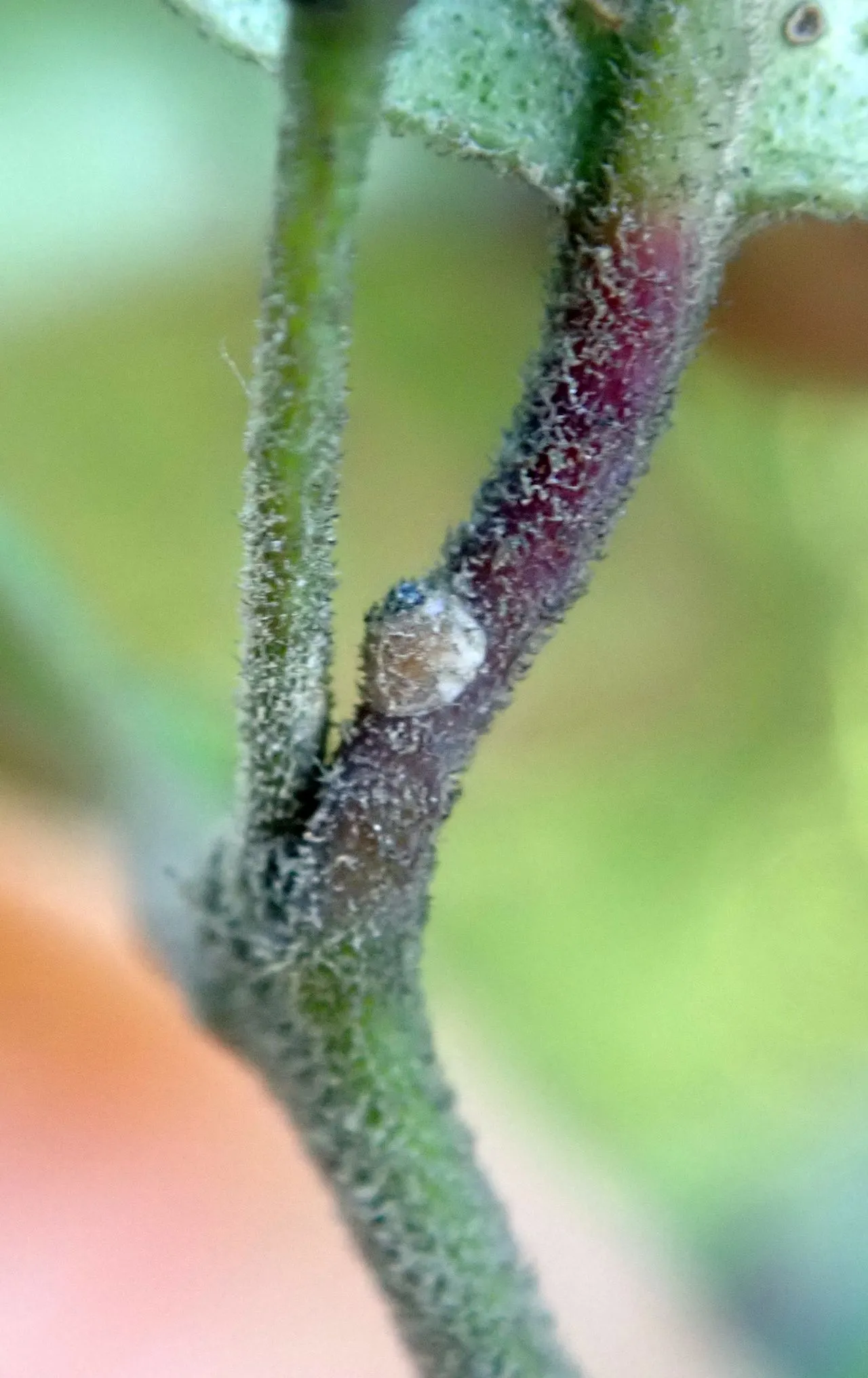
Question: are the brown, tan, or grey bumps on your succulent scale insects, and does it matter whether they are hard-shell or soft-bodied? The bottom-line answer: yes, the distinction matters because armoured scale in Diaspididae hides beneath a separate waxy shield, while soft scale in Coccidae has a dome-shaped body with the cuticle fused to it. Lift one suspect bump with a thumbnail or fine blade: if a shell pops off and the insect body remains underneath, you are dealing with armoured scale; if the whole dome comes away as one animal, it is soft scale. Here is the rest of the picture.
Quick Answer
- Scale appears as brown/tan bumps on stems or leaves. Use the thumbnail test: armoured scale leaves a shell, soft scale comes off whole.
- Scrape off visible scale with a fingernail or soft brush. Treat with neem oil or systemic insecticide.
- Check weekly - scale insects are slow-moving and easier to catch early than mealybugs.
Part of the Beginner's Guide to Succulents.
What it is
Scale insects are sap-feeding hemipterans, related to mealybugs, aphids, and whiteflies. They insert a fine stylet into succulent tissue and feed while remaining almost motionless for most of their lives. That stillness is what makes them so easy to overlook. On an agave leaf or a jade stem, a settled female can look like corking, old splash marks, mineral scale from hard water, or a small scab from mechanical injury.
Two scale families matter most in succulent collections. Armoured scale, family Diaspididae, produces a separable waxy shield over the insect. The shield is not the body. It is a protective cover made of wax and shed skins, and it is one reason these insects resist many contact sprays. Soft scale, family Coccidae, forms a rounded or oval dome where the cuticle is part of the insect's body. Many soft scale species also excrete honeydew, the sticky sugar-rich waste that later supports sooty mould.
The common names are not precise enough. "Hard scale" is often used casually for armoured scale, but what you need in practice is the shield test. Hemiberlesia lataniae, latania scale, is a widespread armoured scale on palms, ornamentals, and succulents. Aspidiotus nerii, oleander scale, is another armoured generalist and turns up on aloes, agaves, cacti, and nursery-grown mixed succulents. Saissetia coffeae, hemispherical soft scale, is a soft scale that can colonise jade plants, kalanchoes, and other smooth-stemmed succulents, especially under warm indoor conditions.
How to identify it
Start with position and texture. Scale insects usually settle on sheltered surfaces with stable contact: the underside of agave leaves, along aloe leaf margins, on the lower stems of crassulas, around cactus areoles, and under the dry skirt of old echeveria leaves. They are usually 1 to 4 mm across as settled females, although young stages are much smaller.
Use a 10x hand lens and a bright angled light. Mineral deposits are irregular or splash-shaped. Corking follows tissue stress patterns and cannot be lifted away cleanly. Scale insects are more regular: circular, oval, oyster-shell, or dome-shaped, often repeated in clusters of similar size.
The thumbnail-lift test is the key field separator. Choose one suspect scale on an older leaf where a small mark will not matter. Press the edge of a thumbnail, wooden toothpick, or fine blade under the side and lift gently.
Hard-shell armoured scale (Diaspididae)
Armoured scale has a cap. When you lift it, the waxy shield separates from the living insect below. The shield may flip off as a pale tan, brown, grey, or whitish disc. The body underneath is soft and flat, often yellowish or orange when crushed. That separation is diagnostic.
On succulents, armoured scale often looks dry and dead even when active. Oleander scale is frequently pale cream to white with a yellow centre, especially on smooth leaves. Latania scale tends to look more brown or grey-tan, sometimes blending into older epidermis. On cacti, armoured scale can lodge near areoles and along ribs, where the shield is partly hidden by spines or wool.
Damage from armoured scale is usually local chlorosis, pitting, weak growth, and a dull, dirty cast to the plant. Heavy feeding on thin-leaved kalanchoes can yellow whole leaves. On thick agaves and aloes, the plant may look cosmetically scarred long before it weakens. Because armoured scale does not produce much honeydew, the absence of sticky residue does not rule it out.
Soft scale (Coccidae)
Soft scale does not have a removable shield. The dome you see is the insect. If you lift it, the entire body comes away, often leaving a wet mark or a ring where the mouthparts were inserted. The surface may be glossy, leathery, brown, amber, olive, or chestnut, depending on species and age.
Hemispherical soft scale lives up to its name: mature females form smooth rounded domes, often 2 to 4 mm wide, on stems and leaf bases. On jade plants, they can line the older woody stems and hide at branch forks. On kalanchoes, they settle along petioles and the underside of leaves. Soft scale is more likely than armoured scale to announce itself with honeydew. Leaves below the colony may feel tacky. Nearby shelves may collect shiny droplets. Sooty mould can follow as a black or grey film that grows on the honeydew rather than inside the plant.
Look also for crawlers. These are first-instar nymphs, about 0.2 to 0.4 mm, mobile, and pale yellow to orange. They are the only mobile life stage in the female line and the best window for sprays because they have not yet built a shield or heavy wax layer. Crawlers often appear 2 to 4 weeks after adult females settle, so a plant can look clean after manual removal and then show a new dusting of tiny moving specks later.
Why it appears
Most scale arrives on new plants. Nursery benches hold many host species close together, and settled scale can survive unnoticed on the underside of leaves, under pot rims, and on old stems. A plant bought for one attractive rosette may carry two or three mature females at the base, enough to start a shelf-wide problem in a warm room.
Dense plant spacing helps the crawlers. They cannot fly, but they can walk across touching leaves, pot rims, labels, and staging. They also move on sleeves, brushes, and tweezers.
Warm, steady temperatures shorten the life cycle. A heated indoor shelf at 21 to 25 °C allows overlapping generations, especially where air movement is weak. Scale is not caused by underwatering, but drought-stressed plants show feeding injury sooner because their tissues have less reserve. Over-fertilised succulents with soft, nitrogen-rich growth can also be more attractive feeding sites.
Ants matter where plants spend time outdoors or in a greenhouse. They collect honeydew from soft scale and may defend the insects from predators. If ants repeatedly visit a jade plant or agave pot, inspect for sap-feeding pests before you assume the ants are nesting in the substrate.
How to fix it
Isolate the plant first. Put it at least 2 metres from the main collection or move it to a separate room. Inspect its neighbours before you treat.
For small colonies, manual removal is not optional. Use a wooden toothpick, cotton swab, or soft toothbrush to dislodge visible adults. On farina-coated echeverias and pachyphytums, work slowly and accept that some bloom may be marked. On cacti, use tweezers and a hand lens around areoles. Wipe tools with 70% isopropyl alcohol between plants so you do not transfer crawlers.
Treatment differs by scale type.
For armoured scale, contact insecticides are often disappointing because the shield blocks the droplet from reaching the body. After manual removal, horticultural oil is useful because it smothers exposed insects and crawlers. Use horticultural oil at 1 to 2% v/v during dormancy or cool, bright-shade conditions, never on a hot sunny windowsill and never on drought-collapsed plants. Oils can mark farina and can burn tissue if applied above about 27 °C or followed by direct sun.
For ongoing armoured scale control, systemics are more reliable than repeated surface sprays. Imidacloprid at 0.05 to 0.1% as a root drench is taken up through the roots and reaches feeding insects through the sap stream. Acetamiprid at 200 mg/L as a foliar spray can also suppress active populations, with better usefulness against exposed crawlers and feeding stages than against adults sealed under old shields. Follow the label for your product and local regulations, and keep systemic insecticides away from edible plants and any plants in flower visited by pollinators.
For soft scale, neem oil and insecticidal soap are more useful because there is no separate shield to block contact. Apply to the insects directly and cover stems, undersides, and leaf bases. Repeat at 7 to 10 day intervals for three or four rounds, watching for new crawlers rather than relying on the first spray. Soft scale also responds to systemics, including imidacloprid root drenches and acetamiprid sprays, when colonies are established or hidden in branch forks.
Timing matters more than product strength. Crawlers, the 0.2 to 0.4 mm first-instar nymphs, are the weak point. Check the plant weekly for four weeks after removing adults. A white-paper tap test can help: tap the pot or stem over clean paper and watch for tiny moving yellow specks. If you see crawlers, treat that week, then recheck seven days later.
After the final treatment, keep the plant isolated for another month. Old shields may remain stuck to tissue after the insect dies, so judge success by absence of new crawlers, no fresh honeydew, and no enlarging clusters. Cosmetic pits and yellow scars will not heal.
How to prevent it
Quarantine new plants for four weeks. Inspect on arrival, at two weeks, and before release. Lift old dry leaves, check the underside of the lowest leaves, and look under the pot rim. A 10x hand lens costs less than one replacement plant and changes how early you catch scale.
Avoid plant-to-plant contact on crowded shelves. A 2 to 3 cm gap between rosettes and stems is enough to reduce crawler movement. It also improves air circulation and makes inspection possible without moving every pot.
Clean tools between plants when grooming. Removing dead leaves from an infested crassula and then using the same tweezers on an echeveria is a common transfer route. A 30-second alcohol wipe is enough for tools; do not spray alcohol broadly over farina-coated leaves.
Control ants around outdoor benches and greenhouse staging. Sticky barriers on bench legs, water moats, or bait stations placed away from pots can break the ant-scale relationship. If honeydew is present, rinse shelves and pot exteriors after treatment so ants are not drawn back to the same area.
Keep the plant growing steadily rather than lushly. Bright light, fast-draining substrate, and correct wet-dry watering reduce the soft, shaded growth where scale establishes fastest. The care baseline in the Beginner's Guide to Succulents is enough for most collections: strong light, mineral-leaning substrate, and no constant dampness around the roots.
Mark treated plants with dates. Scale control fails most often because the first visible adults are removed and the crawler generation is ignored. A small label with "scale, check weekly until" and a date four weeks ahead is more effective than memory.
See also
- A Beginner's Guide to Succulents, the care baseline that reduces stress and makes pest checks easier.
- Mealybug Identification, how cottony Pseudococcidae differ from shielded scale insects.
- Systemic Insecticide Use, when root drenches or foliar systemics make sense for persistent sap-feeding pests.
FAQ
How do I know if it's scale or just a bump?Scale insects are raised bumps that can be pried off. True bumps are part of the plant. Use the thumbnail test - scale will lift as a distinct insect.
Does scale spread to other plants?Yes, via crawlers (young scale). Isolate affected plants and check nearby ones for 2-3 weeks.
What's the difference between armoured and soft scale?Armoured scale has a separate waxy shield. Soft scale has the body fused to its shell.
Frequently Asked Questions
How do I know if it's scale or just a bump?
Scale insects are raised bumps that can be pried off. True bumps are part of the plant. Use the thumbnail test - scale will lift as a distinct insect.
Does scale spread to other plants?
Yes, via crawlers (young scale). Isolate affected plants and check nearby ones for 2-3 weeks.
What's the difference between armoured and soft scale?
Armoured scale has a separate waxy shield. Soft scale has the body fused to its shell.
What is the first step for scale insects on succulents: hard-shell vs soft-bodied?
Scrape off visible scale with a fingernail or soft brush. Treat with neem oil or systemic insecticide.