| Question | Short Answer |
|---|---|
| How do I distinguish mealybugs from white mold? | Mealybugs are waxy and move slowly or not at all. |
| Will alcohol harm my succulent? | 70% isopropyl is generally safe when dabbed directly. |
| Why do mealybugs keep coming back? | The root cause is often poor quarantine or ants farming them. |
| What is the first step for mealybugs on succulents: id, lifecycle & eradication? | Treatment: 70% isopropyl alcohol on cotton swab for small infestations. |
Mealybugs are the most reliably damaging pest you will encounter in a succulent collection. A single infested plant placed among others can seed an entire shelf within three to four weeks, and the insects are easy to miss until numbers are high. The short answer: check every new plant before it touches your collection, treat spotted infestations immediately with 70% isopropyl alcohol, and escalate to a systemic insecticide when the spread is collection-wide. The rest of this guide covers identification by species, lifecycle timing, treatment mechanics, and prevention.
Quick Answer
- Mealybugs appear as white cottony masses in leaf axils and on stems. Look for waxy coating and honeydew.
- Treatment: 70% isopropyl alcohol on cotton swab for small infestations. Systemic imidacloprid for severe cases.
- Check new plants for 30 days before adding to collection. Quarantine infested plants immediately.
Part of the Beginner's Guide to Succulents.
What a Mealybug Is
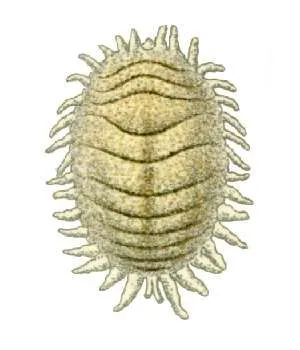
Mealybugs are soft-bodied, sap-sucking insects in the family Pseudococcidae. The two species you will most commonly find on container succulents are Pseudococcus longispinus (the long-tailed mealybug, named for the waxy filaments extending from its rear) and Planococcus citri (the citrus mealybug, a widespread generalist that thrives on succulents, houseplants, and soft fruit alike). Both are hemipterans, in the same order as aphids and scale insects, and both feed by inserting a stylet into plant tissue and drawing out phloem sap.
The characteristic white or grey cottony covering is not the insect itself. It is a waxy secretion produced by the female's integument. This wax coat serves two functions: it reduces water loss, allowing the insect to persist in the dry indoor air succulents prefer, and it physically repels many contact pesticides by preventing them from reaching the cuticle beneath. That wax also explains why standard latex gloves are insufficient when working around infested plants. Latex is slightly tacky, picks up waxy residue, and transfers it to the next plant you touch. It also degrades with repeated exposure to 70% isopropyl alcohol, which is your primary treatment tool. Disposable nitrile gloves resist both the wax adhesion and the alcohol; use those instead.
Mealybugs should not be confused with woolly aphids (which produce similar flocculence but are winged at certain life stages and attack different plant families) or with root-feeding species in the genus Rhizoecus, which colonise the substrate rather than the aerial plant parts and require a different diagnostic approach.
How to Identify Them on a Succulent
The earliest visible signs appear in the most sheltered zones first: leaf axils (the angle between leaf base and stem), the dense centre of a rosette, and the innermost folds of emerging leaves. Females settle in these locations to feed and lay egg masses. Look for:
- White cottony tufts, 2 to 5 mm, in leaf axils and rosette centres. Under a hand lens the insects inside are oval, about 2 to 3 mm, with faint body segmentation visible through the wax.
- Honeydew, a clear, sticky excretion deposited on leaf surfaces below a feeding colony. It dries to a faint waxy sheen.
- Sooty mould, a grey-black powdery fungal layer (primarily Capnodium spp.) that colonises dried honeydew. Sooty mould does not infect plant tissue but is a reliable indicator of an active, established infestation.
- Premature yellowing or leaf drop in the lower whorls. In Echeveria this closely mimics overwatering and is frequently misdiagnosed until the cottony masses are found.
Inspect with a torch and a hand lens, tilting the pot to check the stem below the lowest leaves. A useful screening habit with any new purchase: draw a white tissue lightly along the base of the stem. If it picks up anything cottony, or shows a faint pink-orange stain (crushed mealybug bodies leave this), isolate the plant and begin treatment.
P. longispinus is distinguished from P. citri by its long terminal waxy filaments, which extend roughly as long as the body itself. P. citri has shorter, more symmetrical fringing filaments and is slightly more compact. In practice, this distinction matters less than acting quickly; the treatment is the same for both.
Lifecycle
Understanding the lifecycle explains why a small founding population can become a serious problem in just a few weeks.
A female P. citri lays 200 to 600 eggs over two to three weeks, deposited inside a wax ovisac attached to the feeding site. Eggs hatch in seven to fourteen days at 22 to 25 °C. The first-instar crawlers that emerge are the primary dispersal stage: they are under 0.5 mm, pale yellow, and have minimal wax protection. At this stage they walk freely between pots, cross shelves, and are carried passively on clothing and tools. After settling, each crawler moults through two further nymphal instars over three to five weeks before becoming a sessile adult female. Males are tiny, winged, and short-lived; they are rarely noticed.
The full generation cycle at indoor temperatures (22 to 24 °C) is five to eight weeks, so a founding group can produce three or four overlapping generations in a year. The peak indoor infestation window is late winter through spring. Central heating keeps temperatures steady but drives relative humidity down to 25 to 35% RH, the dry warmth that suits mealybugs well. A collection positioned near a south-facing radiator or a heat vent is the most vulnerable configuration.
How to Eradicate Them
Spot treatment with 70% isopropyl alcohol
For an isolated infestation on one or two plants, 70% isopropyl alcohol applied with a cotton swab is the correct first-line tool. The mechanism is direct: isopropyl at this concentration dissolves the waxy cuticle coating that protects the insect from desiccation, and the insect dies quickly from fluid loss. Higher concentrations (90 to 99%) are actually less effective here because they evaporate too fast, reducing the contact time needed to penetrate the wax; 70% stays on the cuticle long enough to work.
Apply the soaked swab directly to each visible insect and egg mass. Do not smear it across the leaf surface on farina-coated species such as Echeveria subsessilis or Dudleya brittonii: the alcohol will strip that bloom permanently. Work insect by insect. Repeat the treatment every five to seven days for four weeks, which catches newly hatched crawlers before they develop wax protection, while also reaching any adults missed in earlier passes.
Isolate the plant from the rest of the collection for the entire treatment period.
@youtube[BEAGwGlSIUg]
Systemic imidacloprid for collection-wide infestation
When mealybugs have spread to multiple pots, or when leaf symptoms persist despite repeated spot treatment, a systemic neonicotinoid is the appropriate escalation. Imidacloprid, available as a granule or soil-drench concentrate, is taken up through the roots and translocated into the phloem. Any mealybug feeding on plant sap then ingests a lethal dose.
This is the key distinction between contact and systemic treatments. A contact insecticide, including isopropyl alcohol and most neem formulations, kills only insects it physically touches. Individuals sheltering in deep leaf axils, under the pot rim, or in the root zone survive and repopulate. Imidacloprid reaches those sheltered populations because the plant itself becomes the delivery mechanism. Apply as a soil drench at the manufacturer's stated rate (typically 0.25 g/L for granular formulations), repeat at 14 to 21 days if crawlers are still visible, and again at six weeks to account for overlapping generations. For dosing, rotation, and precautions see systemic insecticide use.
Note that imidacloprid is a systemic insecticide and is not appropriate for use on edible plants. For ornamental succulents it presents no practical issue, but keep it away from herbs or fruiting plants grown nearby.
The limits of neem oil
Neem oil, with azadirachtin as the active compound, works as a contact suffocant and also disrupts moulting as an insect growth regulator. The problem for succulent growers is that an effective concentration (0.5 to 1% azadirachtin) applied to waxy or farina-bearing leaves leaves an oily residue that can block stomata and cause heat damage in direct sun. Neem is more useful as a preventive soil drench targeting root-feeding populations, or as a treatment on non-farina species, than as the primary eradication tool for a heavy above-ground infestation.
Preventing Re-infestation
Quarantine all new arrivals. Four weeks isolated from the main collection is the minimum. This interval catches egg masses that hatch after purchase and crawlers too small to see at the point of sale. The investment costs almost nothing; the alternative can cost you an entire shelf.
Control ants. Several ant species farm mealybugs for their honeydew: Lasius niger is the most common culprit in European collections, and Tapinoma sessile plays the same role in many North American settings. Ants physically protect mealybug colonies from predators and actively move crawlers to fresh feeding sites. A sticky barrier around table legs, or a water moat under a growing bench, breaks this relationship without pesticide.
Improve airflow. Mealybug crawlers settle preferentially in still, warm air. A small circulating fan running six to eight hours daily through the warm months creates enough turbulence to disrupt crawler dispersal and removes the stagnant microclimate adult females prefer. This is not a complete control measure on its own, but it reduces establishment rate noticeably in a dense indoor collection.
Sanitise tools between plants. Tweezers used to remove leaves on an infested plant and then used on a healthy neighbour are an efficient transfer vector. A 30-second wipe with 70% isopropyl between plants removes that pathway entirely.
For broader collection management, including light, watering, and substrate fundamentals that keep plants in the vigorous condition that resists pest establishment, see the Beginner's Guide to Succulents.
See also
- A Beginner's Guide to Succulents, collection management fundamentals, including how healthy substrate and airflow reduce pest pressure.
- Root Mealybug Identification, how to distinguish root-feeding Rhizoecus populations from above-ground Pseudococcus and Planococcus species, and when to unpot.
- Neem Oil Application, correct dilution rates, surfactant ratios, and which succulent species are sensitive to oil-based treatments.
- Quarantine new arrivals: the isolation procedure that catches mealybug eggs and crawlers before they reach the main collection
FAQ
How do I distinguish mealybugs from white mold?Mealybugs are waxy and move slowly or not at all. Mold is powdery and刷s off easily. Mealybugs leave sticky honeydew residue.
Will alcohol harm my succulent?70% isopropyl is generally safe when dabbed directly. Avoid soaking the plant, and test on one leaf first for sensitive species.
Why do mealybugs keep coming back?The root cause is often poor quarantine or ants farming them. Treat the entire collection, control ants, and improve airflow.
Frequently Asked Questions
How do I distinguish mealybugs from white mold?
Mealybugs are waxy and move slowly or not at all. Mold is powdery and刷s off easily. Mealybugs leave sticky honeydew residue.
Will alcohol harm my succulent?
70% isopropyl is generally safe when dabbed directly. Avoid soaking the plant, and test on one leaf first for sensitive species.
Why do mealybugs keep coming back?
The root cause is often poor quarantine or ants farming them. Treat the entire collection, control ants, and improve airflow.
What is the first step for mealybugs on succulents: id, lifecycle & eradication?
Treatment: 70% isopropyl alcohol on cotton swab for small infestations. Systemic imidacloprid for severe cases.