Quick Answer
The short answer: Terracotta dries substrate 2-3x faster than sealed pots (glazed ceramic or plastic). Choose terracotta if you overwater, sealed pots if you underwater.
Best first step: For most indoor succulents, use terracotta with a drainage hole. It provides the fast drying that prevents root rot.
Avoid: Sealed pots if you tend to overwater, dark plastic in direct sun (overheats roots), and any pot without drainage.
Pot material is one of those decisions that quietly determines whether your succulents thrive or rot. The bottom-line answer: terracotta breathes and dries the substrate roughly 2 to 3 times faster than a sealed pot, glazed ceramic and plastic both seal moisture in, and the right choice depends more on your watering habits and indoor humidity than on aesthetics. Here is the rest of the picture.
Part of the Beginner's Guide to Succulents.
At a glance
| Property | Terracotta | Glazed ceramic | Plastic |
|---|---|---|---|
| Wall porosity | High, water wicks through clay | Sealed by glass glaze | Sealed |
| Substrate dry-out vs plastic | 2 to 3x faster | Same as plastic | Baseline |
| Weight, 15 cm pot | ~700 g | ~900 g | ~80 g |
| Typical price, 15 cm pot | €3 to €8 | €15 to €50 | €1 to €3 |
| Outdoor freeze tolerance | Cracks below ~0 °C if substrate wet | Cracks similarly | Brittles but survives |
| Salt build-up | White crust visible on outer wall | Hidden inside | Hidden inside |
| Heat under direct sun | Stays cool through evaporation | Stays cool | Heats sharply, can scorch roots |
| Aesthetic range | Classic, narrow palette | Wide, glazes vary | Functional, rarely decorative |
How each material actually behaves
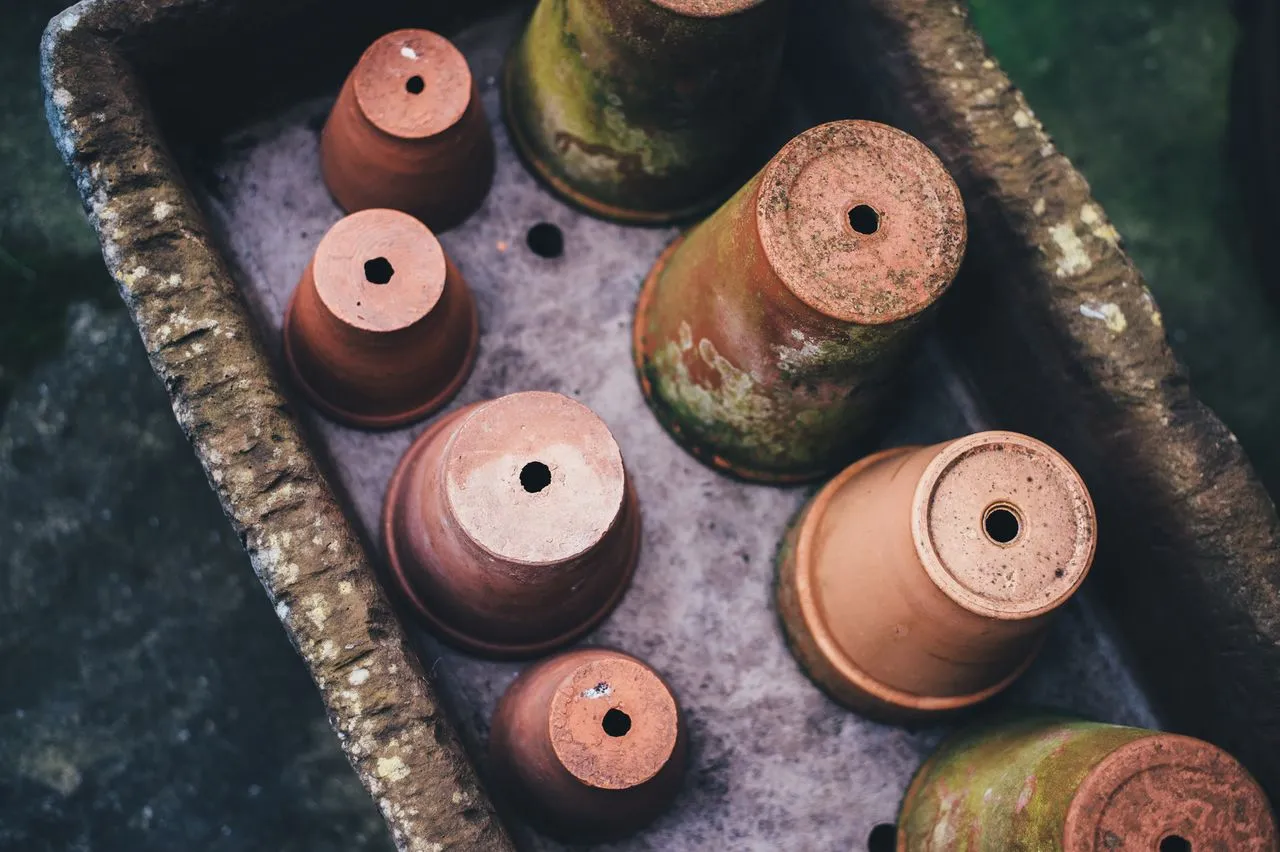
Terracotta. Unglazed fired clay is porous at the wall. Water in the substrate wicks into the pot wall and evaporates from the outer surface, drying the rootball roughly 2 to 3 times faster than a sealed pot of the same size and substrate. That single property changes how the pot is watered and how forgiving it is to mistakes. The pot's mass also matters; a 15 cm terracotta pot weighs around 700 g empty and provides real ballast for tall, top-heavy plants like a mature Crassula ovata trunk or a column of Euphorbia trigona that would tip a plastic pot over in a draught.
Two cosmetic features come with the territory. A pale gritty crust accumulates on the outside wall over months and years, the residue of fertiliser salts and tap-water minerals blooming through the clay. You can scrub it off with a stiff brush and a 5 percent vinegar solution if it bothers you, or leave it as patina. Outdoors in a temperate winter, water held inside the pore network of the clay wall freezes, expands, and splits the pot along the rim or down one side; even pots labelled frost-resistant fail eventually below about −5 °C (23 °F) when the substrate is damp.
Glazed ceramic. The glaze is a thin glass layer fused to the clay during a second firing. It seals the wall completely, so a glazed pot behaves like a plastic pot for moisture: water leaves only through the drainage hole and the open substrate surface. The clay body underneath still gives the pot weight (around 900 g for a 15 cm pot), and the glaze gives it the visual range that drives most purchases. Matte, gloss, speckle, hand-thrown irregularity, deep colour, all live on the glaze surface.
The penalty is price. Expect €15 to €50 for a decent 15 cm glazed pot, versus €3 to €8 for a comparable terracotta one. Outdoor freeze risk is similar to plain terracotta because the unglazed base or unglazed interior still absorbs water that freezes; the glazed face hides early damage well, then the pot fails in one go.
Plastic. Polypropylene and similar plastics are fully sealed, lightweight (about 80 g for a 15 cm nursery pot), cheap (€1 to €3), and durable across many years of indoor use. They hold substrate moisture far longer than terracotta because no water leaves through the wall. That is a help if you under-water and a problem if you over-water. The second risk is heat: a dark plastic pot in direct summer sun on a south-facing terrace can drive substrate temperatures above 45 °C in the outer rootball, scorching fine feeder roots within hours. Pale or terracotta-coloured plastic mitigates this, but plastic is still a worse outdoor choice than ceramic in strong sun.
Cost and longevity
| Plastic nursery | Terracotta | Glazed ceramic | |
|---|---|---|---|
| Price per 15 cm pot | €1 to €3 | €3 to €8 | €15 to €50 |
| Indoor lifespan | 10+ years | Indefinite if not dropped | Indefinite if not dropped |
| Outdoor lifespan, temperate climate | 5 to 10 years (UV embrittlement) | 2 to 5 winters before cracking | 2 to 5 winters before cracking |
| Main failure mode | Sun-embrittled split, snapped lip | Freeze crack, dropped breakage | Freeze crack, dropped breakage |
The cost picture flips depending on where the pot lives. Indoors out of UV, a single glazed pot can outlast a dozen plastic replacements and the per-decade cost is roughly even. Outdoors in temperate winters with freeze cycles, ceramic of either kind is a consumable, and plastic often wins on total cost despite its shorter UV life.
Choosing for your conditions
Three honest questions settle most pot-material decisions.
Do you tend to over-water or under-water? If you over-water (the most common beginner failure mode), terracotta forgives you. The fast wall evaporation pulls the substrate back through the wet-dry cycle in 3 to 5 days indoors instead of 8 to 12, which is the difference between a Haworthia root system that breathes and one that rots. If you under-water (you forget for weeks at a time), terracotta punishes you because the rootball sits bone-dry for far longer than the plant prefers, and plastic or glazed ceramic carries you through.
What is your indoor humidity? In a humid indoor climate (a kitchen, a bathroom, a coastal flat that sits at 65 percent relative humidity), evaporation from any sealed pot slows to a crawl and substrate stays damp for 10 to 14 days after a soak. Terracotta cuts that back roughly in half and is the safer container. In a centrally heated dry climate where winter living-room humidity drops below 35 percent, terracotta dries the rootball uncomfortably fast for slow-rooting species, and a sealed pot is kinder to the plant.
Where will the pot live? Indoors year-round, any material works as long as there is a drainage hole. Outdoors on a sunny terrace, pale plastic holds moisture better than dark plastic and stays cooler than black plastic; glazed ceramic resists sun heating well and looks the part; unglazed terracotta dries the substrate fastest and may demand daily watering at the height of summer for shallow pots. Outdoors in any temperate winter where the pot is exposed below 0 °C with damp substrate, expect terracotta and glazed ceramic to crack, often by the second or third winter. For mixed-container display decisions, the succulent arrangements guide adds the plant-compatibility layer to this pot-material choice.
Drainage holes are non-negotiable
A pot without a drainage hole is the single most common cause of succulent death in the home. The mechanism is mechanical, not mysterious: water poured in has nowhere to leave except through the substrate surface, which evaporates millimetres per day. The lower half of the substrate stays saturated for weeks, oxygen is excluded, and root rot starts within days of the first thorough watering. The entire "succulent in a closed jar" gift category is designed for the unboxing photo, not for the plant's survival.
The fix is straightforward when the vessel is drillable. A 6 to 10 mm masonry or diamond bit through the centre of the base, with the pot supported on a folded cloth and a trickle of water on the bit to cool it, takes under a minute. If drilling is not an option, treat the vessel as a cachepot rather than a planter: slip the plant inside in a smaller plastic nursery pot with its own holes, and tip out any water that pools at the bottom after watering.
This applies to all three materials. The number of holes matters less than their presence; one central hole on a 15 cm pot is sufficient. A scrap of fibreglass mesh or a coffee filter over the hole stops substrate falling out. The traditional crock layer of broken pottery in the base does nothing useful for drainage and often makes the situation worse by perching the water table higher inside the rootball. A gritty succulent soil mix with 50 percent or more mineral content makes the drainage-hole system work at its best regardless of which pot material you choose.
Edge cases
Bonsai pots. Shallow glazed bonsai pots are designed for plants whose root system has been pruned to fit a thin layer of substrate, in a fast-draining mix, with multiple drainage holes. Using one for a casual succulent without the matching root-maintenance routine produces a rootbound, sulking plant within a year.
Self-watering pots. Sealed reservoirs that wick water upward into the substrate are designed for moisture-loving foliage plants and rarely suit succulents. The reservoir keeps the lower substrate permanently damp, which is the exact condition cacti and succulents evolved to avoid.
Gravel "drainage layer" in a hole-less pot. Putting a layer of pebbles at the bottom of a sealed ceramic vessel does not provide drainage. Water still has nowhere to leave the pot; it accumulates above the gravel and rots the roots from the bottom up. The myth survives because the words sound plausible. The physics says no.
Painted or sealed terracotta. Terracotta finished with an interior sealant or a thick exterior paint loses its wall breathability and behaves like a glazed pot. Buy unglazed terracotta if you want the wall-evaporation effect; otherwise a decorative finish works against the plant.
See also
- A Beginner's Guide to Succulents: the foundation for light, water, substrate, and container choices that frame any pot-material decision.
- When to repot a succulent: pot material directly affects how often the "fast dry-out" repotting signal will appear in the first place.
- Drainage hole importance: deeper detail on why a sealed pot is the most common succulent killer in the home.
- Pot size selection: choosing a pot size that complements the drying speed of each material
- Succulent soil and substrate: how the mix interacts with pot material to control overall drying speed
FAQ
Is terracotta better for succulents than plastic?
Generally yes, because terracotta's porous walls pull moisture out of the substrate, reducing rot risk. However, plastic is better if you tend to underwater.
Can I leave my terracotta pots outdoors in winter?
Only if the substrate is completely dry. Wet terracotta cracks below 0°C. In freezes, bring pots inside or expect damage.
Does glazed ceramic dry as fast as plastic?
Yes. Glazed ceramic seals the walls completely, so it behaves identically to plastic for moisture retention - slower drying than terracotta.
Why does dark plastic pot get so hot in the sun?
Dark plastic absorbs and radiates heat, raising substrate temperature above 45°C and scorching roots. Use pale or terracotta-coloured plastic outdoors.
Frequently Asked Questions
What is the first step for terracotta vs glazed ceramic vs plastic: pot choice trade-offs?
Start by matching the symptom to the plant, substrate, light, and season before changing watering or treatment.
What should be avoided?
Avoid changing several variables at once; correct the limiting factor and observe the plant before escalating.
Which care factor matters most?
Match the plant to its light, substrate, pot size, and season. Most succulent failures trace to a mismatch between drying speed and the plant's current growth rate.
When should the plant be checked again?
Recheck after one to two weeks unless tissue is actively collapsing. Stable firmness and new growth are better signs than a fixed calendar interval.