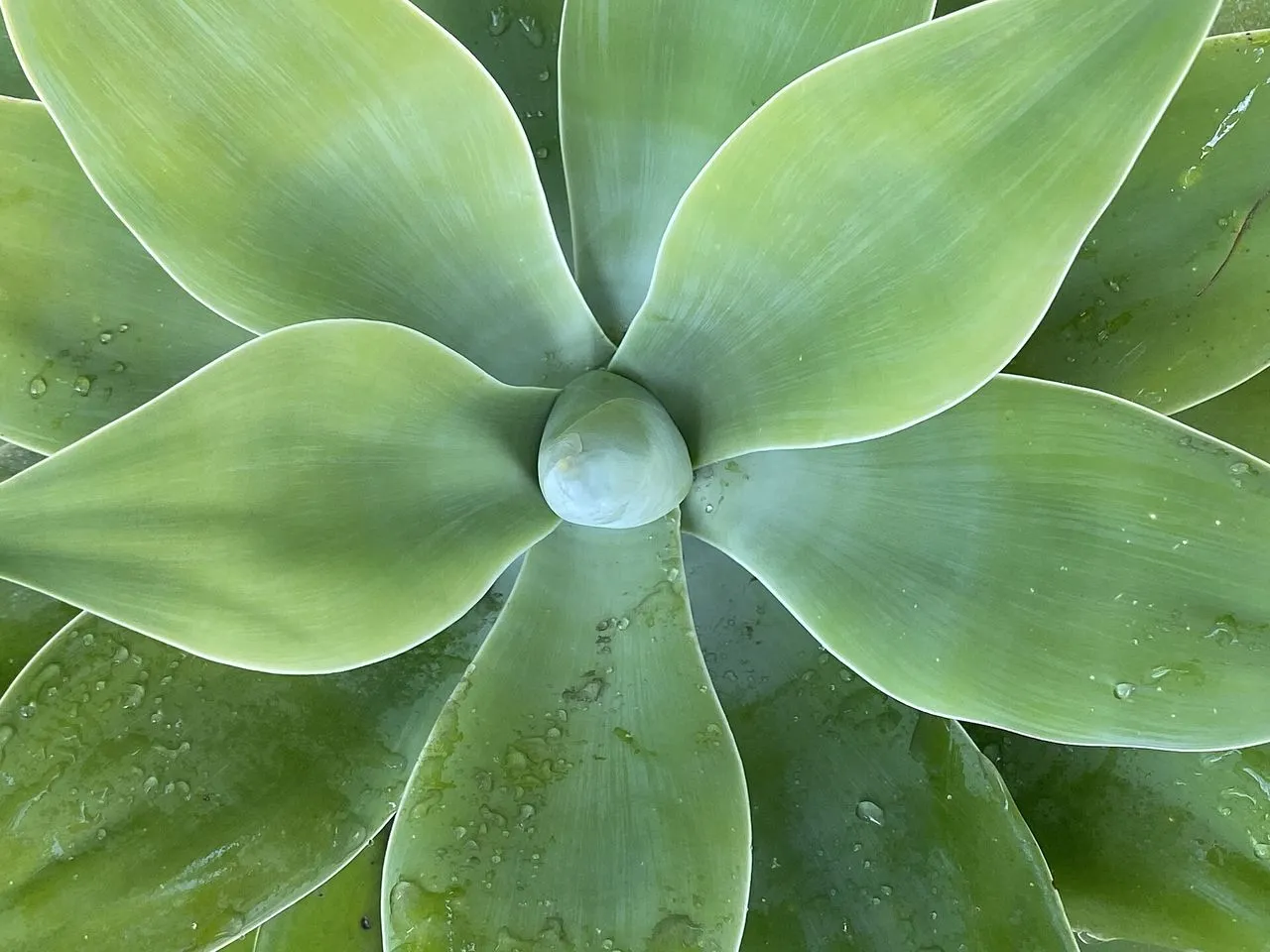
Agave is a genus of roughly 270 accepted species of leaf-succulent monocots in the family Asparagaceae, subfamily Agavoideae, native almost exclusively to the Americas with a diversity centre in northern and central Mexico. They are among the most architecturally distinct of all succulents, and several species underpin the mescal, tequila, and sisal industries of their native range. The World Checklist of Vascular Plants maintained by the Royal Botanic Gardens, Kew recognises the genus Agave L. with its type species A. americana. This guide covers what you need to know to identify, grow, and propagate them well, and where to go for species-specific care.
I'm Dr. Elena Martín, a Certified Advanced Cactus & Succulent Horticulturist and former curator of the succulent collection at the Jardín Botánico de Córdoba. Much of what follows comes from a decade of hands-on cultivation of agaves under glass and outdoors in Mediterranean and temperate climates, where they behave very differently from the textbook picture.
Taxonomy and Natural Range
The genus was established by Linnaeus in 1753, from the Greek agauos meaning "noble" or "illustrious". Classical treatments kept Agave in its own family Agavaceae, but modern APG classification places it within a broadly expanded Asparagaceae alongside Yucca, Beschorneria, Hesperaloe, and Manfreda. Recent molecular work has folded the formerly separate genus Manfreda directly into Agave, so published species counts have shifted upward in the last fifteen years.
Species diversity peaks in the arid and semi-arid uplands of northern Mexico, particularly the states of Oaxaca, Jalisco, Sonora, and Chihuahua, with a secondary centre in the southwestern United States and outliers extending through Central America into northern Venezuela and the Caribbean. Habitats range from Chihuahuan Desert flats at 500 m to high sierran slopes above 2,800 m. That altitudinal spread matters for one practical reason: a lowland species like A. tequilana is not remotely cold-hardy, while a high-altitude species like A. parryi tolerates hard frosts. Care instructions that treat the genus as uniform are wrong by default.
Identification and Morphology
All Agave share a single diagnostic feature: a basal rosette of thick, fibrous, typically rigid leaves, each terminating in a sharp apical spine, arising from a compressed stem at or below ground level. Other diagnostic characters:
- Leaves. Lanceolate to oblanceolate, 10 cm to over 2 m long depending on species, with a fibrous vascular structure that made them commercially valuable for rope. Margins often carry recurved teeth; a few species, notably A. attenuata, lack marginal spines entirely. Surfaces may be glaucous, glabrous, or filiferous (bearing curling white fibres peeling from the margins).
- Flowering. The genus is famously monocarpic at the rosette level. A mature rosette produces a single terminal inflorescence, usually 2 m to 10 m tall, either spicate (unbranched) or paniculate (branched candelabrum), then dies. Time to flowering varies from 8 years in small species to 30 or more in large ones. The popular name "century plant" for A. americana is exaggeration. Actual flowering age for that species is 10 to 30 years in cultivation.
- Offsets and bulbils. Most species hedge against monocarpy by producing basal offsets (pups) before or during flowering. A subset also produce aerial bulbils (plantlets) directly on the inflorescence after the flowers drop, which root on touching soil. A. vilmoriniana is particularly prolific in bulbil production.
The genus is most often confused with Yucca and Aloe. Yucca leaves are narrow, grasslike, and non-succulent; Aloe leaves are softer, non-fibrous, and exude a bitter anthraquinone sap when cut. If you are unsure what you have, slice a leaf tip: Agave yields a fibrous, almost stringy cross-section with clear sap, not a gel or a bitter exudate.
For specific species identification see the pages linked later in this guide.
Cultivation
Light
Agave are obligate high-light plants. Almost every cultivated species tolerates and benefits from full direct sun year-round once acclimated, including the hot afternoon sun that burns Echeveria and most aloes. In a home setting a south-facing window is the minimum; plants grown under lower light etiolate, the leaves elongate and narrow, and the rosette loses its compact geometry. Unlike soft succulents, the damage is structural rather than cosmetic, since distorted leaves persist for the life of the rosette, often a decade or more.
Outdoor plants moved from greenhouse shade into full sun will scorch within a few days, producing permanent tan or white patches. Acclimate over two to three weeks, starting with morning sun only.
Substrate
Free-draining mineral mixes are essential. My standard recipe for agaves is 60% pumice or lava grit, 25% coarse sharp sand, and 15% peat-free loam-based compost such as John Innes No. 2. The proportion of mineral content is higher than for Echeveria, because agave roots tolerate extended drought but rot quickly in substrates that hold moisture against the crown.
pH preference is neutral to slightly alkaline (pH 6.5 to 7.5). Many agaves come from limestone-derived soils and respond badly to the acidifying effect of peat. Container depth matters: mature agaves develop a deep coarse root system and benefit from pots deeper than they are wide.
Water
The fastest way to kill a container-grown agave is to water it on a schedule. These are genuine drought-adapted plants. A useful rule: water thoroughly when the substrate is fully dry to the bottom of the pot, verified by lifting the pot and feeling the weight or by a probe reading below 10%. In a warm summer that may be once every 10 to 14 days; in cool winter conditions it may be once every 6 to 10 weeks. Water the substrate, not the rosette. Water trapped in the crown at low temperatures is the leading cause of crown rot.
Outdoor specimens in free-draining ground can often go entirely unwatered through a British or Mediterranean summer, drawing on winter rainfall alone. Avoid any watering during periods below 5 °C.
Temperature
Cold tolerance is species-dependent and should be researched per plant, but broad categories apply. A. americana, A. attenuata, A. tequilana, and most tropical lowland species are damaged below 0 °C. A. parryi, A. havardiana, A. montana, A. neomexicana, and A. utahensis tolerate USDA zones 7 and colder, with A. parryi surviving brief exposures to −25 °C when dry. Dryness at the roots is the load-bearing variable: a cold-hardy species in wet winter soil will rot at temperatures it shrugs off in cultivation records.
Upper limits are high. Sustained temperatures above 40 °C trigger summer dormancy rather than damage in most species.
Humidity
Ambient humidity is largely irrelevant to agave cultivation. These plants tolerate 10% to 80% relative humidity equally well, provided air movement is adequate. Stagnant humid air combined with low light is the only problem worth flagging, since it promotes fungal pathogens on the leaves. Do not mist agaves. There is no benefit and the waxy cuticle sheds water in any case.
Propagation
Unlike Echeveria, agaves do not propagate from detached leaves. The fibrous vascular tissue lacks the meristematic capacity to generate roots and new shoots from a leaf base. Propagation is by seed, offset, or bulbil.
Offset division
Most agaves produce clonal offsets (pups) around the base of the rosette once mature. Wait until the pup has formed its own visible root system, usually when it reaches a third to a half the size of the parent, then sever it from the rhizomatous connection with a sharp sterile blade. Callus for 5 to 10 days in shade, longer than for soft succulents because the cut surface is larger. Pot up in the standard mineral substrate and withhold water for a further week.
Offsets are genetically identical to the parent, which matters for named clones such as A. americana 'Marginata' or A. victoriae-reginae forms.
Bulbil propagation
When a monocarpic rosette flowers, many species follow fruiting with aerial bulbils, miniature plantlets carried on the old inflorescence where flowers once opened. Allow them to reach 3 cm to 5 cm in size before detaching; some will already have begun pushing aerial roots. Press the base into mineral substrate and keep barely moist until rooting, typically 4 to 8 weeks. Bulbils are the easiest propagation route for A. vilmoriniana, A. bracteosa, and many A. attenuata clones.
Seed
Agaves are typically self-incompatible, so seed production requires two genetically distinct plants flowering simultaneously, often a multi-decade wait. Fresh seed germinates within 2 to 3 weeks at 22 °C to 28 °C on a sterile pumice-peat mix, lightly surfaced. Seedlings take 3 to 6 years to reach identifiable species character and 10 to 20 years to flowering size, so seed is practical only for conservation work or deliberate breeding.
Common Problems
| Symptom | Likely cause | Fix |
|---|---|---|
| Rosette collapses, black mushy core | Crown rot from water in the heart | Unrecoverable; salvage any healthy offsets and discard parent |
| Soft, discoloured leaf bases, foul smell | Agave snout weevil (Scyphophorus acupunctatus) | Remove and destroy plant; treat neighbours with systemic imidacloprid drench |
| White powdery bloom rubbed off handling | Mechanical removal of epicuticular wax | Cosmetic only; wax does not regenerate on affected tissue |
| Circular tan or white patches on leaves | Sun scale from un-acclimated exposure | Irreversible; shield from harsher sun until new leaves replace the damaged |
| Orange-brown pustules on leaf underside | Rust fungus (Puccinia agaves) | Remove affected leaves, improve ventilation, copper fungicide if systemic |
| Etiolated, pale new growth | Insufficient light | Move to full sun gradually; distorted leaves will not re-compact |
| Cottony tufts deep in leaf axils | Mealybug | 70% isopropyl alcohol swab; systemic if widespread |
| Leaves yellowing overall, soft to touch | Chronic overwatering | Allow substrate to dry fully; repot into coarser mix if persistent |
The agave snout weevil is the single most damaging pest for collectors, particularly in warm climates. The adult deposits eggs at the base of large rosettes, the larvae tunnel into the stem, and a secondary bacterial infection liquefies the tissue. Once symptoms appear the plant is unrecoverable. Prophylactic systemic treatment in May and August, before peak adult activity, is the only reliable defence where the weevil is established.
Notable Species and Cultivars
The genus contains too many species to cover in one guide. These are the ones most worth knowing, follow the links for full cultivation profiles.
- Agave americana — century plant; the type species and the archetypal large landscape agave.
- Agave tequilana — blue agave; the cultivated source of tequila.
- Agave angustifolia — narrow-leaved agave; a principal source of mescal.
- Agave attenuata — foxtail agave; spineless leaves and an arching inflorescence.
- Agave parryi — Parry's agave; the most cold-hardy species in common cultivation, native to the US southwest.
- Agave palmeri — bat-pollinated Sonoran species; large paniculate inflorescence.
- Agave victoriae-reginae — Queen Victoria agave; tightly geometric rosette prized in ornamental collections.
- Agave vilmoriniana — octopus agave; prolific bulbil producer on the flowering spike.
- Agave parviflora — miniature species with the smallest flowers in the genus.
- Agave murpheyi — pre-Columbian cultivated agave of the US-Mexico borderlands.
- Agave annapolis — cultivated form profiled separately.
Closing
Agaves reward a different mindset from soft succulents. They occupy space on the scale of decades, not seasons; a young A. parryi planted today will likely outlive the pot it came in by twenty years. Cultivation work is front-loaded: get the substrate, drainage, and light right from the start, and subsequent maintenance collapses to occasional watering and the eventual removal of spent leaves. If you are new to the genus, start with A. parryi outdoors or A. victoriae-reginae under glass. Both are slow, both are forgiving, and both teach the patience the rest of the genus demands.
If you are arriving at succulents for the first time, the beginner's guide to succulents covers the cross-genus basics — light, water, substrate, and the common early mistakes — and is the right starting point before any single-genus deep dive.
Frequently Asked Questions
How many Agave species are there?
The guide uses roughly 270 accepted species, with counts shifted upward by modern treatment of former Manfreda within Agave.
Do agaves need full sun?
Almost all cultivated agaves tolerate and benefit from full direct sun once acclimated. Low light causes structural etiolation that persists for years.
Can agaves propagate from leaves?
No. Agaves lack the regenerative capacity needed for leaf cuttings. Use seed, offsets, or bulbils instead.
What is the fastest way to kill a container agave?
Watering on a schedule is the fastest route. Water only when the substrate is dry to the bottom of the pot.