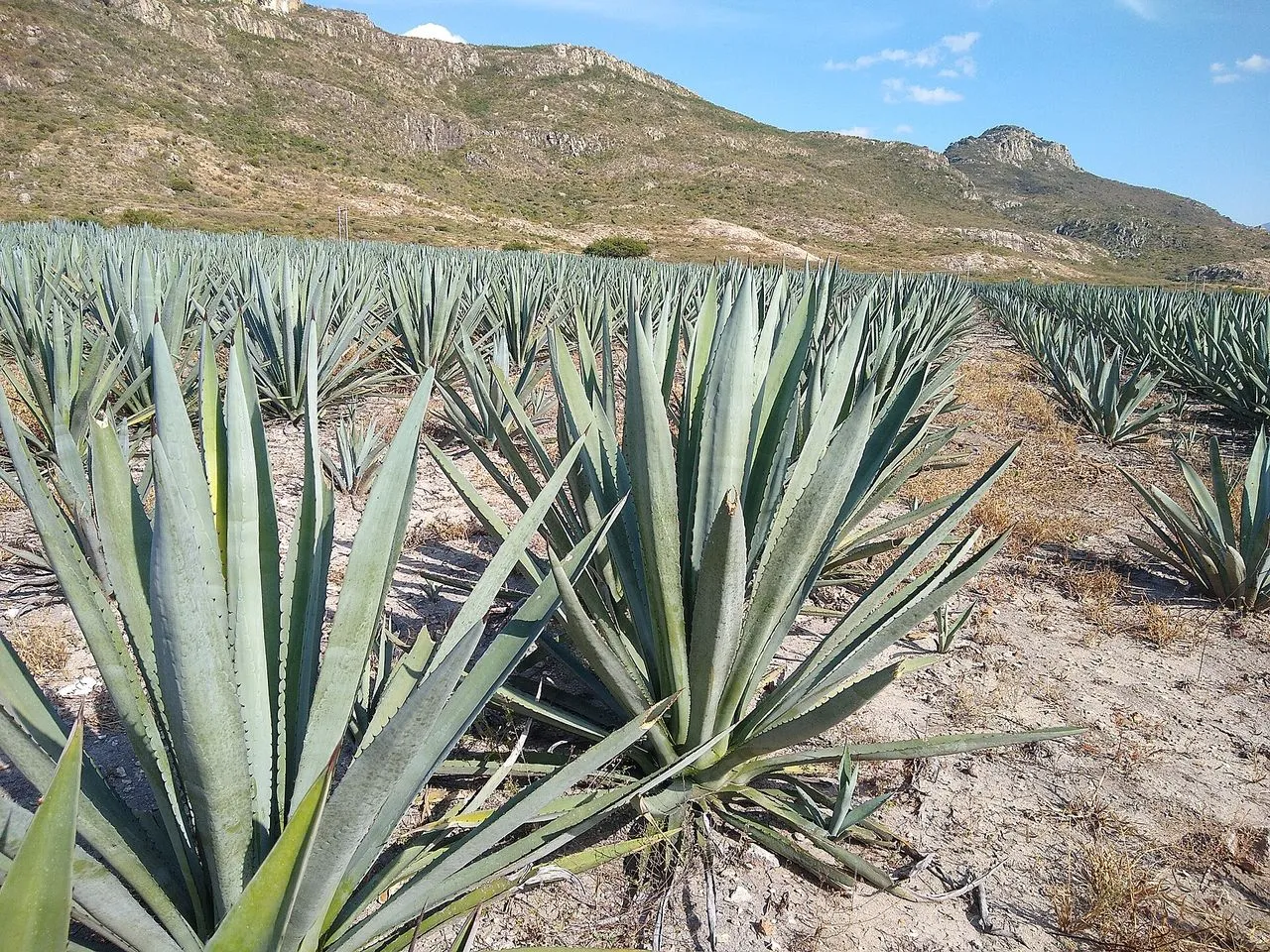
An agave that refuses to produce pups is not necessarily unhealthy. Offset production is one of the most species-dependent traits in the genus. Some agaves make colonies early and aggressively. Others remain solitary for years, then reproduce by seed or bulbils when they flower. A pup-free rosette can be normal, especially when it is young, slow, or naturally solitary.
The practical question is whether the plant is capable of offsetting and has the resources to do it. Identify the species before trying to force a response. Part of the Complete Agave Guide.
Species that offset differently
Agaves do not share one propagation strategy. Agave americana often produces vigorous rhizomatous offsets once the parent is established, sometimes several metres from the main rosette. A. salmiana and many large landscape species can form broad clumps. In contrast, compact collector species may offset slowly, sparsely, or only under particular conditions.
Some species invest heavily in bulbils instead of basal pups. Agave vilmoriniana is famous for producing plantlets on the spent inflorescence. A plant like that may not behave like a clumping A. americana before flowering. Treating the absence of pups as a problem without species context leads to unnecessary stress.
Immaturity and rosette size
Many agaves do not offset until the parent has built a substantial root system and storage reserve. A 10 cm juvenile rosette may be using all available resources to make its own leaves and roots. Producing a pup requires an additional growing point, vascular connection, and stored water. That is expensive.
Size is a better guide than calendar age because growth speed varies with light, temperature, and pot culture. A plant grown hard in a mineral mix may be the same age as a larger nursery-grown plant but less inclined to pup. That is not failure; it is a different resource balance.
Root restriction or weak roots
Offsets arise from basal tissue and depend on a functioning root system. A plant with weak roots, old compacted substrate, or a pot that stays wet too long may stay alive but not invest in pups. The parent prioritises survival and central growth over clonal expansion.
Root restriction can work both ways. A slightly snug pot may encourage some succulents to offset, but a hard root-bound agave in exhausted mix may simply stall. If the root ball is a dense dry cylinder and water runs down the pot edges without wetting the centre, the plant cannot support new offsets well.
Low light and insufficient carbohydrate
Pups are built from surplus energy. In low light, an agave may maintain existing leaves but lack the carbohydrate budget for clonal growth. The centre may become pale or stretched, and the plant may shed older leaves faster. Expecting pups under those conditions is unrealistic.
Full sun after acclimation, or strong grow lights indoors, supports compact growth and future offsets. The effect is not immediate. A plant moved into better light may spend a season rebuilding roots and central leaves before pups appear.
Stress, flowering, and timing
Stress can sometimes trigger offsetting, but relying on stress is poor cultivation. Severe drought, crown injury, or root damage may produce emergency shoots in some plants, but it can also kill the growing point or invite rot. Healthy offset production is steadier when the plant has light, drainage, and space.
Flowering changes the equation. Most agave rosettes are monocarpic, and many species accelerate pup production as the death-bloom approaches. If your plant is years from reproductive size, it may not yet be in that phase. Once the central spear begins to elongate into an inflorescence, basal pups often become more vigorous because the clone is preparing to outlive the mother rosette.
Removing pups too early
Sometimes the problem is not that the agave fails to pup, but that pups fail after separation. Tiny offsets removed without roots often desiccate or rot. This makes the parent seem unproductive because every attempt disappears. Leave pups attached until they are robust enough to survive.
A practical threshold is one third to one half the size of the parent for small species, or at least 10 cm to 15 cm across for many larger pups, with visible roots if possible. Sever the connection cleanly, callus the wound for 5 to 10 days, and pot into dry mineral substrate.
How to identify the reason
| Situation | Likely explanation | What to do |
|---|---|---|
| Young compact plant, otherwise healthy | Immature | Wait and maintain care |
| Species known to be solitary | Normal species behaviour | Use seed or wait for flowering |
| Large clumping species with no pups | Root, light, or space issue | Inspect culture |
| Pale stretched parent | Low light | Increase light gradually |
| Parent flowering | Pups may accelerate soon | Leave offsets attached |
| Pups appear but die after removal | Removed too early | Wait for roots and size |
No single offset schedule fits the genus. The right comparison is the species, not another agave on a social-media bench.
Risk and severity
The absence of pups is not an emergency if the parent is firm, centred, and growing. Wait through at least one active season before judging. Act when lack of pups is paired with no central growth, yellowing, soft bases, or poor roots. Those are general culture problems rather than propagation problems.
Professional help is rarely needed unless a large landscape agave is flowering and producing many offsets around a dangerous collapsing parent. In that case, removal and pup salvage may require protective equipment and careful sequencing.
Solutions
Identify the plant
Confirm whether the plant is A. americana, A. vilmoriniana, A. victoriae-reginae, A. bracteosa, or another species. Read species profiles rather than assuming all agaves clump. If the species normally produces bulbils at flowering, basal pups may be sparse.
Improve culture without forcing
Provide direct sun after acclimation, a mineral substrate, and watering only after the mix dries to the bottom. Repot if the substrate is compacted or roots are unhealthy. Do not use high-nitrogen fertiliser to force pups; it produces soft tissue and does not create species-level offsetting behaviour.
Give roots enough room
Use a pot deep enough for coarse roots and only moderately wider than the root ball. For landscape plants, avoid barriers that trap pups under paving or edging. Some rhizomatous species send offsets away from the parent; if the surrounding soil is compacted or covered, they may be suppressed or emerge in awkward places.
Separate pups at the right time
When pups are ready, expose the connection, cut with a sterile blade, and preserve roots. Let the cut callus in shade for 5 to 10 days. Pot dry, then water lightly only after another week and only in warm growing conditions. Label pups from named clones because they preserve the parent's traits.
Prevention
Choose species according to the propagation you want. If you want a colony, select known offsetting species or clones. If you want a solitary architectural specimen, a sparse-offsetting plant may be an advantage. Do not plant aggressive rhizomatous agaves where pups will be a nuisance near paving, walls, or neighbouring plants.
Maintain steady, hard growth rather than lush growth. Full sun, mineral drainage, and modest feeding create the reserves that make natural offsetting possible. Then wait. In agaves, the absence of pups this year often means only that the plant is still building the parent rosette.
See also
- Agave death-bloom explained — why many agaves produce pups around flowering.
- Agave americana — a strongly offsetting landscape species.
- Agave vilmoriniana — a species better known for bulbils on the inflorescence.
- Agave bracteosa — a freely offsetting spineless species once the rosette is established.
What actually encourages offsets
Pups usually show up when the plant has enough stored energy, not when it is pushed hard. If the agave looks healthy but solitary, the best move may be boring: improve the setup and wait.
- Give it the brightest safe light you can without scorching a shade-grown plant.
- Use a gritty mix and a pot with a drainage hole so roots dry between waterings.
- Avoid heavy nitrogen fertilizer. Fast soft growth is not the same thing as stored energy.
Species matters too. Some agaves pup freely around the base. Others stay single for years, even with good care.
Frequently Asked Questions
Why is my agave not making pups?
The most common reasons are age, species, weak light, recent stress, or a pot that keeps the root system too wet or too cramped.
Can fertilizer make an agave produce pups?
Fertilizer cannot reliably force pups. Too much nitrogen can make soft growth and rot more likely. Use light feeding only during active growth.
Do all agaves make offsets?
No. Some agaves offset heavily, while others stay mostly solitary. Species matters as much as care.