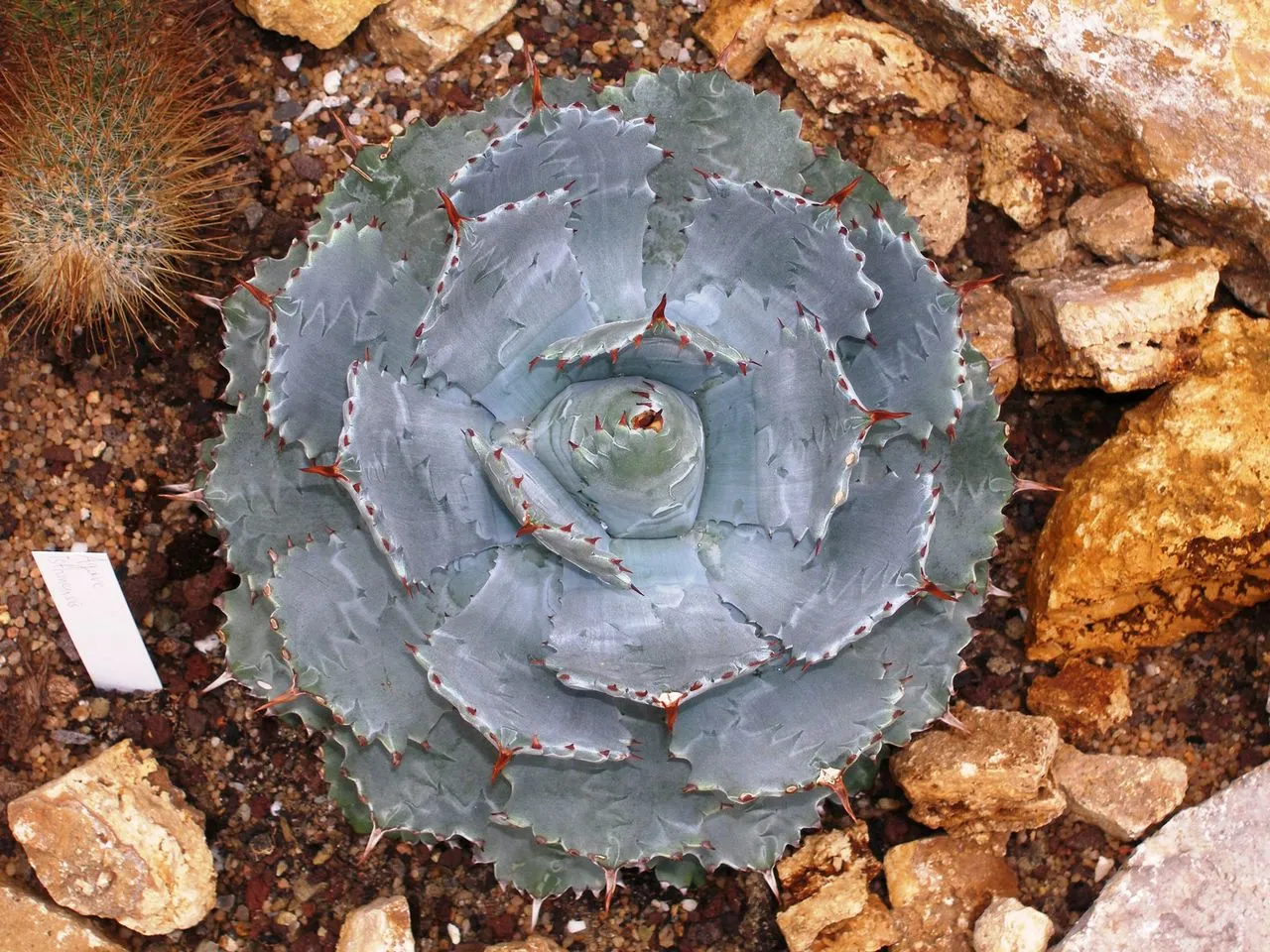
An agave that is not growing may be perfectly normal. Many species are slow, long-lived rosettes that measure progress in leaves per season, not centimetres per week. A compact Agave victoriae-reginae can look unchanged for months while still being healthy. The problem is not slowness; it is a complete absence of new central growth during the warm, bright part of the year.
Before changing care, confirm that growth has truly stopped. Photographs taken 4 weeks apart often reveal central movement the eye misses. Part of the Complete Agave Guide.
Normal slow growth and seasonal dormancy
Agaves are not bedding plants. Their leaves are expensive structures: fibrous, water-storing, armed, and often long-lived. Slow production is part of the biology. Dwarf species and highly geometric species may add only a few leaves during a growing season, especially in containers. Larger species may grow faster but still pause during unfavourable conditions.
Seasonal dormancy is also normal. Cool winter conditions, short days, or extreme summer heat above 40 °C can reduce growth sharply. A dry dormant agave with a firm centre is not failing. It is waiting. The mistake is to interpret dormancy as hunger and force water or fertiliser into inactive roots.
Insufficient light
Light drives the carbohydrate budget that builds new leaves. Agaves need direct sun or strong artificial light to grow with compact geometry. In weak light, the plant may keep living but stop producing normal leaves. If it does grow, the new leaves are narrow, pale, and stretched rather than broad and rigid.
Indoors, distance from glass matters. A plant 1 m back from a south-facing window receives far less light than one on the sill. Outdoors, shade from fences, balconies, or winter sun angle can stop growth for months. Increase light gradually; a plant held in shade can scorch if moved directly into full afternoon sun.
Poor or lost roots
No top growth often means no functioning roots. Root loss follows over-watering, cold wet substrate, severe drought that killed fine roots, or rough repotting. The rosette may remain firm because agave leaves store water, but the centre does not move because the root system cannot supply enough water and minerals for new tissue.
A newly purchased agave may also be under-rooted. Nursery plants are sometimes shifted into larger pots before sale, leaving a small root ball surrounded by fresh mix. The top looks established, but the roots have not colonised the container. Growth pauses until roots catch up.
Cold soil and wrong season watering
Agaves need warmth at the root zone for active growth. A plant in a cold greenhouse, stone pot, or shaded outdoor bed may sit in soil below 10 °C long after air temperatures improve. Watering during that period does not create growth; it creates prolonged wetness and root stress.
This is common in spring. The sun is stronger, but nights remain cold and containers stay chilled. Wait for stable warmth before expecting movement. A dry agave can tolerate cool roots. A wet agave with cool roots is at risk.
Oversized pots and dense substrate
An oversized pot slows agave growth by keeping too much unused substrate wet around a limited root system. Roots need oxygen as much as moisture. When the mix remains damp for 2 to 3 weeks, fine roots die back and the plant pauses. Heavy compost compounds the problem by collapsing into fine particles.
Agaves prefer pots sized to the root ball, with enough depth for coarse roots but not a large wet moat of compost. The mix should be mineral and open: pumice, lava grit, coarse sand, and a modest loam fraction. A pot that dries predictably is better than a decorative tub that stays wet.
Nutrient and pH problems
True nutrient deficiency is less common than light or root problems, but exhausted substrate can slow growth in long-term containers. Agaves generally prefer neutral to slightly alkaline conditions, around pH 6.5 to 7.5. Very acidic peat-based mixes are not ideal for many species, especially those from limestone-derived habitats.
Fertiliser should be modest and seasonal. A low-dose balanced feed during active growth can support a rooted plant. It will not restart a plant in cold wet soil. Too much nitrogen produces soft, stretched, weakly armed leaves that are more vulnerable to rot and pests.
How to identify why growth stopped
| Situation | Likely explanation | Test |
|---|---|---|
| Firm plant in winter | Normal dormancy | Wait for longer days and warmth |
| Pale narrow new leaves | Low light | Increase direct sun gradually |
| No growth after wet period | Root loss | Slide from pot and inspect roots |
| No growth after repotting | Root establishment pause | Check for firmness and wait 4 to 8 weeks |
| Pot stays wet for weeks | Oversized pot or dense mix | Down-pot or change substrate |
| Old container, firm but pale | Exhausted mix | Repot or feed lightly in season |
The central spear is the measuring point. Outer leaves can remain unchanged while the centre slowly advances.
Risk and severity
Act immediately when lack of growth is paired with soft leaves, yellowing, black bases, sour smell, or a loose centre. Those signs indicate rot, not dormancy. Unpot and inspect roots.
Wait when the plant is firm, dry, and out of season. A healthy agave can sit almost motionless through winter. Professional help is unnecessary for ordinary slow growth, but large landscape agaves that stop growing and begin leaning may need inspection for snout weevil or structural crown failure.
Solutions
Confirm growth objectively
Take a clear overhead photo and a side photo. Repeat after 4 weeks in bright stable conditions. Look at the central spear, not old scars. If the spear has moved, the plant is growing slowly and does not need intervention.
Correct light
Move indoor plants to the brightest available window or use a strong grow light. Outdoor plants should receive direct sun once acclimated. Increase exposure over 2 to 3 weeks to prevent scorch. Do not expect existing stretched leaves to shrink; improvement appears in new leaves.
Rebuild roots
If roots are black, sparse, or absent, remove old substrate and let the plant dry. Pot into a barely moist or dry mineral mix depending on temperature, then wait. Resume careful watering only after the plant is stable and conditions are warm. Root recovery can take 4 to 12 weeks.
Fix pot and substrate
Choose a pot with drainage and only 2 cm to 5 cm of extra space around the root ball for small to medium plants. Use a gritty mix that dries within a reasonable interval for your climate. Avoid deep decorative containers filled with organic compost unless the plant is a large established landscape specimen.
Feed only after culture is correct
During active growth, use a dilute balanced fertiliser at quarter to half strength once or twice in the season. Do not feed in winter and do not feed a plant with damaged roots. Growth built on weak roots is not progress.
Prevention
Start agaves in the right light and substrate rather than trying to accelerate them later. Buy species that match your space and climate: A. parryi for cold dry outdoor sites, A. victoriae-reginae for slow container culture, and A. attenuata only where winter protection is available. Repot before the mix collapses, but do not disturb roots unnecessarily.
Accept the pace of the genus. A compact agave that adds 3 to 6 clean leaves in a season may be performing well. The goal is not fast growth at any cost; it is dense, hard, species-typical growth that can persist for decades.
See also
- Agave brown tips — tip damage that often accompanies root restriction or drought.
- Agave leaves yellowing — when no growth combines with root or light stress.
- Agave victoriae-reginae — a naturally slow species where patience is part of correct care.
- Agave winter damage — cold soil and seasonal dormancy as reasons for halted growth.
Frequently Asked Questions
How fast should an agave grow?
Growth varies by species. Small geometric species may add only a few leaves per year, while large landscape species grow noticeably through warm months when rooted and in full sun.
Why has my agave stopped growing after repotting?
Root disturbance often pauses visible growth for several weeks while new roots form. Keep the plant bright, dry at first, and then water only after roots begin functioning.
Can an oversized pot stop agave growth?
Yes. Excess wet substrate around a small root system stays damp too long, reducing oxygen and slowing root recovery. Use a pot only slightly larger than the root ball.
Should I fertilise an agave that is not growing?
Only after light, temperature, and roots are correct. Fertiliser cannot compensate for wet cold soil or a weak root system, and excess nitrogen makes soft growth.