| Question | Short Answer |
|---|---|
| What is Agave angustifolia used for? | It is the taxonomic backbone of mescal production. |
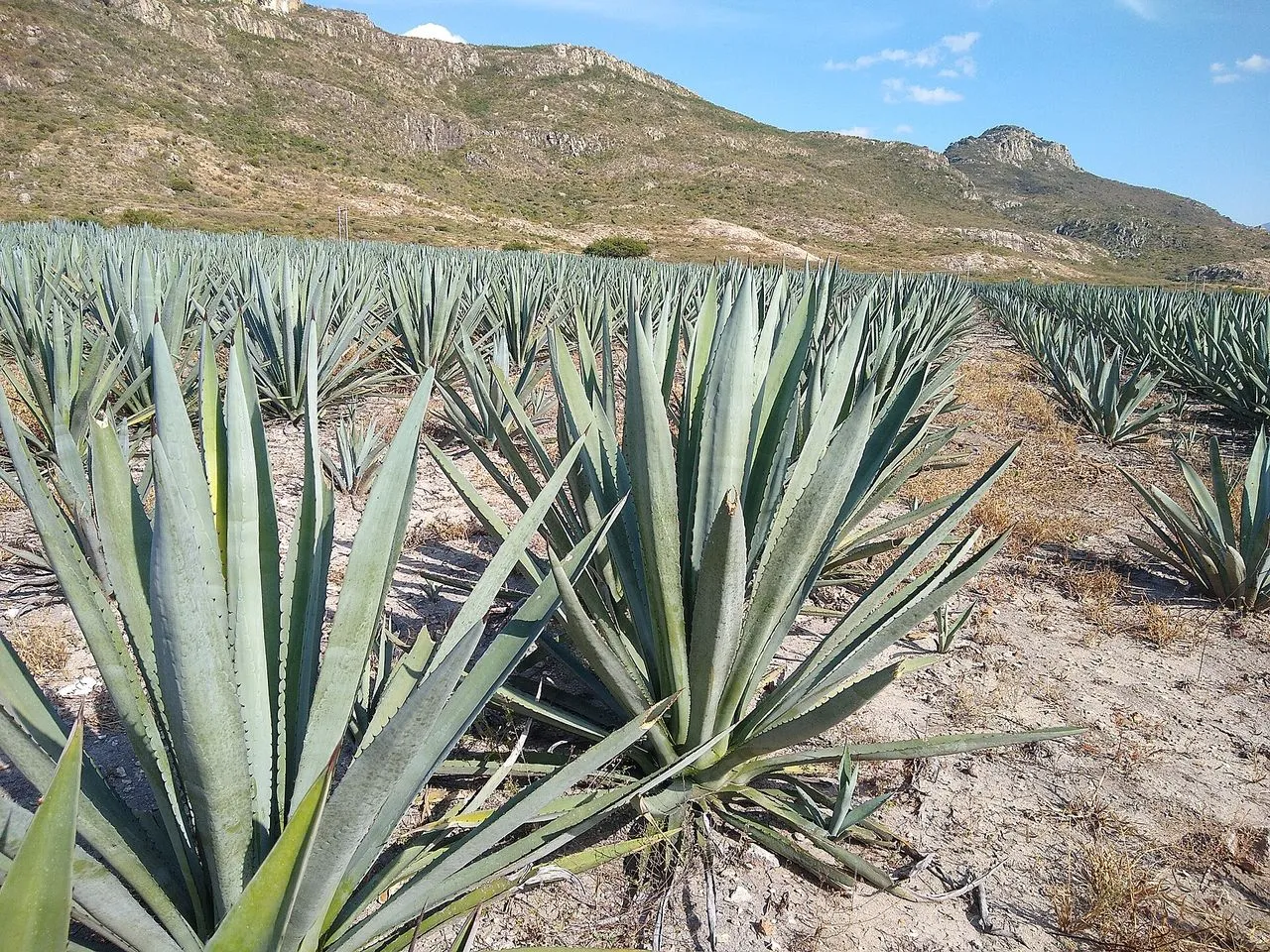
| How do you identify Agave angustifolia? | Look for narrow 60 cm to 120 cm leaves only 6 cm to 10 cm wide, small dark marginal teeth, and a short trunk on older plants. |
| Is Agave angustifolia cold-hardy? | No. |
| What is the best propagation method? | Bulbils from the spent scape are most reliable, with hundreds possible after flowering. |
Agave angustifolia Haw. (Caribbean agave, narrow-leaved agave, maguey espadín) is the most widely distributed species in the genus, ranging naturally from the Pacific slope of Mexico through Central America into Costa Rica, with populations on several Caribbean islands. It is also the taxonomic backbone of the mescal industry: 'Espadín', the cultivar most commonly distilled, is a selection of A. angustifolia.
Within the genus it belongs to the subgenus Agave, group Rigidae, sharing that grouping with A. tequilana, A. karwinskii, and A. rhodacantha. Habitat is dry tropical forest and thorn scrub, from sea level to 1,500 m.
Part of the Complete Agave Guide.
Identification
- Leaves. Narrow for the genus, 60 cm to 120 cm long and only 6 cm to 10 cm wide at the midpoint, green to slightly glaucous, stiffly linear to linear-lanceolate. Margins carry small brown to black teeth 2 mm to 4 mm long, spaced 1 cm to 3 cm apart; the terminal spine is 1.5 cm to 3 cm long and dark.
- Rosette. Solitary or sparsely suckering, 80 cm to 140 cm across at maturity, with a short but visible trunk of 20 cm to 40 cm in older plants.
- Inflorescence. Paniculate, 3 m to 5 m tall, with 10 to 20 umbellate lateral branches of greenish-yellow flowers. Bulbils form readily on the old scape after fruiting.
The variegated cultivar A. angustifolia 'Marginata' is common in the ornamental trade and often sold under the trade name "Caribbean agave". Its cream leaf margins are stable from offset propagation.
Cultivation
A. angustifolia is tropical and subtropical in origin and should not be treated as cold-hardy. Cultivation diverges from the pillar defaults as follows:
- Cold tolerance. Foliage damage begins at about 0 °C. The crown survives brief dips to −3 °C if dry, but prolonged frost is fatal. Grow under glass in any climate colder than USDA zone 9b.
- Light. Full sun outdoors year-round in its native range. Under glass, bright unshaded light is required to maintain compact form; it etiolates faster than most of the cold-hardy agaves.
- Water. More tolerant of regular summer watering than A. parryi or A. utahensis, reflecting its tropical origin. Substrate should still dry fully between waterings.
Substrate and container depth follow the pillar recipe. The rosette is comparatively shallow-rooted, so excessive pot depth is unnecessary.
Propagation
Offsets appear around the base of mature rosettes but are less prolific than in A. americana. The more reliable route is bulbil propagation from the post-flowering scape: mature plants produce hundreds of aerial plantlets over several months, each ready to pot up once 3 cm to 5 cm in size. Seed germinates readily from fresh material but seedlings take 6 to 8 years to reach identifiable character.
For the 'Espadín' mescal clone and other named selections, offsets and bulbils are the only routes; seed segregates away from the parent's traits.
Notes
The species name angustifolia means "narrow-leaved", and that is the most reliable field mark separating it from the broader-leaved A. tequilana. Hybrids with A. tequilana occur naturally in Oaxaca and complicate identification in mescal-producing regions. Some taxonomists have treated A. angustifolia as a highly variable species with five recognised varieties; others have split off several as separate species (notably A. rhodacantha and A. fourcroydes, the sisal agave).
The sap is irritant as for other agaves. The fibres extracted from the leaves were historically used for cordage alongside those of A. fourcroydes. For the cold-hardiness contrast between tropical mescal species and hardy outdoor agaves, Agave parryi is the default cold-tolerant alternative in temperate collections.
See also: Agave tequilana, Agave americana, Agave vilmoriniana.
Frequently Asked Questions
What is Agave angustifolia used for?
It is the taxonomic backbone of mescal production. The widely distilled Espadín clone is a selection of Agave angustifolia.
How do you identify Agave angustifolia?
Look for narrow 60 cm to 120 cm leaves only 6 cm to 10 cm wide, small dark marginal teeth, and a short trunk on older plants.
Is Agave angustifolia cold-hardy?
No. Foliage damage begins around 0 °C, and the crown survives only brief dry dips to about −3 °C.
What is the best propagation method?
Bulbils from the spent scape are most reliable, with hundreds possible after flowering. Named mescal clones should be propagated by offsets or bulbils, not seed.