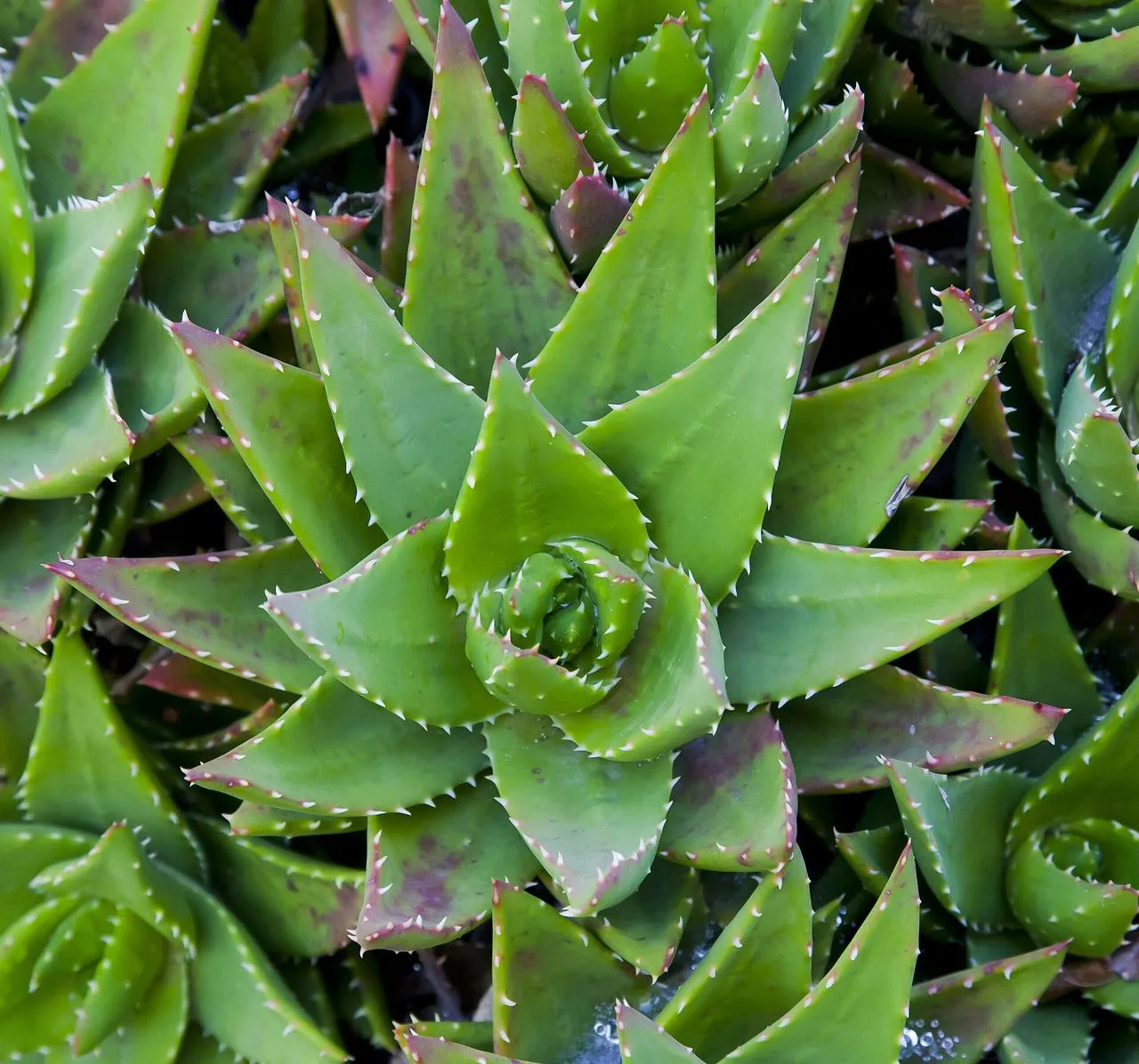
Aloe L. is a genus of roughly 600 accepted species of leaf-succulent monocots in the family Asphodelaceae, formerly placed in Xanthorrhoeaceae and before that in the broad Liliaceae. The genus is centred in continental Africa and Madagascar, with outliers across the Arabian Peninsula and a handful of Indian Ocean islands. Aloe forms, from centimetre-wide grass-aloes to tree-aloes eighteen metres tall, cover the widest morphological range of any succulent genus in cultivation. Plants of the World Online maintained by the Royal Botanic Gardens, Kew, recognises Aloe L. as the type genus of the Aloeae tribe. This guide covers what you need to know to identify, grow, and propagate the most commonly cultivated species, and points to individual species guides for the rest.
I'm Dr. Elena Martín, a Certified Advanced Cactus & Succulent Horticulturist and former curator of the succulent collection at the Jardín Botánico de Córdoba. What follows is drawn from roughly a decade of growing aloes in mixed Mediterranean and glasshouse conditions, plus the usual taxonomic literature.
Taxonomy and Natural Range
The genus was described by Linnaeus in Species Plantarum (1753). A molecular revision by Grace, Klopper, Smith and colleagues in 2013 split the traditional broad Aloe into several smaller genera, moving the tree-aloes into Aloidendron, the climbers into Aloiampelos, the grass-aloes into Aloiampelos and Aristaloe, and the fan-aloes into Kumara. Most horticultural and commercial sources still use the older broad Aloe names, and for cultivation purposes the old names are usually fine. I flag the split where it matters.
Species diversity peaks in two centres. The first is the Eastern Cape and KwaZulu-Natal regions of South Africa, where rocky grassland and fynbos habitats support everything from miniature grass-aloes to the tall Aloe ferox (cape aloe). The second is Madagascar, which holds roughly 130 endemic species, many of them small rosette formers adapted to seasonally arid limestone and granite outcrops.
Altitude range is wide. Aloe polyphylla grows above 2,000 m in the Maluti mountains of Lesotho and tolerates hard frost under snow cover. Aloe vera (true aloe) has no documented wild provenance, is frost-tender, and exists almost entirely as a cultivated clone distributed by vegetative offsets. This range matters practically: when a generic "aloes like..." instruction shows up online, it is almost always wrong for at least half the genus.
Identification and Morphology
Aloes are monocots. That single fact explains most of their vegetative character and separates them cleanly from the Crassulaceae (echeverias, sedums, crassulas) even before you look at flowers.
- Leaves. Thick, fleshy, lanceolate to linear, arranged in a rosette either at ground level or at the apex of a stem. Margins are typically armed with cartilaginous teeth; surfaces can be smooth, spotted, tuberculate, or striate. The leaf base sheathes the stem, a monocot trait.
- Sap. Cut an aloe leaf and two distinct tissues exude. The outer vascular bundle releases a bitter yellow latex rich in anthraquinones (principally aloin, also called barbaloin). The inner mucilaginous parenchyma yields a clear gel dominated by acetylated mannans and acemannan. Any species-level care or medicinal use hinges on this two-layer anatomy.
- Inflorescence. A terminal or lateral raceme or panicle, often tall and unbranched, bearing tubular flowers in red, orange, yellow, or occasionally white. Pollination is predominantly by sunbirds in Africa and by lemurs or geckos in Madagascar; the tubular flower form is the giveaway.
- Roots. Fibrous, shallow, and adapted to exploit brief rainfall events. Aloes do not form taproots.
The diagnostic contrast with the superficially similar Agave (century plant, a New World genus in Asparagaceae) is easier than it looks. Agave rosettes are monocarpic, meaning the rosette dies after flowering. Most Aloe rosettes are polycarpic and flower year after year. Agave leaves are fibrous and stiff; Aloe leaves are juicy and snap cleanly. Haworthias, gasterias, and astrolobas are closer relatives and share the inflorescence pattern, but their rosettes are smaller and the leaves lack the bitter latex layer.
For species-level identification follow the individual guides linked below.
Cultivation
Light
Most cultivated aloes want bright direct light. Six or more hours of full sun suits almost any species from South African grassland or karoo habitat. Indoors this means an unobstructed south-facing window at minimum; in marginal light, expect the leaves to fade to a flat green and the compact rosette form to open up. Aloes tolerate more direct sun than echeverias or haworthias of equivalent size, and they colour up more strongly in response to it. A well-grown Aloe aculeata or Aloe ferox takes on bronze and red tones in summer sun that never develop under cover.
Madagascan species such as Aloe bakeri and Aloe albiflora are the main exception: they grow under scrub in habitat and scorch in direct glasshouse sun at European latitudes. Filter the midday hours.
Substrate
Free-draining and mineral-heavy. My working mix for adult aloes is 40% pumice, 30% coarse sand (3 to 5 mm grit), 20% loam-based compost such as John Innes No. 2, and 10% fine bark. The goal is substrate that wets fully then dries within 48 hours in a 3 litre pot under normal summer conditions. For tree-aloes and heavier species I add a further 10% pumice for stability as the rosette gains mass.
Aloes tolerate a wider pH band than many soft succulents, roughly 6.0 to 7.5. Long-term use of hard tap water pushes pH up and eventually locks out iron and manganese; the symptom is uniform chlorosis of the young leaves with green veins. Switch to rainwater and the plant usually recovers over one growing season.
Water
The top killer of potted aloes is waterlogging through the dormant months. Water when the top 3 to 4 cm of substrate reads dry on a probe, soak thoroughly, and discard any tray water within 30 minutes. In active growth (spring through early autumn for most species) that is usually once every 7 to 10 days. In winter, many aloes stop growing and require a month or more between waterings.
Some species reverse the dormancy pattern. Aloe vera and other tropical African species grow actively through mild winters if kept above 12°C and water accordingly. Match watering to growth, not to the calendar.
Do not let water pool in the central rosette for more than a few hours, especially in cool weather. The growth point is the one part of the plant that will not regenerate.
Temperature
Cultivation range for the common species is 5°C to 38°C. Aloe vera and most Madagascan species are damaged below 4°C. Aloe ferox, Aloe arborescens, and most Eastern Cape species tolerate light frost to around −4°C if dry. The high-altitude exceptions (Aloe polyphylla, Aloe aristata now Aristaloe aristata) handle prolonged sub-zero spells under snow. Never generalise from one clade to another.
Humidity
Ambient humidity of 30 to 50 percent suits almost the entire genus. Higher humidity with poor airflow invites fungal leaf spot, particularly on farinose species. Do not mist. The leaf surface is not adapted to absorb water, and persistent droplets in the rosette are a common rot vector.
Propagation
Four methods exist for the genus. In practical order of usefulness: offsets, stem cuttings (for arborescent species), seed, and tissue culture. Leaf propagation, the standard technique for echeverias and many sedums, does not work for aloes. The monocot leaf has no axillary buds to produce a new shoot, and a detached aloe leaf will callus, then shrivel, then rot. Save the effort.
Offset division
Most rosette-forming aloes produce clonal offsets (pups) at the base once mature. Aloe vera, Aloe arborescens, and Aloe aristata offset freely; Aloe ferox and the tree-aloes rarely do. Wait until an offset is at least a third the size of the parent, unpot the clump, and use a clean sharp blade to separate the offset with as many of its own roots as you can keep. Callus the cut for 2 to 4 days in shade, pot up in dry mix, and withhold water for another week. Offsets root within 2 to 4 weeks.
Stem cuttings
Arborescent species root readily from stem sections. Aloe arborescens (krantz aloe) is the type case: a 30 to 40 cm cutting, callused for 7 to 14 days, pushed into dry mineral mix, roots in 4 to 6 weeks. Use this technique to rejuvenate leggy greenhouse specimens. Ground rosette species will not behave this way; the stem, if it exists at all, is too short and too tightly sheathed by leaves to produce roots along its length.
Seed
Aloes are generally self-incompatible, so viable seed requires two genetically distinct plants flowering simultaneously. Fresh seed sown on a sterile mineral-heavy mix germinates in 2 to 4 weeks at 22 to 26°C. Seedlings reach cultivatable size in 1 to 3 years depending on species, or far longer for tree-aloes. Seed is the only realistic route for conservation-grade multiplication of slow-offsetting rarities such as Aloe argenticauda and Aloe albida.
Tissue culture
Commercial Aloe vera and ornamental hybrids arrive in trade almost exclusively as micropropagated clones. You cannot replicate this at home; it matters only because nursery stock uniformity tells you little about the true genetic diversity of any named species.
Common Problems
| Symptom | Likely cause | Fix |
|---|---|---|
| Lower leaves mushy and translucent | Root rot from waterlogging | Unpot, cut away blackened roots, dry in shade 5 to 7 days, repot in bone-dry mineral mix |
| Raised warty green galls on leaves or rosette | Aloe mite (Aceria aloinis) | Cut out galled tissue well past the margin, burn, treat remaining plant with sulphur or abamectin, isolate |
| White cottony tufts in leaf axils | Mealybug | 70% isopropyl alcohol on a cotton swab; inspect weekly for 4 weeks |
| Brown circular scale on leaf surface | Armoured scale | Scrape off, follow with horticultural oil; systemic imidacloprid for heavy infestations |
| Collapsed water-soaked patches after cold | Frost damage | Remove affected tissue once dry; most species recover from cambial tissue if not fully frozen |
| Pale new growth with green veins | Iron / manganese lockout | Switch to rainwater; foliar chelated iron as a short-term correction |
| Soft rot at growth point | Water in rosette + low temperature | Almost always terminal; behead above the rot line if any clean stem remains |
Aloe mite is the most serious genus-specific threat. It is a microscopic eriophyid mite that induces cauliflower-like galls by injecting a phytohormone analogue. The galls cannot be reversed, only cut out. If you see one, assume neighbouring plants are also infested and treat the whole collection.
Medicinal and Practical Uses
The medicinal chemistry of aloe deserves a factual paragraph because the consumer literature around it is unreliable. Two distinct products come from most medicinally used aloes: the inner leaf gel and the outer leaf latex.
The inner gel, dominated by acemannan and related acetylated mannans, has a reasonable evidence base for topical use on minor burns and superficial wounds. A 2012 Cochrane review found modest evidence of reduced healing time in first-degree burns. Cosmetic applications are widespread and generally low-risk, though the gel oxidises quickly and commercial products rely on preservatives to remain stable.
The outer leaf latex is a different substance. Its principal active, aloin, is a potent stimulant laxative. The United States FDA removed aloe latex from over-the-counter laxative monographs in 2002 after long-term studies suggested carcinogenic potential in rodents at high doses. The European Food Safety Authority reached a similar conclusion in 2018 and banned hydroxyanthracene derivatives including aloin from food supplements. Treat whole-leaf aloe juice products and traditional "bitter aloe" latex preparations with care. Aloe ferox latex was historically the main commercial source of pharmaceutical aloin ("Cape aloes"); the same safety considerations apply.
For cultivation purposes, the practical point is that every aloe you grow contains aloin to some degree. Do not feed leaves or trimmings to pets. Dogs and cats metabolise aloin poorly and develop gastrointestinal distress at small doses.
Notable Species and Cultivars
The genus contains too many species to cover in one guide. These are the ones most worth knowing in cultivation. Follow the links for full profiles.
- Aloe vera — the cosmetic and medicinal staple; nearly always encountered as a cultivated clone and the usual starting point for collectors.
- Aloe ferox — cape aloe; tall single-stemmed South African species and the historical source of pharmaceutical aloin.
- Aloe arborescens — krantz aloe; fast, multi-branched, and the easiest tree-forming species in cultivation.
- Aloe albida — miniature grass-aloe from mistbelt grassland; slender linear leaves, white flowers.
- Aloe africana — upright Eastern Cape tree-aloe with recurved orange flower spikes.
- Aloe aculeata — prickly aloe; stout rosette with conspicuous reddish teeth on the leaf surface, not just the margin.
- Aloe albiflora — Madagascan rosette former with narrow grey-green leaves and white campanulate flowers, unusual in the genus.
- Aloe arenicola — sand-dune species from the Namaqualand coast; creeping habit and fine marginal teeth.
- Aloe argenticauda — Namibian rarity with silvery leaf surfaces and a restricted conservation-sensitive range.
- Aloe bakeri — miniature Madagascan species, clump-forming, with red-and-yellow bicolour flowers and shade tolerance unusual in the genus.
Closing
If you are new to aloes, start with Aloe vera or Aloe arborescens. Both forgive scheduling mistakes, offset generously for propagation practice, and expose the basics of the genus without the sensitivities that come with Madagascan or high-altitude material. Once you have killed neither in a full calendar year, move on to something with real horticultural interest. The genus rewards patience at every step.
If you are arriving at succulents for the first time, the beginner's guide to succulents covers the cross-genus basics — light, water, substrate, and the common early mistakes — and is the right starting point before any single-genus deep dive.
Quick answer: how to keep aloe healthy
Aloe wants bright light, a pot with drainage, and soil that dries fast. Water deeply, then wait until the mix is dry before watering again. Soft leaves, black spots, or a loose base usually point to too much water or soil that stays wet too long.
The soil mistake that causes most aloe problems
Aloe roots need air around them. Heavy potting soil can stay wet at the center of the pot even when the top looks dry. Use a gritty cactus or succulent mix, choose a pot with a drainage hole, and avoid decorative cachepots that trap runoff.
When to repot an aloe
Repot when the plant is top-heavy, the soil has collapsed into a dense block, or pups are crowding the base. If you are replacing a wet, peat-heavy mix, this Amazon search for cactus and succulent soil for aloe is a reasonable place to compare gritty options. As an Amazon Associate, we earn from qualifying purchases, at no extra cost to you.
FAQ
How often should I water aloe indoors?
Water when the soil is dry through most of the pot, not on a calendar. Indoors, that may be every two to four weeks depending on light, pot size, and season.
Does aloe need direct sun?
Aloe likes bright light. Some direct morning sun is usually fine, but a plant grown in shade can scorch if moved into harsh afternoon sun too quickly.
Frequently Asked Questions
How many Aloe species are there?
The guide gives roughly 600 accepted species, centred in continental Africa and Madagascar with outliers into Arabia and Indian Ocean islands.
Are Aloe and Agave the same?
No. Agave rosettes are monocarpic with fibrous stiff leaves, while most Aloe rosettes flower repeatedly and have juicy leaves with separate latex and gel tissues.
Can aloes be propagated from leaves?
No in ordinary cultivation. Detached aloe leaves lack the axillary buds needed to form a new shoot and usually callus, shrivel, and rot.
What is the main indoor risk for aloes?
Waterlogging through dormant months is the top killer. Water only when the top 3 to 4 cm of substrate reads dry and match watering to growth.