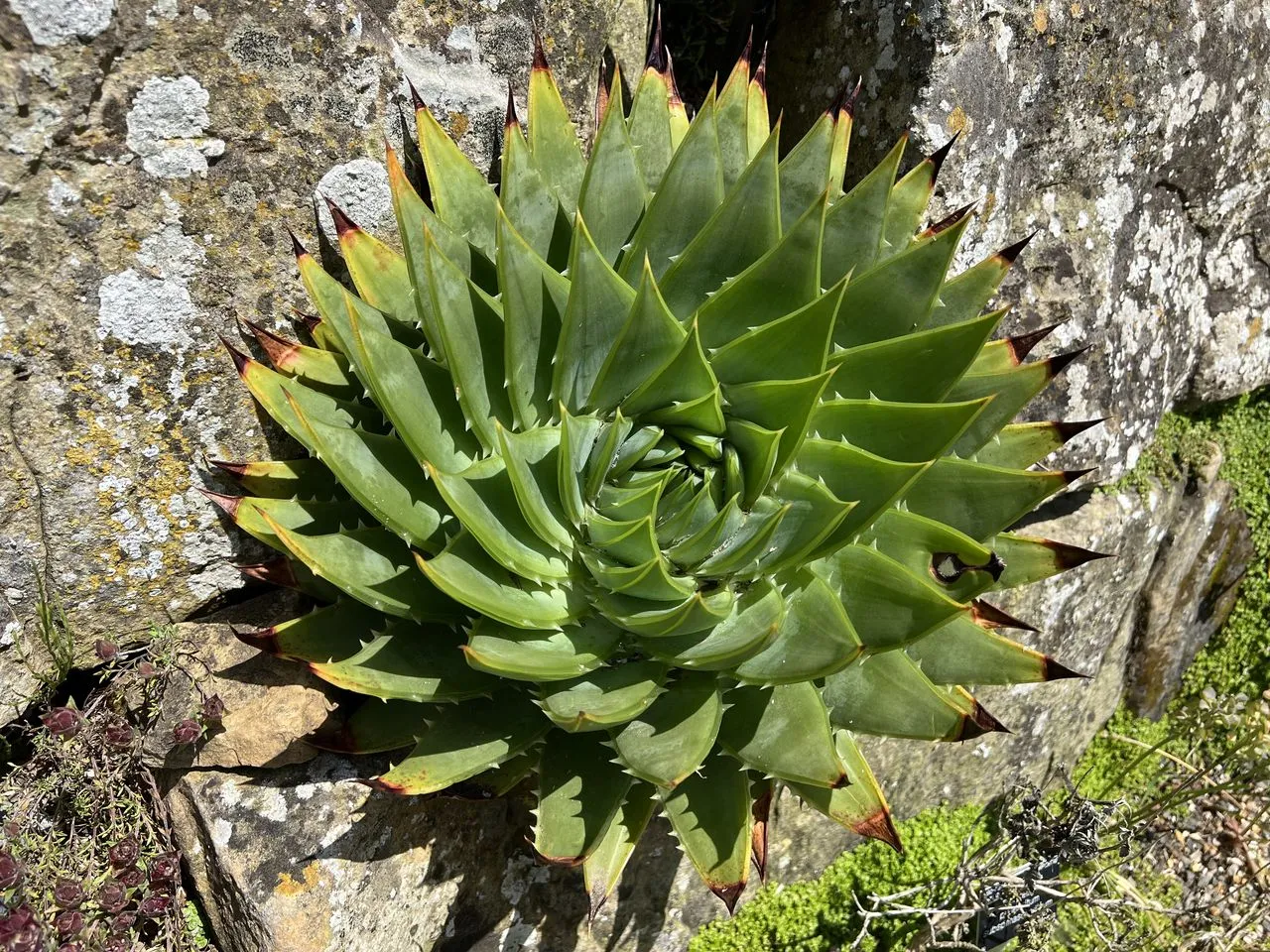
Brown aloe leaves are not a diagnosis by themselves. Brown can mean harmless corking on an old leaf, permanent sunburn on a plant moved too quickly, dry drought collapse after months without a deep soak, cold damage, salt accumulation, or the first visible stage of rot. The important separation is texture: dry and firm is usually stress damage; wet, translucent, or collapsing is disease or cold injury.
Part of the Complete Aloe Guide.
Direct sunburn after a sudden light increase
Sunburn is the most common reason a previously green indoor Aloe vera develops tan to brown patches within a few days. Aloes tolerate strong light, but leaves grown behind glass are built for that lower intensity. A plant moved directly from a kitchen sill to six hours of outdoor summer sun receives several times more radiation than the existing leaf surface can dissipate. The damaged areas turn beige, tan, copper-brown, or chalky white, usually on the sun-facing side. They stay firm because the tissue has desiccated rather than rotted.
The scar will not disappear. Recovery is prevention: move the plant to bright shade, then reintroduce direct sun in 60 to 90 minute increments over 10 to 14 days. Morning sun is safer than midday sun. New leaves formed under the stronger light will be thicker and more resistant.
Drought stress and exhausted lower leaves
Aloe leaves store water, so drought stress often appears slowly. The first sign is lengthwise wrinkling, then brown dry tips, then lower leaves folding inward and drying from the end toward the base. The brown sections are crisp or leathery, not wet. This is common in plants kept in peat-heavy nursery soil that has become hydrophobic: water runs down the pot wall and out the drainage hole while the root ball remains dry.
Check by lifting the plant from its pot. A dry root ball will feel light and may pull away from the pot sides. Soak the entire pot in a basin for 20 to 30 minutes, then drain fully. If the mix still repels water, repot into a mineral mix with 40 to 60% pumice, grit, or coarse sand. Do not respond with daily sips; repeated shallow watering keeps the top layer damp and leaves the root zone dry.
Root rot and water-soaked brown tissue
Soft brown aloe tissue is more serious. When roots rot, the leaves can no longer regulate water movement. Lower leaves become yellow-brown, translucent, heavy, and mushy. The base of the plant may smell sour, and a gentle squeeze near the crown may feel unstable. This pattern usually follows waterlogged substrate, a pot without a drainage hole, winter watering during low growth, or water sitting in a saucer for more than 30 minutes.
Unpot immediately. Healthy aloe roots are pale tan to cream and firm. Rotten roots are black, grey, hollow, slimy, or foul-smelling. Cut all rotten roots back to clean tissue with a sterile blade, dusting is optional, then dry the plant bare-root in shade for 5 to 7 days. Repot into dry mineral substrate and withhold water for another 7 days. If the crown is brown and soft, recovery is unlikely because the growth point does not regenerate.
Cold damage and frost-browned leaves
Cold injury produces brown or black patches that look water-soaked at first and then dry down over several days. Aloe vera is damaged below about 4°C, especially if the substrate is wet. Hardier species such as Aloe arborescens and Aloe ferox can tolerate light frost when dry, but even those suffer if cold wet soil persists around the roots. Indoor plants near single glazing can also show cold injury on the window-facing side while the room temperature seems acceptable.
Do not cut cold-damaged leaves while the tissue is still wet. Move the plant to 12 to 18°C, keep it dry, and wait 7 to 14 days until the boundary between dead and living tissue is clear. Remove only collapsed tissue with a sterile blade. If the central spear remains firm and green, the plant can resume growth in spring.
Salt accumulation and brown leaf tips
Brown dry tips can come from mineral salts rather than drought. Hard tap water, repeated fertiliser, and organic potting mixes with poor drainage leave dissolved salts in the root zone. Aloes tolerate a fairly wide pH band, but chronic alkalinity can lock out iron and manganese and burn fine root tips. The visible symptom is a combination of dry brown leaf ends, pale new growth, and a white crust on the soil surface or pot rim.
Flush the pot thoroughly with rainwater or low-mineral water until several pot volumes have passed through the drainage hole. If the substrate is old, compacted, or peat-heavy, repot instead. Use fertiliser only during active growth, at half label strength or lower, and no more than once per month for A. vera. Do not fertilise a plant that is already drought-stressed or root-damaged.
Normal ageing and corking
Not every brown mark needs correction. Mature aloes shed old lower leaves, and the oldest leaves often develop dry brown tips before they detach. Stem-forming species can also develop corky brown tissue where old leaf bases have dried around the stem. This tissue is firm, dry, and confined to the oldest parts of the plant. The central leaves remain upright and clean.
Normal ageing is slow. A single lower leaf taking 4 to 8 weeks to dry is ordinary. Three or more leaves browning within a week, brown tissue spreading from the crown, or soft leaf bases are not ageing. The speed and distribution matter more than the colour.
How to identify the cause
| Brown pattern | Texture | Likely cause | First action |
|---|---|---|---|
| Tan patches on sun-facing side | Firm, dry | Sunburn | Move to bright shade and reacclimate |
| Brown dry tips, wrinkled leaves | Leathery or crisp | Drought or hydrophobic mix | Soak once, then assess substrate |
| Yellow-brown lower leaves | Soft, translucent | Root rot | Unpot and inspect roots |
| Black-brown patches after cold night | Watery, then dry | Cold damage | Keep dry and wait for margins to declare |
| Brown tips plus white soil crust | Dry | Salt accumulation | Flush or repot |
| One old basal leaf drying | Papery | Normal ageing | Remove after it detaches easily |
Texture is the fastest triage tool. A firm scar is already sealed. A wet brown area is active damage and should be treated as urgent.
Risk and severity
Act immediately when brown tissue is soft, spreading, foul-smelling, or located at the crown. Those signs can reach the growth point within days, especially below 18°C in wet substrate. Act within a week for salt crust, hydrophobic soil, or multiple brown dry tips. Wait and observe for isolated sunburn scars or a single ageing lower leaf.
Professional help is rarely needed for a household aloe, but large landscape specimens are different. If a mature outdoor Aloe arborescens hedge or tree-aloe develops spreading crown rot after frost, an arborist or specialist succulent nursery can advise whether stem sections are worth rooting.
Solutions
If the brown tissue is dry and firm
Leave the scar alone. Move the plant into appropriate light, correct the watering rhythm, and wait for new central growth. Dry scars do not infect healthy tissue. Cutting them usually creates a larger wound than the original problem.
If the brown tissue is soft
Unpot the plant the same day. Remove rotten roots and any collapsed leaves at the base. Dry bare-root in shade for 5 to 7 days, then repot dry. If the stem itself is soft above the root line, cut upward until the cross-section is clean and pale; if no clean tissue remains, discard the plant and any contaminated substrate.
If the browning follows a move outdoors
Treat it as acclimation failure. Put the plant under 40 to 60% shade cloth or in bright open shade for one week. Then give 1 to 2 hours of morning sun for several days, increasing gradually. Midday sun through glass or during heat above 32°C is the final step, not the starting point.
Prevention
Grow aloes in a pot with a drainage hole, a mineral-heavy substrate, and light matched to the species. Water only when the top 3 to 4 cm of substrate is dry, then soak completely and empty the saucer within 30 minutes. Keep Aloe vera above 4°C, preferably above 12°C if it is actively growing. Acclimate any indoor plant before exposing it to outdoor sun. Flush mineral salts every few months if using hard tap water.
See also
- Aloe vera — species-specific notes on temperature, shade tolerance, and fertiliser response.
- Root Rot Diagnosis for Succulents — root inspection and triage procedure for soft brown tissue.
- Sunburn Diagnosis and Recovery — acclimation principles that apply across succulent genera.
- Aloe vera Soft and Mushy — when soft wet-brown tissue indicates rot rather than surface scarring.
Frequently Asked Questions
Can brown aloe leaves turn green again?
No. Brown scarred tissue is dead or corked and will not re-green. Recovery means stopping the cause and waiting for clean new central growth.
Should brown tips be trimmed from aloe leaves?
Trim only dry, papery tips if they bother you aesthetically. Do not cut into firm green tissue, because the wet wound can become an entry point for rot.
Why did my aloe turn brown after moving outside?
A sudden jump from window light to direct outdoor sun causes sunburn. Acclimate over 10 to 14 days with morning sun first and shade through midday.
Are brown lower aloe leaves normal?
One or two oldest lower leaves drying slowly from the tip can be normal. Several lower leaves turning soft, yellow-brown, or translucent at once is not normal and requires root inspection.