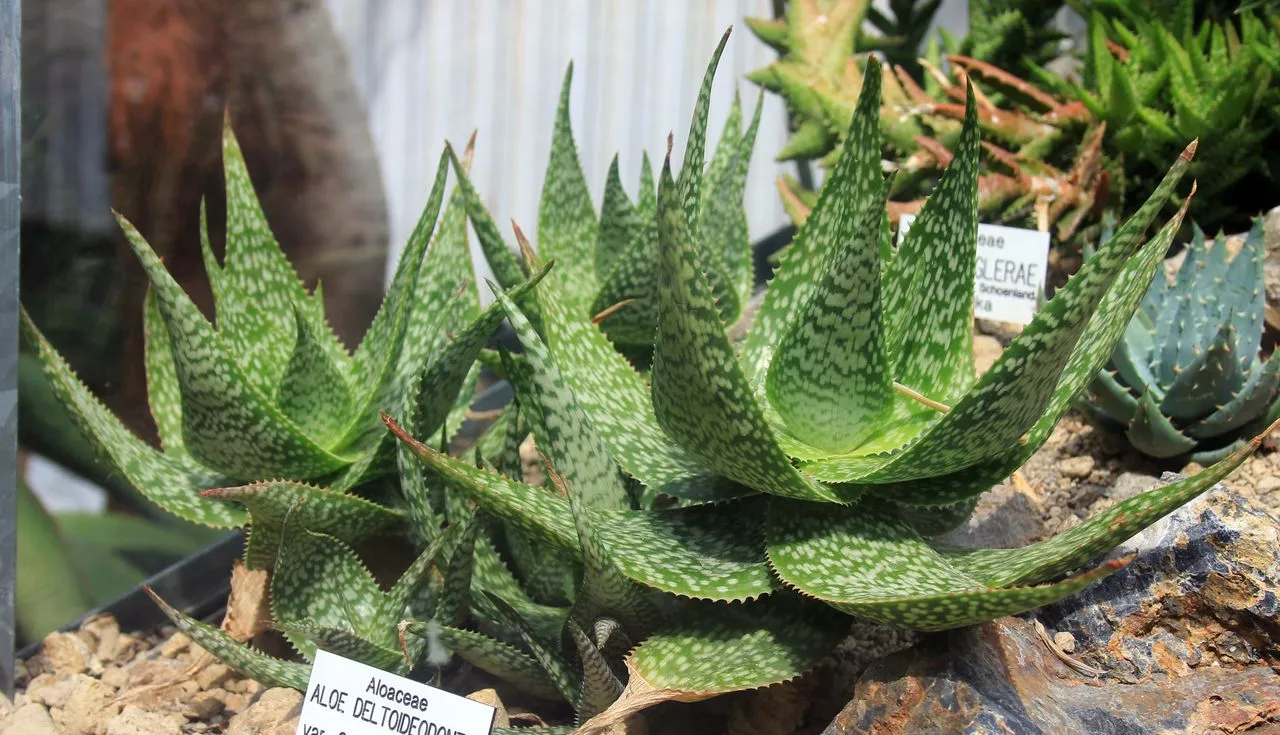
Leggy Aloe vera is usually a light problem, but not every exposed stem is etiolation. A plant can develop a short bare neck as old lower leaves dry and are removed. True legginess is different: new leaves are too long for their width, the rosette opens, the plant leans, and the centre reaches toward the light. Correcting the shape starts with separating those two patterns.
Part of the Complete Aloe Guide.
Low light and etiolation
Etiolation is growth formed under insufficient light. In Aloe vera, it produces long, thin, pale leaves that arch outward instead of holding a firm upward angle. The rosette loses its compact geometry, and the plant may lean toward the nearest window. Leaf colour can shift from deep sage-green to pale yellow-green because the plant is making tissue faster than light can support robust structure.
This happens indoors even when a room looks bright to human eyes. Human vision adapts; plants measure photons. A table 2 m from a window can receive a fraction of the light available at the glass. Move the plant within 30 to 60 cm of the brightest suitable window, or place it under a proper grow light for 10 to 14 hours daily. Increase direct sun gradually, because shaded aloe leaves scorch easily.
Normal old-leaf loss and a firm neck
Older A. vera plants often show a short stem as lower leaves age, dry, and detach. That is not automatically a problem. The stem should be firm, dry, and ringed with old leaf scars. New central growth should remain compact and upright. The plant may sit slightly above the soil line because the original lower leaves have been removed over time.
This pattern needs maintenance, not emergency surgery. Remove only leaves that are fully dry or detach with light pressure. Keep the crown above the substrate. If the firm neck is visually awkward or makes the plant unstable, it can be reset during repotting by positioning a small amount of clean dry stem below the surface, but wet leaf bases should never be buried.
Pot instability exaggerating legginess
Leggy plants often fall because the pot is too light for the stretched rosette. A healthy compact aloe carries weight close to the centre. A stretched aloe carries weight outward on longer leaves. Plastic nursery pots, shallow decorative cachepots, and dry peat make the centre of gravity worse. The plant looks more etiolated because it is physically tilted.
Use a heavier pot with a broad base and drainage. Terracotta is useful, but do not overpot dramatically. A pot 2 to 4 cm wider than the root ball is enough for a single plant. Add a coarse mineral top dressing if needed for surface stability. Temporary stakes can hold the rosette while new roots grip, but they cannot make old stretched leaves compact.
Crowding by pups
Pups can make an aloe look leggy by pushing the parent upward and sideways. A. vera offsets freely, and a tight cluster in a small pot forces leaves to grow around each other. The parent may develop a bare side where pups shaded lower leaves. This is not pure etiolation, although low light often compounds it.
Divide pups once they are 8 to 15 cm tall and have their own roots. Withhold water for 5 to 7 days before division, separate with a clean blade, callus cuts for 24 to 72 hours, and pot into dry mineral mix. The parent often regains a better posture once its base is no longer crowded. If the central leaves are still pale and stretched after division, light remains the limiting factor.
Overfeeding in weak light
Fertiliser can worsen legginess if light is inadequate. Aloe vera responds to modest feeding during active growth, but nitrogen-driven expansion in a dim position produces softer leaves and wider spacing. The plant grows, but the growth is poor. Feeding should support an already well-lit plant, not push a shaded one.
If the plant is leggy, stop feeding until new compact growth appears under better light. Then use a balanced fertiliser at half strength once monthly through active growth. Do not feed during winter dormancy, after root trimming, or while the plant is recovering from rot.
How to identify the cause
| Pattern | New growth | Stem | Likely cause |
|---|---|---|---|
| Pale long leaves, open rosette | Stretched | May be weak | Low light |
| Compact centre, short bare base | Normal | Firm and dry | Old-leaf loss |
| Leaning mainly to one side | Stretched toward window | Firm | Directional light |
| Parent lifted by offsets | Crowded | Firm | Pups |
| Soft pale growth after feeding | Fast but weak | Variable | Fertiliser without light |
| Long neck with firm top | Compact above | Firm | Age plus previous low light |
Judge the newest central leaves. They record current conditions. The old outer leaves record past conditions and cannot be made smaller.
Risk and severity
Legginess itself is not urgent if the plant is firm. The risk is secondary: falling, leaf breakage, sunburn during correction, or rot if the long neck is buried wet. Act quickly only if the stem is soft, the plant wobbles from the base, or lower leaves are mushy. Those signs point to root or stem problems rather than simple etiolation.
Professional help is unnecessary for household A. vera. Severe specimen plants can be reset by anyone comfortable making a clean cut and allowing a callus period.
Solutions
Improve light safely
Move the plant to brighter conditions in stages. Give bright indirect light for several days, then 1 to 2 hours of morning sun, then longer exposure if leaves remain firm and unscarred. Under LEDs, place the plant at the manufacturer-recommended succulent distance and run a 10 to 14 hour photoperiod.
Manage the existing shape
Do not cut healthy green leaves just because they are long. They still feed the plant. Remove old stretched leaves only as they dry naturally or if they are broken and collapsing. Rotate the pot weekly, not daily, so new growth develops evenly without constant reorientation.
Reset a severe long neck
If the plant has a firm elongated stem and a healthy top, remove dry leaf bases, let any fresh wounds callus, and repot so a short length of clean stem is supported in dry mineral mix. For more severe cases, cut the top, callus for 7 to 14 days, and root it as a stem reset. Keep dry at first; roots form before regular watering resumes.
Prevention
Grow Aloe vera at the brightest indoor exposure available, divide pups before crowding distorts the parent, and feed only when the plant is already producing compact growth. Keep photographs from the side every few months; spacing changes are easier to see in images than day by day. A compact aloe is built over time by steady light, not repaired instantly by pruning.
See also
- Aloe Falling Over — structural diagnosis for leaning and unstable plants.
- South vs East vs West Window — choosing the best indoor exposure for succulents.
- Beheading and Root Reset — controlled reset technique for long stems.
- Aloe vera — species profile with compact growth expectations and fertiliser notes for indoor plants.
Frequently Asked Questions
Can a leggy Aloe vera become compact again?
Existing stretched leaves will not shorten. Better light produces compact new central growth, and severe long-neck plants can be reset once the stem is firm and dry.
Is a bare stem on Aloe vera normal?
A short firm neck can be normal after old lower leaves dry and detach. A long pale weak stem with floppy leaves indicates low-light growth.
Should I cut the top off a leggy aloe?
Only for severe cases with a firm healthy stem and enough top growth to re-root. Mild legginess is better corrected with light and patient new growth.
How much light fixes Aloe vera legginess?
Use the brightest window available or a strong grow light for 10 to 14 hours. Increase direct sun over 10 to 14 days to avoid sunburn.