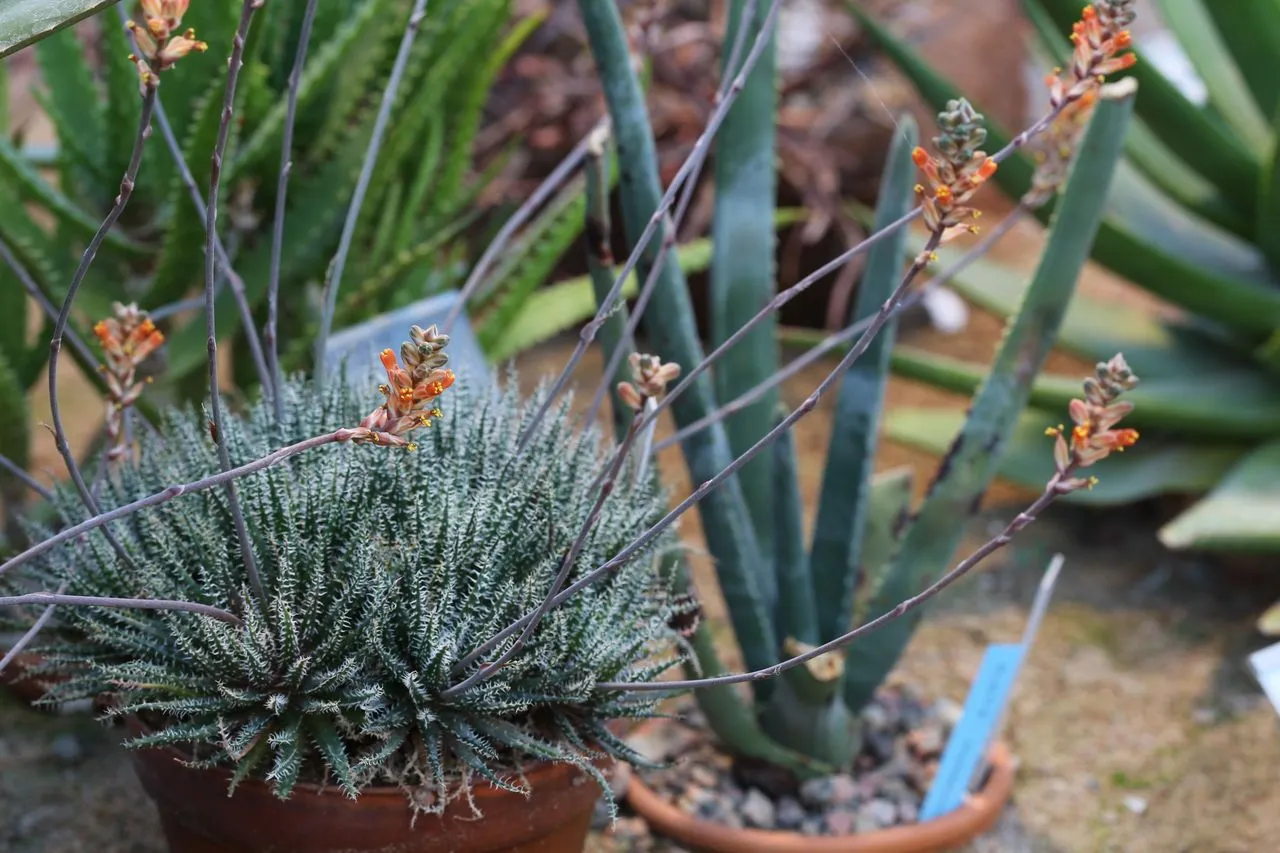
Red, orange, or pink-tipped Aloe vera is a common sight on plants kept outdoors in summer or placed near a strongly lit window. In most cases the colour change is a normal physiological response — not damage, disease, or deficiency. Understanding when red tips indicate healthy photoadaptation and when they signal sunburn, cold stress, or drought determines whether to adjust conditions or leave the plant alone.
Part of the Complete Aloe Guide.
Anthocyanins and the stress-colouring response
Aloe vera and most species in the genus produce anthocyanins — water-soluble red-to-purple pigments stored in the leaf vacuoles — as a photoprotective response to high light intensity. The mechanism parallels how echeverias and sedums colour under intense sun: when the photosynthetic apparatus approaches saturation, or the plant is under mild physiological stress, anthocyanins act as an internal sunscreen by absorbing excess blue-green wavelengths and reducing the energy load on chloroplasts. The pigments are synthesised in the epidermal and subepidermal cells closest to the leaf surface, which is why the colour appears in the outermost tissue first and spreads inward from the tip toward the base as intensity increases.
The response is dose-dependent and fully reversible. A plant receiving 4 to 6 hours of direct sun may have pale sage-green leaves. The same plant in 8 to 10 hours of summer sun, or directly under a high-output grow light at close range, will develop red or orange tips within 1 to 2 weeks. Reduce the light intensity — move the plant to partial shade or increase the distance from a grow light — and the colour fades within 2 to 4 weeks as anthocyanin synthesis slows and existing pigment is metabolised.
Stress-coloured leaves are firm, hydrated, and completely flexible. The red-orange tint is translucent rather than opaque — you can see the leaf structure through it if you hold it to a light source. The plant continues to grow normally from the centre. There is no reason to reduce light if the plant otherwise shows compact, upright growth, and many collectors deliberately maintain moderate stress colouring by keeping aloes in the strongest available direct sun.
True sunburn: when light damage is permanent
Acute sunburn occurs when Aloe vera is exposed to light and heat intensities above the threshold its current leaf structure can tolerate. The most common scenario is a plant moved directly from a dim indoor position to outdoor direct summer sun, or a greenhouse plant exposed to uncovered glass during a heat wave. Unlike anthocyanin colouring, sunburn destroys cell membranes: the epidermal and mesophyll cells rupture and desiccate, and the proteins in the chloroplasts are denatured.
The affected tissue turns opaque, chalky white, tan, or pale brown. It is dry and papery, does not flex when pressed, and may peel or crumble. The damage is typically confined to the sun-facing surface of the leaf, appearing as a flat bleached patch rather than a tip-to-base gradient. Surrounding tissue may retain normal colour and firmness right up to the edge of the burned area.
Sunburned tissue does not recover. The cell membranes are ruptured and the bleached surface is permanent. New leaves formed from the central growing point will have the correct colour and thickness for the current light level, but the scarred outer leaves carry the marks for their remaining life. Do not cut into a dry sunburn scar — the wound creates an entry point for fungal pathogens and the dry tissue acts as a self-sealing barrier. Remove the leaf only if the entire leaf has collapsed or if the scar has become wet and soft, which would indicate secondary infection rather than the original sunburn. Full acclimation guidance is in Sunburn Diagnosis and Recovery and Aloe Leaves Turning Brown.
Temperature stress and cold-triggered reddening
Cold temperatures — particularly nights below 10°C, even well above the frost threshold — can trigger anthocyanin production in Aloe vera. When temperatures drop sharply in autumn or after an unexpectedly cold night for a plant set outside, the tips and outer leaf margins flush red or dark orange before any actual cold damage occurs. This is a protective response: the anthocyanins absorb some radiant heat and protect chloroplasts against the photoinhibition that is exacerbated by cold.
If the plant remained above 4°C and the leaves are firm with no glassy or water-soaked appearance, the colouring is harmless and will fade once temperatures stabilise above 15°C. The diagnostic boundary between cold-triggered colouring and actual cold damage is texture: cold-stressed but firm leaves have stress colouring only; cold-damaged tissue becomes water-soaked, dark, and glassy, softening rapidly over 24 to 72 hours. See Aloe Vera Soft and Mushy for the cold-injury distinction and recovery protocol.
Drought stress and reduced water pressure in the leaf
Mild water stress — a plant reaching the end of a correctly timed dry-down cycle, or one kept in a substrate that has partially dried unevenly — can trigger anthocyanin production alongside the first signs of leaf wrinkling. The two stress signals coincide because both photon excess and cellular water deficit activate the same flavonoid biosynthesis pathway. Red colouring associated with drought is usually accompanied by a subtle lengthwise creasing in the mid and lower leaves; in contrast, light-driven stress colouring appears on otherwise fully turgid leaves.
Check the top 3 to 4 cm of substrate before assuming drought. If the soil reads dry at that depth and the lower leaves show mild wrinkling, a thorough soak is appropriate — submerge the pot in a basin of water for 20 to 30 minutes if the substrate has become hydrophobic, then drain fully. If the substrate reads moist or wet, the colouring is driven by light or temperature and watering is not the correct response. Avoid the reflex of watering a red-tipped plant without first checking moisture, particularly in winter when a moist substrate can remain wet for several weeks.
High phosphorus and nutrient-driven colouring
Some growers observe increased red-tip colouring after applying high-phosphorus fertilisers or after substrate pH rises to the point where phosphorus becomes highly available. Phosphorus is a recognised enhancer of anthocyanin synthesis: it upregulates the expression of chalcone synthase and related enzymes in the flavonoid pathway. If red tips appeared shortly after a recent fertiliser application and light and temperature have not otherwise changed, reducing fertiliser concentration or switching to a more balanced formula is reasonable. This is a minor contributing factor rather than a primary driver; correcting light and watering management has a larger effect on colouring than adjusting nutrient ratios.
How to identify the cause
| Tip appearance | Leaf texture | Other signs | Likely cause |
|---|---|---|---|
| Red-orange translucent tips | Firm, hydrated | Compact growth, green centre | Anthocyanin from light intensity |
| Red tips plus subtle lengthwise wrinkling | Slightly firm, creasing | Top substrate dry | Light stress combined with mild drought |
| Red tips after cold night above 4°C | Firm, no water-soaking | Temperature dropped sharply | Cold-triggered anthocyanin |
| Chalky-white or tan flat patches | Dry, papery, does not flex | On sun-facing surface only | Actual sunburn |
| Bleaching spreading across leaf surface | Dry, beginning to peel | Following sudden move outdoors | Acute acclimation failure and sunburn |
The single fastest field test: press the coloured area with a fingertip. Firm tissue that springs back — stress colouring, no action needed. Tissue that depresses and does not recover its shape — sunburn damage, permanent.
Risk and severity
Anthocyanin stress colouring carries no risk. It is a normal adaptive response and not a disease or deficiency signal. Do not act on it unless the rest of the plant shows problems such as stretching, soft tissue, or spreading discolouration. Actual sunburn scars are permanent but not progressive — they do not spread or deepen once the cause is removed. The only urgent secondary risk from sunburn is if the burned tissue becomes wet and soft, allowing fungal pathogens to enter through the compromised surface. In that case, keep the area dry, improve airflow, and remove the leaf if it collapses entirely.
Cold-triggered reddening without accompanying tissue collapse is low severity. Watch the plant over 3 to 7 days: if the tissue remains firm, the plant has adapted successfully. If tissue softens and becomes glassy or dark, move the plant inside immediately and apply the cold damage protocol in Aloe Vera Soft and Mushy.
Solutions
If the red tips are firm and the plant looks healthy
No intervention is needed. The colour is aesthetic and harmless. If you prefer the standard sage-green appearance, reduce direct midday sun intensity by filtering with 30 to 40% shade cloth or moving the plant to a position that receives full morning sun and light shade from noon onward. The colour fades within 2 to 4 weeks.
If the red is accompanied by wrinkling and dry substrate
Water once thoroughly. If the substrate has become hydrophobic, submerge the pot in a basin for 15 to 20 minutes, then allow to drain fully. Resume a normal dry-down cycle: do not water again until the top 3 to 4 cm reads dry. The wrinkling and any associated stress colouring will resolve within 1 to 2 weeks.
If chalky-white or tan patches have appeared after a move outdoors
Move the plant to bright shade or filtered light immediately. Apply no further intense direct sun for one week. Acclimate by reintroducing 1 to 2 hours of morning sun per day, increasing by 30 to 60 minutes every 2 to 3 days over a total of 10 to 14 days. Midday and afternoon summer sun is the last step in the sequence. The scarred leaves can remain on the plant while new compact central growth develops; remove them only once fully dry or if they develop secondary softness.
Prevention
Acclimate Aloe vera over 10 to 14 days whenever moving from a lower to a higher light environment. Start with morning sun only and add midday exposure incrementally. Leaves built under stronger light are thicker-walled and more resistant to both sunburn and drought-triggered colouring. A plant that has spent a full outdoor summer acclimated gradually will tolerate direct sun far more reliably the following year than one moved abruptly. Window selection for indoor growing is covered in South vs East vs West Window.
See also
- Aloe Leaves Turning Brown — when red-orange tips progress to permanent brown scars, and how to distinguish sunburn from drought and cold damage.
- Sunburn Diagnosis and Recovery — the full light acclimation protocol applicable across succulent genera.
- South vs East vs West Window — choosing the right indoor exposure to balance growth quality and stress colouring.
- Aloe Vera Yellow Leaves — the diagnostic contrast when pale or yellow colouring replaces red as the dominant symptom.
Frequently Asked Questions
Is it bad if my aloe has red tips?
Not in most cases. Red or orange tips on otherwise firm and upright leaves indicate photoprotective anthocyanin production in response to strong light or mild temperature stress. Only chalky-white, bleached, or papery patches indicate actual tissue damage.
How do I tell the difference between red stress colouring and sunburn?
Stress colouring is a translucent to deep red-orange shade on firm, hydrated leaf tissue, typically gradual from tip toward base. Sunburn is an opaque chalky-white, tan, or brown bleached patch on the sun-facing side of the leaf, with tissue that feels papery and does not flex.
Does red aloe mean it needs water?
Mild water stress can trigger anthocyanin production alongside the first signs of wrinkling, so reddening can coincide with a plant approaching the end of its dry-down cycle. Check the top 3 to 4 cm of substrate: if dry, water normally. If already moist, the red colour is driven by light or temperature rather than drought.
Will red aloe tips turn green again?
Anthocyanin stress colouring is fully reversible. Move the plant to slightly lower light intensity or resume normal watering and the colour fades within 2 to 4 weeks. Sunburn scars are permanent — bleached tissue will not re-green regardless of conditions.