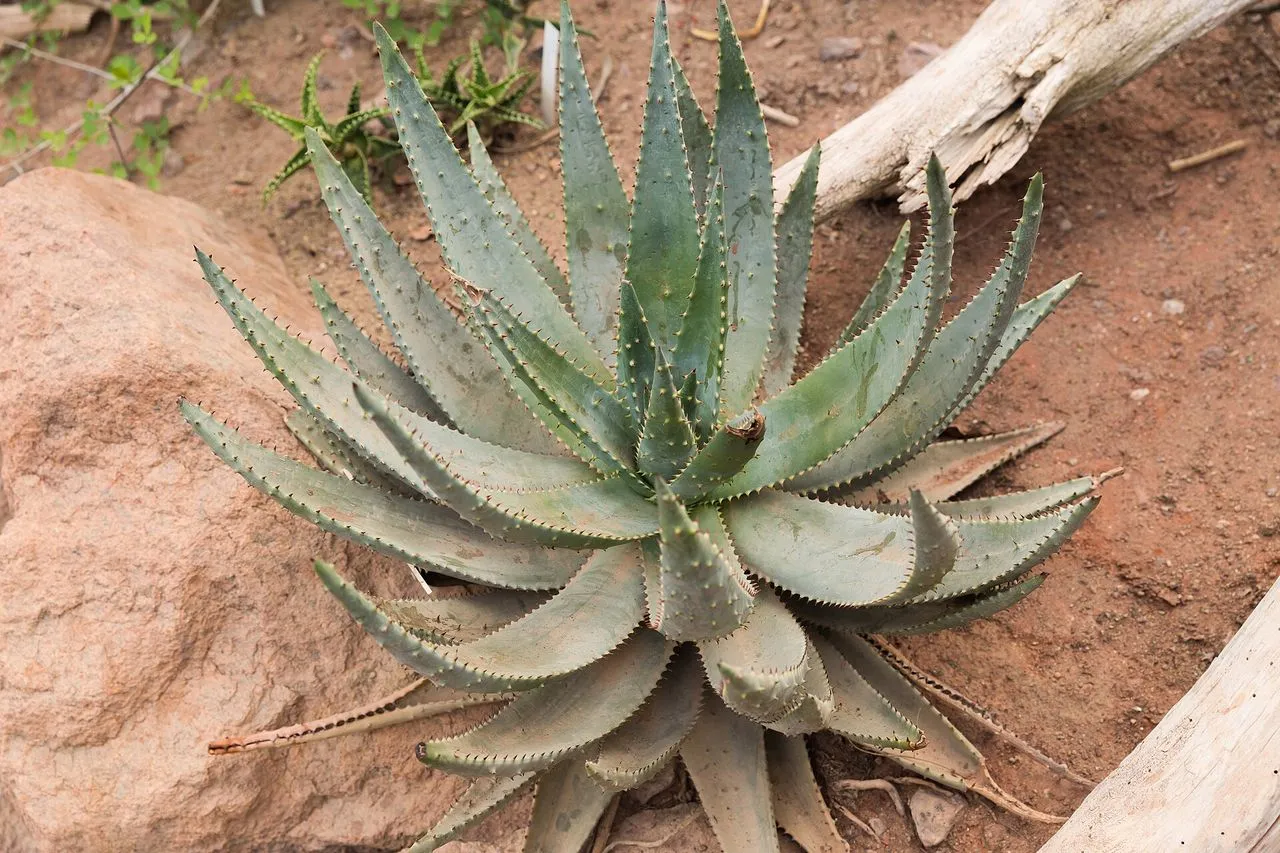
An aloe falling over is a structural problem, not a reason to add water automatically. The rosette is heavy because aloe leaves are water-storage organs. A healthy plant stays upright because its leaves are compact, its roots grip the substrate, its pot has enough weight, and the stem is appropriate for the species. When one of those supports fails, the plant leans or tips.
Part of the Complete Aloe Guide.
Low-light elongation weakens the rosette
Low light produces the classic floppy indoor aloe. Leaves grow longer, thinner, paler, and more horizontal as the plant tries to capture light. The rosette opens instead of holding a tight upward form. Eventually the weight of the water-filled leaves exceeds the stiffness of the tissues, and the plant leans toward the window or collapses sideways.
This is common in Aloe vera because it tolerates shade long enough for the problem to develop slowly. The fix is better light, introduced gradually. Move the plant closer to a bright window or use a grow light for 10 to 14 hours per day. Existing stretched leaves will not shorten, so the aim is compact new central growth. Severe cases may need lower leaves removed as they dry, or a stem reset if the plant has developed a long bare neck.
Root loss from waterlogged substrate
A firm-looking aloe can fall because the roots no longer anchor it. Waterlogged mix kills fine roots first. The rosette remains heavy, but the base loosens and begins to rock. If lower leaves are also soft, yellowing, or translucent, treat the lean as a root warning rather than a balance issue.
Unpot the plant. Healthy roots should bind at least part of the substrate and resist gentle movement. Rotten roots break away easily, smell sour, or leave a hollow sheath. Remove all dead roots, dry the plant bare-root for 5 to 7 days, and repot into dry mineral substrate. Stake only after the rot has been corrected. A stake pushed into wet infected mix merely hides the symptom while the crown continues to fail.
Top-heavy growth in a light or shallow pot
Sometimes the plant is healthy and the container is wrong. A mature Aloe vera in a thin plastic nursery pot can become heavier above the soil line than below it. Dry substrate weighs little, pups push the centre of gravity outward, and one touch sends the plant over. This is especially common after watering has been withheld correctly; the dry pot is light while the leaves still contain stored water.
Repot into a heavier container with a broad base. Terracotta is useful because it adds weight and breathability. Increase pot diameter modestly, usually 2 to 4 cm beyond the root ball for a single plant or 4 to 6 cm for a clump. Do not jump to a deep oversized pot just for ballast; excess wet substrate creates the root problems covered above. If needed, add a coarse mineral top dressing for stability.
Crowded pups lifting the parent
Offsetting aloes can lean because their own pups have changed the root geometry. Aloe vera produces pups freely, and a dense ring can press against the parent rosette, tilt it, or lift one side of the root ball. The plant may look like it is escaping the pot. Leaves remain firm and green, but the central rosette no longer sits over the root mass.
Division is the clean fix. Withhold water for 5 to 7 days, unpot the clump, and separate pups that are at least 8 to 15 cm tall with their own roots. Callus cuts for 24 to 72 hours, then pot the parent back at the correct level. Removing pups reduces leverage and restores space for new roots. It also prevents the parent from being forced against the pot rim, where leaves bruise and brown.
Natural stem age and species habit
Not all upright problems are cultural failures. Some aloes form stems naturally. Aloe arborescens branches and leans with age; tree-aloes and old clumping plants do not remain flat rosettes forever. Even Aloe vera can develop a short exposed stem as old lower leaves are shed. If the stem is firm, dry, and not foul-smelling, the lean may be a maturity issue rather than disease.
The response depends on species and aesthetics. For a stem-forming aloe, a deeper pot and careful orientation may be enough. For an overlong A. vera neck, reset the plant by removing dry lower leaves, allowing any wounds to callus, and potting only clean stem tissue slightly deeper in a fast-draining mix. Never bury wet leaf bases or soft tissue.
Loose substrate after repotting
Freshly repotted aloes often wobble for several weeks. Mineral mixes contain large particles and do not grip roots immediately. If the plant was dry and roots were trimmed, the root system also needs time to branch into the new medium. A slight wobble after a correct repot is normal; a progressive lean with softening leaves is not.
Use temporary support. Two bamboo stakes outside the root ball, tied loosely with soft tape, hold the rosette without crushing leaves. Remove the support after 6 to 10 weeks, once new roots have anchored. Keep the substrate dry for the first week after repotting and water only when the upper 3 to 4 cm has dried thereafter.
How to identify the cause
| Lean pattern | Base feel | Likely cause | First action |
|---|---|---|---|
| Leaning toward window, pale long leaves | Firm | Low light | Improve light gradually |
| Sudden wobble, damp soil | Loose or soft | Root rot | Unpot and inspect roots |
| Whole pot tips over | Firm | Pot too light | Use broader heavier pot |
| Parent pushed sideways by offsets | Firm but crowded | Pups | Divide clump |
| Firm old stem bends over rim | Firm, dry | Age or species habit | Reset or support |
| Recent repot wobble | Firm | New roots not anchored | Temporary stake |
Hold the plant at the soil line and move it gently. If the pot moves with the plant, the issue is balance. If the rosette moves independently of the root ball, the issue is anchorage.
Risk and severity
Immediate action is needed when falling over is accompanied by soft lower leaves, wet soil, sour smell, or a blackened stem base. That combination points to root or stem rot. Moderate urgency applies when the plant is healthy but physically unstable; leaves can snap and wounds can rot if the pot keeps falling. Low urgency applies to a slight lean from old stem growth or recent repotting.
Professional help is only relevant for large landscape aloes with heavy branching stems. Household plants can be assessed by root inspection and repotting.
Solutions
Stabilise without hiding disease
First decide whether the base is healthy. If it is soft, do not stake and walk away; unpot and treat rot. If it is firm, set the plant upright in a heavier pot and add temporary stakes outside the root zone.
Correct light-driven flopping
Move gradually to brighter light. Rotate the pot a quarter turn weekly while new growth forms, but do not rotate daily; the plant needs a consistent light direction to build balanced tissues. Remove only leaves that are fully dry or structurally in the way.
Reset a long neck
For A. vera with a long bare stem, strip only dry old leaf bases, callus any fresh wounds, and pot the firm stem slightly deeper in dry mineral mix. Water after 7 days. If the stem is too long or crooked, use a beheading-and-root-reset method rather than burying the whole neck.
Prevention
Give aloes enough light to build compact leaves, use pots with drainage and adequate weight, divide pups before they distort the parent, and repot before the plant becomes perched above the rim. Check root health whenever a lean appears suddenly. A stable aloe is the product of roots, light, and container geometry working together.
See also
- Aloe vera Propagation — pup division timing for crowded clumps.
- Pot Size Selection — choosing a container that supports roots without overpotting.
- Beheading and Root Reset — technique for plants with long stems or failed lower roots.
- Aloe vera Leggy — how low-light etiolation extends stems and contributes to structural instability.
Frequently Asked Questions
Can I stake an aloe that is falling over?
Yes, if the roots and stem are firm. Staking is temporary support while roots re-establish; it is not a cure for rot or severe etiolation.
Why is my Aloe vera suddenly leaning?
Sudden leaning usually means the root ball has loosened, the pot has become too light, or lower roots have died. Inspect the base before adding water.
Should I bury a leaning aloe deeper?
Only bury clean, dry stem tissue, and never bury live leaf bases. If the stem is long and healthy, a root reset or beheading method is safer than simply piling wet soil around it.
Do aloe pups make the parent fall over?
They can. A crowded ring of pups can push the parent off-centre and lift the root ball, especially in a shallow plastic pot.