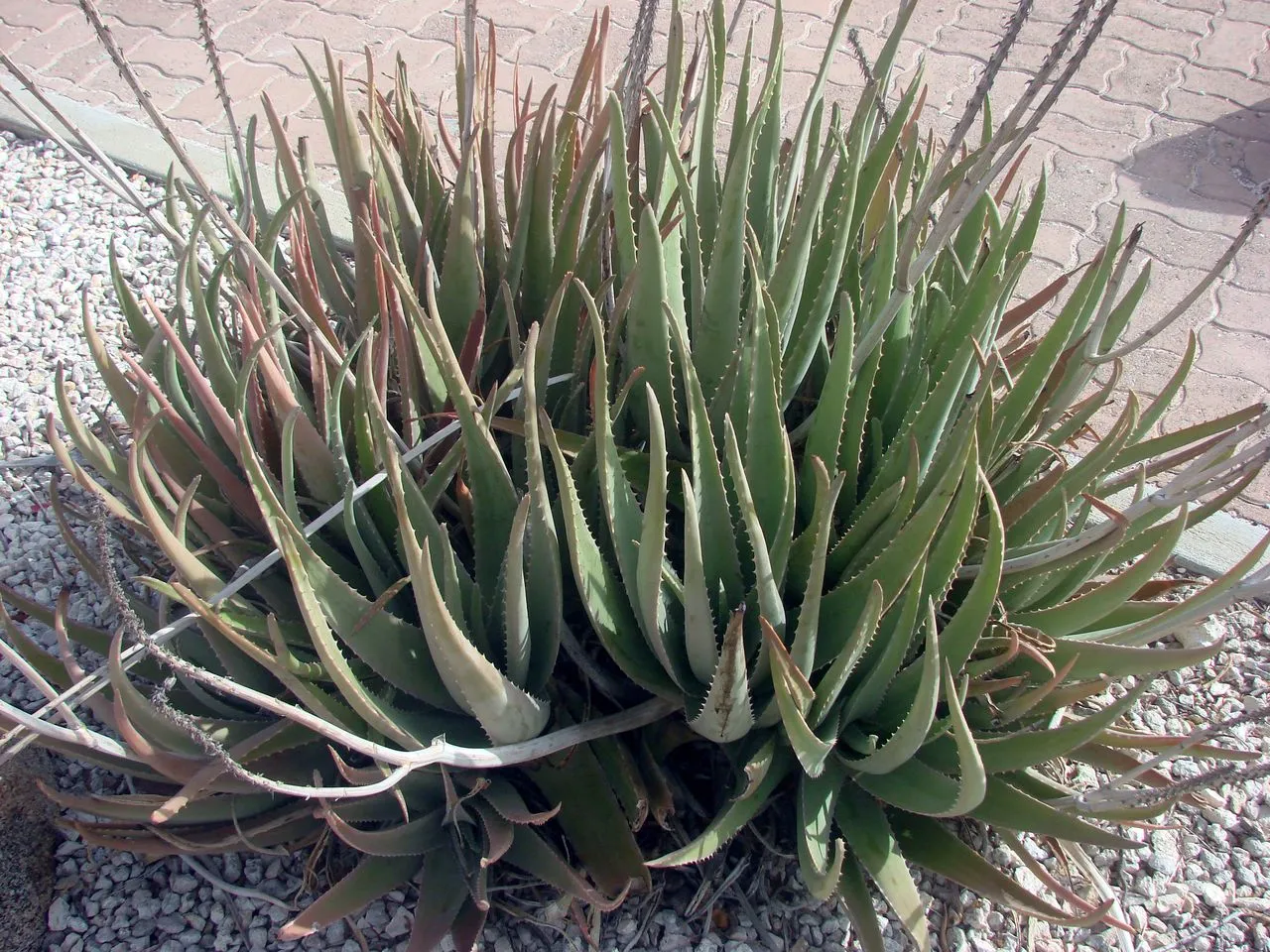
Aloe vera offsets so freely that almost every named clone in trade exists only because someone, somewhere, kept dividing pups. The bottom-line answer for propagation is straightforward: divide pups, ignore leaves, skip seed. A healthy adult plant produces 4 to 10 pups per year on its own, with no intervention from you. Here is the rest of the picture.
Part of the Complete Aloe Guide.
At a Glance
The three methods sometimes recommended online are not interchangeable. Their success rates differ by an order of magnitude, and only one of them yields a plant identical to the parent in any reasonable timeframe.
| Method | Success rate | Time to potted plant | Genetic copy of parent |
|---|---|---|---|
| Pup division | >95% | 4 to 8 weeks | Yes (clonal) |
| Leaf cuttings | <10% | Rarely succeeds | Would be, if it worked |
| Seed | Germination 70 to 80%, plants variable | 3 to 5 years to flowering | No (segregates visibly) |
The rest of this article explains why the spread is so wide and how to execute the only method that works reliably for a clonal cultivar.
Method 1: Pup Division
A. vera is one of the most prolific offsetting succulents in cultivation. A three-year-old specimen in a 5-litre pot routinely throws 4 to 10 pups in a single growing season, often more under favourable conditions. The plant has spent the last two thousand years being selected, deliberately or accidentally, for ease of vegetative multiplication. Modern stock is the cumulative result.
The first rule is patience. Do not separate a pup the moment it appears at the surface. Wait until it stands 8 to 15 cm tall and carries its own roots. You can usually verify the roots without unpotting by tilting the parent gently sideways and looking at the substrate around the pup base; visible white root tips at the soil surface are sufficient confirmation. A pup that has not yet formed an independent root system still depends entirely on the parent for water and carbohydrates, and detaching it at that stage means trying to raise it as a leaf cutting, with the same low success rate covered in the next section.
Procedure:
- Withhold water for 5 to 7 days before separation. The substrate should be dry and the parent slightly thirsty. This firms the leaves, reduces sap flow at the wound, and lowers rot risk.
- Unpot the clump on a clean surface. Brush away enough substrate to see where each pup attaches.
- Use a sharp, clean blade (a single-edge razor or a sterilised knife) to cut through the connecting tissue between pup and parent. Do not tear or twist; A. vera tissue bruises and a torn cut takes longer to callus.
- Set each pup aside in shade for 24 to 48 hours so the cut surface dries and forms a visible callus. In humid climates allow up to 72 hours.
- Pot into dry mineral substrate (50 to 70% inert grit, with the balance a low-organic potting mix). Do not water for 7 days.
- After the first week, water lightly. Resume normal irrigation once you see new central growth.
Expect rooted pups within 4 to 6 weeks and visible new leaf production by week 8. Success rates above 95% are routine for indoor cultivation between 18 and 28 °C. The few failures are almost always traceable to a pup taken too young, a torn rather than cut connection, or a wet substrate during the callus phase.
Method 2: Leaf Cuttings
If you have already propagated Echeveria or Sedum from leaves, you may be tempted to try the same with A. vera. Do not. The genus does not respond to standard leaf propagation, and the reasons are mechanical as much as biological.
Two structural problems work against you. First, A. vera leaves are large and thick, with high water and gel content. The cut surface stays wet long enough for Fusarium and Pythium species to colonise before any meristematic activity begins. The leaf typically blackens and collapses inside two weeks. Second, the fibrous internal architecture of the leaf is structured for water storage, not for regenerating a growing apex from a wound. The dormant cells capable of producing a new shoot are concentrated at the very base of the leaf, where it meets the stem, and even an apparently clean detachment usually leaves that tissue behind on the parent.
Specialised techniques exist. Tissue-culture protocols using small leaf segments that include apical bud tissue have been published in horticultural research, and a small fraction of growers report rosette formation from carefully wounded leaf bases under sterile conditions. Reported success rates sit below 10% even in those cases, and the resulting plantlets take six to twelve months to reach a usable size. For comparison, a pup taken at the right size is already a fully formed small rosette.
The practical conclusion: leaf cuttings of A. vera are not a propagation method, they are a curiosity. If you encounter a guide that recommends it, the author has either copied another guide without testing or has confused Aloe with the unrelated genera that actually do propagate from leaves (see Leaf Propagation Step-by-Step for Crassulaceae for the genera where the method works). Pup division is faster, more reliable, and produces a larger plant in less time.
Method 3: Seed
Seed is the standard route for most Aloe species in habitat, but for A. vera in cultivation it serves no useful purpose. Two issues compound.
First, segregation. Wild Aloe species are typically self-incompatible, meaning a flower needs pollen from a genetically distinct individual to set viable seed. Cultivated A. vera stock has lost this trait through generations of vegetative selection; selfed seed is now produced occasionally, and any cross between two trade clones (which are themselves near-identical) yields seedlings that segregate visibly from the parent. Plants grown from seed of a "true" A. vera parent produce variable rosette sizes, leaf colours, tooth densities, and gel contents. They are no longer the cultivar you started with.
Second, time. Germination is straightforward in horticultural terms: fresh seed sown on a moist mineral surface at 22 °C germinates within 14 to 30 days at rates of 70 to 80%. The trouble starts after that. Seedling A. vera takes 3 to 5 years to reach a useful size and longer to reach flowering maturity. In that same span, you could produce 30 or more clonal plants from pups off a single parent.
There is one narrow case for seed: deliberate hybridisation between A. vera and another Aloe species, where you specifically want segregation and novelty. For ordinary multiplication of a clonal cultivar, seed is the wrong tool.
Pups Are Free
This is the practical insight worth holding onto. Garden centres and online retailers routinely list small A. vera plants at €15 to €25 each, sometimes higher in winter or in specialty packaging. Those plants were themselves produced from pups, by commercial nurseries running the same procedure described in Method 1 at scale. Nothing in the supply chain requires money on the buyer side.
A single healthy adult plant in your collection produces, on its own and without intervention, several free clones every year for the entire span of its life. A six-year-old A. vera in a 7-litre pot can yield 8 to 10 separable pups in a single division session, and continue doing so the next year. If you need a second plant, ask a friend who already grows one; the request costs them five minutes and a pot. If you need ten, ask the same friend in spring.
The only legitimate reason to buy an A. vera is to acquire your first one. After that, the plant handles multiplication for you, and the propagation cost drops to the price of a few terracotta pots and a bag of grit.
For the underlying technique that applies across the genus, see the Beginner's Guide to Succulents. For genus-level cultivation context covering light, water, and substrate that frame any aloe propagation work, see the Complete Aloe Guide.
See also
- The Complete Aloe Guide: genus-level cultivation, gel and latex chemistry, dormancy patterns
- Aloe vera: Identification, Cultivation & Propagation: species profile with cultivation specifics for the cultivated clone
- Leaf Propagation Step-by-Step for Crassulaceae: the method that works for echeverias and graptopetalums but not for aloes
- A Beginner's Guide to Succulents: substrate, light, and watering basics that frame any propagation work
Frequently Asked Questions
What is the main identification point?
The Identification section separates Aloe vera by plant habit, leaf form, marginal teeth or surface markings, flowers, and lookalikes named in the article.
How should this aloe be watered?
Follow the Cultivation section rather than a fixed calendar. The article gives drying depth, seasonal growth rhythm, and the wet-cold risk for this plant.
How is it propagated?
Use the Propagation section. The article states whether offsets, stem cuttings, or seed are practical, and notes that single-leaf cuttings do not work for aloes.
What should buyers watch for?
Check the Notes and lookalike sections. The article flags trade confusion, hybrid material, or conservation sourcing where those issues apply.