| Question | Short Answer |
|---|---|
| What is the main identification point? | The Identification section separates Aloe argenticauda by plant habit, leaf form, marginal teeth or surface markings, flowers, and lookalikes named in the article. |
| How should this aloe be watered? | Follow the Cultivation section rather than a fixed calendar. |
| How is it propagated? | Use the Propagation section. |
| What should buyers watch for? | Check the Notes and lookalike sections. |
Aloe argenticauda Merxm. & Giess (silver-tailed aloe) is a small-to-medium aloe endemic to a restricted area of south-western Namibia, on rocky quartzitic slopes between roughly 700 m and 1,200 m elevation. It occupies a harsh habitat of summer rainfall (less than 100 mm annually), extreme temperature fluctuations, and heavy fog penetration from the Atlantic coast.
Part of the Complete Aloe Guide.
Identification
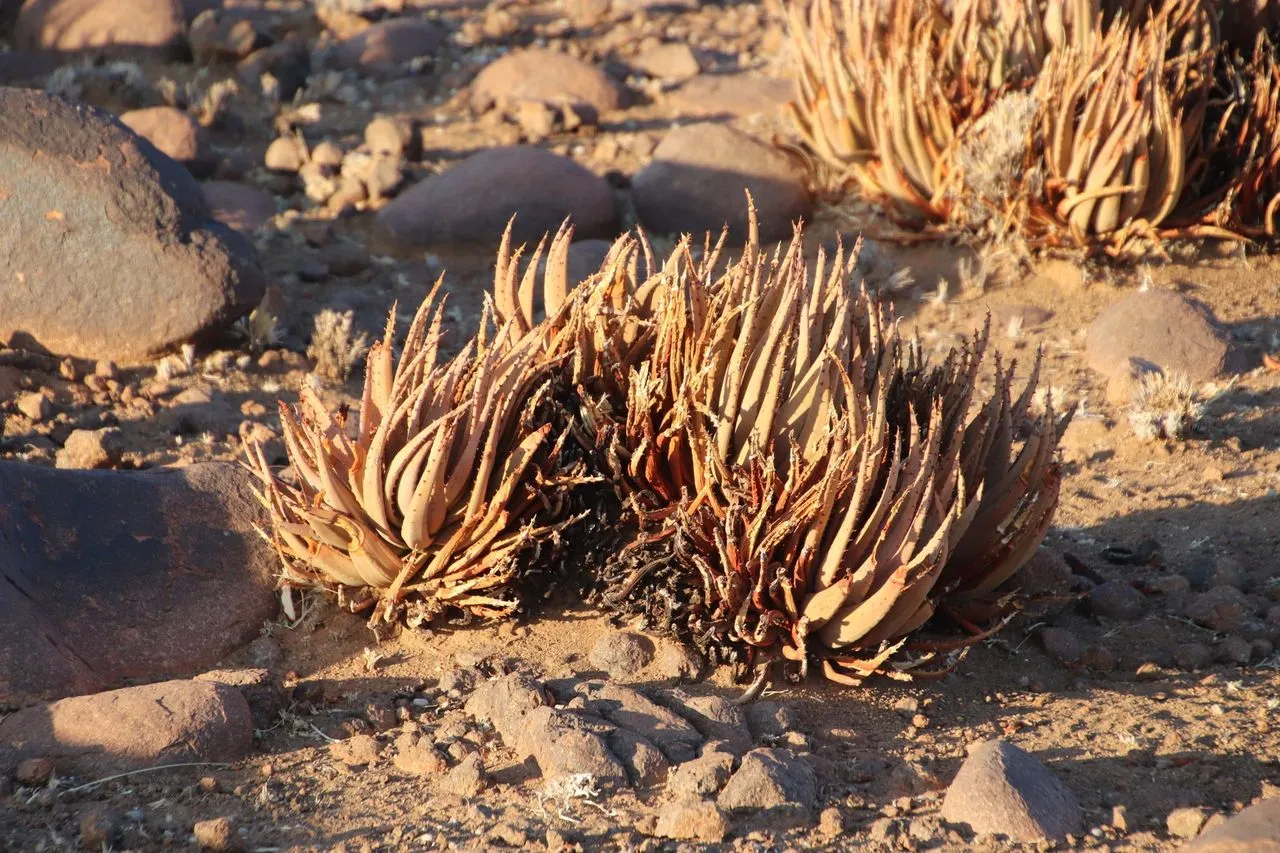
A compact solitary or slowly clumping rosette 25 to 40 cm across at maturity, composed of 20 to 30 stiff lanceolate leaves. The diagnostic feature is the leaf surface: dense silver-white waxy bloom (epicuticular farina) that covers both faces and gives the plant a distinctive pale silvery appearance. The epithet argenticauda translates approximately as "silver-tailed" and refers to the waxy inflorescence stalk rather than the leaves, though the leaves carry the more visible waxing. Leaf margins have small pale teeth; tips frequently dry into a characteristic papery point.
Inflorescence is an unbranched raceme 40 to 60 cm tall with tubular coral-red flowers, flowering late spring to early summer in habitat. The wax coating on the inflorescence is pronounced and gives the stalk a ghostly silver appearance that matches the leaves.
A. argenticauda is closely allied to Aloe asperifolia and Aloe gariepensis in the Namibian aloes complex, but the combination of dense leaf-surface farina and restricted range distinguishes it.
Cultivation
This is not a beginner's aloe. Three specific divergences from the pillar's default matter. First, substrate must be extremely mineral-heavy; the working mix should approach 70% pumice and grit with minimal organic content. The species roots shallowly and any persistent wetness at the rosette base causes rot within a growing season. Second, water sparingly even through active growth; in habitat annual rainfall is below 100 mm and the plant draws additional moisture from fog condensation on the waxy leaves. Overwatered specimens lose the silver coating as leaves swell and stretch, and they rarely regain the character. Third, full sun is essential; the farina develops only under high UV load.
The wax layer is functionally a sunscreen and fog-condensation surface, and as with Echeveria laui and E. cante it should not be wiped or handled. The coating does not regenerate on a damaged leaf.
Minimum safe temperature is around 3°C, with brief lower drops tolerated if the plant is dry. Growth is slow: expect one or two new leaves per season on a mature rosette.
Propagation
Seed is the practical route. A. argenticauda rarely produces basal offsets under cultivation and is largely solitary in habitat. Two genetically distinct plants flowering simultaneously are required for viable seed, which is the bottleneck for amateur propagation because cultivated stock is limited. Fresh seed germinates on sterile mineral mix within three to four weeks at 22 to 26°C, and seedlings reach the silvery adult morphology only in the fourth or fifth year.
When basal offsets do appear, usually after apical damage, they can be separated conventionally once rooted. Stem cuttings are not applicable.
Notes
A. argenticauda is listed as Vulnerable on the IUCN Red List, with the combined pressures of habitat restriction, slow population turnover, and illegal collection identified as the primary threats. The species is CITES Appendix II listed and cannot be traded internationally without export documentation. Only purchase from nursery-propagated stock with clear provenance; wild-collected material is both illegal and ecologically damaging.
The species is grown principally by specialist collectors and botanical gardens. It rewards patient cultivation with a compact rosette of genuine distinction, but it is not a windowsill ornamental and should not be attempted by those new to the harder aloes.
See also
- Aloe albiflora
- Aloe arenicola
- Aloe bakeri
- Aloe polyphylla — another conservation-sensitive specialist aloe requiring careful sourcing and cultivation.
How to keep Aloe argenticauda from staying too wet
Use a pot with a drainage hole and a gritty mix that dries faster than standard potting soil. A mineral-heavy blend such as Bonsai Jack Succulent and Cactus Soil Gritty Mix is a better fit than peat-heavy indoor mixes for growers who tend to overwater. As an Amazon Associate, we earn from qualifying purchases, at no extra cost to you.
Watering signs to watch
- Leaves firm but slightly thinner: the plant can probably use water if the mix is dry.
- Leaves soft, translucent, or collapsing near the base: check roots before adding more water.
- Brown dry tips after a heat wave: check both sun exposure and how long the pot stayed dry.
FAQ: can Aloe argenticauda grow indoors?
Yes, but it needs strong light. A south or west window is usually better than a dim shelf. Rotate the pot every week or two so the rosette stays even, and water less often in winter when growth slows.
Frequently Asked Questions
What is the main identification point?
The Identification section separates Aloe argenticauda by plant habit, leaf form, marginal teeth or surface markings, flowers, and lookalikes named in the article.
How should this aloe be watered?
Follow the Cultivation section rather than a fixed calendar. The article gives drying depth, seasonal growth rhythm, and the wet-cold risk for this plant.
How is it propagated?
Use the Propagation section. The article states whether offsets, stem cuttings, or seed are practical, and notes that single-leaf cuttings do not work for aloes.
What should buyers watch for?
Check the Notes and lookalike sections. The article flags trade confusion, hybrid material, or conservation sourcing where those issues apply.