Quick Answer
The short answer: Sort your succulents by continent of origin - Mexican (summer growth, cold-dry winter), African Cape (winter growth, dry summer), African Karoo (summer growth), and Madagascan (warm year-round, never below 4°C).
Best first step: Group plants by origin and water them on different schedules. A Lithops and Echeveria on the same schedule will both suffer.
Avoid: Treating all succulents as one category - this causes 30-50% annual losses in mixed collections.
A succulent shelf that mixes a Mexican Echeveria, a Cape Lithops, and a Madagascan Kalanchoe is three plants on three different calendars. They evolved on three continents under three rainfall regimes, and they expect three different things from you in the same month. Treat them as one category and a typical mixed bench loses 30 to 50 percent of plants per year, almost always to seasonal mismatches the grower never noticed. Here is the rest of the picture.
I'm Dr. Elena Martín, a Certified Advanced Cactus & Succulent Horticulturist and former curator at the Jardín Botánico de Córdoba. The single most useful re-organisation I ever made to my own collection was sorting it by continent of origin instead of by visual similarity. The losses dropped, the plants hardened up, and the watering decisions became almost mechanical.
Part of the Beginner's Guide to Succulents.
At a glance
| Region | Major genera | Native climate | Growth season | Winter rule |
|---|---|---|---|---|
| Mexican / SW US | Echeveria, Sedum, Agave, Mammillaria, Ferocactus, Pachyphytum | Arid, winter-cold high desert, 1,500 to 2,800 m | Summer | Dry and cold (0 to -10 °C tolerated dry) |
| African (Cape) | Conophytum, Lithops, some Aloe, Othonna | Mediterranean winter rainfall | Winter | Active growth, water through |
| African (Karoo / east) | Haworthia, Haworthiopsis, Gasteria, Crassula, many Aloe | Summer rainfall, mild winters | Summer | Reduced water, mild dormancy |
| Madagascan | Kalanchoe, Pachypodium, tree Aloe relatives, some Euphorbia | Tropical wet-dry savanna | Warm season | Warm and dry, never below 4 °C |
The table is the punchline. Everything below explains why the rules differ and how to apply them when the plants are sitting next to each other on your bench.
Mexican: summer growth, cold-dry winter
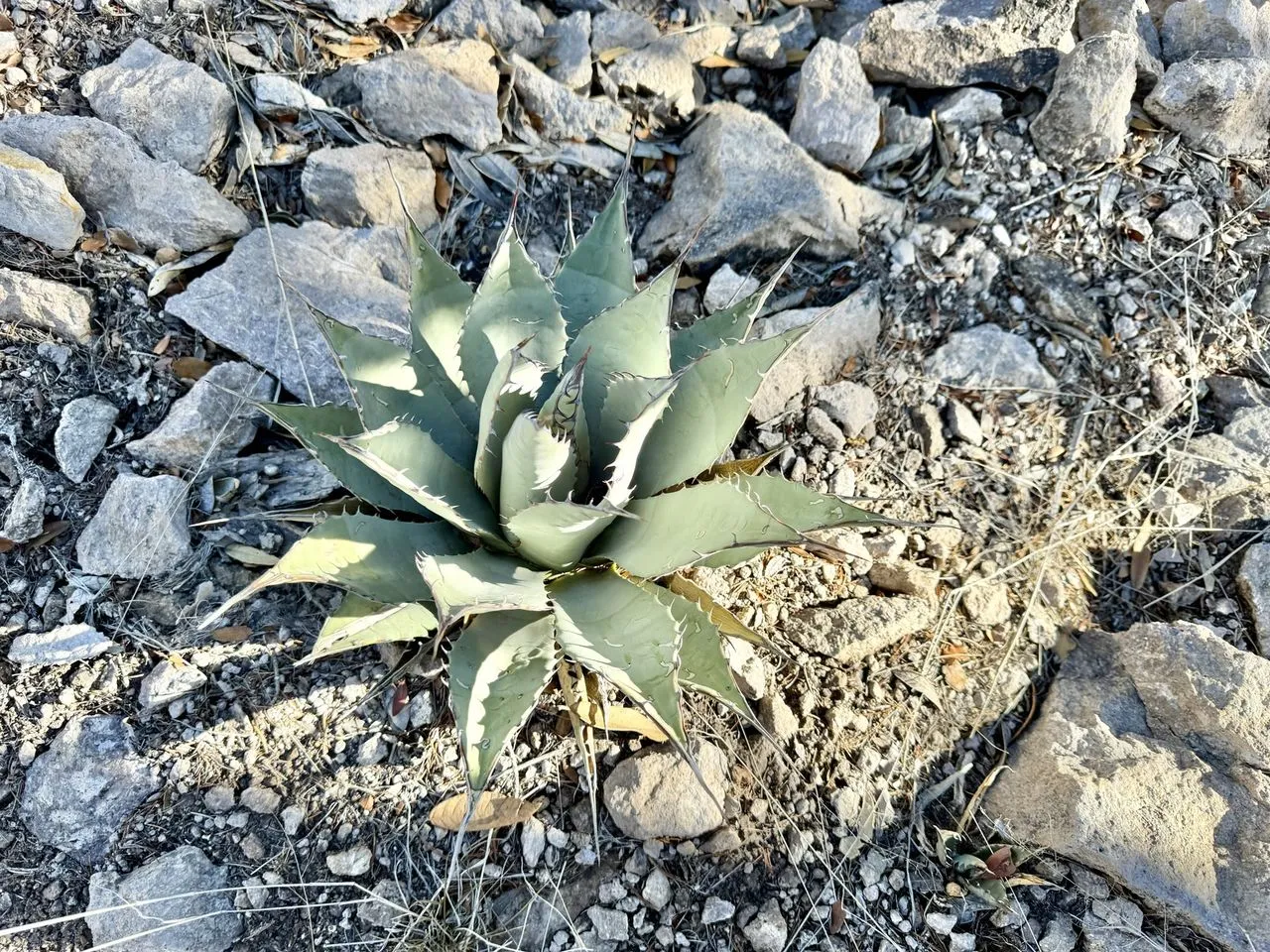
The Mexican succulent flora dominates most beginner collections. Echeveria, Pachyphytum, Graptopetalum, the bulk of cultivated Sedum, Agave, and the great majority of cultivated cacti including Mammillaria, Ferocactus, Astrophytum, Echinocactus, and Coryphantha all originate from the high plateaus and sky islands of central and northern Mexico, with some range overlap into the southwestern US. Native elevations cluster between 1,500 and 2,800 metres. The climate is arid year-round, with summer monsoon rains feeding active growth and winters that are dry, bright, and often cold.
The cultivation rule that falls out of this is straightforward: water hard in summer, dry the plants down through autumn, and overwinter them cold and dry. Most genera tolerate brief frost when the substrate is dry, with Mammillaria species hardy to about -5 °C and high-elevation Echinocereus and Sclerocactus into -15 °C territory. Wet at the same temperatures kills them. Light tolerance is high; full Mediterranean summer sun suits the majority once acclimatised, though young Echeveria hybrids burn at first exposure and want stepped hardening.
The trap with Mexican plants is the autumn signal. They want a clean ramp-down: less water from late September, almost nothing from November to February, then a cautious resumption in March as nights warm. Growers who keep them indoors at 20 °C through winter often see weak etiolated growth, lost compactness, and increased rot pressure, because the plant is being denied the cold cue that triggers proper dormancy.
African: two climates, two opposite rules
"African succulents" is not one category. Southern Africa contains two rainfall regimes that drive opposite growing seasons in the plants that evolved there.
The Cape winter-rainfall zone runs along the southwestern coast of South Africa and produces a Mediterranean climate: cool wet winters, hot dry summers. Plants from this zone reverse the normal succulent calendar entirely. The clearest examples are the Aizoaceae, including Lithops, Conophytum, Pleiospilos, and Argyroderma, alongside Othonna, Tylecodon, and several Cape Aloe species such as A. plicatilis. These genera grow, flower, and put on tissue in autumn and winter under cool wet conditions, then dry off and rest through the heat of summer. Watering them on a Mexican schedule starves them in their growing season and drowns them in their dormancy. A Conophytum watered in July rots; the same plant watered in October leafs out and flowers within weeks.
The summer-rainfall interior, including the Karoo, eastern Cape, and KwaZulu-Natal escarpment, drives the more familiar summer-grower African genera. Haworthia, Haworthiopsis, Gasteria, most Crassula, Adromischus, and the bulk of cultivated Aloe (A. vera, A. arborescens, A. ferox, A. striata, A. maculata) follow this pattern: active in summer, slowed in winter, but never as fully dormant as Mexican plants because their native winters are mild rather than cold. Frost tolerance is genus-dependent; Haworthia and Gasteria sulk below 5 °C, most Aloe below 0 °C, while a handful of high-Drakensberg Aloe species shrug off occasional snow.
The practical consequence is that "African" tells you almost nothing on its own. You need to know whether the plant is from the winter-rainfall Cape or the summer-rainfall interior before you can assign it to a watering tray. Lithops and Aloe vera are both South African and need almost opposite annual schedules.
Madagascan: tropical, never cold
Madagascar contributes a small but visually distinctive succulent flora that follows a third rule entirely. Kalanchoe (the cultivated florist hybrids and species like K. tomentosa, K. luciae, K. beharensis), Pachypodium, the tree-like succulent Euphorbia group including E. milii, and the segregate Madagascan aloes (now placed in Aloiampelos and Lomatophyllum, distinct from mainland African Aloe despite a shared common name) all evolved in tropical wet-dry savanna conditions where frost has never occurred.
The cultivation rule is warm year-round, summer rains, dry winter, never below 4 °C. Pachypodium lamerei drops leaves and rots at temperatures that a Mexican Agave would not even register. Kalanchoe florist hybrids look bulletproof on a sunny windowsill in spring and then collapse in a single November cold snap if the room drops to 7 °C overnight. Madagascan plants do not have winter dormancy in the temperate sense; they have a dry season they ride out warm.
If you live north of about Madrid latitude and you have any Madagascan species in your collection, they need either a heated greenhouse, a heated grow room, or a permanent bright indoor spot above 12 °C minimum. They cannot share an unheated cold frame with your Mexican cacti.
Sort by origin, not by appearance
The single change that cuts winter losses most reliably is rearranging the bench by biogeography. A typical mixed succulent collection lays out by visual similarity: the rosettes together, the columnar things together, the trailing things together. That layout looks tidy and kills plants. A Lithops sits next to an Echeveria because both are small and round, and gets watered with the Echeveria in November while it is in growth and underfed, then again in July while it is in dormancy and overheated.
A bench sorted by origin replaces this with three (or four, splitting Cape and Karoo) trays you treat as separate organisms:
- Tray 1, Mexican: Echeveria, Sedum, Agave, Mammillaria, Ferocactus, Astrophytum. Hard summer water, dry cold winter.
- Tray 2, African summer-rainfall: Haworthia, Gasteria, Crassula, most Aloe. Moderate summer water, light winter water above 8 °C, cooler dormancy than the tropics but warmer than Mexican.
- Tray 3, African Cape winter-rainfall: Lithops, Conophytum, Othonna, Tylecodon. Active autumn-winter watering, dry summer, never frosted but tolerates cool nights.
- Tray 4, Madagascan: Kalanchoe, Pachypodium, succulent Euphorbia, segregate Madagascan aloes. Warm year-round, summer growth, never below 4 °C.
The light requirements overlap enough that a south or west window can host all four trays side by side. The watering can does not. A single pass over a mixed bench in November helps Tray 3, mildly damages Tray 2, kills slow plants in Tray 1, and chills Tray 4. Same water, four different outcomes.
Edge cases and the genera that confuse the framework
Three points where the rule of thumb breaks down.
Aloe is not one biogeographic unit. Most cultivated Aloe are summer-rainfall South African (Tray 2). A. plicatilis is Cape winter-rainfall (Tray 3). The Madagascan segregates now placed in Aloiampelos and Lomatophyllum (Tray 4) still circulate in trade under the old Aloe name. The label "Aloe" alone does not tell you the schedule. Look up the species and place it.
Euphorbia spans every continent and almost every climate the others occupy. Madagascan E. milii and E. lactea are tropical (Tray 4); southern African E. obesa and E. polygona are summer-rainfall Karoo (Tray 2); North African and Arabian Euphorbia split between Mediterranean and tropical depending on origin. There is no genus-level rule. Treat Euphorbia species individually.
Aeonium is none of the four. The Canary Islands and Madeira sit in their own Macaronesian Mediterranean climate, and Aeonium are winter-growing like Cape Aizoaceae but tolerate more cold and more humidity. They sit comfortably in Tray 3 alongside Lithops if you mostly want them watered when the Cape plants are watered, but they can take more cold and more soak than the Aizoaceae will.
The mental model that works in practice is: read the label, look up native range and elevation once, write the tray number on the pot in pencil. After you have done it for fifty plants the patterns become automatic and the seasonal losses stop.
See also
- A Beginner's Guide to Succulents: the cross-genus foundation that this geography framework sits on top of
- The Complete Echeveria Guide: full detail on the central Tray 1 genus
- The Complete Aloe Guide: the cultivated Aloe species that span Trays 2, 3, and 4
- Winter watering protocol: how dormancy timing shifts between Mexican highland, African savanna, and Madagascan dry-forest origins
FAQ
Can I keep Lithops and Echeveria together?
No. Lithops (Cape, winter-growers) need water from autumn through spring and dryness in summer. Echeverias (Mexican, summer-growers) need the opposite. Water one and you'll harm the other.
What's the minimum temperature for Madagascan succulents like Kalanchoe?
Never below 4°C. Kalanchoe and Pachypodium are tropical and will rot or die in cold. They need a heated spot in winter.
Are all African succulents the same type?
No. The Cape (southwestern South Africa) has winter rainfall - Lithops, Conophytum grow in winter. The Karoo has summer rainfall - Haworthia, Aloe, Crassula grow in summer.
Can Mexican cacti and Madagascan Kalanchoe share a cold frame in winter?
No. Mexican cacti want cold (0°C to -10°C) and dry conditions. Madagascan plants need warmth (above 12°C) year-round.
Frequently Asked Questions
What is the first step for mexican vs african vs madagascan succulents: geography matters?
Start by matching the symptom to the plant, substrate, light, and season before changing watering or treatment.
What should be avoided?
Avoid changing several variables at once; correct the limiting factor and observe the plant before escalating.
Which care factor matters most?
Match the plant to its light, substrate, pot size, and season. Most succulent failures trace to a mismatch between drying speed and the plant's current growth rate.
When should the plant be checked again?
Recheck after one to two weeks unless tissue is actively collapsing. Stable firmness and new growth are better signs than a fixed calendar interval.