Quick Answer
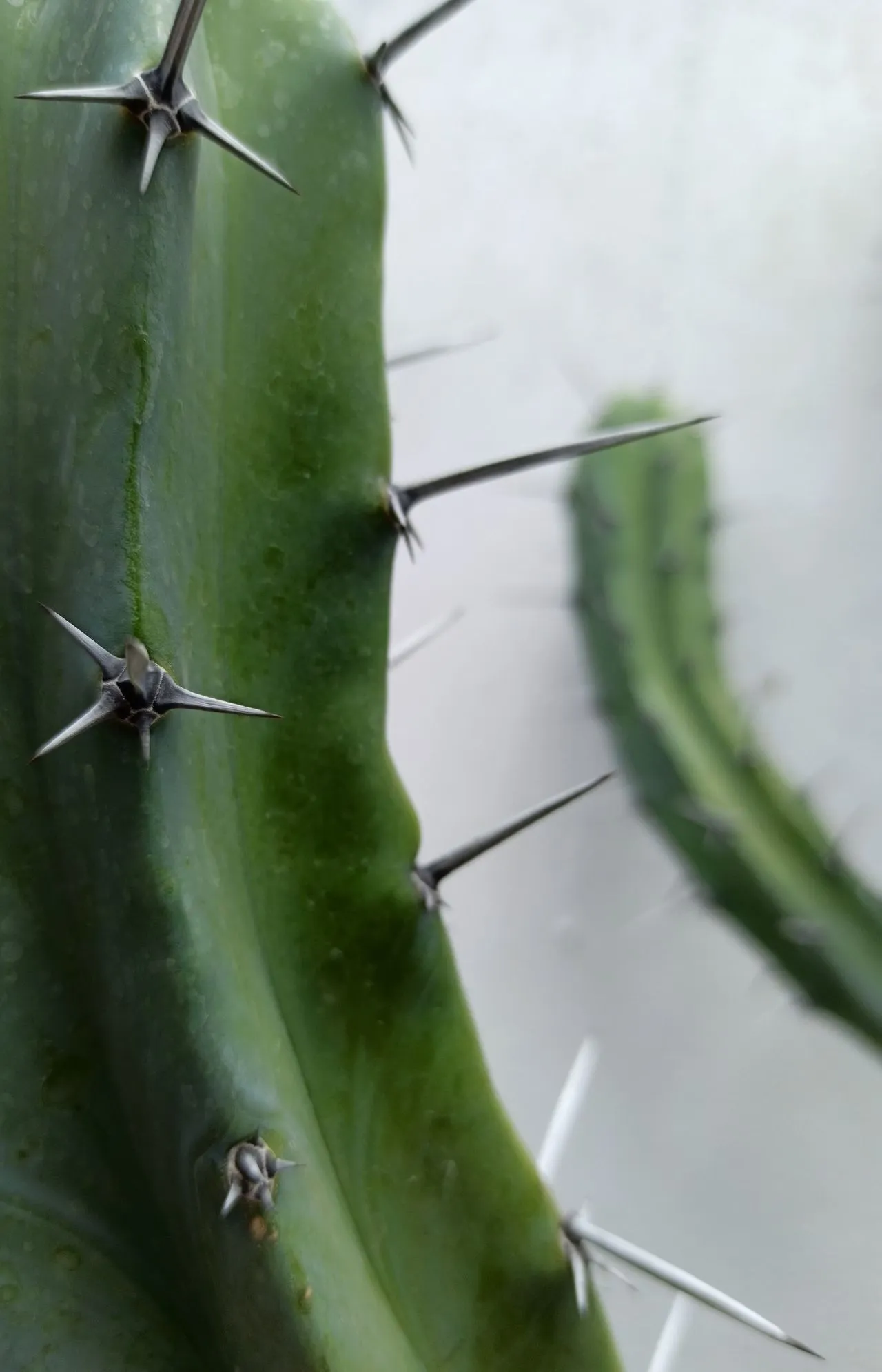
The short answer: The reliable test for "is this a cactus?" is checking for areoles - small woolly cushions where spines and flowers emerge. All cacti have them; no other succulents do.
Best first step: Separate your cacti from other succulents and give them different watering schedules - most cacti need much less water and longer dry intervals.
Avoid: Treating a cactus and Echeveria the same way - they have different light, water, and temperature needs that diverge significantly.
A reader brings home a stout spiny Mammillaria and a fleshy rosette Echeveria, treats both the same way, and one of them rots within a month. The two plants share a shape language and a reputation for tolerating neglect, but they sit in different families, and their water and light requirements diverge enough that one schedule cannot serve both. The single most reliable test for "is this a cactus?" is the presence of areoles: small woolly cushions on the stem from which spines, glochids, flowers, and offsets all emerge. Areoles are unique to Cactaceae and absent in every other succulent family. Here is the rest of the picture.
All cacti are succulents in the broad sense, since they store water in fleshy stems. Not all succulents are cacti. Cactus refers to a single family, Cactaceae, of around 1,500 species, all native to the New World with one outlier (Rhipsalis baccifera in the Old World tropics, probably bird-dispersed). The rest of the succulent world is scattered across many unrelated families that independently evolved water-storage tissue: Crassulaceae (Echeveria, Sedum, Sempervivum, Crassula), Aizoaceae (Lithops, Conophytum), Asphodelaceae (Aloe, Haworthia, Gasteria), Apocynaceae (Adenium, Pachypodium, Stapelia), Euphorbiaceae (Euphorbia obesa, E. trigona), Asparagaceae (Agave, Yucca), and a dozen smaller groups. A Madagascan Pachypodium and a Mexican Ferocactus resemble each other to a beginner, but their lineages parted more than 100 million years ago.
At a glance
| Character | Cactus (Cactaceae) | Other succulents |
|---|---|---|
| Areoles | Always present | Never present |
| Spines | Modified leaves, emerge from areoles | Absent, or unrelated thorns from leaf axils or stipules |
| Functional leaves | Absent in most species (stem photosynthesises) | Almost always present, often the main organ |
| Flower position | Always emerges from an areole | From leaf axils, stem nodes, or a separate raceme |
| Native range | New World (Americas), one Old World exception | Worldwide: Africa, Madagascar, Arabia, Mediterranean, Americas, Asia |
| Family count | One (Cactaceae) | Twenty-plus (Crassulaceae, Aizoaceae, Apocynaceae, Euphorbiaceae, Asphodelaceae, others) |
| Summer water | Low to moderate, long dry interval | Moderate, often shorter dry interval |
| Winter water | Near zero for most genera | Low, but a few genera grow in winter and need water then |
| Direct PPFD tolerance | 1,000 to 2,000 µmol/m²/s in many genera | 600 to 1,500 µmol/m²/s for typical Echeveria; lower for Haworthia |
| Root form | Often wide and shallow | Variable: tap-roots (Pachypodium), fibrous (Echeveria), tuberous (Adenium) |
| Frost tolerance (dry) | Many genera tolerate brief frost | Many soft-leaved genera frost-tender |
| Fertility need | Near-zero, low-N substrate suits most | Often light feeding through growth |
Key separators in the field
1. Areoles. Look at the stem of an unknown spiny succulent. If the spines, and any flower buds, emerge from a small woolly cushion you can see clearly under a hand lens, the plant is a cactus. The cushion may be tiny (1 mm or less in some Mammillaria) or large and obvious (5 mm in many Opuntia and Echinocactus), but it is always discrete, repeats in a regular pattern across the stem, and bears tufts of trichomes (the "wool"). Areoles are a meristematic structure unique to Cactaceae; no other plant family has them. Spines, glochids, flowers, fruit, branches, and offsets all originate from this single point. If a "cactus" you are inspecting has thorns coming straight out of green tissue with no woolly cushion at the base, it is almost certainly a Euphorbia or a Pachypodium, not a cactus.
2. Latex test. Euphorbia trigona, E. ingens, and other tree-form spurges resemble cacti closely enough that they are routinely mis-shelved. Nick a stem of a Euphorbia and milky white latex oozes out within seconds (it is irritant, so handle with care). A genuine cactus cut on the stem produces clear sap or a slightly mucilaginous flesh, never milky latex. Milky sap rules out Cactaceae outright.
3. Flowers. Cactus flowers always emerge from an areole, never from a leaf axil or terminal raceme. Echeveria and Sedum throw their flowers on a leafy stalk that rises from the centre of the rosette or from leaf axils. Aloe sends up a thick raceme well above the rosette, with tubular nectar-bearing flowers. Lithops opens a single yellow or white daisy-flower from the central fissure of the body. If the flower clearly emerges from a woolly cushion on a green stem, the plant is a cactus.
4. Leaves and stem photosynthesis. Most cactus species lack functional leaves entirely; the green stem is the primary photosynthetic organ, and the spines are modified leaves attached to areoles. The exceptions are the genus Pereskia (the leaf cacti of tropical America) and certain Opuntia species, which carry small ephemeral leaves on new pad growth. By contrast, almost every non-cactus succulent depends on leaves: Echeveria rosettes, Aloe swords, Haworthia triangular leaves, Sedum button leaves, Lithops paired bodies. If the plant's photosynthetic surface is clearly leaf tissue rather than stem tissue, it is not a cactus.
5. Origin. Cactaceae are New World plants, with all species native to the Americas except Rhipsalis baccifera, which also occurs in tropical Africa, Madagascar, and Sri Lanka and was probably carried by birds before the genus diversified. If a succulent's wild range is Africa, Madagascar, Arabia, Mediterranean Europe, the Canary Islands, India, or southeast Asia, it is not a cactus regardless of how spiny it looks.
Where care diverges
The five separators settle identification. The reason it matters is that the care regimes are not interchangeable.
Water. Most desert cactus need less water and tolerate longer dry intervals than most soft-leaved succulents. A mature Echinocactus grusonii in a 20 cm pot can hold six to eight weeks between summer waterings without complaint; an Echeveria in the same pot wants water every 10 to 14 days through summer. The contrast widens in winter. Most cactus genera demand bone-dry roots from October through March, especially the Mexican and southwestern US species (Ferocactus, Echinocactus, Mammillaria, Astrophytum). Soft succulents in the same room want at most a small monthly watering, but very few tolerate the four to five months of complete dryness that suit a cactus. One watering schedule across both groups is a fast route to a rotted Echeveria by February.
Light and PPFD. Cactus collectively tolerate higher photosynthetic photon flux density than soft succulents. Open-grown Ferocactus, Echinocactus, and Cereus species photosynthesise comfortably at 1,500 to 2,000 µmol/m²/s of photosynthetically active radiation, the levels of unshaded summer noon in their native habitat. Echeveria and Crassula tolerate 600 to 1,500 µmol/m²/s in cultivation; pushing them above that range often produces sun-stress colour in the short term but bleached, flat-rosetted plants over a season. Haworthia, Gasteria, and many Aloe dwarfs run lower still, with optima around 200 to 600 µmol/m²/s. Moving an outdoor-grown Astrophytum and an Echeveria to the same south-facing windowsill in July will leave one happy and the other bleached.
Root structure. Many cactus carry wide, shallow root systems adapted to absorb brief desert rain over a large lateral footprint without committing tissue to depth. This is why a 30 cm wide Mammillaria clump can sit comfortably in a 12 cm shallow pan, and why a deep narrow pot is wasted volume that holds wet substrate the roots cannot reach. Many soft succulents differ: Pachypodium and Adenium form thick caudex tap-roots; Echeveria and Sedum throw fibrous shallow roots that tolerate slightly deeper pots; Aloe species range from fibrous to fleshy. Pot choice should follow root form, not genus tradition.
Frost. Most desert and montane cactus tolerate brief frost when dry-rooted: Opuntia humifusa, Echinocereus triglochidiatus, and Escobaria vivipara survive winters at -20°C in zone 5 substrate beds; even the more tropical-feeling Mammillaria species shrug off -2°C dry. Many soft succulents are far more tender. Most Echeveria species are damaged at 0°C; Adenium and Stapelia die outright below 5°C; Lithops tolerates light frost dry but is killed near -5°C. The rule with frost in any succulent is that it is dryness-conditional: a wet Sempervivum dies at -2°C, a dry one survives -25°C.
Fertility. Cactus tolerate near-zero soil nutrients. Wild Mexican habitat substrate is mineral grit with negligible organic matter, and cultivated cactus respond best to dilute feeding (a quarter-strength balanced fertiliser two or three times through the active season is generous). Soft succulents are more variable. Echeveria, Sedum, and Crassula tolerate similar lean substrate but respond visibly to light feeding through summer, and Aeonium in winter growth wants slightly richer conditions than any cactus. The practical rule: a Mexican cactus needs less attention than a Madagascan Kalanchoe in the same conditions, and the Kalanchoe will tell you about it through faded leaves and stalled growth before the cactus gives any sign of either neglect or excess.
Edge cases and look-alikes
A handful of plants sit on the line and trip up beginners.
Euphorbia trigona, E. ingens, and E. ammak are tree-form African spurges with vertical green ribbed stems, stout spines, and silhouettes close to a Cereus or Pachycereus. They have no areoles. The spines emerge directly from the rib edge or in paired patterns associated with stipule scars, and any nick in the stem produces white latex. These are Euphorbiaceae, and the latex is moderately toxic.
Pachypodium lamerei and P. geayi (Madagascar) carry single spiny trunks topped with thin leaves. They are Apocynaceae: no areoles, paired thorns from leaf scars, clear sap. Care leans drier than a typical soft succulent but brighter than most cacti want.
Pereskia (true cactus, Cactaceae) breaks the leafless rule. P. grandifolia and P. aculeata carry persistent oval leaves on a woody stem, with clear areoles in the leaf axils. The areole is the giveaway, even when the foliage suggests "shrub". Cultivation leans more like a tropical shrub than a desert cactus: regular water, regular feeding, no extended dry rest.
Stapelia and Huernia (Apocynaceae) form ribbed succulent stems that look superficially cactus-like, especially as juveniles. They have no areoles, no spines (only soft tubercles), and produce large patterned star-flowers from leaf-axil-equivalent positions, often with a strong carrion smell.
When the two get confused in trade
"Cactus mix" planters from chain stores often blend a small cactus, a Crassula, and an Echeveria in one container under a single care card. Within a season, the cactus will be over-watered and the Echeveria under-fed. Separate them at purchase and run two regimes.
"Mini cactus, assorted" trays often contain dyed-spine Gymnocalycium grafts and wax-coated Mammillaria alongside Echeveria pups sold as cacti. The dyed-spine treatments rarely survive a second growing season. Look for areoles before paying for anything labelled as a cactus.
Euphorbia trigona is sold as "African milk tree" or "candelabra cactus". The latex settles it, and the care diverges enough to matter: E. trigona wants brighter winter light and more steady moisture than any true cactus.
Pachypodium lamerei circulates as "Madagascar palm" or "spiny palm cactus". Neither name is correct. Cultivation suits a sun-loving caudex succulent, and the plant will leaf out in spring rather than push apical stem growth.
The reliable rule at any nursery is short. Look for areoles. If the plant has them, it is a cactus, and a desert-cactus regime applies (long dry intervals, high PPFD, near-zero feeding, dry winter). If the plant has clear leaves and no areoles, it is some other succulent, and the regime depends on the family. The beginner's guide covers the overlapping fundamentals; the divergence above is what to keep in mind every time you reach for the watering can.
See also
- A Beginner's Guide to Succulents: substrate, light, and water fundamentals that apply across both groups before the divergence sets in.
- The Complete Cactus Guide: genus-level cultivation principles for Cactaceae, from Mexican desert species to South American highland cacti.
- Winter Watering: When Most Succulents Want Almost Nothing: the seasonal divergence that exposes mislabelled plants the fastest.
- Succulent soil and substrate: how substrate composition differs between cactus and soft succulent mixes
FAQ
Does a spiny succulent automatically mean it's a cactus?
No. Many spiny succulents like Euphorbia trigona (African milk tree) are not cacti. Look for areoles (woolly cushions) - if absent, it's a Euphorbia or Pachypodium.
Can I keep cacti and Echeverias together in the same pot?
Not recommended. They have different water needs - cacti want 6-8 weeks between summer waterings, while Echeverias want 10-14 days. One schedule will harm one of them.
Will my cactus survive winter if I keep watering it lightly?
Most cacti need near-zero water from October through March. Light watering through winter usually causes root rot in desert cacti species.
Are all cacti from the Americas?
Yes, almost all cacti are native to the New World (Americas). The one exception is Rhipsalis baccifera, which occurs in tropical Africa, Madagascar, and Sri Lanka - likely spread by birds.
Frequently Asked Questions
What is the first step for cactus vs other succulents: where care diverges?
Start by matching the symptom to the plant, substrate, light, and season before changing watering or treatment.
What should be avoided?
Avoid changing several variables at once; correct the limiting factor and observe the plant before escalating.
Which care factor matters most?
Match the plant to its light, substrate, pot size, and season. Most succulent failures trace to a mismatch between drying speed and the plant's current growth rate.
When should the plant be checked again?
Recheck after one to two weeks unless tissue is actively collapsing. Stable firmness and new growth are better signs than a fixed calendar interval.