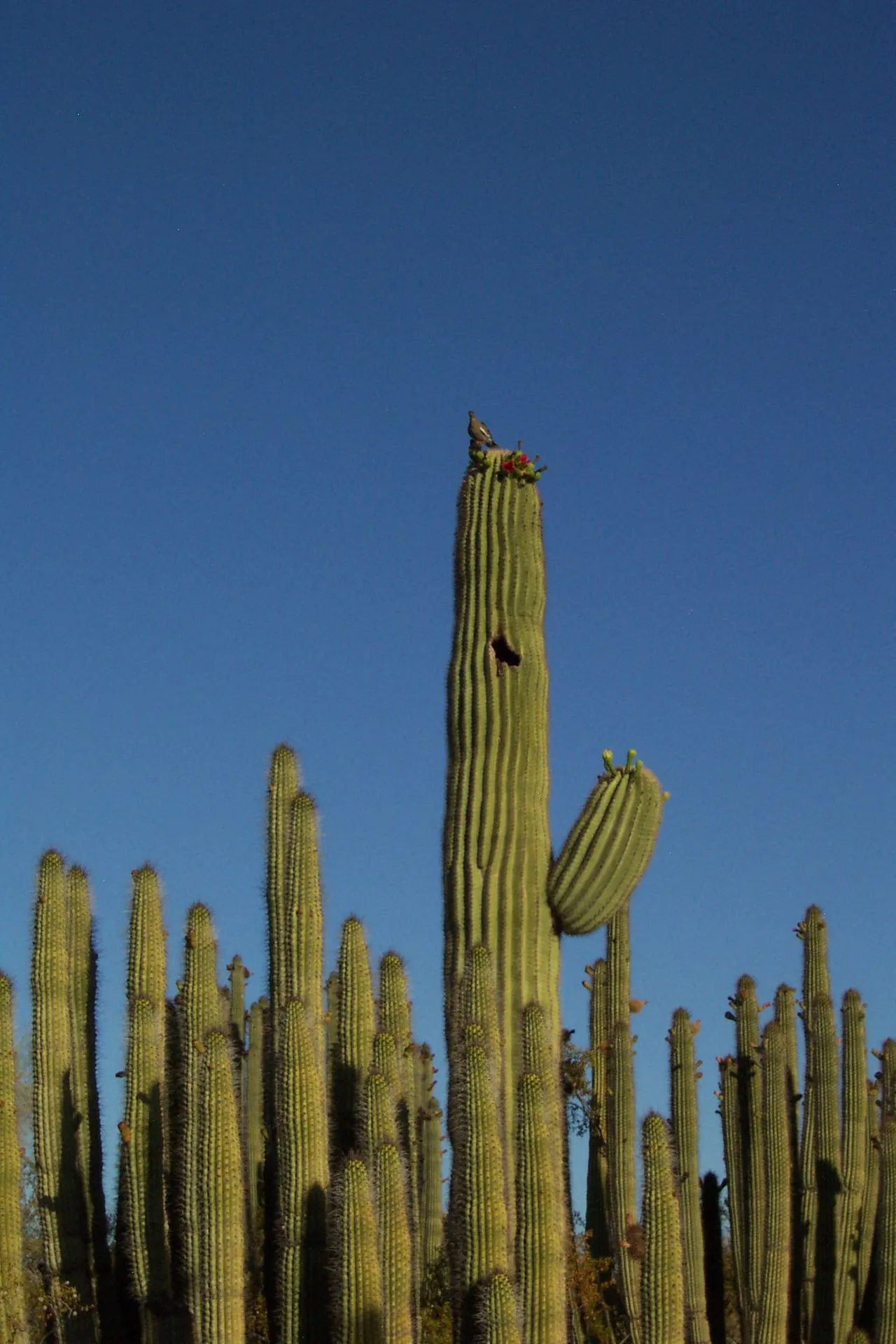
Cactaceae contains more than 1,500 accepted species, from button-sized desert plants no wider than 2 cm to columnar trees that stand taller than a house. What makes them a family is not spines, drought tolerance, or a rounded stem. The diagnostic structure is the areole, a small modified shoot from which spines, hairs, glochids, branches, and flowers arise. Cacti are overwhelmingly New World plants, native from southern Canada through the United States, Mexico, Central America, the Caribbean, and South America into Patagonia. A few Rhipsalis species occur naturally in Africa, Madagascar, and Sri Lanka, probably after long-distance dispersal by birds. Modern cactus study still rests partly on the early 20th-century work of Nathaniel Lord Britton and Joseph Nelson Rose, whose four-volume treatment, The Cactaceae (1919 to 1923), gave growers and botanists a practical framework for names, morphology, and relationships, even though molecular taxonomy has revised many of their boundaries.
I'm Dr. Elena Martin, a Certified Advanced Cactus & Succulent Horticulturist and former curator of the succulent collection at the Jardin Botanico de Cordoba. Cacti are often sold as plants that tolerate neglect, but good cultivation is not neglect; it is matching water, light, mineral substrate, and rest periods to the way these plants actually grow.
Part of the Beginner's Guide to Succulents.
What Makes a Cactus a Cactus
The areole is the cactus family's fingerprint. Look closely at a cactus stem and you will see small cushions, pads, woolly dots, or felted discs arranged along ribs, tubercles, or flattened pads. Each areole is a condensed branch system. Spines arise from it, flowers usually arise from it, and new shoots can arise from it. A spiny euphorbia may look cactus-like from across the room, but it lacks areoles and belongs to a different family entirely.
Cactus spines are modified leaves. That matters because it explains why many cacti have no broad leaf blades at maturity. Instead of losing water through thousands of leaf stomata during the day, the plant reduces the leaf to a rigid defensive and shading structure, then moves most photosynthesis into the green stem. In young seedlings, temporary leaves can appear briefly, especially in more primitive lineages such as Pereskia, but the cultivated desert cacti you meet in pots usually rely on stems.
The stem is not just a green cylinder. It is a water-storage organ packed with mucilage-rich parenchyma tissue, vascular bundles, and a thick outer cuticle. When a cactus is fully hydrated, the storage tissue swells. When drought arrives, the tissue contracts without immediately collapsing the plant. Ribs and tubercles act like expansion joints. A ribbed Ferocactus can increase and decrease in diameter after rain without tearing its epidermis, while a tuberculated Mammillaria distributes that change across hundreds of small projections.
Most cacti use CAM photosynthesis, short for Crassulacean Acid Metabolism. Their stomata open mainly at night, when temperatures are lower and the vapour-pressure deficit is smaller. Carbon dioxide is stored overnight as organic acids, then released inside the plant during the day for photosynthesis while the stomata are mostly closed. The practical result is clear: a cactus can survive in dry air with less water loss than a thin-leaved houseplant, but it still needs enough light to run the system.
This is also where the common succulent confusion needs clearing up. Most cacti are succulents because they store water in thickened tissue. Not all succulents are cacti. An Echeveria, Aloe, Agave, or Crassula may be drought adapted, but none has areoles. The Beginner's Guide to Succulents covers that wider category; this guide narrows in on Cactaceae.
The Major Genera You'll Meet
Mammillaria is one of the largest cactus genera in cultivation, with many species native to Mexico and the southwestern United States. Instead of ribs, mammillarias carry tubercles arranged in spirals, and the flowers usually form a ring around the crown from the axils between tubercles. Mammillaria hahniana, the old lady cactus, has white wool and magenta flowers; M. elongata forms clustered golden fingers. They are good first cacti if you can give them strong light and a dry winter.
Opuntia includes the prickly pears, chollas, and many hardy outdoor species. The flattened pads are stem segments, not leaves, and the tiny detachable glochids in the areoles are often more irritating than the obvious spines. Opuntia microdasys, often sold as 'Bunny Ears', looks soft but sheds barbed glochids into skin easily. Many opuntias tolerate more cold than small globular cacti if their roots stay dry in winter.
Echinocactus is best known through Echinocactus grusonii, the golden barrel cactus. Mature plants can exceed 60 cm across after decades, with strong ribs and dense yellow spines that shade the stem. In habitat, barrel cacti are exposed to high light and sharp drainage, not peat-heavy indoor compost. They grow slowly in pots, but slow growth is normal rather than a sign of failure.
Astrophytum species are small, geometric cacti from Mexico and the southern United States. Astrophytum myriostigma, the bishop's cap, often has five ribs and a spineless grey-green body flecked with pale trichomes. A. asterias is flatter and more sensitive to rot, especially below 15°C if the substrate is damp. These are collector plants that reward restraint with water and accuracy with mineral mixes.
Ferocactus are the barrel cacti with strong, often hooked central spines. The name reflects their formidable appearance, but their care is straightforward if they receive intense light and a long dry winter. Many species grow in Mexico and the southwestern United States in open habitats where summer heat can exceed 38°C. In containers, the usual problem is not heat; it is damp organic substrate around cool roots.
Gymnocalycium contains compact South American cacti, many from Argentina, Paraguay, Bolivia, and Brazil. The flower buds are smooth and scaly rather than woolly, a useful identification feature. They often tolerate slightly less intense sun than Mexican desert genera, especially in hot climates where afternoon shade prevents scorching. The chlorophyll-free red and yellow plants sold as "moon cactus" are Gymnocalycium scions grafted onto green rootstocks.
Parodia includes many small to medium globular South American cacti formerly placed in Notocactus. They often flower young, with yellow, orange, or red blooms near the crown. In cultivation they prefer bright light, regular summer water after drying, and more protection from extreme heat than true desert barrels. They are forgiving by cactus standards, but they still resent cold wet roots.
Rebutia are small clustering cacti from Bolivia and Argentina, often from higher elevations around 2,000 m to 3,500 m. Their flowers are large for the size of the plant and usually emerge low on the body rather than only at the crown. Because many come from cool mountain habitats, they appreciate bright light, cool nights, and a winter rest around 5°C to 10°C when kept dry. They are good choices for growers who want flowers without waiting twenty years.
Cereus is a group of columnar cacti, including Cereus repandus, the Peruvian apple cactus of commerce. These plants can become house-height specimens in warm climates, with ribbed blue-green stems and large night-opening flowers. Indoors they need the brightest position available and usually become too large for windowsills. A 2 litre pot may hold a young plant for a year or two, but mature growth needs heavier containers for stability.
Schlumbergera is the Christmas cactus group, and it breaks many assumptions people make about cacti. These are epiphytes from humid Brazilian coastal mountains, growing on trees and rocks rather than in desert sand. They want bright filtered light, a more moisture-retentive but airy substrate, and watering when the upper 2 to 3 cm has dried. Flowering is triggered by cool nights and short days, not by drought alone.
Rhipsalis is another epiphytic cactus group, with thin, pendent stems suited to forest canopies rather than open desert. Several species are found beyond the Americas, which makes the genus a useful exception when discussing cactus geography. In homes, rhipsalis prefers an east window or bright indirect light, higher humidity than desert cacti, and a fine bark, pumice, and compost mix that drains fast but does not become bone dry for weeks. Treating it like a barrel cactus usually causes shrivelling and stalled growth.
Epiphyllum are the orchid cacti, grown for large showy flowers on flattened, leaf-like stems. Most named plants in cultivation are hybrids rather than wild species. They are forest-edge plants, so direct midday sun behind glass can scorch them, while deep shade prevents flowering. Use a chunky epiphyte mix and water more like a hoya than a desert cactus.
Selenicereus includes night-blooming climbing and scrambling cacti, with Selenicereus undatus producing the dragon fruit sold in shops. Their triangular or winged stems root along supports and can grow several metres in warm glasshouse conditions. They like more water and feed during active growth than compact desert cacti, provided drainage is sharp and temperatures stay above about 12°C. The flowers open at night and may last only one evening.
Carnegiea is represented by a single species, Carnegiea gigantea, the saguaro. It is native to the Sonoran Desert of Arizona, Sonora, and adjacent areas, where mature plants can reach 12 m to 18 m and live for well over 150 years. Seedlings spend their early years under nurse shrubs, protected from heat and herbivory. In cultivation it is a symbol more than a houseplant; a 10-year-old seedling may still be only a few centimetres tall.
Cleistocactus contains slender columnar species, many from Bolivia, Argentina, Uruguay, and Peru. Cleistocactus strausii, the silver torch cactus, is the common one, with white hair-like spines over vertical stems. It wants strong sun, cool dry winter rest, and a pot heavy enough to keep tall stems upright. The tubular flowers often do not open widely, which is normal for the genus.
Cultivation Essentials
Light drives cactus shape. Most desert and high-light cacti want 4 to 6 hours of direct sun daily in active growth, and many will take more outdoors if acclimated over 10 to 14 days. In the northern hemisphere, a south-facing window is usually the minimum for compact indoor growth; east or west windows can work for Gymnocalycium, Parodia, Rebutia, and some seedlings, but barrel and columnar cacti often stretch. Jungle epiphytes such as Schlumbergera, Rhipsalis, Epiphyllum, and many Selenicereus are exceptions. Give them bright filtered light or morning sun, not unfiltered midday sun through glass.
Water should follow a deep-soak and dry cycle. In active growth, water until the whole root ball is wet and water exits the drainage hole, then wait until the substrate has dried through the lower half of the pot. For a 9 cm terracotta pot in a warm bright window, that may be 7 to 14 days in summer. For a 15 cm plastic pot indoors, it may be 3 to 5 weeks. A moisture probe should read below 15% in the top 3 cm and close to dry at depth before most desert cacti are watered again. If using a wooden skewer, push it to the bottom for 5 minutes; if it comes out cool and damp with particles attached, wait.
Winter dryness is not optional for desert species. From late autumn to early spring, when light is low and temperatures are below about 12°C to 15°C, most desert cacti should receive little to no water. A small Mammillaria or Rebutia kept at 6°C to 10°C may go 8 to 12 weeks dry without harm. A large barrel may go longer. This dry rest keeps roots from rotting and helps many species set flower buds for spring. If the plant is kept warm under strong grow lights, it may need occasional water, but the substrate still has to dry quickly.
Substrate should be more mineral than the mix used for most leaf succulents. A reliable starting recipe is 60% to 70% mineral material and 30% to 40% low-peat or peat-free organic matter. For example: 40% pumice, 20% coarse grit at 3 to 6 mm, 10% lava rock or expanded shale, and 30% loam-based compost. For rot-prone Mexican miniatures and Astrophytum, move closer to 80% mineral. For epiphytes, use a different structure: fine orchid bark, pumice, and a modest amount of compost so roots receive air and mild moisture.
The pot has to match the root system. Many small globular cacti prefer a pot only 1 to 2 cm wider than the root ball. Oversizing is risky because unused substrate stays wet beyond the reach of roots. Terracotta dries faster and is useful in humid homes; plastic works in hot dry climates but demands a more cautious watering interval. Always use a drainage hole. A decorative cover pot is acceptable only if the inner pot is removed for watering and allowed to drain fully before it goes back.
Temperature depends on origin. Many desert cacti tolerate 35°C to 40°C in summer if roots are healthy and the plant is acclimated, but growth may pause in extreme heat. Winter rest for many common desert species is best at 5°C to 12°C, dry and bright. Keep frost-sensitive genera above 2°C to 5°C unless you know the species is hardy and the substrate is dry. Jungle cacti are warmer plants; keep most above 10°C to 12°C and avoid the dry, cold treatment used for barrels.
Fertiliser should be light. A cactus growing in a mineral mix has limited nutrient reserves, but heavy feeding produces soft growth that scars and rots more easily. During active growth, use a low-nitrogen balanced fertiliser at one-quarter to one-half label strength every 4 to 6 weeks, only after watering the plant first. Do not feed during winter rest. If the plant is not growing because it is cold or dark, fertiliser does not solve the problem.
Propagation Overview
Seed is slow but viable, and it is the cleanest way to raise species that do not offset. Use fresh seed where possible, a sterile fine mineral mix, and steady warmth around 22°C to 28°C. Sow on the surface or barely cover with fine grit, then keep humidity high until germination. Many cactus seeds germinate in 7 to 21 days, but seedlings may need 2 to 5 years before they resemble saleable plants. Slow does not mean difficult; it means the process rewards patience and hygiene.
Offset division is the easiest route for clustering genera such as Mammillaria, Rebutia, and many Parodia. Wait until the offset is large enough to handle, ideally at least 1.5 cm across or one-third the parent size. Remove it with a sterile blade or a gentle twist if it detaches cleanly. Let the wound dry in shade for 3 to 7 days, then place it in dry mineral substrate and wait another week before the first light watering.
Stem cuttings work well for Opuntia, Cereus, Selenicereus, many epiphytes, and columnar species. Cut at a joint where possible, or use a clean blade through firm tissue. Callus for 1 to 2 weeks before potting, longer for thick stems over 5 cm diameter or in humid weather. The cut surface should be dry, pale, and sealed, not sticky. Pot upright in dry substrate, support if needed, and begin light watering only after roots start to anchor the cutting.
Grafting is a specialist technique, not a routine rescue method for ordinary care problems. It joins a scion cactus to a vigorous rootstock to speed seedling growth, maintain chlorophyll-deficient plants, or preserve weak rare material. You will see it in moon cactus plants, where a colourful Gymnocalycium cannot live on its own roots because it lacks chlorophyll. Learn own-root cultivation first; grafting makes more sense once you understand water movement, callus formation, and active growth timing.
Common Problems
Etiolation is the stretched, pale, narrowed growth that appears when light is insufficient. On a globular cactus the crown may become pointed; on a columnar cactus the new section may be thinner than the older stem. The stretched tissue will not shrink back. Move the plant to stronger light gradually, then decide whether to keep the scarred growth as history or cut and re-root a healthy top section where the species allows it.
Corking is often mistaken for disease. Older cactus tissue, especially near the base, can develop tan to brown woody skin as it ages. This is normal when it is firm, dry, and even, particularly on old Opuntia, Cereus, and barrel cacti. It is not normal when the area is soft, spreading, sunken, black, or wet. Press gently with a tool rather than a finger if the plant is spiny; firm cork is stable, rot collapses.
Root mealybug is a hidden pest that causes stalled growth, dull colour, and poor water uptake. When you unpot the plant, look for white waxy deposits on roots and along the inner pot wall. Isolate the plant, remove old substrate, rinse roots if temperatures are warm enough for rapid drying, and repot into fresh mineral mix. Severe infestations may need a systemic insecticide permitted in your region, used exactly as labelled.
Fungal and bacterial rot are strongly linked to excessive winter water. A cactus resting at 8°C cannot use water quickly, and organic substrate can remain wet for weeks. Rot usually begins at roots or the stem base, then moves upward as black, brown, orange, or translucent tissue. If caught early, cut back to clean tissue with a sterile blade and let the wound callus. If the vascular core is discoloured through the stem, the plant is often already lost.
Sunburn happens after rapid sun exposure, especially when a plant grown under glass, shade cloth, or shop lighting is moved straight into outdoor summer sun. Damage appears as pale beige or white patches on the sun-facing side within hours to a few days. The scar is permanent because epidermal cells have died. Acclimate over 10 to 14 days, starting with morning sun, then increasing exposure. Even sun-loving species need a transition.
Scale insects attach as small brown, grey, or white shields on stems, ribs, and near areoles. They feed by sucking sap and can leave yellowish marks or sticky honeydew. Remove small infestations with a cotton bud dipped in 70% isopropyl alcohol, taking care around woolly areoles. Repeat weekly for at least 4 weeks because eggs and crawlers are easy to miss. Isolate the plant until no new scale appears.
Flower failure is not always a problem, but it is useful feedback. Many cacti need maturity, strong light, and a cool dry winter before they flower. A 4 cm saguaro seedling will not bloom no matter how well you grow it. A mature Rebutia or Mammillaria that receives bright summer light and rests dry at 5°C to 10°C has a much better chance. If the plant is healthy but bloomless, check age, winter temperature, and light before changing fertiliser.
Where to Go from Here
If you are new to succulent growing, start with the Beginner's Guide to Succulents, then use the soil guide to build a mix that suits your climate and pot type. Indoor growers should also read the indoor growing guide, because window direction, glass, winter heating, and airflow change cactus care more than most labels admit. If you plan to combine cacti with other succulents, the arrangements guide will help you avoid mixing plants with incompatible light and water needs.
The wider succulent pillars are useful comparisons. Agave shares strong light and mineral substrate requirements with many cacti, but it is not a cactus and grows as a leaf rosette. Aloe, Haworthia, and Echeveria show how different succulent families solve water storage in different organs. Crassula, Kalanchoe, Sedum, Sempervivum, and Senecio will give you a broader sense of how seasonal rhythm changes from genus to genus.
Individual cactus species guides are forthcoming. The best way to use this pillar until then is to identify the plant to genus, decide whether it is a desert cactus or a jungle epiphyte, then adjust light, water, substrate, and winter rest around that biology. A cactus is not asking for neglect. It is asking for timing.
Frequently Asked Questions
What structure defines a cactus?
The areole defines Cactaceae. Spines, hairs, glochids, branches, and flowers arise from these modified shoots.
How much sun do most desert cacti need?
Most desert and high-light cacti need 4 to 6 hours of direct sun during active growth. Acclimate over 10 to 14 days before full outdoor exposure.
Should cactus soil be mostly mineral?
Yes. A practical desert cactus mix is 60% to 70% mineral material with 30% to 40% low-peat or peat-free organic matter.
Do all cacti need a dry winter?
Most desert cacti benefit from a bright dry rest at 5°C to 12°C. Jungle epiphytes such as Schlumbergera and Rhipsalis need warmer, less severe treatment.