| Question | Short Answer |
|---|---|
| What parts of Opuntia ficus-indica are edible? | The species is grown for edible pads and fruits, but glochids still require careful handling. |
| Are prickly pear pads leaves? | No. |
| Does Opuntia ficus-indica stay small? | No. |
| What light does it need? | Direct sun and sharp drainage are required for strong Opuntia growth. |
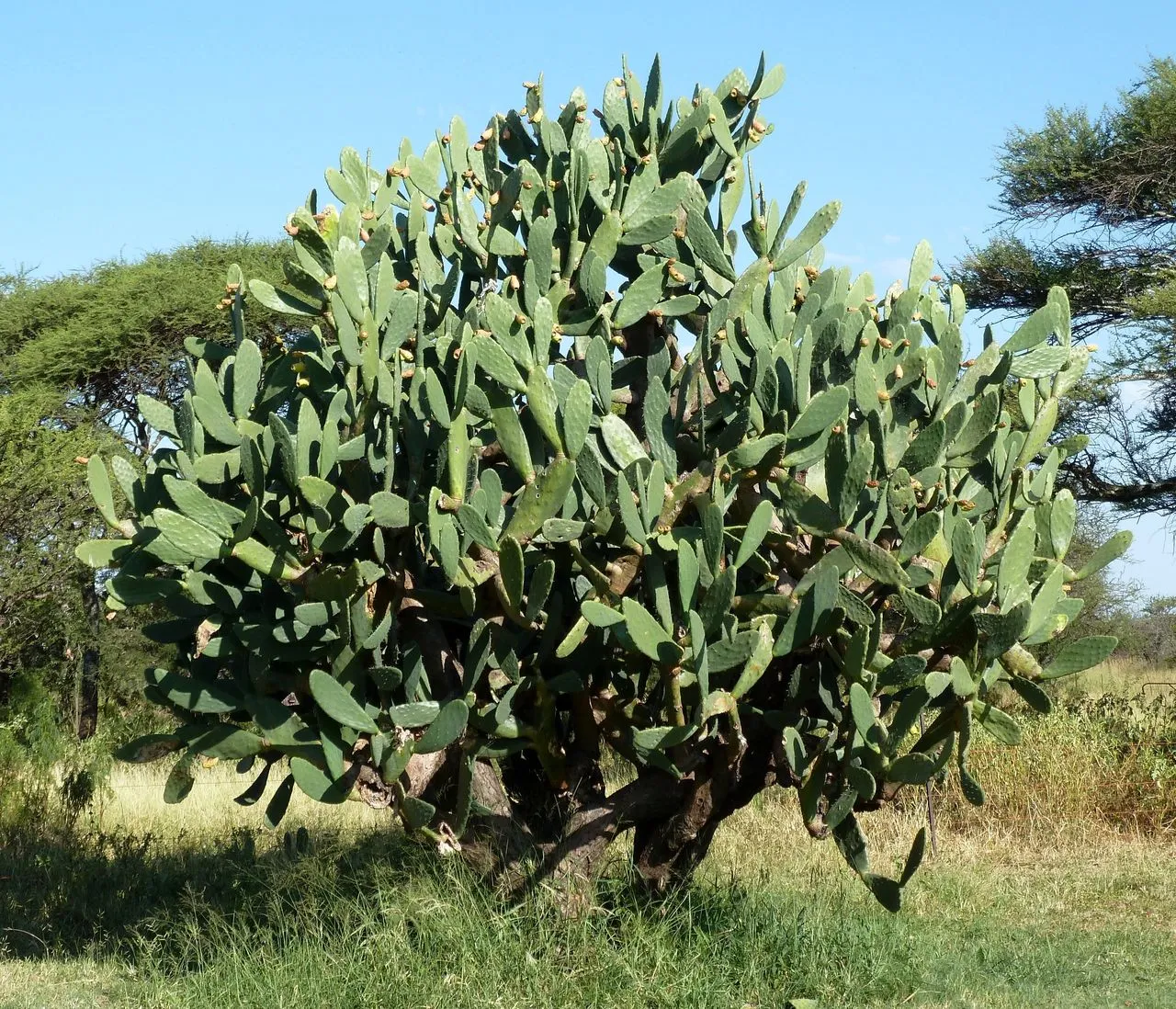
Opuntia ficus-indica (L.) Mill., the Indian fig or prickly pear, was first described by Carl Linnaeus in 1753 as Cactus opuntia and transferred to Opuntia by Philip Miller in 1768. The native range is disputed; the best evidence points to central Mexico, but the species has been cultivated for so long that genuinely wild populations are uncertain and most so-called natural stands are feral descendants of crop plantings. The defining features are the tree-form habit (a single trunk that branches into a candelabra of flat green pads), the reduced spination compared with most opuntias, and the persistence of fertile glochid clusters at every areole regardless of how spineless the plant looks.
In its presumed home range, O. ficus-indica grows in semi-arid scrub and open grassland with rocky drainage and summer-dominant rainfall. Outside that range it is one of the most widely naturalised cacti on Earth, established across the Mediterranean basin, North Africa, the Canary Islands, southern Africa, parts of the Arabian peninsula, India, the Hawaiian Islands, and large areas of Australia. In several of those regions it is classed as invasive: South Africa, Ethiopia, parts of southern Spain, and most of inland eastern Australia have active management programmes for dense feral stands that displace native vegetation and injure livestock. There are no CITES restrictions on the species; the regulatory pressure runs the other way, with weed-control legislation in some jurisdictions.
Part of the Complete Cactus Guide.
Identification
Mature plants grow as small trees of 3 to 5 m, occasionally taller in frost-free climates with deep soil. The trunk corks and lignifies into a brown woody column, and the canopy is built from successive generations of flat oval pads (cladodes) ranging 25 to 40 cm long and 15 to 25 cm wide. Pads are mid-green, sometimes with a light bluish bloom, and emerge from the margins or tip of older pads in spring. Surface areoles are spaced 2 to 4 cm apart and carry one to four short whitish spines (often missing on cultivated stock) plus a persistent tuft of fine glochids. The glochids are the trap. Even the so-called spineless cultivars retain them, and they detach into skin at the lightest contact.
Flowers open in spring and early summer, 6 to 10 cm across, yellow at first and often deepening to orange or apricot as the day wears on. They form along the upper margin of two- to three-year-old pads. Fruits ripen through summer into autumn: barrel-shaped berries 6 to 10 cm long with a thick rind that turns from green through yellow to red, orange, or deep purple depending on cultivar. The flesh inside is sweet, sticky, and packed with hard seeds. The fruit's outer skin carries glochids; commercial harvesters and home growers brush or singe them off before peeling.
Three lookalikes are worth separating by Latin name. Opuntia microdasys, the bunny ears cactus, is a small shrub to about 60 cm with pads only 6 to 15 cm long, no true spines, and dense yellow or cream glochids that make it look soft; it does not produce edible-scale fruit at home and never reaches tree form. Opuntia basilaris, the beavertail cactus from the Mojave and Colorado deserts, is a low spreading plant with distinctly purple-grey, more wedge-shaped pads and brilliant magenta flowers; the colour and growth habit alone separate it. Within O. ficus-indica itself, var. inermis is the truly spineless cultivated form bred over centuries for safe handling of pads and fruit, retaining only the glochids that all opuntias keep.
Cultivation
Light. Full sun is the working assumption. Outdoors in Mediterranean and warm temperate climates, O. ficus-indica takes anything the sky offers once acclimated; pad colour, firmness, and flower set all decline below 6 hours of direct sun a day. Indoors it rarely thrives long term because few windows deliver enough light to support a plant of this scale. A south-facing patio or unheated glasshouse is more realistic than a houseplant position.
Water. During active growth (April through September across most of the temperate northern hemisphere), water deeply when the top 5 cm of substrate has dried and pads feel firm rather than plump-tight. For an in-ground plant in Mediterranean rainfall, no supplementary water is needed once established. For a containerised plant in a 30 to 40 cm pot in summer, a deep soak every 14 to 21 days suits the species. From late October through February, hold water entirely if temperatures stay below 10 °C. Wet roots in cool substrate are the leading non-frost cause of rot.
Substrate. A 65 to 70% mineral mix is the practical baseline: 40% pumice or scoria at 5 to 10 mm, 15% coarse grit, 10% lava rock, 30% loam-based compost, 5% perlite. The plant tolerates poorer mixes than most cacti once it has rooted into open ground, but in containers, peat-heavy compost holds water at depth past the point where roots can use it.
For the pumice fraction, bagged horticultural pumice in the 5–10 mm range is the straightforward option if you can't source scoria locally; it holds structure for years and doesn't break down the way perlite does.
Temperature. Established plants tolerate brief dips to about −8 °C without losing the trunk or main pads, especially with bone-dry substrate. Frost causes pad dehydration: pads take on a flaccid, water-soaked appearance, then partially recover as temperatures rise. A plant repeatedly exposed to lower temperatures, or to prolonged frost on wet roots, loses pads and may collapse to ground level before regenerating from a surviving base. Summer heat to 40 °C is not a problem in dry air; the same temperature with high humidity around the roots is.
Pot. Mature plants outgrow indoor pots within a few seasons. Container culture works for the first 2 to 4 years in a 30 to 50 cm wide, heavy unglazed terracotta or concrete pot, after which the plant either needs the open ground, a half-barrel sized container, or hard pruning back to a single trunk every year or two.
Propagation
Pad cuttings are the standard route, with success rates above 95% at 22 to 28 °C. Detach a healthy single pad with long-handled tongs or a folded newspaper grip, callus the cut end in dry shade for 7 to 14 days (longer for thick pads from older plants), then stand the callused end 3 to 5 cm into dry mineral substrate. Withhold water for the first 10 to 14 days, then resume normal watering once a gentle tug meets resistance. Roots usually anchor in 3 to 6 weeks; the first daughter pad appears within 6 to 10 weeks of rooting under good light. A pad cutting can produce flowers and fruit within 2 to 4 years.
Handle pads with long-cuffed leather gloves; glochids go straight through cloth. A gauntlet style such as the HANDLANDY leather pruning gloves protects the forearms too, which you will appreciate the first time a pad rolls against your wrist.
As an Amazon Associate, we earn from qualifying purchases, at no extra cost to you.
Seed germination is straightforward but slow. Surface-sow on fine mineral mix at 25 to 30 °C; most seeds break dormancy within 14 to 30 days, with a long tail of late germinators over the next several months. Seedlings reach the size of a single rooted pad in 4 to 6 years, which is why commercial orchards and home growers almost always rely on cuttings for cultivar fidelity and speed.
Notes
The cultivation history of O. ficus-indica is unusually long for any cactus. Indigenous Mesoamerican peoples cultivated and bred it for thousands of years before European contact; the Aztecs grew it both for food and as host for the cochineal scale insect Dactylopius coccus, whose dried bodies yield carminic acid, the deep red dye that became one of the most valuable exports out of colonial New Spain. After 1492, the plant moved with Spanish and Portuguese ships into the Mediterranean, North Africa, India, and southern Africa, where it naturalised so thoroughly that nineteenth-century European writers often took it for a Mediterranean native.
The pads are eaten as a vegetable under the name nopales, particularly in Mexican cuisine: young pads are de-glochided, sliced, and grilled, sautéed, or boiled. The fruit, sold as tunas, prickly pears, or barbary figs, is eaten fresh, juiced, fermented into spirits in parts of southern Italy and the Maghreb, or processed into jams and syrups. Cochineal production has shrunk since synthetic dyes appeared in the 1870s, but it persists commercially in Peru and the Canary Islands, where farmers still maintain O. ficus-indica plantations specifically as host for D. coccus.
The same traits that made the plant a global staple, vigorous vegetative spread from broken pads and high seed viability, drive its invasive behaviour. In South Africa and Australia, biological control programmes using cochineal insects and the Cactoblastis cactorum moth have reduced feral stands by orders of magnitude in some districts. If you grow this species outside its presumed home range, check local invasive species lists before planting in open ground; container culture or removal of fruits before seed set keeps the plant out of the wider landscape.
See also
- The Complete Cactus Guide, family-wide reference covering substrate, watering, winter rest, and the major genera in cultivation.
- Opuntia microdasys, the bunny ears cactus; the small spineless-looking shrub form of the genus, with persistent yellow glochids and no edible-scale fruit.
- Opuntia basilaris, beavertail cactus; low-growing Mojave and Colorado desert species with purple-grey wedge-shaped pads and bright magenta flowers.
- Beginner's Guide to Succulents, the master pillar covering general light, water, and substrate principles for cacti and other succulents.
Soil and pot choice for Opuntia ficus-indica
This cactus hates a wet root zone more than it hates neglect. Use a gritty mix, a drainage hole, and a pot heavy enough that tall pads do not tip it over. If regular potting soil stays damp for days, cut it with mineral material or repot before watering again.
For container plants, start with a fast-draining cactus and succulent soil mix search rather than peat-heavy houseplant soil. As an Amazon Associate, we earn from qualifying purchases, at no extra cost to you.
Watering rule of thumb
- Water deeply in warm, bright growth periods, then let the mix dry before watering again.
- Reduce water sharply in cool weather, especially for potted plants under cover.
- Wrinkled pads can mean thirst, root loss, or cold stress, so check the soil before adding water.
Quick answer: how to care for Opuntia ficus-indica
Give Indian fig prickly pear as much sun as you can, then make drainage the second priority. In the ground, it hates soggy winter soil. In a pot, it needs a gritty mix, a drainage hole, and enough weight that the plant does not topple as pads stack up.
Potting mix for heavy pads and wet winters
For containers, skip peat-heavy houseplant soil. A mineral cactus blend such as Bonsai Jack Succulent and Cactus Soil Gritty Mix dries faster around Opuntia roots and reduces the chance of winter rot. As an Amazon Associate, we earn from qualifying purchases, at no extra cost to you.
Why pads shrivel or yellow
A little wrinkling during drought is normal and often reverses after watering. Yellow, soft, or translucent pads are more concerning. Check the base and roots before adding water, especially after cool weather or weeks of rain.
Quick answer: how to care for Opuntia ficus-indica
Opuntia ficus-indica needs strong light, sharp drainage, and deep but infrequent watering. Outdoors it wants sun and room to spread. Indoors, give it the brightest window you have and rotate the pot if pads start leaning toward the glass.
Soil and drainage matter more than extra fertilizer
As an Amazon Associate, we earn from qualifying purchases, at no extra cost to you. This cactus can handle lean soil, but it hates staying wet. Use a gritty cactus and succulent soil mix for opuntia, add mineral grit if your climate is humid, and choose a pot with a real drainage hole. Skip saucers full of standing water.
How often to water prickly pear cactus
Water deeply when the mix is dry, then wait. In hot outdoor weather that may be weekly. Indoors or in winter, it may be much less often. Wrinkled pads can mean thirst, but soft dark patches usually mean rot.
Handling pads safely
Opuntia pads can carry tiny glochids that are hard to see and miserable in skin. Wear thick gloves, use tongs if you are moving cuttings, and keep pads away from pets and foot traffic.
Opuntia ficus-indica FAQ
Can Opuntia ficus-indica grow indoors?
Yes, but only with very bright light. A weak window usually leads to thin stretched pads.
Why are my prickly pear pads falling over?
The usual causes are low light, a loose root system, wet soil, or top-heavy new growth. Check the base before staking it upright.
Frequently Asked Questions
How much sun does Opuntia ficus-indica need?
Give it full sun outdoors. Indoors, place it in the brightest window possible or move it outside during warm weather.
What soil is best for Opuntia ficus-indica?
Use a gritty cactus mix that drains fast. Heavy potting soil stays wet around the roots and raises rot risk.
Can Opuntia ficus-indica survive frost?
It tolerates light cold better than many succulents, but hard freezes can damage pads. Container plants should be protected before freezing weather.
Can Opuntia ficus-indica grow in a pot?
Yes, but choose a heavy pot with drainage and use a gritty cactus mix. The plant becomes top-heavy as pads grow, so a small light pot tips over easily.