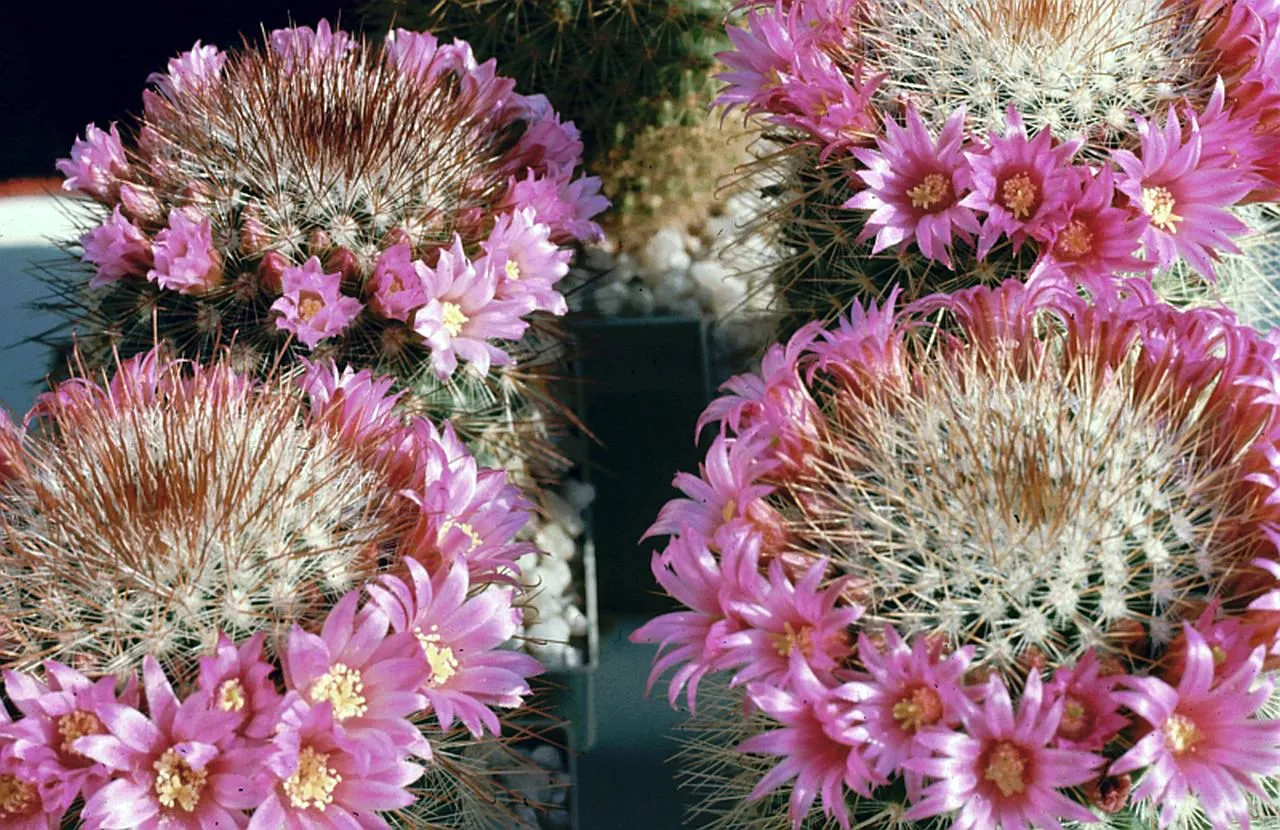
White fuzz on a cactus is easy to misread because cactus areoles naturally produce wool, hairs, bristles, glochids, and spines. On Mammillaria hahniana and Mammillaria plumosa, white hair is part of the plant's identity. On another cactus, the same cottony look may be a mealybug colony feeding in protected crevices. Identification comes before treatment.
Part of the Complete Cactus Guide.
Natural areole wool and hairs
Cacti are defined by areoles, modified shoots that produce spines, flowers, offsets, hairs, and wool. Many species have white wool at the crown or along areoles. Astrophytum myriostigma has small woolly areoles on rib edges and pale flecks on the epidermis. Mammillaria hahniana carries dense white axil wool that can cover much of the body. Mammillaria plumosa has feather-like white spines that look soft and fuzzy. This natural growth is organised: it repeats at every areole or axil in a consistent pattern, does not smear when touched, and is attached to the plant. Removing it damages the cactus and reduces protection from sun and temperature swings. If the white material is symmetrical, clean, and exactly where the species normally carries wool, leave it alone.
Mealybugs above the soil line
Mealybugs are the most common harmful white fuzz on cacti. They are small sap-sucking insects covered in white wax, often hiding in areoles, between tubercles, under Opuntia pad joints, near the crown, or at the base where spines provide shelter. They appear as irregular cottony tufts rather than orderly plant wool. A toothpick may lift the clump away, revealing a soft oval insect or yellowish residue. Infested tissue may yellow, scar, or stop growing, and severe infestations weaken flower buds and offsets. Mealybugs spread easily between crowded pots, especially where plants touch or where ants move honeydew-producing insects. Because cactus spines hide them well, one visible tuft usually means more insects are present out of sight.
Root mealybugs below the soil line
Root mealybugs cause white fuzzy material where growers do not look often enough: in the root ball. They coat themselves and egg masses with wax, leaving white flecks or cottony deposits on roots, lower stems, and the inside wall of the pot. Above ground, the cactus may look dull, yellowish, stalled, or shriveled despite correct watering. When watered, the plant fails to plump because roots are being drained and damaged. Root mealybug is common in dense collections, old dry pots, and plants acquired from unknown sources. It is also easy to miss in mineral mixes because white pumice and white wax can look similar. The clue is texture and placement: waxy residue clings to roots and pot walls, while mineral particles are hard and granular.
Mold on dead flowers, fruit, or old tissue
Fungal growth can look like white fuzz when it grows on dead flowers, old fruit, fallen petals, or dead basal leaves trapped in spines. This is not the same as mealybug, although both can occur together. Mold usually appears on decaying organic debris, not as moving cottony insects tucked into live areoles. It may smell musty and collapse when disturbed. Poor airflow, high humidity, and wet top dressing encourage it. The fix is removal of dead material and drying the surface, not insecticide. On cactus seedlings or epiphytes in constantly wet mixes, mold can signal a broader air and moisture problem. On mature desert cacti, occasional mold on a dead flower is usually local if removed promptly.
Mineral deposits and spray residue
Hard water, fertiliser salts, and dried sprays can leave pale spots that are mistaken for pests. Mineral deposits are crusty or powdery rather than cottony, often appearing where water droplets dried on the stem or at the pot rim. They do not move, produce honeydew, or cluster in protected joints. Repeated overhead watering with hard water can mark smooth-skinned cacti, and some residues are difficult to remove without damaging the epidermis. Avoid unnecessary washing. If the plant is otherwise healthy and the white marks match dried droplets, change watering technique: water the substrate, not the body, and flush pots occasionally during active growth if salts accumulate.
How to identify the white spots
| White material | Pattern | Touch test | Action |
|---|---|---|---|
| Natural wool | Symmetrical at areoles, axils, or crown | Attached, does not crawl | Leave intact |
| Mealybug | Irregular cotton in crevices | Lifts or smears; insect may appear | Isolate and treat |
| Root mealybug | White wax on roots or pot wall | Waxy clumps below soil | Unpot and clean roots |
| Mold | On dead flowers or debris | Collapses, musty | Remove debris and improve airflow |
| Mineral residue | Droplet marks or crust | Gritty, non-living | Adjust water method |
Use a hand lens and a dry toothpick. Do not spray first and identify later. Cactus wool can trap liquids, and unnecessary treatments can scar sensitive tissue.
When to act immediately
Act immediately if the white fuzz is irregular, spreading, associated with yellowing, or found on multiple plants. Isolate the cactus the same day. Mealybugs reproduce in protected spaces, and weekly delay makes eradication harder. Act immediately if a newly purchased cactus shows white wax in the root ball; quarantine prevents collection-wide spread. Wait and observe if the white material is species-typical wool and the plant is growing normally. Professional help is rarely needed, but severe infestations in a valuable collection may justify advice on a systemic insecticide permitted in the grower's region.
Solutions
Treat visible mealybugs precisely
Move the plant away from the collection. Dip a cotton bud or fine brush in 70% isopropyl alcohol and touch each visible mealybug. The wax dissolves and the insect dies. Avoid flooding woolly crowns or treating in direct sun, because alcohol can mark tissue. Repeat inspection and treatment weekly for at least 4 weeks. Eggs and crawlers are easy to miss, especially inside dense spines. Clean the shelf, pot exterior, and neighbouring plants.
Handle root mealybug thoroughly
Unpot the cactus during warm weather if possible. Discard the substrate. Inspect roots and trim dead portions. Rinse roots only if conditions allow fast drying; otherwise brush away material carefully. Let the plant dry bare-root in bright shade for several days, then repot into fresh dry mineral mix. Severe root mealybug may require a labelled systemic treatment where legal. Follow the label exactly; cactus sensitivity and local pesticide rules matter.
Remove mold and dead debris
Use tweezers to remove dead flowers, fruit, shed segments, and debris trapped in spines. Increase airflow and reduce surface wetness. Avoid decorative moss or organic top dressing around desert cacti. If mold returns repeatedly, the substrate is staying too wet or the plant is in stagnant air. Repotting into a more mineral mix may be needed for desert species.
Preserve natural wool
Do not scrub normal wool from Mammillaria, Astrophytum, or other woolly cacti. It is part of the areole structure and can protect the growing point. If dust collects, use a dry soft brush or gentle air movement, not water jets. Damaged wool does not always regrow neatly on older tissue.
Prevention
Quarantine new cacti for 2 to 4 weeks. Inspect crowns, areoles, pad joints, and the root ball before integrating them. Keep pots spaced so spines and stems do not touch. Remove dead flowers after they dry. Avoid high-nitrogen feeding that produces soft pest-prone growth. Check root balls of plants that fail to plump after watering or stop growing for no clear reason. Clean tools between plants. In dense collections, schedule monthly torch inspections; early mealybugs are much easier to kill than a colony hidden across 30 pots.
See also
- Mammillaria hahniana — a cactus with natural white wool that should not be mistaken for pests.
- Astrophytum myriostigma — a species with woolly areoles and pale epidermal flecks.
- Opuntia microdasys — pad joints and glochid areoles can hide pests as well as natural structures.
- Mammillaria plumosa — feather cactus with naturally white fuzzy spines, a frequent source of mealybug confusion.
Frequently Asked Questions
Are white fuzzy spots on cactus always mealybugs?
No. Many cacti naturally produce wool or hair from areoles. Mealybugs are irregular, mobile, and often hidden in protected crevices.
How do I kill mealybugs on cactus?
Isolate the plant and dab visible insects with 70% isopropyl alcohol on a cotton bud, repeating weekly for at least 4 weeks.
What are root mealybugs?
Root mealybugs are white wax-covered insects that feed below the soil line. They leave white residue on roots and pot walls and cause stalled growth.
Can I spray alcohol over the whole cactus?
Spot treatment is safer around woolly areoles and sensitive epidermis. Whole-plant spraying can mark tissue, especially in sun or heat.