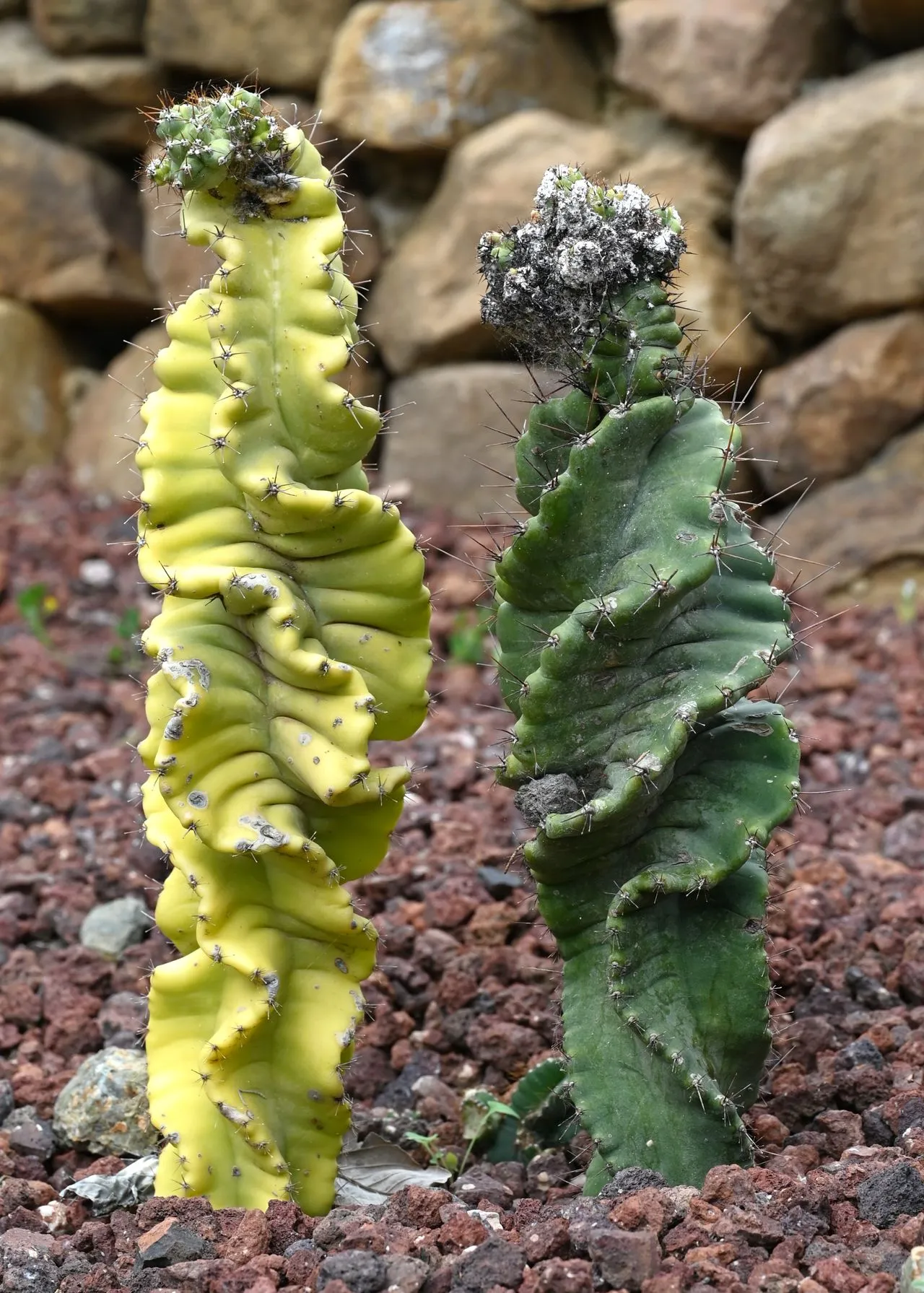
Shriveling is one of the few cactus symptoms that can mean either normal resilience or serious trouble. Cacti store water in their stems, so ribs, tubercles, pads, and segments naturally contract when water reserves are used. The danger comes from assuming every wrinkle means thirst. A cactus with dead roots can shrivel in wet soil because it cannot absorb the water already present.
Part of the Complete Cactus Guide.
Normal drought contraction
Healthy desert cacti expand and contract with water availability. Ribbed barrels fold inward slightly, Mammillaria tubercles look less plump, columnar stems become subtly fluted, and Opuntia pads may soften at the edges. During active growth, this usually means the pot has dried thoroughly and the plant is drawing on stored water. During cool winter rest, moderate shrinkage is expected. A dry Rebutia or Mammillaria at 5°C to 10°C can go 8 to 12 weeks without water and look smaller by late winter. This is not failure; it is dormancy. The tissue remains firm, the colour stays healthy, and the plant does not smell or collapse. Once spring warmth and light return, a deep watering refills the storage tissue gradually over days to weeks.
Root loss after over-watering
The most dangerous shriveling appears when the pot is damp. Roots damaged by rot, stale compost, or long saturation cannot take up water, so the stem shrivels even though moisture is present. This is the cactus equivalent of drought at the stem with flood at the root. The plant may feel loose in the pot, the base may yellow or soften, and the substrate may smell sour. Fine roots die first, then thicker roots and the stem base. Watering again makes the condition worse because it further reduces oxygen in the root zone. If a cactus is wrinkled and the lower half of the pot is damp, do not water. Unpot, inspect roots, remove dead tissue, and dry the plant before repotting.
Under-watering during active growth
True under-watering occurs when a cactus is warm, in strong light, actively growing, and left dry beyond its reserves. It is common in very small terracotta pots, hot balconies, gritty mixes with little water retention, or plants kept close to a warm window. The cactus becomes uniformly wrinkled but remains firm. New growth pauses, flower buds may abort, and offsets may fail to root. The fix is a thorough soak, not frequent teaspoons of water. Water until the whole root ball is wet and water exits the drainage hole, then allow full drainage. A 7 cm pot may rehydrate visibly within a few days; a large barrel can take 1 to 2 weeks to show fuller ribs.
Hydrophobic or compacted substrate
Old peat-based mixes can become hydrophobic when completely dry. Water runs down the gap between root ball and pot wall, exits the drainage hole, and leaves the central root mass dry. The grower thinks the cactus was watered, but roots received little moisture. This causes chronic shriveling despite regular watering. Compacted fine sand or decomposed compost creates the opposite problem: the surface wets, the centre stays stale, and roots decline. Check by lifting the pot after watering. A properly soaked pot should feel heavier. If water drains instantly but the root ball remains light, soak the pot in a shallow tray for 10 to 20 minutes during warm growth, then drain fully. Long term, repot into a structured mineral mix that rewets evenly.
Heat, wind, and low humidity stress
Outdoor summer conditions can draw water from a cactus faster than expected, especially in small pots. Hot wind, black plastic containers, reflected heat from paving, and temperatures above 35°C can cause temporary shriveling even in plants that are not neglected. Some cacti pause growth during extreme heat and take up water poorly until nights cool below about 24°C. Watering during the hottest part of a heatwave can leave roots in hot wet substrate, which is risky. The better response is morning watering when the pot is dry, afternoon shade for small containers, and protection from reflected heat. Plants should recover firmness when temperatures moderate if roots are healthy.
Epiphytic cactus dehydration
Forest cacti shrivel differently from desert cacti. Schlumbergera, Rhipsalis, and Epiphyllum have thinner stems and shallower roots adapted to airy organic pockets, not months of desert drought. Their segments wrinkle, hang limp, and may redden when kept too dry or in harsh sun. They can also shrivel from root rot if kept in stale soggy peat. The identification rule is the same: check the mix. If the upper 2 to 3 cm is dry and the pot is light, water thoroughly. If the mix is wet and segments are limp, inspect roots. These cacti need an airy bark, pumice, and compost mix that holds mild moisture while draining quickly.
How to identify the cause
| Condition | Pot moisture | Stem texture | Likely action |
|---|---|---|---|
| Normal winter rest | Dry | Firm, evenly contracted | Wait until spring unless severe |
| Active-growth thirst | Dry | Firm but wrinkled | Deep soak, then dry cycle |
| Root rot or root death | Damp or wet | Soft, loose, yellowing, or collapsing | Unpot and inspect roots |
| Hydrophobic mix | Surface wet then quickly dry; pot still light | Chronic wrinkles | Rewet carefully, then repot |
| Heat stress | Drying fast in hot exposure | Temporary wrinkles | Morning water and heat protection |
| Epiphyte drought | Upper 2 to 3 cm dry | Limp thin segments | Water and improve humidity |
Wrinkles alone are not enough. Always combine the above-ground symptom with pot weight, root-zone moisture, temperature, and season.
When to act immediately
Act immediately if the cactus is shriveled while the substrate is damp, if the base is soft, if the plant wobbles, or if there is any sour smell. Those signs point to root failure or rot. Act within a few days if a warm actively growing cactus is dry and wrinkled; delayed water can cost buds or new roots. Wait if a desert cactus is in planned cool winter rest and remains firm. Professional help is unnecessary for most shriveling, but a large old cactus that has detached from its roots may need careful handling, cutting, or specialist re-rooting.
Solutions
For a dry rooted cactus
Water deeply in the morning. Apply water evenly until it runs from the drainage hole, wait 5 minutes, then water once more if the mix was extremely dry. Let the pot drain fully. Do not leave the cactus standing in water for hours unless you are deliberately rewetting a hydrophobic root ball, and even then limit soaking to 10 to 20 minutes in warm conditions. Resume the normal dry cycle. The body should become firmer gradually; instant swelling is not required.
For damp soil and root loss
Remove the cactus from the pot. Discard the substrate. Trim dead roots with sterile scissors or a blade, then leave the plant bare-root in bright shade for 5 to 10 days. If the stem base is clean and firm, repot into dry mineral mix and wait another week before watering. If the base is soft or discoloured, treat it as rot and cut back to clean tissue. Water only when temperatures and light support new root growth.
For hydrophobic mix
During warm active growth, soak the pot in a shallow tray so water reaches halfway up the pot for 10 to 20 minutes. Remove and drain fully. This is a temporary rescue, not a permanent soil strategy. At the next safe opportunity, repot into a mix with 60% to 70% mineral aggregate and enough loam-based or peat-free organic material to rewet without collapsing. Remove compacted peat plugs around the roots.
For epiphytic cacti
Water when the upper 2 to 3 cm of mix dries, not when the whole pot is bone dry for weeks. Use an open blend of fine bark, pumice or perlite, and a modest organic fraction. Keep humidity around 50% to 70% where possible and avoid unfiltered midday sun. If segments remain limp after watering and the mix stays wet, inspect roots for rot.
Prevention
Prevent shriveling problems by learning the normal seasonal contraction of each cactus type. Use pot weight and a skewer test rather than a calendar. Match pot size to root size so the plant can dry predictably. Keep desert cacti dry in cool winter rest, but do not impose that treatment on jungle epiphytes. Repot old hydrophobic mixes before they become impossible to water evenly. During heatwaves, shade pots and water early in the day only after checking dryness. A cactus should be allowed to use stored water; it should not be forced to choose between drought above ground and suffocation below ground.
See also
- Rebutia minuscula — a small cactus where winter contraction and spring rehydration are part of normal rhythm.
- Rhipsalis baccifera — an epiphytic cactus that shrivels under desert-style drought.
- Mammillaria elongata — a dry-rest cactus that should be watered deeply only when conditions suit growth.
- Cactus rot treatment — next step when shriveling with damp soil points to root failure.
Frequently Asked Questions
Is cactus shriveling normal in winter?
Moderate contraction is normal for many desert cacti during a dry cool winter rest. Severe collapse, softness, or damp soil is not normal.
How do I rehydrate a wrinkled cactus?
If roots are healthy and the mix is dry, water deeply until water drains out, then let the pot dry again. Do not water daily.
Why is my cactus shriveled but the soil is wet?
Wet soil with a shriveled cactus usually means roots are damaged, cold, or rotten and cannot take up water. Unpot and inspect before adding more water.
Can a cactus recover after severe shriveling?
Yes, if firm living tissue and viable roots remain. Recovery may take several weeks because cactus bodies refill slowly.