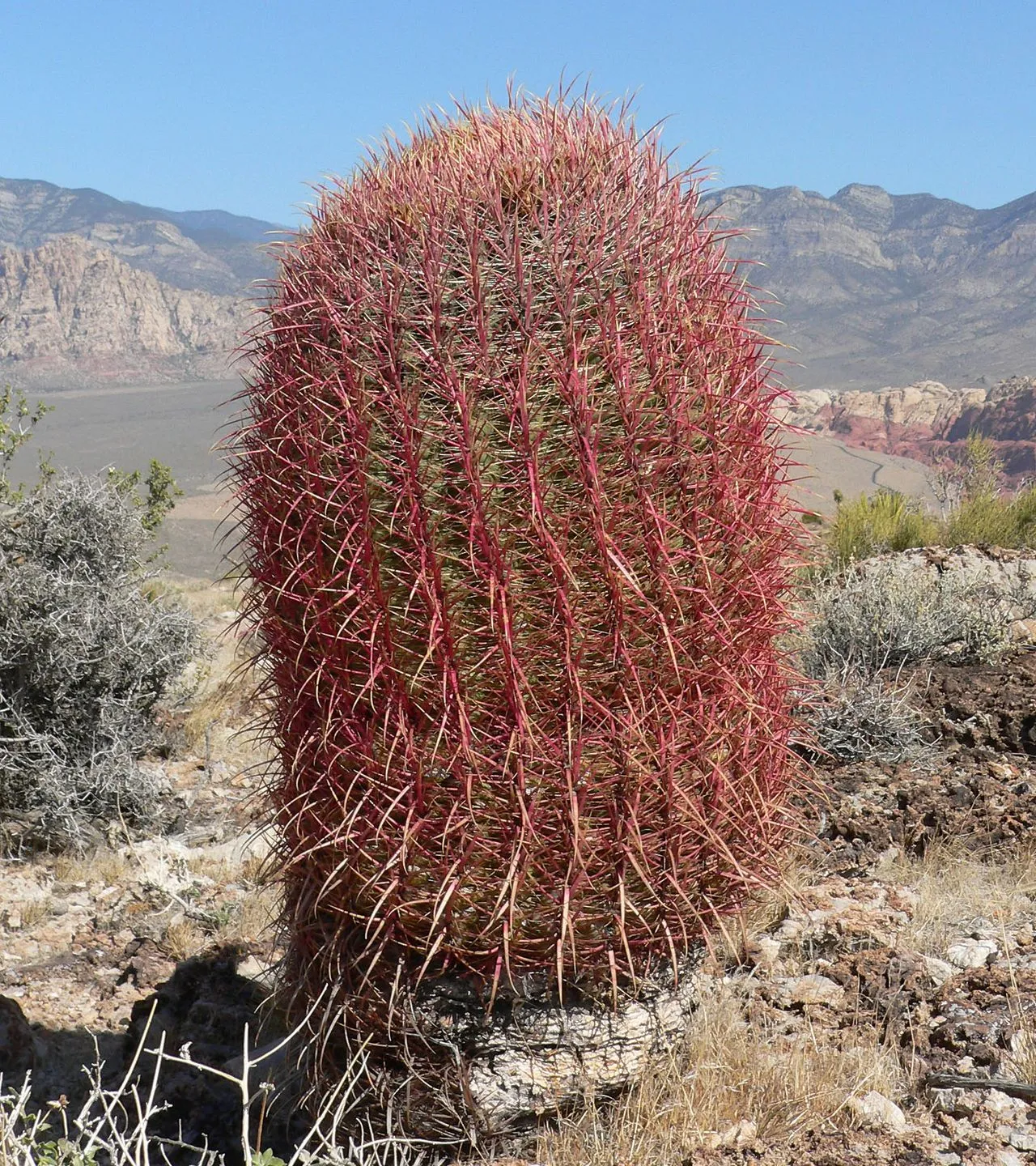
Yellowing in a cactus is a diagnostic clue, not a diagnosis. The same colour can appear when roots are suffocating in wet compost, when a shaded plant is moved into direct summer sun, when a pot has been cold and damp for too long, or when insects are draining sap from the areoles. The right response depends on texture, speed, location, and season.
Part of the Complete Cactus Guide.
Wet roots and early rot
The most serious yellowing begins below the surface. When cactus roots sit in saturated substrate for several days, oxygen drops and fine roots die. A cactus can no longer regulate water uptake cleanly, so lower stem tissue may turn yellow, translucent, or dull olive before it softens. This is common in peat-heavy nursery compost, oversized pots, decorative cachepots that trap drainage water, and winter watering below about 12°C. The yellow often starts near the base or just above the soil line, then moves upward. Unlike drought colour, wet-root yellowing is usually accompanied by a heavy pot, a stale smell, and tissue that yields under gentle pressure. Desert species such as Astrophytum, Mammillaria, Echinocactus, and Ferocactus are especially vulnerable when cool wet roots meet low winter light.
Sudden sun and heat stress
A cactus adapted to indoor glass or shop lighting can yellow within days if it is moved straight into outdoor sun. Epidermal cells that were built under lower light cannot handle the sudden rise in ultraviolet radiation, leaf-surface temperature, and evaporation demand. Mild stress appears as yellowing on the sun-facing side, often high on ribs or exposed pads. Stronger damage becomes pale beige or white, then dries into a permanent scar. South and west windows can also cause one-sided yellowing when glass concentrates heat on a stem that has not been acclimated. Even high-light desert cacti need a transition: 10 to 14 days moving from bright shade to morning sun, then only later to full exposure. Jungle cacti such as Schlumbergera and Rhipsalis should not receive unfiltered midday sun at all.
Low light and chlorophyll loss
Yellowing can also mean the plant is not making enough chlorophyll to support compact growth. In low light, new cactus tissue may become paler, thinner, and softer than older tissue. Globular species develop a pointed crown; columnar cacti form narrow new growth; flat epiphytes make thin weak segments. This is often confused with nutrient deficiency, but light is the driver. A cactus cannot use fertiliser properly when photosynthesis is limited. Indoors, most desert cacti need a south-facing window or a strong grow light delivering roughly 200 to 500 µmol/m²/s for several hours daily during active growth. If the plant is 60 cm back from a bright window, the light level may be a fraction of what it receives at the glass. Pale yellow-green growth at the newest tissue, combined with stretching, indicates a light correction is needed.
Nutrient exhaustion in long-held pots
Cacti do not need heavy feeding, but they do need some mineral nutrition during active growth. A plant kept in the same inert or exhausted potting mix for 5 to 8 years can develop a dull yellow-green cast, weak spine production, and little flowering even when watering is correct. Nitrogen deficiency tends to appear as general pallor, while magnesium and iron problems can show as lighter tissue between green areas, although exact diagnosis by eye is unreliable. The practical check is simpler: has the cactus been repotted within the last 3 to 4 years, and has it received low-dose fertiliser during warm active growth? In a mineral mix, use a balanced fertiliser at one-quarter to one-half label strength every 4 to 6 weeks from spring to late summer. Do not feed a cold, dormant, or rootless plant.
Cold damage and winter stress
Cold damage often appears as yellowing that later turns tan, brown, or glassy. The risk rises sharply when cold and moisture occur together. A dry Mammillaria elongata may tolerate brief dips near 0°C, but the same plant in damp compost can lose roots at temperatures far above freezing. Window sills are frequent trouble spots: night temperatures beside glass may be 5°C to 8°C lower than the room, and the side touching the pane can yellow first. Tropical epiphytic cacti are less cold tolerant than many desert species. Schlumbergera should generally stay above 10°C, with 5°C treated as an absolute emergency minimum, while many desert cacti rest best dry at 5°C to 12°C. The distinction matters because the yellowing remedy for cold desert dormancy is dryness, not warmth plus extra water.
Pests feeding around areoles
Sap-sucking pests can create yellow patches that follow feeding sites. Mealybugs hide in woolly areoles, between pads, beneath dense spines, and along the root ball. Scale insects sit as small brown, grey, or white shields on ribs or older basal tissue. Spider mites can stipple tender epidermis, especially in hot dry indoor air, leaving pale yellow speckling rather than broad patches. Pest yellowing is often local at first, then spreads as the population grows. Use a torch and a hand lens. Check the underside of Opuntia pads, the axils of Schlumbergera segments, and woolly crowns of Mammillaria and Astrophytum. Root mealybug is invisible until unpotting; look for white waxy deposits on roots and on the inside wall of the pot.
How to identify the cause
| Symptom pattern | Most likely cause | Immediate check |
|---|---|---|
| Yellow, soft base; damp mix; heavy pot | Wet roots or rot | Unpot and inspect roots |
| Yellow or beige on one sun-facing side | Sun or heat stress | Review recent move and window exposure |
| Pale narrow new growth at the crown | Low light | Measure distance from window or light |
| Whole plant dull yellow-green but firm | Nutrient exhaustion or old mix | Check repotting and feeding history |
| Yellow patches around areoles or joints | Mealybug, scale, or mites | Inspect with torch and hand lens |
| Yellow glassy side after a cold night | Cold injury | Check minimum temperature at sill level |
Texture decides urgency. Firm yellow tissue can be observed while conditions are corrected. Soft, wet, sunken, or spreading yellow tissue requires immediate action because rot can cross the vascular core quickly.
When to act immediately
Act the same day if yellowing is at the stem base, the pot is still wet more than 7 days after watering, the plant smells sour, or tissue collapses under gentle pressure. Those signs point to root or basal rot. Act within 24 to 48 hours if insects are visible, because pests spread quickly in a succulent collection. Wait and observe for 2 to 3 weeks if yellowing is firm, dry, and clearly linked to a light change; scars will not reverse, but the damage should stop spreading after the plant is protected. Professional help is rarely needed for ordinary houseplant cactus problems, but valuable old specimens with rot in the lower stem may justify a specialist grower assessing whether grafting or a top cutting is viable.
Solutions by cause
If roots are wet or rotten
Remove the plant from its pot, brush away the old substrate, and inspect roots. Healthy roots are pale tan to white and firm. Dead roots are black, hollow, slimy, or detach as a sheath. Cut dead roots with a sterile blade, then leave the cactus bare-root in bright shade with airflow for 5 to 10 days. Repot into a dry mineral mix: 60% to 80% pumice, grit, lava rock, or similar mineral aggregate, with only 20% to 40% low-peat organic matter. Do not water immediately. Wait another 7 to 10 days, then water lightly only if temperatures are above 18°C and the plant is in active growth.
If sun caused the yellowing
Move the cactus out of the harsh exposure but keep it bright. Do not put a scorched cactus into deep shade, because weak replacement growth creates a second problem. Use morning sun for 2 to 3 hours and bright shade after midday for the next 10 to 14 days. Old yellow or white scar tissue will remain; the goal is firm new growth with normal colour. Rotate pots only after the plant is acclimated. Sudden rotation can expose a previously shaded side and create a matching burn.
If light is too low
Increase light gradually. Move a desert cactus to the brightest window, ideally south-facing in the northern hemisphere, or place a grow light 20 to 35 cm above the plant depending on fixture strength. Increase exposure over 10 to 14 days. Stretched pale growth will not become compact again; future growth will be better. Severe etiolation on a columnar cactus may require cutting and re-rooting the healthy top once active growth resumes.
If nutrition is the issue
Repot during warm growth if the mix is old, compacted, or salt-crusted. After the plant has settled for 2 to 3 weeks, feed at one-quarter to one-half label strength every 4 to 6 weeks until late summer. Do not chase yellowing with repeated fertiliser doses. Cactus roots need dry intervals, oxygen, and light more than concentrated nutrients.
If pests are present
Isolate the plant. Dab visible mealybugs or scale with 70% isopropyl alcohol on a cotton bud, avoiding repeated soaking of woolly crowns. Repeat weekly for 4 weeks. For root mealybug, unpot, discard the substrate, rinse roots only in warm weather, dry thoroughly, and repot into fresh mineral mix. Use systemic insecticides only where permitted and exactly as labelled.
Prevention
Prevent yellowing by matching care to cactus type. Use a mineral substrate that dries within 7 to 14 days for most desert cacti in active growth, and much faster after light winter drinks. Keep desert species dry and bright during winter rest at 5°C to 12°C. Give epiphytes such as Schlumbergera an airy bark-and-pumice mix and water when the upper 2 to 3 cm dries instead of treating them like barrels. Acclimate every cactus before stronger sun, especially after purchase. Inspect new plants for 2 to 4 weeks before placing them with the collection. Repot nursery plants out of dense peat plugs when warm weather allows safe drying.
See also
- Astrophytum myriostigma — a rot-sensitive cactus where yellowing near the neck needs quick attention.
- Mammillaria elongata — a beginner cactus that shows low light through pale stretched stems.
- Schlumbergera truncata — an epiphytic cactus with different yellowing causes from desert species.
- Cactus rot treatment — treatment steps when yellow basal tissue is caused by wet roots.
Frequently Asked Questions
Is a yellow cactus dying?
Not automatically. Firm yellowing after a light change can be stress pigmentation or mild scorch, while soft yellow tissue at the base usually means rot risk.
Should I water a cactus that is turning yellow?
Only water if the pot is dry through the lower half and the stem is firm. If the mix is damp or the base is soft, unpot and inspect roots instead.
Can yellow cactus tissue turn green again?
Mild, even chlorosis can improve when light, roots, and nutrition are corrected. White, tan, sunken, or corky scar tissue is permanent.
Why is only one side of my cactus yellow?
One-sided yellowing usually points to sun exposure, heat through glass, or cold contact with a window rather than a whole-root watering problem.