Sunburn on a cactus is not proof that the plant dislikes sun. It is proof that the exposure changed faster than the epidermis could adapt. A cactus grown behind glass, under shade cloth, in a shop, or in a greenhouse bay can burn within hours when moved into outdoor summer sun. The damaged patch is permanent, but the plant often survives cleanly if the burn is stopped before tissue collapses or rot enters.
Part of the Complete Cactus Guide.
Sudden outdoor exposure
The classic cause is moving a cactus from indoor light to full outdoor sun in one step. Human eyes adjust easily, but plant tissue does not. Epidermal cells formed under weaker light contain different protective pigments and cuticle characteristics from tissue grown in open sun. When exposed suddenly, the surface overheats and photodamage kills cells. The first sign may be yellowing or a pale translucent cast on the sun-facing side. Within 24 to 72 hours it can become white, beige, or tan. The patch then dries into a scar. This affects high-light desert species as well as shade-tolerant ones. Echinocactus, Ferocactus, Opuntia, and Mammillaria can all burn if they were previously grown under lower light. Acclimation, not species reputation, decides safety.
Heat through glass
Windows create their own scorch pattern. A cactus on a south or west sill may receive intense light plus trapped heat, while airflow remains low. Glass filters some ultraviolet light but can still allow stem temperatures to rise sharply, especially where the plant is close to the pane. One side turns yellow, then beige or tan, often exactly where the sun hits for several hours. The opposite side remains normal. This is common after seasonal sun angle changes in spring, when a plant that tolerated winter light suddenly receives stronger afternoon sun. It is also common when a pot is rotated and a previously shaded side faces the glass. A thermometer at sill level may show temperatures above 35°C even when the room feels comfortable.
Shade-grown nursery tissue
Retail cacti are often produced under greenhouse shade, shipped in boxes, then displayed under indoor lights. Their current appearance does not guarantee outdoor readiness. A compact Astrophytum myriostigma from a nursery bench may still burn if placed outside at noon the day it comes home. White-flecked and woolly species have some surface protection, but tender new growth and green forms without dense trichomes remain vulnerable. Recently repotted plants are also at higher risk because roots may not yet supply water efficiently. Sunburn risk rises when strong light, hot pots, dry roots, and still air occur together. A plant can be drought tolerant and still lose epidermal tissue if the transition is abrupt.
Water stress before sun exposure
A dehydrated cactus has less internal water buffering heat. Ribs may be contracted, tissue may be slightly soft, and the surface may overheat faster than a fully functioning plant. That does not mean the fix is to soak a burning cactus after damage appears. It means sun moves should be planned when the plant is healthy, rooted, and in active growth. Watering a plant immediately before moving it into extreme heat can also be risky if the pot becomes hot and roots sit in warm wet substrate. The safer approach is moderate hydration, sharp drainage, airflow, and gradual exposure. Cacti acclimate best when roots are healthy and temperatures are warm but not extreme.
Species and form differences
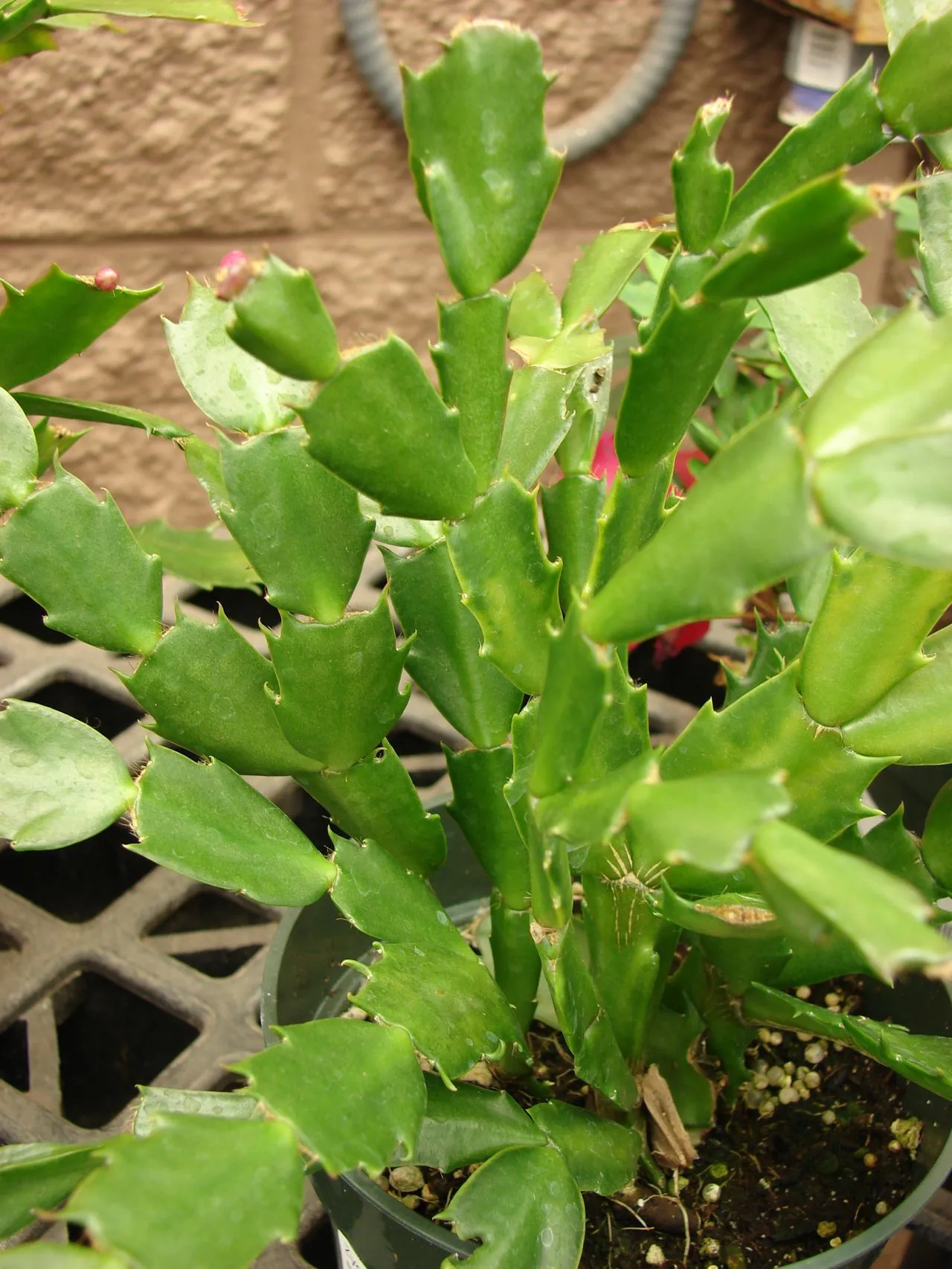
Some cactus forms show sunburn more dramatically. Flat Opuntia pads expose broad surfaces and often burn as large oval patches. Globular cacti burn on the upper shoulder or sun-facing ribs. Columnar species develop vertical bands on the side facing strongest light. Schlumbergera, Rhipsalis, and Epiphyllum are forest or forest-edge cacti; their scorch often appears as red-purple stress colour followed by beige patches on flat or thin stems. These epiphytes should receive bright filtered light or morning sun, not unfiltered midday sun. Desert cacti usually tolerate more direct sun after acclimation, but even they can scorch where tender new growth emerges from the crown.
How to identify sunburn
| Feature | Sunburn | Rot | Corking |
|---|---|---|---|
| Texture | Dry and firm at first | Soft, wet, sunken, or slimy | Dry, hard, woody |
| Location | Sun-facing side, upper ribs, exposed pads | Base, wounds, or any spreading wet patch | Older lower tissue, often even |
| Speed | Appears within hours to days after exposure change | Progresses while tissue remains wet | Develops slowly over months or years |
| Colour | Yellow, white, beige, tan | Yellow, brown, orange, black, translucent | Tan to brown |
| Smell | Neutral | Sour or foul if advanced | Neutral |
Firm dry scorch is stable damage. Softening, dark margins, oozing, or a spreading wet border means the burned tissue has become infected and must be treated as rot.
When to act immediately
Act immediately when new pale patches appear after a sun move. Move the cactus out of the harsh exposure the same day. Do not wait to see whether it adapts; dead epidermal tissue cannot be revived. Act faster if the burned area is at the crown of a solitary globular cactus, because crown damage can deform all future growth. If tissue becomes soft or black, switch to rot treatment and cut to clean tissue if needed. Wait and observe if the patch is dry, firm, and no longer expanding after 3 to 5 days. Professional help is rarely needed unless an expensive old specimen has crown damage or secondary infection.
Recovery steps
Move to bright shade, not darkness
Place the cactus in bright shade, under 40% to 60% shade cloth, or in morning sun only. Deep shade stops further burning but encourages weak new growth if maintained for months. The goal is controlled light: enough for photosynthesis, not enough to extend the injury. For windowsill burns, move the plant 30 to 60 cm back from the glass temporarily, use a sheer curtain, or shift it to an east window while it stabilises.
Keep the damaged area dry
Do not mist, wash, or apply oily treatments to burned tissue. Moisture trapped on dead epidermis encourages infection. Water the pot only when the substrate has dried appropriately for that cactus type. If the plant was recently watered and the pot is heavy, wait. If it is rooted, warm, and genuinely dry, a normal watering is acceptable, but recovery does not require flooding.
Do not cut firm scorch
Cutting a firm dry burn creates a fresh wound that may rot. Leave scars alone unless they soften or become infected. On Opuntia, a badly disfigured pad can be removed at a joint after the plant is stable, but that is cosmetic. On globular and columnar cacti, scars remain as part of the plant. New growth can eventually reduce their visual impact, especially on species that grow taller or produce offsets.
Reacclimate after stabilisation
After 2 to 3 weeks with no spreading damage, begin acclimation again if stronger light is still needed. Start with 1 to 2 hours of morning sun for several days. Increase exposure by 30 to 60 minutes every few days while watching the previously shaded side and the crown. Avoid the first heatwave of summer for acclimation. Cloudy bright days are safer than sudden clear 32°C afternoons.
Prevention
Prevent sunburn by treating every light increase as a transition. Move cacti outdoors over 10 to 14 days minimum: bright shade, then morning sun, then longer sun. Use shade cloth during heatwaves and for recently purchased plants. Avoid rotating a pot 180 degrees when one side has been shaded for months; rotate in smaller steps or wait for mild weather. Keep black plastic pots from overheating by using cachepots that do not trap water, grouping pots, or shading the container while keeping the plant bright. Match light to cactus type: desert barrels need more sun than Schlumbergera, but both need acclimation when conditions change.
See also
- Opuntia microdasys — broad pads can scorch quickly after a move outdoors.
- Astrophytum myriostigma — white-flecked forms tolerate light differently from green forms.
- Schlumbergera truncata — a forest cactus that needs filtered light rather than desert exposure.
- Cactus etiolation fix — managing indoor light transitions to prevent both stretching and scorch.
Frequently Asked Questions
Can cactus sunburn heal?
The plant can recover, but the scarred tissue itself does not become green again. New growth can be normal after light is corrected.
How do I tell sunburn from rot?
Sunburn is usually dry, firm, and on the light-facing side. Rot is soft, wet, spreading, often basal, and may smell sour.
Should I cut off sunburned cactus tissue?
Do not cut firm dry scorch. Cut only if tissue becomes soft, sunken, or infected, because unnecessary wounds create rot risk.
How long should cactus acclimation take?
Use at least 10 to 14 days when moving from indoor or shaded conditions into stronger outdoor sun. Sensitive plants may need longer.