| Question | Short Answer |
|---|---|
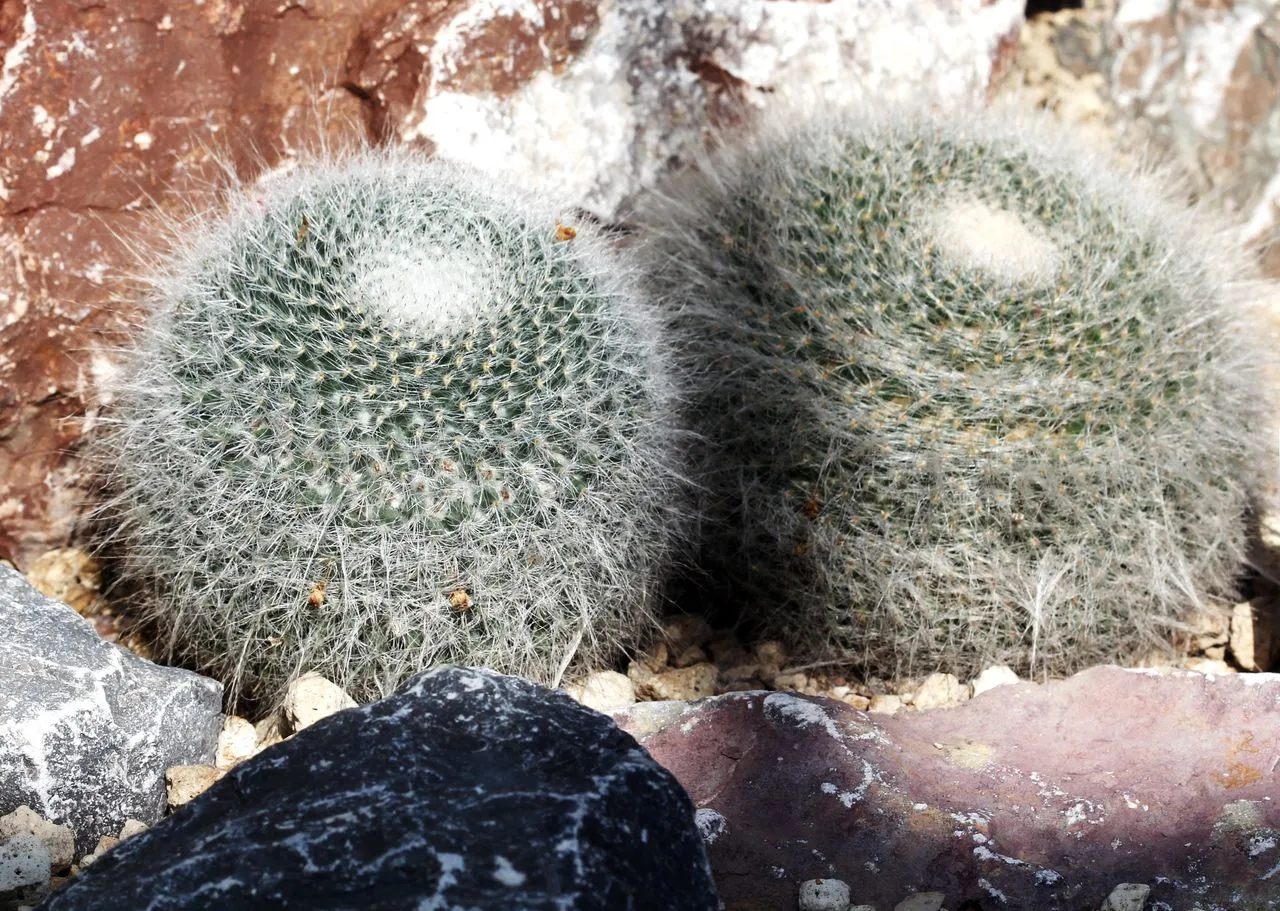
| What is Mammillaria hahniana called? | It is commonly called old lady cactus because of the white wool around the body. |
| What flowers does Mammillaria hahniana produce? | The cactus guide notes M. |
| Does Mammillaria hahniana have ribs? | No. |
| What winter care does it need? | A bright dry winter rest keeps the plant compact and reduces rot risk. |
Mammillaria hahniana Werderm. was described by the German botanist Erich Werdermann in 1929, named in honour of F. Hahn, an early collector who gathered specimens from the central Mexican plateau. The species is endemic to three states: Guanajuato, Hidalgo, and Querétaro, where it grows on limestone and basalt hillsides at roughly 1,700 to 2,300 m elevation. Two features define it at first glance: dense white wool and bristles fill every axil between the tubercles, and in late winter the plant produces a tidy ring of small pink to magenta flowers around its crown.
In habitat, M. hahniana occupies rocky scrub alongside agaves and opuntias, often wedged into crevices on south-facing slopes where drainage is nearly instantaneous and the substrate contains very little organic matter. The climate is sharply seasonal: warm wet summers from June to September, then cool dry winters with occasional overnight frosts at the upper elevations. That rhythm is worth bearing in mind when you set your watering calendar.
Part of the Complete Cactus Guide.
Identification
The stem is solitary when young, globular to shortly cylindrical, and typically reaches 8 to 15 cm in height and similar width in cultivation. Very old plants occasionally produce a few offsets at the base, but this is not the freely clustering habit of M. prolifera or M. gracilis. The form is compact and slow; a specimen 12 cm tall is likely at least 10 to 15 years old.
The most diagnostic feature sits in the axils: the spaces between each tubercle are packed with long, soft, white wool and fine bristles. This is the character that earns the plant its common name. In good light a healthy specimen looks as though it has been dusted with snow. The wool extends over the whole stem surface, partially or completely obscuring the green body underneath.
Spines arise from small areoles at each tubercle tip. Radial spines number 20 to 30 or more per areole, are fine and hair-like, and are white. Central spines number 2 to 4, are slightly stouter, and carry a brownish or reddish tip. That brownish-tipped central is a key identification character when comparing to lookalikes.
Flowers appear from January to March in the northern hemisphere, forming a ring around the crown from the axils rather than from the areole at each tubercle tip. Each flower is 12 to 15 mm across, pink to magenta, with a slightly darker midstripe on each petal. After pollination, slender red club-shaped berries develop and can persist well into summer.
Four subspecies are recognised: subsp. hahniana, subsp. bravoae, subsp. mendeliana, and subsp. woodsii. They differ mainly in central spine count and wool density. Most plants in general cultivation are subsp. hahniana or unlabelled mixed nursery stock.
Lookalikes. Mammillaria candida (the snow puff cactus) has a similar pale woolly appearance but shorter, sparser axil wool, distinctly pectinate radial spines arranged in a comb pattern, and no distinguishable stout central. M. plumosa (the feather cactus) has feathery, branched radials and lacks the long bristle wool in the axils. M. bocasana shares a similar overall silhouette but has fewer axil bristles and noticeably hooked central spines. If the central spine is hooked, it is M. bocasana; if the centrals are stiff and straight with a brown tip, it is most likely M. hahniana.
Cultivation
Light. Give M. hahniana at least 5 to 6 hours of direct sun daily through the growing season. A south-facing windowsill is usually the minimum indoors, and the plant should sit within 20 cm of the glass to compensate for the reduced intensity. In fewer than 4 hours of direct sun, the crown elongates over one or two seasons, the new tubercles space out, and the wool thins visibly. Outdoors from late spring through summer, acclimate over 10 to 14 days before exposing the plant to unfiltered midday sun; the white wool does protect the stem somewhat, but sudden full exposure after indoor growing can cause surface bleaching.
Water. In active growth from roughly March to October, water thoroughly when the top 3 to 4 cm of substrate has dried. In a 10 cm terracotta pot on a warm bright windowsill, that is often every 10 to 14 days. In a plastic pot with less airflow, the interval may stretch to 3 or 4 weeks. A wooden skewer pushed to the base of the pot is a reliable test: if it comes out with damp particles clinging to it, wait. Always water at the soil surface, not into the crown or wool from above. The wool traps moisture against the stem, and any water sitting there in cool or humid conditions can initiate basal rot within days.
From November to late February, withhold water almost entirely. A plant resting between 5 and 10°C can go 8 to 12 weeks dry without harm. If you keep it warmer under grow lights (above 15°C), a single light watering per 4 to 6 weeks is acceptable, but the substrate must dry through completely within a week.
Substrate. A mix of 65% mineral material and 35% organic matter is a good starting point. Combining 35% pumice, 15% coarse grit at 3 to 5 mm, 15% lava grit or crushed granite, and 35% loam-based compost gives the sharp drainage this species needs. Peat-heavy general potting compost is unsuitable; the fine root system sits in the mineral fraction and rots readily when the substrate stays wet for more than 7 to 10 days at a stretch.
Temperature. The species tolerates brief dips to around -4°C when the substrate is completely dry, but prolonged freezing damages the wool and causes permanent brown surface patches. A winter rest held between 5 and 10°C, dry and in reasonable light, produces the best results and helps set flower buds for late winter. Summer heat to about 35°C is well tolerated when the root zone is healthy and drainage is sharp.
Pot. Terracotta at 1 to 2 cm wider than the root ball is the standard choice. The porous wall wicks excess moisture and helps the substrate dry evenly between waterings. The root system is broad and shallow rather than a deep taproot, so avoid very deep pots; a standard pot depth (roughly equal to the diameter) suits the root profile well.
Propagation
Offset division is the most reliable route, but patience is required. M. hahniana offsets slowly compared to clustering mammillarias, and a typical specimen may produce only two or three offsets over a decade. In spring, when the plant is entering active growth, remove an offset that has reached at least 2 cm in diameter using a clean blade. Let the cut surface dry in shade for 5 to 7 days until a firm dry callus has formed, then set the offset in dry mineral substrate with the cut end just at the surface. Begin light watering 10 to 14 days after potting; roots form within 3 to 5 weeks at temperatures above 18°C. Success rates from healthy offsets in warm weather run around 85 to 90%.
Seed is the practical choice for anyone who wants more than one or two plants. Fresh seed germinates at 70 to 85% success when sown on the surface of sterile fine pumice or fine grit held at 22 to 26°C with a humidity tent or cover. Most seeds sprout within 7 to 14 days. The seedlings grow slowly: 5 to 8 years is a realistic timeline to a flowering-size plant. A 3 cm seedling at three years old is normal growth, not a sign that anything has gone wrong.
Notes
Trade confusion. M. hahniana and M. candida are sold interchangeably in many nurseries and online listings. The separator to check is the central spine: M. hahniana has 2 to 4 stiff centrals with brownish tips; M. candida has either no distinct centrals or short ones indistinguishable from its pectinate radials. A hand lens is helpful here. Mislabelled plants are common enough that it is worth checking a new purchase before assuming the label is accurate.
Wool maintenance. Over time the white wool accumulates dust, pollen, and occasionally scale eggs. Clean it with a dry soft brush, working gently from the crown outward. Do not use water or isopropyl alcohol directly on the wool; both can cause staining or trap moisture at the stem surface.
CITES status. M. hahniana is listed on CITES Appendix II, meaning international trade in wild-collected specimens requires documentation. Nursery-raised cultivated plants circulate freely and are what you will find in most reputable shops. Very large old-looking specimens offered at unusually low prices occasionally turn out to be wild-collected; asking about provenance is worth doing.
Toxicity. The species is not known to be toxic to humans or pets. The real hazard is mechanical: the fine radial spines penetrate skin easily despite their hair-like appearance, and the stiff central spines draw blood readily. Handle with thick gloves or folded newspaper rather than bare hands.
See also
- The Complete Cactus Guide, full genus primer covering anatomy, major genera, cultivation essentials, and common problems.
- A Beginner's Guide to Succulents, broader context for first-time growers.
- Opuntia microdasys, pad-forming prickly pear from the same Mexican highland zone, showing how a contrasting areole structure (glochid-heavy, no axil wool) shapes a completely different care approach.
- Echinocactus grusonii, another central Mexican highland species, but solitary, rib-structured, and far larger at maturity; useful comparison for understanding how growth form varies within Cactaceae.
Frequently Asked Questions
What is Mammillaria hahniana called?
It is commonly called old lady cactus because of the white wool around the body.
What flowers does Mammillaria hahniana produce?
The cactus guide notes M. hahniana for white wool and magenta flowers.
Does Mammillaria hahniana have ribs?
No. Mammillaria species carry tubercles arranged in spirals rather than true ribs.
What winter care does it need?
A bright dry winter rest keeps the plant compact and reduces rot risk.