| Question | Short Answer |
|---|---|
| Is powdery mildew contagious to other plants? | Yes, it spreads via airborne spores. |
| Should I use fungicide for powdery mildew? | Airflow fixes the cause. |
| What's the difference between powdery mildew and fungal leaf spot? | Powdery mildew is white flour-like dust on the surface. |
| What is the first step for powdery mildew: why succulents sometimes catch it? | Improve airflow immediately - still, humid air is the main cause. |
Powdery mildew on a succulent looks like a dusting of fine flour spread across the upper surface of a leaf, sometimes coming off when you brush it but always returning within a few days. The bottom line: it is a true fungal infection from the order Erysiphales, and on succulents the intervention that matters most is moving more air past the plant. Treating the conditions matters more than treating the fungus. Here is the rest of the picture.
Quick Answer
- Powdery mildew appears as white flour-like dust on leaf surfaces - it刷s off but returns.
- Improve airflow immediately - still, humid air is the main cause.
- Neem oil or sulfur fungicide can help, but fixing conditions is more important than spraying.
Part of the Beginner's Guide to Succulents.
What it is
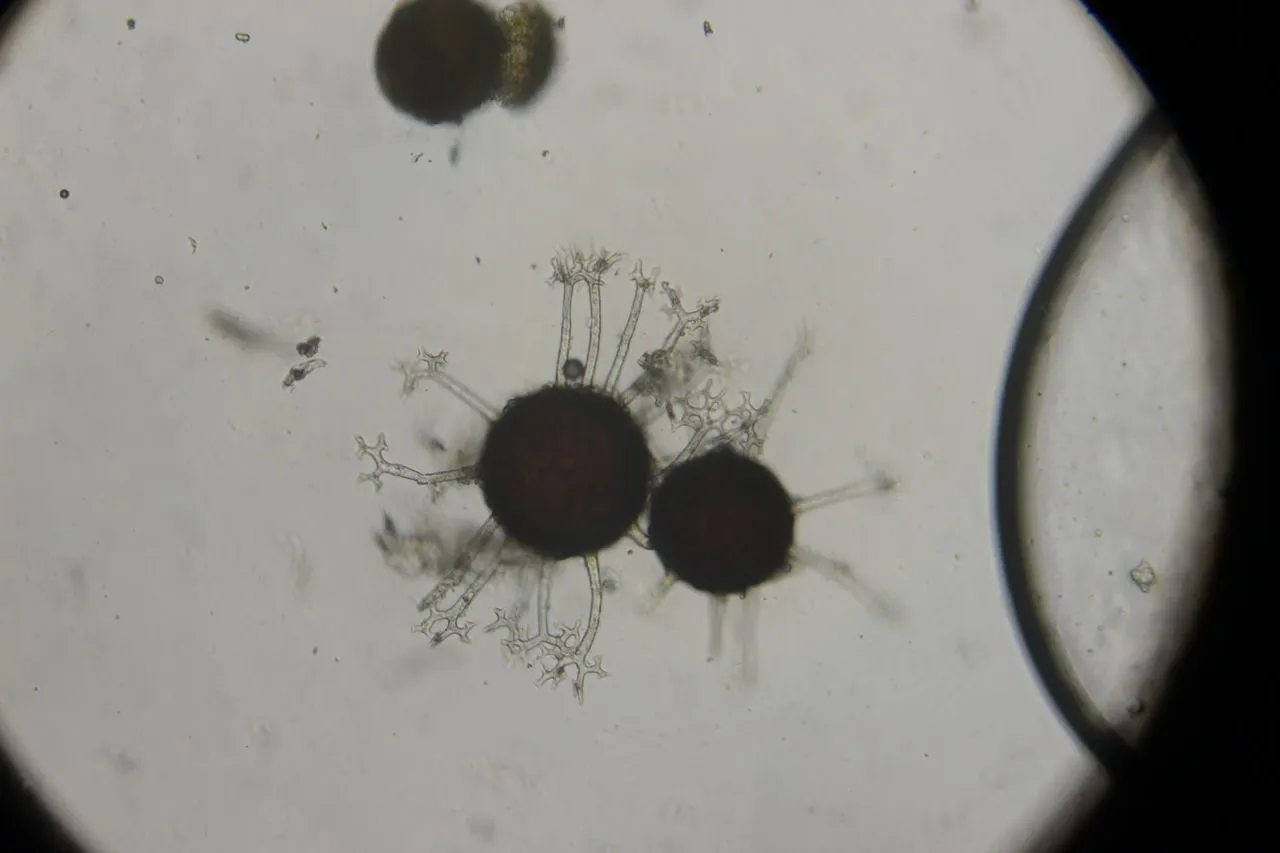
Powdery mildew is the common name for a group of obligate biotrophic fungi in the order Erysiphales. Several genera produce the same surface symptoms, and the four that account for almost every case in cultivated succulents are Erysiphe, Sphaerotheca, Podosphaera, and Oidium. The fungus does not penetrate deep into the leaf the way a leaf-spot pathogen does. Instead, it lays a fine mat of mycelium across the upper epidermis, sends short feeding pegs (haustoria) through the cuticle into individual surface cells, and uses those cells as a sugar tap for the rest of its life cycle.
The visible white-to-grey dust is sporulation. The fungus produces chains of conidia on tiny upright stalks called conidiophores, and those chains break apart with the slightest air movement, carrying inoculum to neighbouring leaves and plants. On a clean upper leaf surface a young colony shows as a small round patch of pale grey, two to five millimetres across; within a week or two it expands into a continuous powdery sheet that can cover an entire leaf.
What separates powdery mildew from almost every other foliar fungus is its preferred climate. Most leaf fungi need free water on the leaf surface to germinate. Powdery mildew germinates on dry leaves, and prolonged leaf wetness actually inhibits it. The conidia are sensitive to free water; soaking a colony for a few hours can rupture spores and slow the spread. That paradox explains why a dry-air, humidifier-free succulent shelf can still produce powdery mildew when it has never produced any other fungal disease.
How to identify it
Look at the upper leaf surface first. Powdery mildew almost always appears there, although on Crassulaceae it can spread to the underside in advanced cases. The fungus shows as a flat, dry, talcum-fine deposit. You can usually wipe a young colony off with a fingertip, and the leaf surface beneath looks slightly chlorotic but otherwise intact. Older colonies leave a pale stippled scar pattern even after the mycelium dries off.
Pattern across the plant is also telling. Powdery mildew tends to start on a single leaf or a single side, often the leaf that sits closest to a still corner of the room or pressed against a wall. Within a few days new white patches appear on adjacent leaves. By contrast, fungal leaf spot creates discrete dark lesions that stay in place rather than spreading as a film, and edema produces raised corky bumps without any white surface growth at all.
A short test will rule out most lookalikes. Wipe a small section with a damp cotton bud. Powdery mildew comes off and leaves a faintly stained leaf surface; mineral residue from hard water comes off cleanly with no stain; mealybug wax comes off as sticky white clumps rather than a dry film. If the suspected mildew patch is fuzzy and grey rather than flat and white, suspect Botrytis cinerea instead and treat it as a leaf-spot problem.
Why succulents catch it (the conditions)
Powdery mildew on a succulent is unusual enough that, when it appears, three conditions are almost certainly stacked together.
The first is intermediate humidity. Powdery mildew germinates best at 40 to 70% relative humidity. Below 40% the conidia desiccate before they can establish; above about 80% the spores absorb water and rupture. A typical centrally heated living room sits squarely in the receptive band, especially in winter when both indoor heating and a humidifier raise the air to 50 to 60% RH.
The second is still air. Conidia spread on the lightest air current, but they only germinate where the leaf surface holds a calm boundary layer of air long enough for the germ tube to find a stoma or a wax fissure. A bench in the corner of a room, a windowsill behind a curtain, or a propagation tray in a closed cabinet all create that calm pocket. Outdoor succulents in a sheltered courtyard with no breeze suffer the same problem.
The third is close plant spacing. When canopies touch, every plant cools the air around its neighbours and traps humidity in the gaps between leaves. The microclimate at leaf level can sit several percent above the room reading, and conidia produced on one plant land directly on a calm receptive surface on the next.
This is the dry-air paradox of powdery mildew. Most growers expect fungal disease to follow wet leaves and damp substrate, so the cure they imagine is to dry the plant out. Powdery mildew thrives in exactly the conditions that prevent classical leaf rots. The cure is not drier air; it is moving air. A small fan changes the calculation more than any humidity adjustment will.
Genera that get it
Powdery mildew is selective among succulents, and the affected list is short.
Crassula ovata, the jade plant, is the species I see most often with active powdery mildew, especially older specimens kept indoors over winter. The smooth glossy upper leaf surface offers exactly the texture the fungus prefers, and the dense rounded canopy of a mature jade traps still air between the leaves. Other Crassula species with similar leaf form, including Crassula arborescens, can show the same pattern, although less frequently.
Cotyledon species, including Cotyledon orbiculata and the soft-leaved Cotyledon tomentosa, occasionally develop powdery mildew indoors, particularly under the same low-airflow conditions that affect jade.
Soft-leaved Echeveria hybrids occasionally pick it up in greenhouses, especially over summer in a low-ventilation propagation house. The farinose ones, with a heavy waxy bloom, are more resistant; the smooth glossy ones are more susceptible. Severity rarely matches what jade plants endure.
The genera that almost never catch it are equally informative. Cacti, Aloe, Agave, and Haworthia are largely resistant. Their thicker cuticle, denser epicuticular wax, and lower density of receptive cells per leaf area make them poor hosts for surface fungi that need to anchor a mycelial mat. If you find a white deposit on a cactus or an agave, suspect mealybug wax, hard-water residue, or natural farina before powdery mildew.
How to fix it
Work in this order. The progression is deliberate because the most effective intervention is the one most growers reach for last.
First, increase airflow. A small clip-on or desk fan, set on the lowest speed, placed roughly 30 to 50 cm from the affected plant, running for several hours per day, is the single most effective intervention against powdery mildew on a succulent. Constant gentle air movement disrupts the calm boundary layer, dries new conidia before they can germinate, and slows colony expansion within a few days. If you do nothing else, do this.
Second, increase plant spacing. Move the affected plant out of the dense bench and into open space until the colony is gone. Allow at least one canopy diameter between adjacent succulents on a shared shelf. Crowding is the most reliable way to undo every other treatment.
Third, apply a milk spray once a week. A 1:9 dilution of cow's milk in water (10% milk by volume), sprayed lightly to wet the upper leaf surface, slows powdery mildew on a wide range of hosts. The proteins denature on the leaf and disrupt fungal mycelium, and the lactose appears to interfere with germination of fresh conidia. The mechanism is not fully classical fungicide chemistry, but the effect is consistent. Apply in the morning so the leaves dry within a few hours.
Fourth, consider potassium bicarbonate. A 0.5 to 1% solution (5 to 10 g per litre of water) sprayed to lightly wet the upper leaf raises the pH at the leaf surface above the range conidia tolerate, and inhibits germination of new spores. Apply every 7 to 10 days while symptoms persist. Use the lower concentration on tender new growth and on Crassulaceae generally; succulent leaves are more sensitive to bicarbonate burn than woody hosts are.
Fifth, sulphur fungicides at 0.05% (0.5 g per litre of wettable sulphur) applied every 10 to 14 days for three applications give reliable knockdown for stubborn colonies. Do not apply sulphur above 28 °C ambient or in direct sun; phytotoxicity rises sharply, and Crassulaceae can mark badly. Do not combine sulphur with horticultural oil within two weeks of either application.
Sixth, for collections under heavy pressure, systemic triazoles such as myclobutanil or propiconazole, applied at the label rate as foliar sprays, will clear advanced infection. Reserve these for severe cases. The earlier interventions clear most domestic infections without resort to a triazole.
A note on what not to do. Hosing the leaves with plain water, sometimes recommended online, will reduce conidial load briefly, but on a succulent it adds wet-leaf duration without addressing the airflow problem and can encourage Botrytis in the same plant. The leaf-soak trick that works for ornamentals does not transfer cleanly here.
How to prevent it
Most prevention is environmental, and most of the work is one-time.
Run a small fan over the collection during the months when powdery mildew is most likely. In Mediterranean climates that means autumn and winter, when heating raises the indoor humidity into the receptive band; in temperate indoor cultivation it usually means the entire heating season.
Hold ambient humidity below 50% RH where you can. A hygrometer placed at plant level reads more accurately than a wall thermostat. The same range that suppresses fungal leaf spot also discourages powdery mildew when paired with airflow.
Space plants so canopies do not touch. One canopy diameter of clear air around each rosette is enough to break the still microclimate that allows transfer from one plant to another.
Inspect new arrivals before adding them to a dense bench. Greenhouse stock from a nursery running 60 to 70% RH and tightly spaced benches has often acquired latent powdery mildew. Quarantine a new jade or Cotyledon for two to three weeks in your own ventilation regime. The standard intake checks from quarantine new arrivals apply here alongside the fungal-risk check.
Avoid heavy nitrogen feeding on Crassulaceae. Soft, fast-growing tissue is more susceptible to surface infection than slow, compact growth. The lean feeding regime in the Beginner's Guide to Succulents gives plants enough nutrition for steady growth without softening the cuticle.
Powdery mildew on a succulent is one of those problems where the long-term answer barely involves the fungus at all. Move air, spread the plants, watch the humidity, and the disease tends to fade on its own.
See also
- A Beginner's Guide to Succulents, for the airflow and humidity baseline that prevents most surface diseases.
- Fungal leaf spot on succulents, for distinguishing dark sunken lesions from the dry surface dust of powdery mildew.
- Edema diagnosis, for separating water-pressure scars from a true fungal film.
- IPM for succulents: incorporating powdery mildew monitoring into a broader pest and disease management routine
FAQ
Is powdery mildew contagious to other plants?Yes, it spreads via airborne spores. Isolate affected plants and improve airflow immediately.
Should I use fungicide for powdery mildew?Airflow fixes the cause. Neem oil or sulfur can help, but conditions are the real fix.
What's the difference between powdery mildew and fungal leaf spot?Powdery mildew is white flour-like dust on the surface. Fungal leaf spot appears as dark, sunken spots.
Frequently Asked Questions
Is powdery mildew contagious to other plants?
Yes, it spreads via airborne spores. Isolate affected plants and improve airflow immediately.
Should I use fungicide for powdery mildew?
Airflow fixes the cause. Neem oil or sulfur can help, but conditions are the real fix.
What's the difference between powdery mildew and fungal leaf spot?
Powdery mildew is white flour-like dust on the surface. Fungal leaf spot appears as dark, sunken spots.
What is the first step for powdery mildew: why succulents sometimes catch it?
Improve airflow immediately - still, humid air is the main cause.