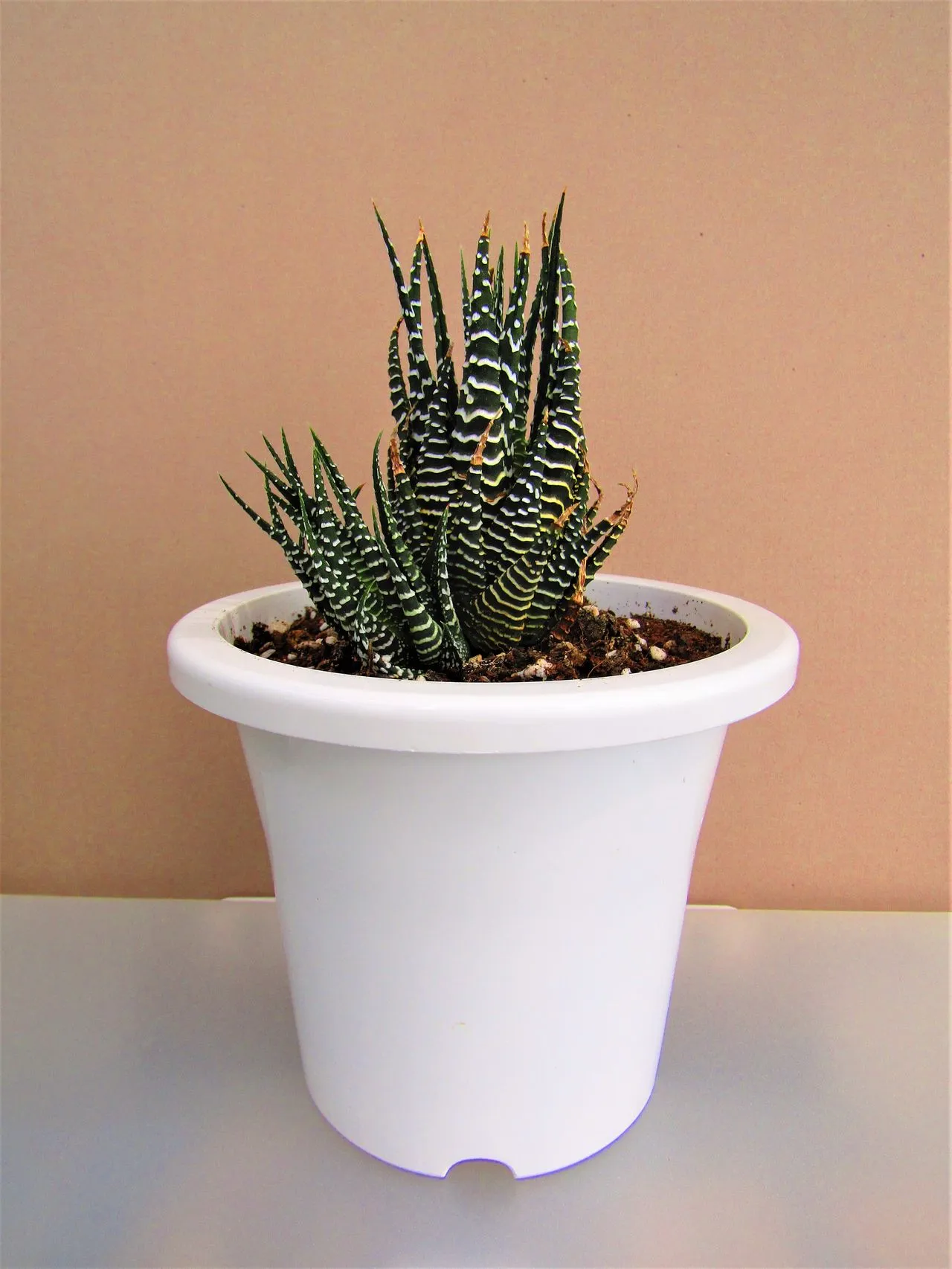
Stem cuttings are the propagation method to use when a succulent will not regenerate reliably from a single leaf. A stem segment already contains nodes, vascular tissue, stored water, and usually a living shoot tip or dormant axillary buds. Your job is not to force roots. It is to make a clean wound, let it seal, and give the cutting enough oxygen and slight moisture to root without rot. Here is the rest of the picture.
Quick Answer
- Cut stem sections with 2-3 nodes. Cut below a node for best rooting.
- Let cut end callus 5-10 days (soft stems) or 10-14 days (woody stems) before potting.
- Root in pumice or gritty mix, keep dry 1 week, then water sparingly. Roots appear in 2-4 weeks.
Part of the Beginner's Guide to Succulents.
Why Stem Cuttings Work When Leaves Don't
Leaf propagation depends on a small meristematic zone at the leaf base. If that zone is absent, damaged, or biologically inactive, the leaf may root but it cannot build a new growing point. Stem cuttings avoid that problem. A stem already has buds and a vascular cylinder.
This is why stem cuttings are the correct method for several groups that disappoint from leaves:
- Aeonium Webb & Berthel. rarely produces true plantlets from leaves, but branching species root well from 6 to 10 cm stem tips during autumn or spring growth.
- Sempervivum L. does not need leaf propagation at all. Offsets are the usual route, but a rosette with 1 to 2 cm of stolon tissue attached behaves like a small stem cutting and roots quickly in mineral grit.
- Woody Crassula L., especially Crassula ovata (Mill.) Druce, roots far more reliably from stems than from leaves. In warm summer conditions, firm 8 to 12 cm jade cuttings from actively growing shoots often approach 100% success if they are callused and kept out of wet compost.
- Succulent Senecio L. and Curio P.V.Heath species, such as string-of-pearls types, root from stem nodes. Individual pearls may shrivel, but a 7 to 12 cm strand with several nodes has multiple rooting points.
- Most Aloe L. species do not root from detached leaves. A true stem cutting is possible only in species or old plants with exposed stem tissue; most home propagation is by offsets with a stem base attached.
The same principle applies to stretched plants. An etiolated echeveria or sedum can be reset by taking the top as a cutting, and the old stem may produce side shoots below the cut.
When to Take a Cutting
Take stem cuttings during active growth, not during dormancy. A cutting without roots survives on stored water until it can rebuild a root system, so it needs enough metabolic activity to callus and initiate roots. A dormant cutting may sit unchanged for weeks, then fail.
For most indoor succulents in temperate homes, late spring through early summer is the safest window. Aim for 18 to 27 °C (64 to 81 °F), bright light, and a parent plant that has shown fresh growth in the previous month. Outdoors in Mediterranean climates, spring and early autumn are often better than midsummer heat, especially for Aeonium, which can slow down during hot dry weather.
Do not take cuttings immediately before flowering if you can avoid it. A shoot diverting stored carbohydrates into a flower stalk is a poorer candidate than a vegetative shoot. If the plant is already flowering, choose a non-flowering lateral shoot.
Never take cuttings from a cold-resting plant unless you are trying to save it from rot. For routine propagation, wait until watering has resumed and the plant has firm leaves but not waterlogged tissue.
How to Cut
Use a sterile, sharp blade. A scalpel, grafting knife, or new razor blade crushes less tissue than scissors. Wipe the blade with 70% isopropyl alcohol before the first cut and between plants.
Cut at a slight angle rather than straight across. The angle prevents a flat base from sitting flush on a damp surface later. On upright woody stems, cut 5 to 10 mm below a visible node. On rosette plants, cut below the head with enough bare stem to anchor the cutting upright after callusing.
Minimum useful lengths vary by genus because stored water and node spacing vary:
| Genus or group | Minimum cutting length | Better working length | Notes |
|---|---|---|---|
| Aeonium | 6 cm | 8 to 12 cm | Include a firm rosette and non-hollow stem. Autumn cuttings often root faster than midsummer cuttings. |
| Woody Crassula | 5 cm | 8 to 15 cm | Semi-ripe, pencil-thick jade stems root more reliably than soft green tips. |
| Tender Sedum | 4 cm | 6 to 10 cm | Remove lower leaves from the buried section; trailing stems root at nodes. |
| Senecio and Curio | 7 cm | 10 to 15 cm | A strand needs several nodes in contact with the substrate. |
| Kalanchoe Adans. | 5 cm | 8 to 12 cm | Avoid flowering tips; use vegetative side shoots. |
| Stemmed Aloe | 8 cm | 10 to 15 cm | Only applies where there is real stem tissue. Offsets are usually safer. |
| Sempervivum offsets | 1 cm stolon | 2 to 3 cm stolon | Treat the attached stolon as the rooting stem. |
Preserve the apical meristem when you want a single upright plant. The top growing point should remain intact, not gouged, snapped, or dried in direct sun. If you make several cuttings from one long stem, each middle section needs at least two nodes. Mark the top end before callusing, because an upside-down cutting wastes stored water before it fails.
Remove the lowest leaves from the portion that will sit below the substrate line. Do not bury leaves. Buried succulent leaves rot, and rot at the base is the failure that spreads fastest.
The Callus Phase
Place the cutting somewhere dry, bright, and out of direct midday sun. The cut surface must seal before it meets moisture. During callus formation, exposed parenchyma cells dry at the surface, suberin helps close the wound, and the tissue becomes less accessible to fungi and water-mould organisms.
Soft green cuttings usually need 5 to 7 days. Thicker or woody cuttings need 10 to 14 days. A 12 cm C. ovata cutting with a woody base should not be potted after two days because the outside looks dry; the deeper wound remains vulnerable longer than a sedum tip.
Do not use sealed humidity domes for succulent stem cuttings. High humidity keeps the wound surface hydrated, delays sealing, and gives Pythium, Fusarium, and bacterial soft rot a better entrance. Succulent cuttings already carry their own water supply.
The cutting may wrinkle slightly during callusing. That is not a problem. Severe collapse before potting usually means the parent material was too soft, too recently watered, or already compromised.
Substrate and Rooting
Root stem cuttings in a pure mineral substrate at first. Fine to medium pumice, perlite, or a pumice and grit blend in the 2 to 5 mm range gives the base air and enough surface moisture for root initiation. Compost-rich mixes are better after roots exist. Organic particles around an unrooted stem hold water against wounded tissue.
Set upright cuttings vertically, with only the lowest 1 to 2 cm inserted. Taller pieces can be supported with a bamboo skewer rather than buried deeper. Trailing Senecio and Curio cuttings can be laid on the surface with several nodes pinned lightly against the grit. For Sempervivum offsets, sit the rosette on the surface and tuck the stolon into a shallow groove.
Do not add rooting hormone as a routine step. Succulent stems already root readily from nodes and wound tissue when temperature, oxygen, and moisture are right. Powdered hormone can cake on a moist base and hold damp material exactly where you want air.
Water very lightly only after callusing. For the first two weeks in substrate, moisten the mineral mix around the base, then let it dry within 24 hours. A teaspoon or two around a small cutting is enough indoors. Once resistance is felt when you tug gently, roots have anchored, and watering can shift toward the normal wet-dry cycle described in the soil guide.
Water-rooting is a common myth because it looks dramatic in a glass jar. Roots produced in water are suited to constant saturation, with fewer air spaces to manage dry mineral substrate. When moved into a pot, they often desiccate or rot before the cutting has made proper soil roots. Root in mineral substrate from the start.
What You Will See by Week
Week 0: The cutting is taken, lower leaves are removed, and the base begins drying. No substrate contact yet.
Week 1: Soft-stemmed sedums and kalanchoes may have a dry, corky cut surface. Woody jade, aeonium, and aloe stems usually need more time. The cutting should remain firm, even if the lower leaves wrinkle a little.
Week 2: Most cuttings can be placed in mineral substrate. Do not expect visible roots above the surface. If the cutting rocks freely, leave it alone.
Weeks 3 to 4: Fine roots begin from nodes or the callused base. Trailing Senecio strands often root first at contact points along the stem. A gentle tug gives slight resistance. New top growth may still be absent.
Weeks 5 to 6: The cutting should begin using water again. Leaves firm after a light watering, and the growing tip may produce new leaves. Jade cuttings often root before they visibly extend.
Weeks 7 to 8: A healthy cutting is anchored and either growing or visibly plumper. At this point it can move into a normal succulent mix with 50 to 80% mineral material, depending on the genus and your climate.
Failure Modes
Soft black base: The cutting was potted too soon, watered too heavily, buried too deeply, or placed in a substrate with too much organic matter. Cut above the black tissue with a sterile blade. If the remaining piece is at least 5 cm long and firm, callus it again and restart in dry mineral grit.
Mummification: The cutting becomes papery and shrivelled before roots form. The environment was too hot, too dry, or too bright, or the cutting was too short. Move future cuttings into bright shade at 18 to 24 °C (64 to 75 °F), and use longer pieces within the genus ranges above.
No growth after 8 weeks: If the cutting is firm and anchored, wait. Some woody crassulas are slow above ground. If it is loose, wrinkled, and unchanged after 8 weeks, take a fresh cutting from healthier material. Recutting the same exhausted piece usually wastes time.
Roots but no stable top growth: The cutting may have lost its apical meristem, or a middle section may have been planted upside down. If nodes are alive, side shoots can still form, but a clean new tip cutting is faster for most home growers.
Rot after potting on: The cutting rooted, then moved into a mix that stayed wet too long. Return to a smaller pot with a mostly mineral mix and let the root ball dry completely between waterings. A newly rooted cutting does not yet drink like an established parent plant.
See also
- A Beginner's Guide to Succulents: the basic light, water, substrate, and container decisions that decide whether cuttings keep growing
- The Complete Crassula Guide: jade and other woody crassulas where stem cuttings outperform leaves
- The Complete Aloe Guide: why most aloes are propagated from offsets rather than detached leaves
- The Complete Senecio Guide: rooting strings and trailing stems by node contact
FAQ
How long does it take for stem cuttings to root?2-4 weeks for most species. Some woody Crassula can take 6-8 weeks. If the cutting stays firm, it's still working.
My cutting is shriveling - is it dead?Not necessarily - cuttings consume stored water during rooting. If it's firm at the base, it's alive. Light shriveling is normal.
Should I use rooting hormone?Not required for most succulents, but can help slow-rooting species. Optional.
Frequently Asked Questions
How long does it take for stem cuttings to root?
2-4 weeks for most species. Some woody Crassula can take 6-8 weeks. If the cutting stays firm, it's still working.
My cutting is shriveling - is it dead?
Not necessarily - cuttings consume stored water during rooting. If it's firm at the base, it's alive. Light shriveling is normal.
Should I use rooting hormone?
Not required for most succulents, but can help slow-rooting species. Optional.
What is the first step for stem cuttings: reliable propagation for soft and woody stems?
Let cut end callus 5-10 days (soft stems) or 10-14 days (woody stems) before potting.