| Symptom | Likely Cause | Risk | First Action |
|---|---|---|---|
| The winter response — what looks like damage but is not | Before diagnosing winter damage, distinguish the normal winter appearance of Sempervivum from actual damage. | Cutting back or removing brown outer leaves in winter — they provide insulation for the inner crown and the damage can be reassessed once new growth confirms what survived. | Wait until March or April before assessing winter damage. Rosettes that look dead in February often push new growth from a firm centre crown within weeks. |
| Wet-then-freeze cycles — the primary cause of real damage | The combination that damages Sempervivum is not hard cold alone, but wet conditions followed by freezing and thawing repeatedly. | Cutting back or removing brown outer leaves in winter — they provide insulation for the inner crown and the damage can be reassessed once new growth confirms what survived. | Wait until March or April before assessing winter damage. Rosettes that look dead in February often push new growth from a firm centre crown within weeks. |
| Wet-freeze root damage | Improve drainage before the following autumn. | Cutting back or removing brown outer leaves in winter — they provide insulation for the inner crown and the damage can be reassessed once new growth confirms what survived. | Wait until March or April before assessing winter damage. Rosettes that look dead in February often push new growth from a firm centre crown within weeks. |
Sempervivum is one of the hardiest genera in cultivation, with a frost tolerance that far exceeds most other succulents. The plants survive growing conditions — exposed rock faces, roof tiles, alpine scree — that would kill a year's worth of careful cultivar collection in minutes. Yet winter damage does occur, and when it does, it is almost always the result of a specific combination of conditions rather than cold alone.
Part of the Complete Sempervivum Guide.
The winter response — what looks like damage but is not
Before diagnosing winter damage, distinguish the normal winter appearance of Sempervivum from actual damage. In autumn and winter:
Rosette flattening: Cold causes cells to lose turgor as metabolic activity slows. The rosette leaves drop and press flat against the soil, giving the plant a collapsed, dead-looking appearance compared to its summer upright posture. This is not damage — it is a temperature-driven turgor response. The leaves firm up when temperatures rise above 5–8 °C.
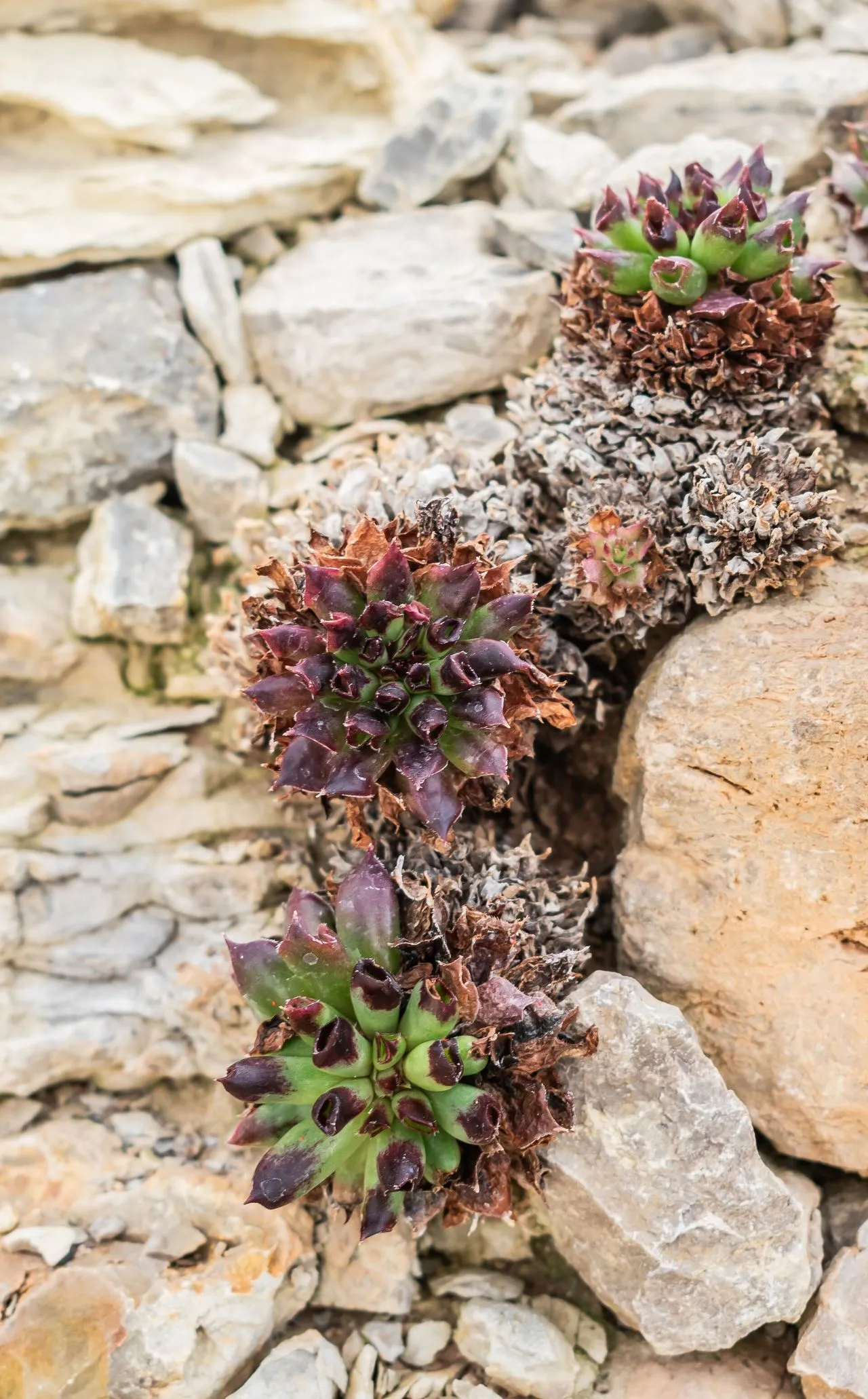
Colour change: Most rosettes shift to copper, bronze, purple, or red in cold weather through anthocyanin pigmentation. This is a photoprotective response to high light combined with cold — it is healthy and temporary, fading in spring as new growth dilutes the pigmented leaves.
Outer leaf desiccation: The outermost leaves on a mature rosette may dry and brown over winter, particularly in exposure to drying winter winds. The outer leaves form a protective papery skirt around the inner crown — they are sacrificed to protect the growing point. New leaves pushing from the centre in spring render this outer desiccation cosmetic.
None of these require intervention. Do not try to water, feed, or prune a sempervivum that simply looks flat and brown in February — it is dormant.
Wet-then-freeze cycles — the primary cause of real damage
The combination that damages Sempervivum is not hard cold alone, but wet conditions followed by freezing and thawing repeatedly. When soil or the rosette tissue is saturated — from autumn rain, snow melt, or poor drainage — and then freezes, ice crystals form in cells and disrupt membranes. The thaw releases the cellular contents; bacteria and fungi colonise the damaged tissue.
A single sharp frost on dry, dormant sempervivum causes negligible damage even at −20 °C. Repeated cycles of freezing and thawing through a wet winter — temperatures above 0 °C during the day and below at night — cause cumulative damage that an isolated freeze does not. This is why drainage is the most critical winter protection measure, and why Sempervivum thrives in naturally well-drained positions (rock gardens, walls, slopes, raised beds) that resist saturation.
In the garden, ensure the planting area drains freely. If the soil stays wet for weeks in winter, incorporate coarse grit at 30–50% volume or relocate the plants to a raised bed or container with proper drainage before the following autumn.
Container freeze-through
Container plants are at higher risk than garden-planted Sempervivum because:
- The entire root ball can freeze through the pot wall from all sides simultaneously, not just from the top.
- Small or shallow containers freeze more completely than deep ones.
- Terracotta containers crack as water in the pot wall expands on freezing.
- The root ball in a container has no surrounding soil mass to buffer temperature change.
Below approximately −10 °C for more than 24 hours, an unprotected terracotta or ceramic container can freeze the root zone completely, killing roots even when the rosette itself survives. Sempervivum roots are less frost-hardy than the rosettes.
Protection for container plants:
- Move against a south or west-facing wall — reduces wind-chill and provides radiated heat from the wall.
- Wrap the pot (not the plant) with bubble wrap, hessian, or straw — insulates the root zone from lateral freeze-through.
- Raise on pot feet — prevents the base sitting in standing frozen water.
- Move to an unheated but sheltered position (shed, unheated greenhouse, cold frame) — maintains temperatures at 0 to −5 °C rather than −15 to −20 °C, which is below the protection threshold of all but the hardiest roots.
- Do not bring into a heated house or greenhouse above 5 °C — the warm temperatures trigger unseasonal growth, break dormancy prematurely, and leave the plant vulnerable to the next cold spell.
Late frost on emerging spring growth
New growth emerging in late February or March is more cold-sensitive than the dormant winter rosette because the cells are actively dividing and have high water content. A late frost of −3 to −5 °C after growth has started can damage or kill the new centre growth while the older tissue is undamaged.
Late frost damage appears as blackening or collapsing of the very centre of the rosette — the newest, smallest leaves. It can be confused with crown rot (both produce dark tissue at the crown) but the history makes the distinction clear: a cold night following several warm days, not a period of persistent wet conditions.
Most late-frost-damaged rosettes recover: the growing point produces replacement growth from undamaged tissue within the meristem. Do not intervene until 2–3 weeks after the frost event — allow the damaged tissue to dry and assess whether new growth emerges from the centre before removing the rosette.
Cultivar hardiness variation
Not all Sempervivum species and cultivars are equally hardy. The general genus rating is high, but specifics vary:
Most hardy (to −25 °C and below): S. tectorum, S. montanum, S. arachnoideum, and most alpine-origin species.
Moderately hardy (to −15 °C): Most common nursery cultivars; reliable in UK and Northern European winters with good drainage.
Less hardy (to −5 to −10 °C): Some highly selected decorative cultivars with very large, soft leaves and unusual colours; recent hybrid cultivars from warmer nursery environments.
If a plant is described as Sempervivum but shows unusual winter sensitivity, confirm that it is not a tender Crassula, Echeveria, or decorative succulent sold in the sempervivum section of a mixed succulent display.
Assessment in spring
Do not make final decisions about winter-damaged sempervivum before late March or April. A rosette that is flat, discoloured, and apparently dead in January will often push compact new growth from its centre by early April. The rule: if the centre crown is firm (not mushy) and shows no sign of rot or decay, wait.
Examine the growing point by gently pressing the centre of the rosette. Firm and slightly resilient = alive, dormant, recovering. Soft, mushy, and smelling sour = crown rot (possibly triggered by the freeze-thaw cycle) = the rosette is lost.
For the full post-frost assessment procedure, the frost damage recovery guide covers the complete cross-genus evaluation and recovery steps.
Solutions
Outer leaf desiccation
Peel dry outer leaves in spring once new growth has confirmed the centre is viable. No further action.
Wet-freeze root damage
Improve drainage before the following autumn. Incorporate grit, create raised planting, or relocate to a better-draining position. Healthy chicks from damaged rosettes can be replanted in the improved site.
Container freeze-through
Insulate pots as described above for the following winter. Replace cracked terracotta with plastic or fibreglass containers that withstand freeze-thaw expansion better. Repot if roots have died; healthy chick rosettes can be established in fresh substrate.
Late frost crown damage
Wait 2–3 weeks and assess whether new growth emerges from the centre. If new leaves appear, the plant is recovering. If the centre remains dark and mushy, recover surviving chicks and discard the mother rosette.
Prevention
Plant in well-draining soil or raised beds. Top-dress with grit around rosette bases. Protect containers against wall and insulate pot walls in cold climates. Accept the winter appearance — flat, discoloured, dormant — as normal and resist the urge to intervene.
See also
- Frost damage recovery — the cross-genus procedure for assessing plants after freeze events and deciding what to save.
- Sempervivum rotting in summer — wet conditions cause rot in winter too; the crown-rot mechanism is the same year-round.
- Sempervivum arachnoideum — the cobweb houseleek; one of the hardiest species and a reliable benchmark for comparing winter performance.
Frequently Asked Questions
Will my Sempervivum survive winter?
Most species and cultivars are rated hardy to at least −15°C, and many to −25°C or below in dry conditions. In the ground with good drainage, winter damage is rare in most temperate climates. Container plants are more vulnerable because the root ball can freeze through the pot wall.
Why do my Sempervivum rosettes look flat and brown in winter?
Normal winter response. Cold causes the leaves to lose turgor and lie flat against the soil — the rosette 'closes down' for winter. This appearance is not damage; the leaves will firm back up as temperatures rise in spring.
Which Sempervivum are most vulnerable to winter damage?
Large-leaved, soft cultivars with high water content in their leaves are more susceptible than compact, small-leaved types. Sempervivum arachnoideum (cobweb houseleek) and similar fine-webbed compact species are generally the hardiest. Recently purchased plants in peat-based compost are more vulnerable than well-established plants in gritty soil.
How do I protect Sempervivum in containers over winter?
Move containers against a south or west wall for wind protection. Wrap pots with bubble wrap or hessian. Raise on pot feet to prevent sitting in frozen standing water. Do not bring into a heated greenhouse — they need cool dormancy, not warmth.