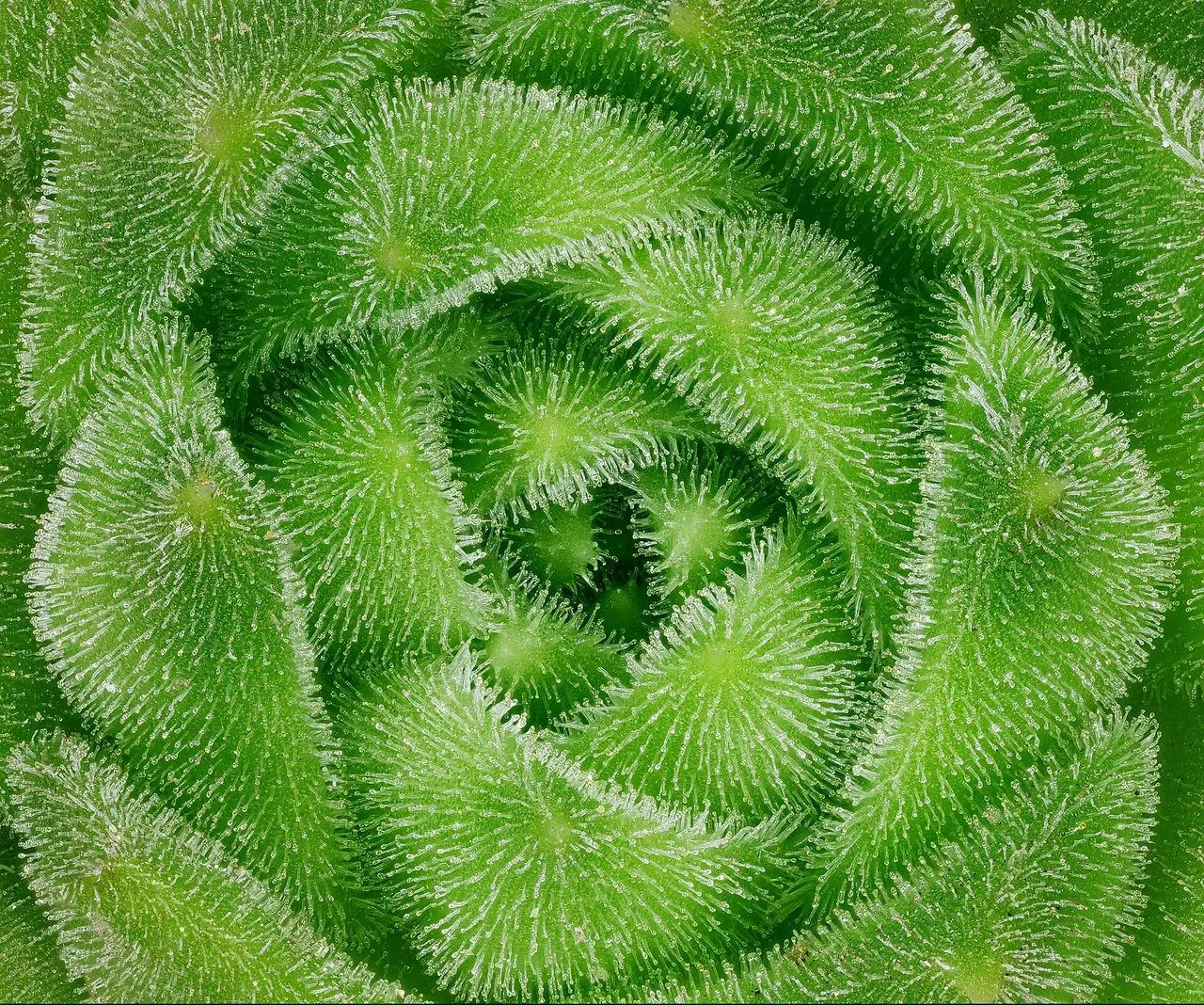
Sempervivum is sold and grown on the premise of near-indestructibility, and for most of the year that reputation is earned. But a specific set of summer conditions — warm temperatures, high humidity, and tight rosette geometry that traps water — can kill a mat of houseleeks faster than any frost. Understanding the mechanism makes the problem entirely preventable with a few simple site and cultural adjustments.
Part of the Complete Sempervivum Guide.
Crown rot from hot, humid air
The primary mechanism of summer rot in Sempervivum is crown rot, not root rot. The tight, overlapping leaf geometry of the rosette creates a microenvironment at the centre — the growing point and youngest inner leaves — that retains moisture. In cool or dry conditions, this moisture evaporates quickly. In warm, humid summer weather — particularly in humid continental or maritime climates during July and August — the moisture lingers at the crown for hours after rain or watering.
The pathogens most commonly responsible are Botrytis cinerea (grey mould) and Fusarium species. Both colonise soft plant tissue in warm, moist conditions with limited air movement. The infection progresses from the crown inward and downward through the rosette. Because the early stages are hidden within the centre of the rosette, the outer leaves look healthy until the crown is significantly compromised. By the time brown, mushy tissue is visible from the outside, the growing point is often already destroyed.
Signs of crown rot:
- Centre of the rosette, when pried open, reveals brown, mushy, or slimy tissue.
- A sour or musty smell is detectable at close range.
- Outer leaves remain green until crown collapse is advanced.
- No flower spike present (distinguishes from monocarpic death).
- Nearby chicks may look normal or may begin to show the same symptoms if the pathogen has spread along stolons.
Conditions that favour summer crown rot
High humidity combined with warm temperatures: The fungal pathogens responsible for crown rot thrive when the relative humidity around the rosette stays above 70% for extended periods at temperatures of 18–30 °C. This combination occurs naturally in humid summers, particularly after warm rain in still-air conditions.
Poor airflow: A sempervivum planted in a sheltered corner, against a wall, in an enclosed cold frame, or in a crowded container where rosettes overlap has dramatically higher crown rot risk than one in an open, breezy position. Airflow is the most important preventive factor.
Heavy rain followed by warm, still days: A Mediterranean or UK-climate summer with alternating heavy rain and warm still days is particularly dangerous. The rain fills the rosette; the still warmth prevents rapid drying; pathogens germinate and establish within 24–48 hours.
Dense mat planting: Mature mats where rosettes press against each other reduce airflow between individual crowns and can transfer infection by physical contact between leaves.
Root rot from waterlogged summer soil
Distinct from crown rot, root rot in summer sempervivum is caused by the same mechanism as in other genera: saturated soil depriving roots of oxygen, enabling anaerobic pathogens. In a garden with heavy clay soil or a compacted growing surface, summer thunderstorms or prolonged rain can waterlog the root zone of even well-positioned sempervivum.
The symptoms differ from crown rot: the rosette yellows from the outside inward, the leaves lose turgor (becoming soft or wrinkling), and the base of the rosette — at the soil line — is the first point where dark, wet, mushy tissue appears. The inner crown may be undamaged initially. A sour smell comes from the root zone and the base of the stem rather than the crown.
Dig and inspect. Remove affected plants from the wet area. Allow healthy offsets to dry. Improve soil drainage before replanting: incorporate coarse grit at a ratio of 30–50% by volume into the planting area, or create raised planting mounds of 5–10 cm above the surrounding grade.
Identifying which type of rot is present
| Feature | Crown rot | Root rot |
|---|---|---|
| First affected tissue | Rosette centre (crown) | Base of stem at soil line |
| Smell location | Crown | Root zone, stem base |
| Outer leaves initially | Normal | Yellow, soft, losing turgor |
| Season trigger | Hot humid air, poor airflow | Waterlogged soil |
| Soil condition at time of onset | Normal or dry | Wet or compacted |
Risk and severity
Crown rot progresses fast in summer warmth — a rosette that smells slightly sour in the morning can be fully liquefied by the following day. The window for intervention is narrow. Act immediately. Root rot in summer is slightly slower-moving than in cold winter conditions, but still damages progressively without intervention.
A mat of established sempervivum that loses one or two rosettes to crown rot each summer is not in crisis — the mat continues growing around the gaps. A mat losing 20–30% of rosettes to rot in a single season indicates a site or cultural problem that needs correction.
Solutions
Crown rot — early stage
Remove affected central leaves with sterile tweezers. Dry the rosette in bright shade with maximum airflow for 3–5 days. Do not water into the crown. Apply a copper-based fungicide drench at the rosette base if adjacent rosettes also show early signs. The rosette may recover if the growing point was not fully destroyed.
Crown rot — advanced stage
The rosette is lost. Remove it cleanly with a sterile blade at the stolon connection. Bag the affected material and dispose of it — do not compost. Separate healthy offsets and allow attachment points to dry for 2–3 days. Replant chicks in fresh substrate in a position with better airflow.
Root rot
Remove affected plants. Improve drainage by incorporating coarse grit into the planting area. Replant in raised mounds or add drainage channels from planting pockets. Healthy offsets with undamaged roots can be replanted immediately.
Prevention
Site selection: Plant sempervivum in the most open, well-ventilated position available. South- or west-facing raised beds, rock garden positions, wall tops, and containers elevated on pot feet all have better natural airflow than enclosed corners.
Grit top-dressing: A 2–3 cm layer of sharp horticultural grit around every rosette base is the single most effective prevention measure for crown rot. It keeps the lowest leaves dry after rain, prevents soil splash, and improves airflow at crown level. Apply grit when planting and refresh annually.
Avoid overhead irrigation: In summer, if supplemental irrigation is needed, water at the base of the plant only, not from above. Natural rain cannot be controlled, but irrigation can.
Plant spacing: Leave 5–10 cm between rosettes to allow airflow between crowns in a mat. This reduces the humidity microenvironment that crown rot requires.
Copper preventive application: A dilute copper-based fungicide drench applied to the soil and rosette bases once in early summer provides preventive protection in areas with a history of summer rot. Do not spray directly into open rosette centres.
See also
- Root rot diagnosis — the full procedure for identifying and recovering from root rot when the problem is soil saturation rather than crown humidity.
- Sempervivum turning brown — distinguishing rot from the several other causes of browning in Sempervivum.
- Sempervivum tectorum — the common houseleek; the most widely planted species and a good benchmark for rot-resistance in typical temperate conditions.
- Sempervivum arachnoideum — the cobweb houseleek; its dense web of fine hairs traps more moisture than smooth-leaved types and may be higher risk in humid conditions.
Frequently Asked Questions
Why is my hardy Sempervivum rotting in summer?
Summer rot in Sempervivum is almost always crown rot from Botrytis or other fungi, encouraged by warm humid conditions and poor airflow — not from cold or overwatering alone. The tight rosette cup collects water that does not evaporate quickly in humid weather, creating ideal conditions for fungal growth at the crown.
Can a Sempervivum survive crown rot?
The individual rosette rarely survives advanced crown rot. However, the offsets on the stolons usually survive. Separate healthy chicks, allow their attachment points to dry for 2–3 days, and replant in a better-draining, better-ventilated position.
How do I tell crown rot from normal monocarpic death?
Crown rot: centre is mushy, wet, and smells sour; may occur without a flower spike; surrounding chicks may also be affected. Monocarpic death: dry and papery from the centre outward; a flower spike is present or was recently removed; chicks are healthy.
Does grit top-dressing prevent summer rot in Sempervivum?
Yes, significantly. A top-dressing of sharp horticultural grit around the rosette base keeps the lower leaf zone dry even after heavy rain, prevents soil splash onto the rosette, and improves airflow at crown level — all of which reduce the humidity that encourages crown rot.