| Question | Short Answer |
|---|---|
| How cold-hardy is Sempervivum montanum? | It is reliable in USDA zone 3, below −35 °C when dry. |
| Does Sempervivum montanum need acidic soil? | Yes. |
| How large does Sempervivum montanum get? | Mature rosettes are compact at 2–5 cm across, with short stolons that keep the colony tight. |
| Why does Sempervivum montanum stop growing in summer? | Hot continental summers can trigger a pause. |
Sempervivum montanum L. (mountain houseleek) is one of the smaller and most alpine of the European Sempervivum species. Linnaeus described it in 1753. It is native to the higher Alps, Pyrenees, Apennines, and Carpathians, typically growing between 1,800 m and 3,400 m on acidic rock, and is among the hardiest species in the genus.
Part of the Complete Sempervivum Guide.
Its strong preference for siliceous (granitic, schistic) substrate distinguishes it from S. tectorum and S. calcareum, which tolerate limestone. In the wild it rarely grows below the tree line and is a good indicator species for historically glaciated acidic ridges.
Identification
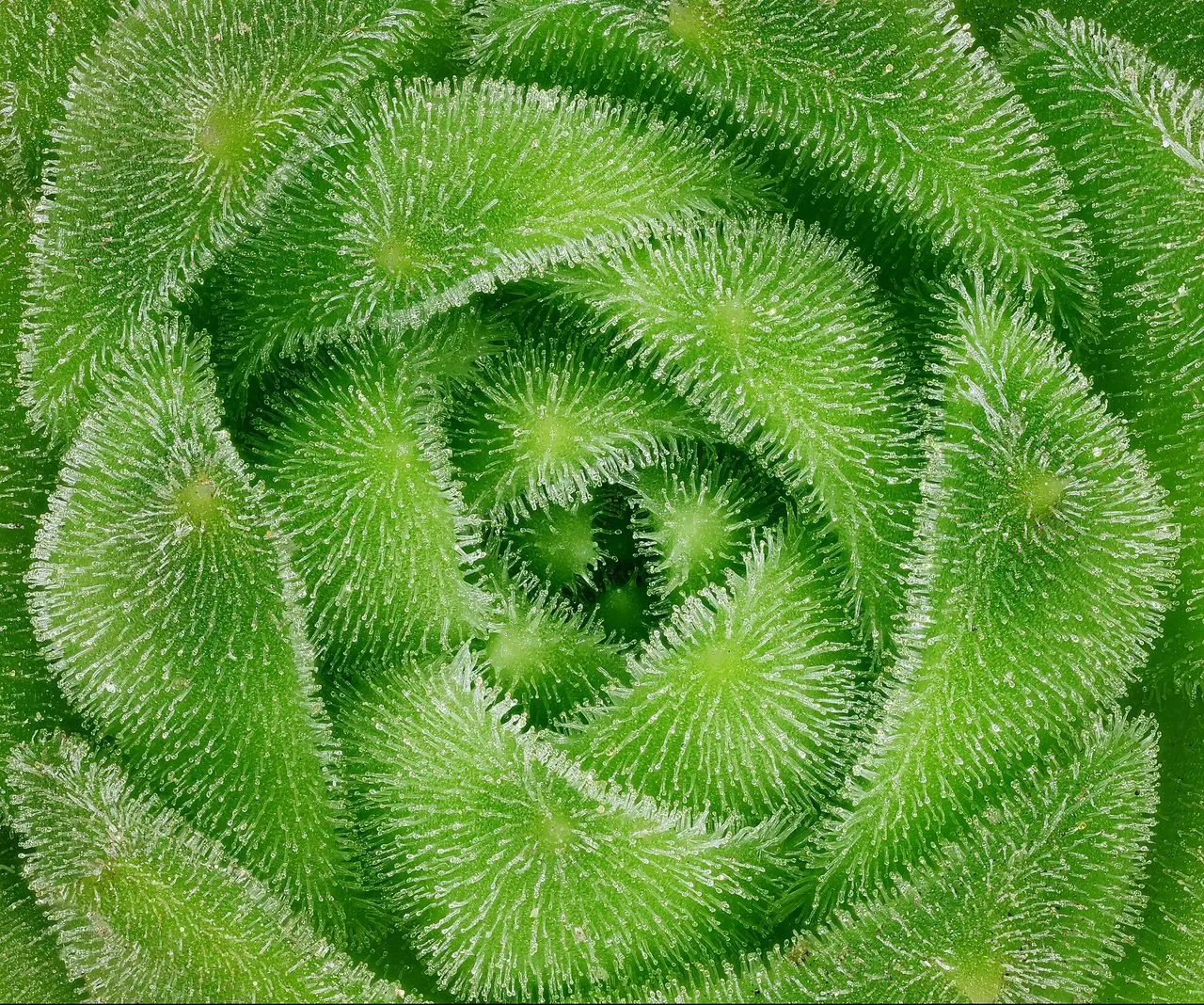
- Rosettes. Compact, 2–5 cm across at maturity, flattened-globose; one of the smaller wild species.
- Leaves. Oblanceolate, 1–2.5 cm long, densely covered in short glandular hairs. The pubescence gives a matte, slightly sticky feel that is characteristic. The leaf is coloured dull green with a faint brownish-red flush at the tip.
- Inflorescence. A short scape 5–15 cm tall, shorter than most sempervivums, bearing 3–10 dull purple-red flowers with narrow, acute petals (typically 12). Flowering is in July–August in its native range, so somewhat later than the lowland species.
- Offsets. Produced on short stolons 1–2 cm long; the colony stays tight.
A small densely pubescent rosette on acidic rock at high altitude is almost certainly S. montanum. The species hybridises readily with S. arachnoideum and with S. tectorum where ranges overlap, producing a spread of intermediate forms.
Cultivation
Where this species diverges from the pillar defaults: it is slightly more sensitive to summer heat than the lowland species. In hot continental summers it will shut down and refuse to grow, then resume in autumn. In Mediterranean or hot dry continental gardens, position it with some afternoon shade from surrounding stones, while keeping the full morning sun.
In everything else it is generic but at the extreme end. Cold hardiness is exceptional — reliable in USDA zone 3, meaning below −35 °C when dry. If you are trying to grow sempervivums somewhere genuinely cold (interior Canada, Scandinavia, the higher Alps), this is the species to start with.
It demands acidic substrate. Use the standard gritty alpine mix but with ericaceous compost or peat-alternative (composted pine bark) as the organic fraction, not loam. pH 5.5 to 6.5. Alkaline substrate produces yellow chlorotic leaves within one growing season.
Propagation
Offset division. The chicks are small and tight to the mother; use fine scissors. Repot or replant in acidic gritty substrate. Establishment is slower than in lowland species — expect 4–6 weeks to visible new growth.
Notes and Quirks
S. montanum has three recognised subspecies in modern treatments: subsp. montanum (widespread), subsp. stiriacum (eastern Alps, larger rosettes), and subsp. burnatii (western Alps and Pyrenees, longer leaves). The differences are subtle and matter mainly to botanical collectors; for garden purposes the species behaves as one plant.
The species is a parent of many hybrids in the Czech and Swiss breeding programmes of the mid-20th century, which crossed montanum's cold hardiness into the larger flatter rosettes of the tectorum group. If you see a small very hardy sempervivum cultivar of European origin, there is a good chance S. montanum is in its background.
See also
- Sempervivum arachnoideum — the other high-altitude alpine species.
- Sempervivum tectorum — the lowland sibling.
- Cobweb Sempervivum — related hybrids.
- Sempervivum 'Pilatus' — a compact cultivar likely derived from montanum parentage.
Frequently Asked Questions
How cold-hardy is Sempervivum montanum?
It is reliable in USDA zone 3, below −35 °C when dry. It is one of the best houseleeks for severe continental winters.
Does Sempervivum montanum need acidic soil?
Yes. Use an acidic gritty mix with ericaceous or pine-bark organic fraction, not limestone or alkaline loam.
How large does Sempervivum montanum get?
Mature rosettes are compact at 2–5 cm across, with short stolons that keep the colony tight.
Why does Sempervivum montanum stop growing in summer?
Hot continental summers can trigger a pause. Growth resumes in autumn when temperatures fall.