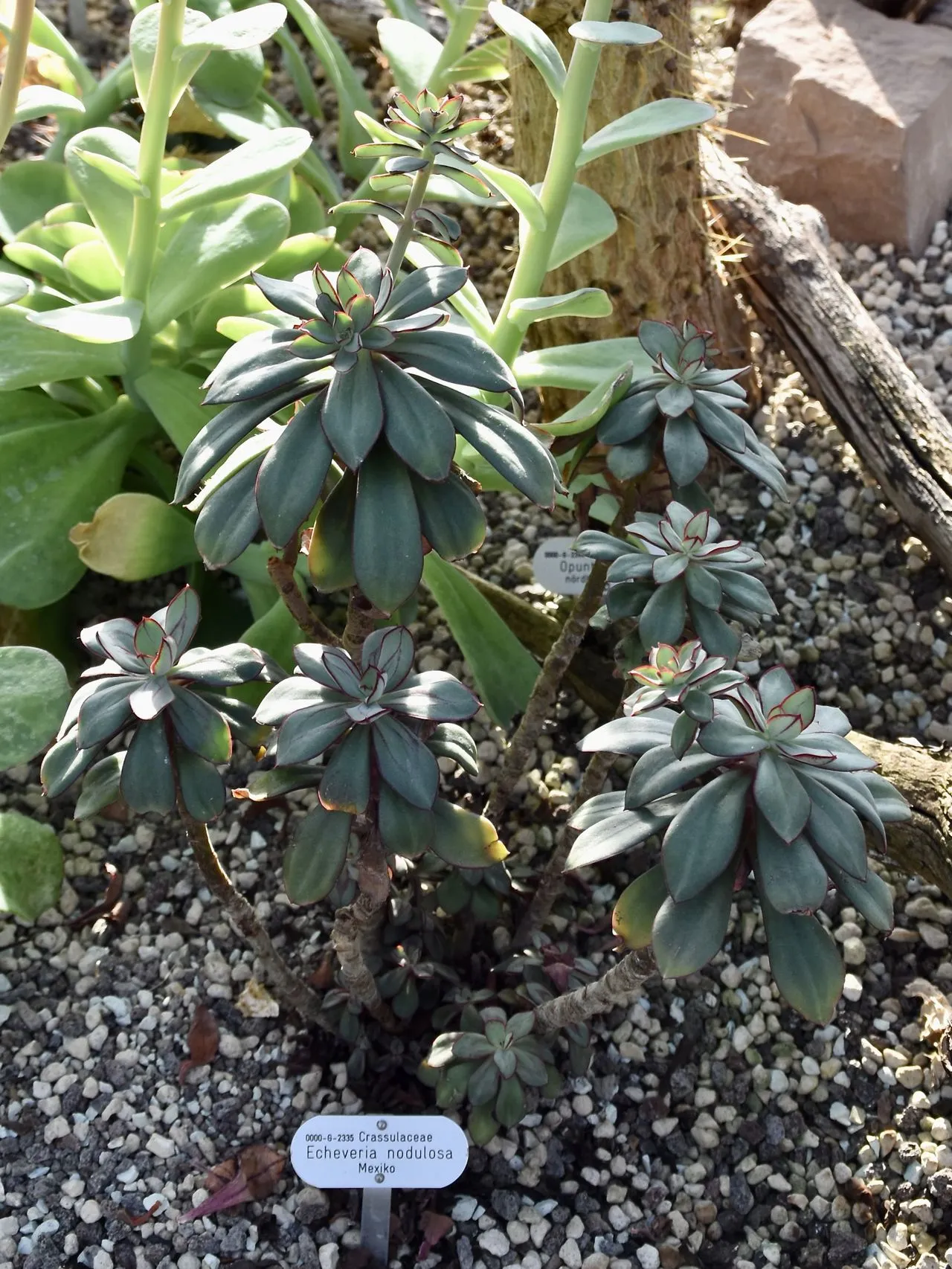
An Echeveria that has just finished blooming does not need saving — it needs a prompt scape cut and a return to normal care. This is one of the most misread moments in Echeveria cultivation. Collectors who have previously kept Sempervivum expect a rosette decline after flowering; first-time growers who notice the plant looking slightly open or paler after bloom assume something is wrong. Neither response is appropriate. The plant has completed an energetically demanding process and is in a brief recovery phase. The rosette will firm up, resume compact new growth, and given adequate light, produce a scape again the following year.
The practical tasks are three: remove the spent scape promptly, understand which post-bloom changes are normal versus diagnostic, and maintain the conditions that support annual re-blooming.
Part of the Complete Echeveria Guide.
Echeveria are polycarpic
The single most important fact to establish: Echeveria are polycarpic. The monocarpic pattern — in which a rosette flowers once and then dies — is characteristic of Sempervivum, several Aeonium species, and monocot relatives such as Agave. In Echeveria, the flower scape is a lateral structure that arises from the side of the rosette, not from the growing point at the centre. The meristematic tissue from which all new leaves develop is not consumed by the flowering process. The scape dies back; the rosette continues indefinitely.
The full comparison of monocarpic and polycarpic rosette genera is covered in the monocarpic vs polycarpic guide. It is worth reading if the collection includes multiple genera, since confusion between Echeveria, Sempervivum, and monocarpic Aeonium cultivars causes unnecessary intervention and lost plants every season.
Removing the spent scape
Cut the scape at the base — as close to the stem as possible without cutting into stem tissue — using a sterile blade or secateurs. Do this as soon as the last flower on the scape has closed and begun to dry, which typically occurs one to four weeks after the first flower opened. Do not wait for the entire scape to turn brown before cutting; the earlier it is removed, the sooner the vascular resources being redirected to the dying stalk return to the rosette.
Before discarding the scape, inspect it with a hand loupe. Aphids, scale insects, and mealybugs all colonise flower stalks during and after bloom. A scape that looks clean at a glance may carry insects under bracts or in spent flower sockets. Dispose of the scape away from the plant collection entirely — off the bench and out of the growing space — rather than leaving it in a pot tray where insects can re-colonise.
Normal post-bloom rosette changes
Three changes are common and expected in the four to six weeks after flowering:
Slightly open rosette form. The plant invested carbohydrates and structural resources in the scape rather than maintaining tight leaf packing. The rosette may show a small opening — the outer leaves spreading marginally, or the inner whorl less tightly cupped than before. This resolves under strong light as the next generation of leaves emerges at normal compact spacing. If the opening is dramatic, with visible stem between leaf nodes or noticeably smaller and spaced-out new leaves, the cause is etiolation from insufficient light rather than post-bloom relaxation. The Echeveria stretched and leggy guide covers that diagnostic.
Slightly paler leaf colour. Echeveria colour is driven by stress pigments — anthocyanins and carotenoids — that accumulate in response to high light intensity, UV exposure, and moderate physiological stress. Flowering consumes chlorophyll precursors and trace nutrients. A plant that was intensely coloured before bloom may appear greener for three to five weeks afterward. Once vigorous new leaf production resumes under full light, the pigment recovers. The full explanation of how light, temperature, and stress interact with Echeveria colouration is in the stress coloring guide.
Offset production. Some species produce basal offsets more vigorously in the season following flowering than at other times. This appears to relate to the hormonal and resource shifts of the reproductive cycle: having invested in a scape, the plant also increases clonal spread. Do not separate offsets until they are at least one-third the diameter of the parent rosette and show visible root initiation at the base. Premature separation of small offsets before they have established their own root systems increases transplant stress without benefit.
Propagating from the spent scape
Before composting the cut scape, evaluate it for propagation potential. In Echeveria elegans, E. secunda, E. derenbergii, and closely related compact species, scape sections laid horizontally on barely moist substrate regularly produce small plantlets from axillary buds along the stalk.
The technique: cut the scape into sections 4 to 6 cm long, each containing at least one node or bract scar. Allow the cut ends to callus for 24 hours in dry shade. Lay sections flat on the substrate surface — do not bury them. Keep in bright indirect light at 18 to 24 °C. Plantlets emerge from the buds within three to six weeks. The parent scape section dries progressively as it supports the young rosettes, in the same pattern as the parent leaf in leaf propagation.
This technique is unreliable on large-scape hybrids derived from E. gibbiflora and most large-leaved cultivars. If no plantlets emerge within eight weeks, compost the material. For the full propagation framework including offset separation and stem cutting, see Echeveria agavoides propagation.
Encouraging annual re-bloom
Echeveria initiate flower buds in response to the transition from short, cool winter conditions to longer, brighter spring days. The two variables that matter most are accumulated light through the growing season and a winter temperature differential.
Light. A plant that received fewer than 5 to 6 hours of direct bright light per day through the growing season will often fail to produce a scape the following year. The photosynthate reserves required for scape production, bud development, and flower formation are built through sustained high-intensity photosynthesis in the months before bloom initiation. Moving plants outdoors for summer, or supplementing with a strong full-spectrum grow light running 12 to 14 hours daily, is the most reliable way to build those reserves.
Winter cool rest. Most Echeveria species benefit from a cool, dry rest period of 7 to 12 °C with reduced watering through autumn and winter. The temperature drop provides the environmental cue that precedes flower bud initiation in the growing conditions these plants evolved for. Plants kept at uniform indoor warmth of 18–22 °C year-round often fail to bloom consistently. A bright, cool windowsill or unheated glasshouse through November to February delivers the right dormancy signal without the frost-damage risk that temperatures below 3 °C would bring.
Post-bloom watering. Resume the normal wet-dry watering cycle after scape removal. Do not increase watering frequency in an attempt to accelerate recovery. The rosette needs a standard dry-down cycle, not supplemental moisture. The single most common post-bloom error is overwatering a plant that looks slightly loose and pale — this pushes it toward the root problems described in the root rot diagnosis guide at a time when its reserves are already depleted from flowering. For a full account of why a plant may fail to produce a scape at all — including light, maturity, and seasonal cue requirements — see Echeveria not flowering.
Identifying post-bloom normal versus pathological
| Observation | Post-bloom normal | Needs investigation |
|---|---|---|
| Rosette slightly open | Firm tissue, resolves in 4–6 weeks under strong light | Visible stem between nodes, small new leaves: etiolation |
| Leaf colour slightly paler | Normal, recovers with resumed light and growth | Yellowing plus mushy tissue: over-watering |
| Slower new growth | Normal post-bloom rest phase | No growth at all for 8 or more weeks in the growing season |
| Lower leaf shed | Normal senescence, leaves dry papery | Mushy lower leaves: root stress |
| Offset appearance | Normal; wait before separating | Offset is soft or discoloured: inspect parent roots |
| Dry stub at scape base | Normal; calluses within 24–48 hours in good airflow | Soft, sour-smelling stub: treat as potential crown entry point |
A soft or sour-smelling stub at the scape base after cutting is a low-probability but real risk point for crown infection. This is rare when the scape was cut promptly and the plant is in a well-ventilated position, but it can occur if a long stub was left in warm, moist conditions for several days. If softness is detected at the stub, cut back to firm dry tissue with a sterile blade and dust with powdered sulphur.
Risk and severity
The post-bloom period is low-risk for a well-grown plant. The scape cut heals within 24 to 48 hours in normal airflow. Elevated risk applies to plants that were already stressed before or during flowering — over-watered, under-lit, or recently repotted — because they enter recovery with depleted reserves. The combination of recent bloom, chronic low light, and overwet substrate is the most common compound cause of a post-bloom decline that looks like the plant is dying from flowering but is actually two or three simultaneous problems.
A plant that was compact, firm, and strongly coloured before the scape appeared, grown in correct conditions throughout, needs only the scape removed. Everything else is normal rosette growth.
See also
- Echeveria not flowering — why a plant fails to produce a scape, and how to build the conditions for annual bloom.
- Echeveria stress coloring — how light, temperature, and the post-bloom recovery period interact with leaf pigment.
- Echeveria agavoides propagation — offset separation and cutting technique applicable in the post-bloom period when new offsets appear.
Frequently Asked Questions
Does Echeveria die after flowering?
No. Echeveria are polycarpic and produce flowers repeatedly across their lifespan. Only the flower stalk dies after each bloom cycle. This distinguishes them from Sempervivum, where the individual mother rosette dies after its single flowering event.
Should I cut the Echeveria flower stalk off?
Yes, once all flowers have closed and dried. Cut the scape at the base with sterile secateurs. Leaving a dead scape attached draws resources from the rosette and provides an entry point for aphids and scale insects as the tissue softens.
Can I propagate Echeveria from the flower stalk?
In several species, yes. Scape sections 4 to 6 cm long, laid horizontally on lightly moist mineral substrate, can produce small plantlets from axillary buds. Echeveria elegans, E. secunda, and related compact species are most reliable. Allow cut ends to callus for 24 hours first.
Why does my Echeveria look tired or pale after flowering?
Flowering is energetically expensive. A plant that bloomed heavily may show slightly paler leaves, a marginally looser rosette, or slower new growth in the weeks following scape removal. Ensure strong light, resume the normal wet-dry watering cycle, and avoid fertilising until firm compact new growth appears.