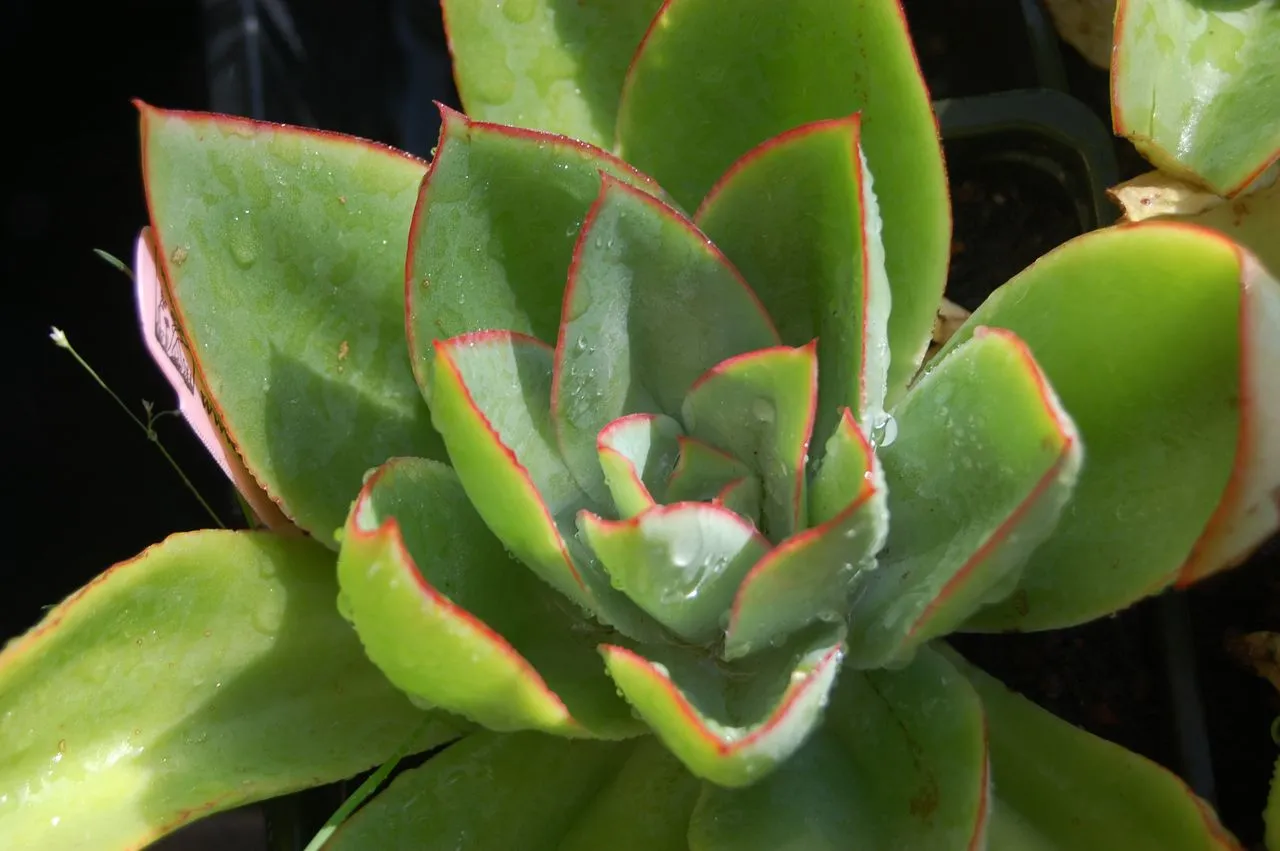
A stretched Echeveria is not reaching for water or asking for fertiliser. It is responding to inadequate light. The compact rosette form depends on short internodes, broad leaves, and high light intensity. When light falls below what the plant needs, the stem elongates, leaves space out, and the plant directs growth toward the brightest available source. That process is etiolation.
The hard part is accepting that the old stretch is permanent. Better light will improve future growth, but it will not compress the existing stem. The practical decision is whether the plant is mildly open and worth growing out, or severely leggy and better restored by beheading. Part of the Complete Echeveria Guide.
Insufficient light
Low light is the primary cause of a leggy Echeveria. In strong light, the plant keeps leaves close together, maintains a flat to cupped rosette, and colours according to the cultivar. In weak light, photosynthesis cannot support normal compact growth. The plant elongates the stem to search for more light, producing visible gaps between leaves and a smaller, looser crown.
Indoor conditions create this problem quickly. A bright-looking room can still deliver less than 10% of outdoor light. East or west windows may work for tolerant species, but a north window rarely does. Winter makes the gap worse because day length shortens and the sun angle drops. If the rosette is leaning toward glass, producing smaller centre leaves, and losing symmetry, light is already below the maintenance threshold.
Sudden seasonal light reduction
Etiolation often appears after a plant that grew compact outdoors is brought inside for winter. The plant was calibrated to full sun or bright patio light, then suddenly receives filtered indoor light through glass. Growth continues for a few weeks using stored energy, but the new leaves form under the lower light environment and emerge longer, thinner, and paler.
This seasonal version is common in climates where Echeveria must be protected below 5 °C. The answer is not to keep the plant warm and wet indoors. Warmth encourages growth while light is weakest. If no grow light is available, keep the plant cooler, around 8 to 12 °C, and water sparingly so growth slows until outdoor light returns.
Excess nitrogen under weak light
Fertiliser does not cause etiolation alone, but it makes low-light stretching worse. Nitrogen pushes cell expansion and chlorophyll production. Under adequate light that can support healthy growth; under weak light it produces soft, open tissue faster than the plant can harden it. A recently fertilised plant on a dim shelf can stretch in two to four weeks.
The diagnostic sign is vigorous but weak growth: the crown is pale green, leaves are thin, and the stem extends rapidly. Stop feeding immediately. Succulents do not need regular high-nitrogen fertiliser. For Echeveria, quarter-strength feeding during active high-light growth is enough, and none is needed during dim winter storage.
Crowding and one-sided exposure
Plants crowded on a shelf can etiolate even when the shelf itself is bright. Rosettes shade each other, lower leaves lose light, and the growing point leans into the gap. A plant pushed against a window may also grow asymmetrically because only one side receives direct light. The result is a curved stem, flattened leaves on the light side, and a crown that no longer sits directly above the root ball.
This is partly a placement problem. Echeveria need enough horizontal space for the full rosette diameter plus air movement around the leaf axils. Rotate indoor plants a quarter turn every week only after the light level is adequate; rotation cannot compensate for a fundamentally dim position.
How to identify etiolation
| Feature | Healthy compact growth | Etiolated growth |
|---|---|---|
| Stem | Hidden by overlapping leaves | Visible between leaves |
| New leaves | Broad, firm, close together | Smaller, thinner, spaced out |
| Rosette shape | Symmetric and low | Tall, open, leaning |
| Colour | Cultivar-typical, often flushed | Greener or pale yellow-green |
| Lower leaves | Normal slow senescence | Shaded leaves drop faster |
Do not confuse etiolation with a naturally taller species. Echeveria gibbiflora types can form larger elevated rosettes with age, but the leaves remain broad, the growth is firm, and the crown does not show weak spacing. Etiolation is a change in growth quality, not simply height.
When to act immediately
Act promptly when new centre growth is already smaller and spaced out. Every week under weak light adds more stem that cannot be reversed. Move the plant before watering or feeding. If the plant is also yellowing or mushy, inspect roots first; low light and over-watering commonly occur together because dim plants use water slowly.
Wait to cut if the plant is currently dormant, freshly watered, or soft from stress. Beheading works best on firm, actively growing tissue. Professional help is not required, but collections under artificial lights benefit from a light meter or PPFD estimate. Guessing by human brightness perception is unreliable.
Solutions
Mild stretching
If only the newest leaves are slightly open, improve light and let the plant grow through it. Move it to a south-facing window, an outdoor bright-shade position, or a grow light running 12 to 14 hours per day. Acclimate over 7 to 14 days if the plant has been shaded. New leaves should become shorter and closer together within the next growth cycle.
Do not remove healthy leaves to make the stem look shorter. Each leaf stores water and photosynthate. Removing them weakens the plant and exposes leaf scars that can rot if buried or watered from above.
Severe stretching
If the rosette sits on a long bare stem, beheading is the clean restoration. Use a sterile blade to cut the top rosette with 2 to 3 cm of firm stem attached. Remove the lowest leaves from that short stem section, leaving a clean handle. Let the cutting callus in bright shade for 5 to 10 days. Pot into dry mineral mix, hold dry for another 5 to 7 days, then water lightly around the edge of the pot.
The old stem can be kept if it is healthy. Place it in brighter light and water sparingly. Dormant buds along the stem often produce multiple offsets within 3 to 8 weeks, giving replacement rosettes or propagation material.
Winter indoor correction
If stretching happens every winter, change the winter system rather than repeating spring surgery. Use a full-spectrum grow light positioned close enough to deliver meaningful light at the rosette, run it 12 to 14 hours daily, and reduce room-temperature watering. If lights are not possible, store the plant cool and bright, not warm and dim.
Prevention
Start with the right location. For most homes that means a south-facing window or a dedicated grow light. Keep the rosette within the effective light footprint; a lamp that looks bright from across the room may deliver little usable light at leaf level. Clean window glass, avoid sheer curtains during winter sun, and do not place Echeveria behind larger plants.
Acclimate outdoor moves. A leggy indoor plant has thin, shade-grown tissue that burns easily. Begin with bright shade for three to four days, add morning sun, then extend exposure. Permanent tan or white sunburn patches are not a cure for etiolation; they are a second problem.
Water and fertiliser should follow light. In high light, normal wet-dry watering supports compact growth. In low light, water use slows sharply, and fertiliser should stop. The most compact Echeveria are grown with light as the limiting decision, not water or feed.
See also
- Echeveria agavoides propagation — beheading and re-rooting procedure used for leggy plants.
- Echeveria stress coloring — how strong light changes colour without causing injury.
- Light acclimation protocol — step shaded plants into stronger light safely.
- Echeveria losing bottom leaves — shaded lower leaves are shed from a stretched plant; separate this pattern from disease.
Frequently Asked Questions
Will a leggy Echeveria become compact again?
New growth can become compact under stronger light, but the stretched stem and wide internodes will not shorten. Severe plants need beheading to restore rosette form.
How much light does Echeveria need to stop stretching?
Most need five to six hours of direct bright light or a strong grow light for 12 to 14 hours per day. A north window is usually insufficient.
Can I bury the long stem of a stretched Echeveria?
Only bury a short, firm, callused stem cutting. Burying a long leafy stem in damp substrate traps moisture around old leaf scars and increases rot risk.
When should I behead an etiolated Echeveria?
Behead when the rosette has a firm top with 2 to 3 cm of clean stem below it and the plant is actively growing. Callus the cutting for 5 to 10 days before potting.