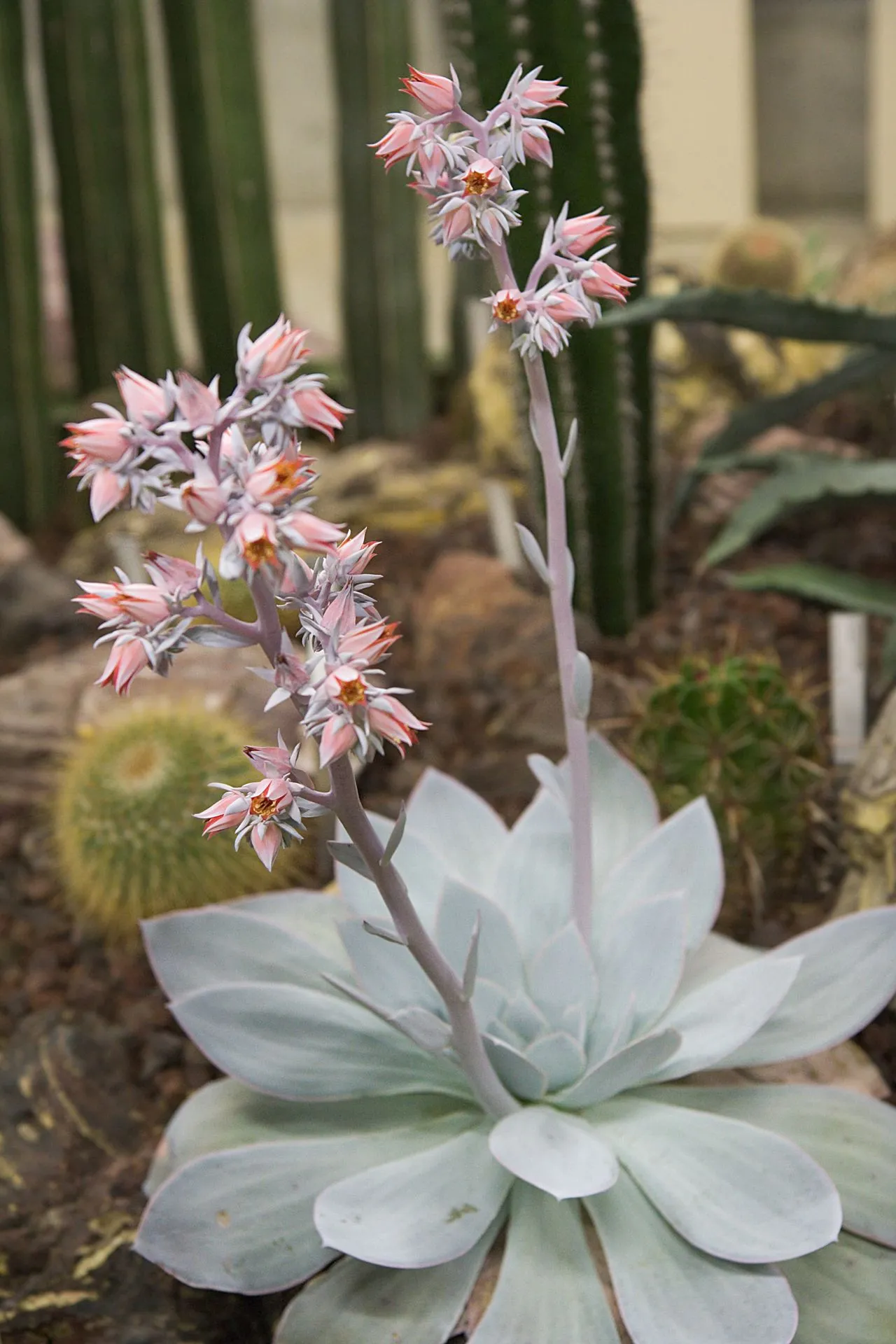
Mealybugs are one of the few pests that regularly trouble Echeveria in ordinary collections. They suit the plant's architecture: tight leaf axils, dry sheltered lower leaves, and a short stem with many hidden crevices. By the time white cotton is visible on the outer rosette, insects may already be feeding deeper inside or on the roots.
Treatment works when it is physical, repeated, and targeted. A single spray rarely reaches every insect in a farinose rosette. The goal is to remove visible pests, interrupt the life cycle, inspect roots when symptoms suggest hidden colonies, and prevent spread to neighbouring plants. Part of the Complete Echeveria Guide.
Leaf-axil mealybugs
The common visible infestation sits in the leaf axils where each leaf joins the stem. Mealybugs feed by piercing tissue and drawing sap. They shelter under white waxy filaments that look like cotton or lint. On Echeveria, the first visible signs are often white tufts near lower leaves, sticky honeydew on nearby surfaces, yellowing leaves, or ants visiting the pot outdoors.
Leaf-axil infestations can remain local if caught early. The challenge is access. Overlapping succulent leaves create pockets that sprays miss, and pulling leaves away to reach pests can wound the plant. Use a torch and magnification. Work from the oldest lower leaves upward, because colonies usually start where old papery leaves and dry debris provide cover.
Root mealybugs
Root mealybugs live below the substrate line and are easier to miss. The plant looks thirsty, stalled, or yellow despite reasonable care. When unpotted, the roots show white waxy flecks, cotton-like deposits, or pale insects moving through the root ball. The pot interior may have a powdery white residue that is not mineral crust.
Root mealybugs require a different response from surface mealybugs. Swabbing leaf axils will not reach them. The plant must be unpotted, the substrate discarded, and the roots cleaned. Because Echeveria tolerate dry-root handling well, this is safer than trying to drench a compacted pot repeatedly and hoping the treatment reaches every pest.
Flower-stalk infestations
Mealybugs and aphids often appear on flower scapes because the tissue is softer and richer in sap than mature leaves. A flowering Echeveria can look clean at the rosette while the scape carries pests under bracts or around buds. These insects can then move back into the rosette when the scape ages.
If the plant is valuable or the infestation is heavy, remove the flower stalk. Cut it at the base with sterile scissors and dispose of it away from the collection. If the infestation is minor and the plant is otherwise clean, swab the scape every few days and monitor until flowering finishes.
Import and nursery contamination
New plants are the main route into a clean collection. Nursery trays place many rosettes close together, and mealybugs move easily between pots. Farinose plants can hide pests because the white wax bloom makes cottony residue less obvious. Pubescent species such as Echeveria setosa add another difficulty: hairs can catch debris and make inspection harder.
Quarantine is not optional for collections. Keep new plants separate for at least four weeks. Inspect at arrival, after the first watering, and again weekly. Many infestations become visible only after the plant warms up and resumes growth in the new environment.
How to identify the problem
| Sign | Location | Interpretation |
|---|---|---|
| White cotton tufts | Leaf axils or stem base | Visible mealybug colony |
| Sticky residue or ants | Pot rim, shelf, scape | Honeydew from sap-feeding insects |
| Yellowing lower leaves | Around infested axils | Feeding damage or hidden pests |
| Waxy white flecks | Roots and pot interior | Root mealybugs |
| Stalled wrinkled plant | Whole rosette | Possible root infestation or root loss |
Distinguish mealybugs from farina. Farina is a uniform wax film on the leaf surface. Mealybug wax is clumped, cottony, and concentrated in crevices. Do not rub the entire leaf surface to check; damaged farina does not regenerate on that leaf.
When to act immediately
Act the same day when live insects are visible. Isolate the plant before treatment because handling can dislodge crawlers. Inspect adjacent plants within at least 1 m, especially those touching leaves or sharing a tray.
Unpot immediately if the plant remains wrinkled after watering, if visible mealybugs keep returning from the stem base, or if there is white residue around drainage holes. Professional help is rarely needed for a household plant, but large collections may need a coordinated quarantine and disposal policy for heavily infested stock.
Solutions
Visible leaf pests
Use cotton swabs dipped in 70% isopropyl alcohol and touch each insect directly. The wax dissolves and the insect collapses. Work carefully around farina-coated leaves; alcohol and rubbing can leave permanent marks. After swabbing, use tweezers to remove dead lower leaves and debris where pests hide.
Do not flood the rosette with alcohol. Liquid trapped between leaves can damage tissue, especially in cool conditions. Keep the plant dry, bright, and ventilated after treatment. Repeat inspection every 7 days for four weeks because hidden eggs and juveniles can escape the first pass.
Root mealybugs
Remove the plant from its pot and discard all substrate. Rinse or brush the roots gently to remove waxy deposits. Trim dead roots. Let the plant dry bare-root in shade for two to five days, then repot into fresh dry mineral mix in a clean pot. Keep isolated and check the pot surface weekly.
If the root system is severely compromised, reduce watering until new roots form. The plant may wrinkle temporarily, but wetting a damaged root system too heavily invites rot. Treat it like a cutting until firm new roots anchor the plant.
Collection control
Clean the shelf, saucer, and tools. Mealybugs hide under pot rims and in tray corners. Do not reuse old substrate. Space plants so rosettes do not touch. Mark the treatment date on a label so the four-week repeat schedule is not missed.
Prevention
Quarantine every new Echeveria. Remove dead basal leaves once they are fully dry. Avoid overcrowded benches where lower leaves stay hidden and inspections are skipped. Check flower stalks, because pests often appear there first. Keep plants healthy with correct light and drainage; stressed plants are easier for pests to exploit and harder to treat without secondary rot.
Prevention also means restraint with cosmetic sprays. Oils and soaps can scar farina, collect in the rosette, and interact badly with strong sun. Physical removal is slower but more precise on a tight succulent rosette. The best treatment is the one that kills pests without turning the plant's leaf axils into wet pockets.
See also
- Echeveria losing bottom leaves — pest feeding can mimic abnormal lower-leaf drop.
- Echeveria leaves turning yellow — yellow leaves plus cottony residue changes the diagnosis.
- Echeveria setosa — hairy leaves require especially careful inspection.
- Echeveria harmsii — the velvet-haired plush plant, where mealybug colonies blend into the pubescence along woody stems.
Frequently Asked Questions
What do mealybugs look like on Echeveria?
They appear as white cottony tufts in leaf axils, under lower leaves, around flower stalks, or as waxy residue on roots. Adults are soft oval insects hidden in the rosette crevices.
Is alcohol safe on Echeveria leaves?
A precise cotton swab with 70% isopropyl alcohol is safer than soaking the rosette. Test farinose cultivars first because alcohol can mark the wax bloom.
How often should I repeat mealybug treatment?
Inspect and treat weekly for at least four weeks. Eggs and hidden juveniles can survive the first cleaning and reappear after several days.
Do I need to throw away the soil?
Yes if root mealybugs are present or suspected. Discard the substrate, wash the pot, and repot into fresh dry mineral mix after cleaning the roots.