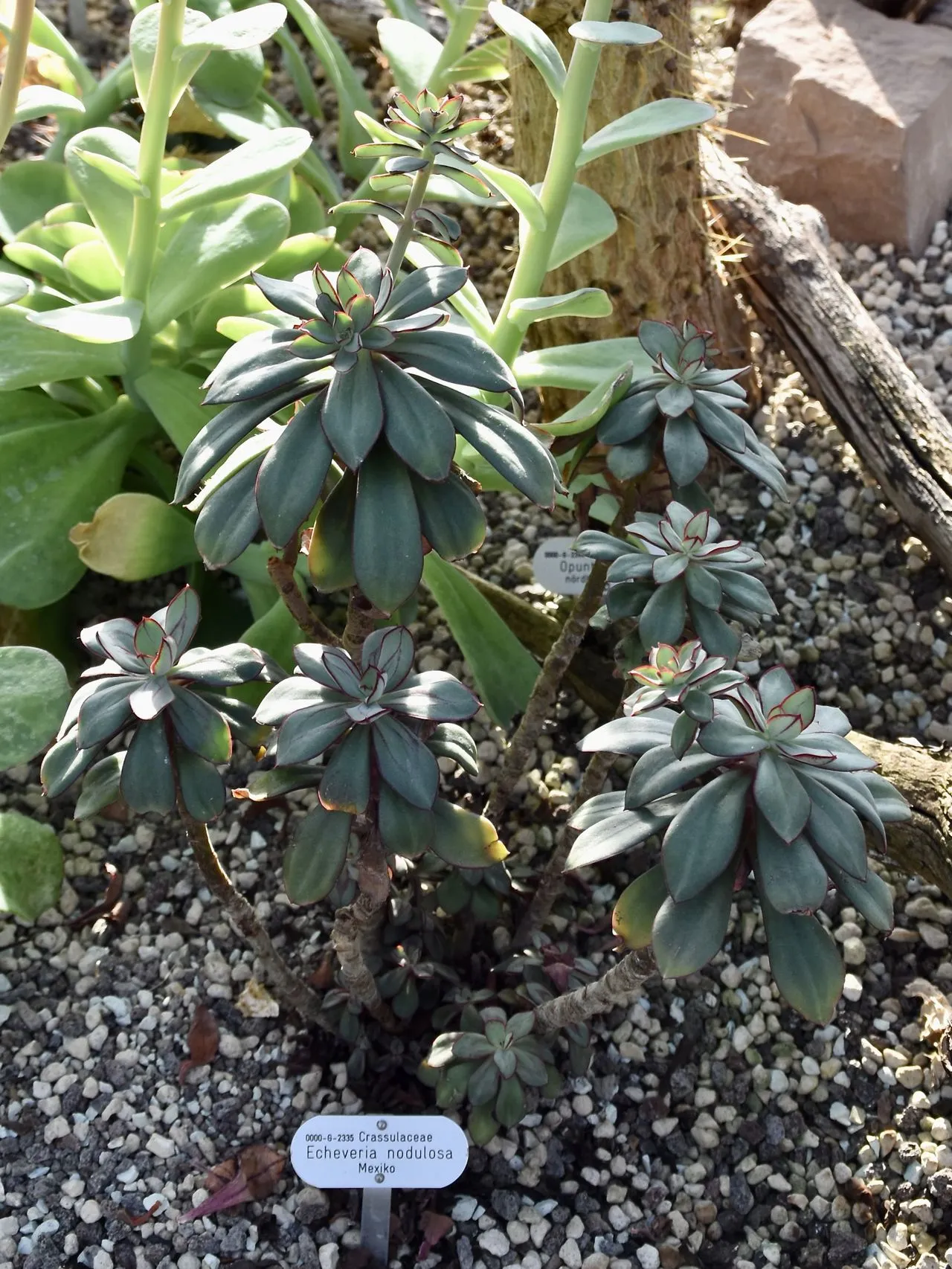
Wrinkled Echeveria leaves are a water-pressure symptom, not a diagnosis by themselves. Succulent leaves stay smooth because cells are full of stored water. When the plant uses that reserve faster than roots replace it, the leaves crease, soften, and lose thickness. The visible wrinkle may come from ordinary drought, but it can also come from roots that are too damaged to absorb water.
This distinction matters. A dry, rooted plant needs a thorough soak. A wrinkled plant sitting in wet substrate may be rotting and will decline faster if watered again. Read the pot, roots, temperature, and leaf texture together before acting. Part of the Complete Echeveria Guide.
Dry substrate and normal water use
The simplest cause is a dry root ball. Echeveria store water in their leaves, then use it during the dry half of the wet-dry cycle. Lower leaves wrinkle first because the plant sacrifices older tissue before the crown. The leaf surface develops shallow lengthwise creases, and the leaf feels thinner but not wet, translucent, or foul-smelling.
This is common in active growth, especially in terracotta pots, shallow containers, windy balconies, and mineral mixes that dry within 24 hours. If the substrate is dry through the full depth of the pot and the roots are alive, one thorough watering is appropriate. Water until the full root ball is wet and excess drains freely. The centre should regain firmness within two to three days.
Dead roots after drought
Persistent wrinkles after watering often mean the roots are no longer functioning. Fine succulent roots can die back during a long dry spell. When water finally arrives, the dead roots cannot absorb it, so the pot becomes wet while the rosette stays wrinkled. Growers often respond by watering again, which converts a dry-root problem into root rot.
The sign is a mismatch: wet substrate, wrinkled leaves, and little improvement after 72 hours. Unpot the plant. If roots are brittle, hollow, or absent, treat the plant like an unrooted cutting. Remove dead roots, let the base dry for two to five days, and repot into barely moist mineral mix. Keep bright but out of hard sun until new roots form.
Root rot and blocked uptake
Root rot also produces wrinkles because rotten roots cannot move water. The leaves may look dehydrated while the pot is wet. Unlike clean drought, rot often adds yellowing, translucence, mushy lower leaves, or a sour smell. The stem base may darken or soften. This is the highest-risk version of wrinkling because the visible symptom can tempt exactly the wrong response.
Rot starts when substrate remains saturated without oxygen. Cool rooms, oversized pots, peat-heavy mixes, and saucers full of water are typical causes. Recovery depends on whether the stem is still firm. Remove all wet substrate, cut back to pale firm roots or clean stem tissue, and dry the plant before re-rooting. If rot has entered the crown, recovery is unlikely.
Heat dormancy and temporary uptake slowdown
In sustained heat above about 35 °C, many Echeveria slow active growth and reduce water uptake. Leaves can wrinkle even when the substrate has recently been watered because the plant is limiting transpiration and root activity. This is especially visible in black plastic pots, against reflective walls, or in greenhouses with poor ventilation.
Heat-dormant wrinkles are usually firm rather than collapsing. The plant may hold its shape, but the leaf surface looks drawn. Watering more frequently during this phase can be dangerous because the plant is not using water quickly. Provide bright shade during the hottest afternoon hours, improve airflow, and water early in the morning only when the substrate has dried.
Compact or hydrophobic substrate
Old peat-based mixes can become hydrophobic when dry. Water runs down the pot edge and exits the drainage holes while the centre of the root ball remains dry. The grower sees drainage and assumes the plant was watered, but the roots never receive a full soak. The rosette wrinkles despite apparently regular watering.
Test by lifting the pot before and after watering. A properly soaked pot is noticeably heavier. If water channels through in seconds and the root ball remains light, bottom-soak for 20 to 30 minutes once to rewet it, then repot at the next opportunity into a mineral mix. Long-term, Echeveria should not depend on peat that alternates between waterlogging and water-repelling. The succulent soil guide covers substrate choices that prevent this.
How to identify the cause
| Situation | Leaf feel | Substrate | Likely cause |
|---|---|---|---|
| Lower leaves wrinkled, centre firm | Thin but dry | Dry throughout | Normal drought cycle |
| Whole rosette wrinkled after watering | Soft but not mushy | Wet | Dead roots or root rot |
| Wrinkles plus yellow mushy leaves | Wet, translucent | Wet or recently wet | Root rot |
| Wrinkles during 35 °C+ weather | Firm but drawn | Variable | Heat dormancy |
| Water drains instantly, pot stays light | Dry creases | Dry core | Hydrophobic substrate |
The centre is the recovery indicator. A firm centre means the plant is still protecting new growth. A wrinkled centre means the water deficit has become systemic and root inspection should not be delayed.
When to act immediately
Act immediately when wrinkles appear while the pot is wet, when leaves are both wrinkled and translucent, or when the stem base is soft. These combinations indicate root dysfunction rather than ordinary thirst. Unpotting is safer than guessing.
Wait when only the lowest leaves wrinkle near the end of a dry cycle and the centre remains firm. Water at the next normal interval. Professional help is rarely needed, but a repeated pattern across many plants usually indicates a substrate or irrigation problem: peat-heavy mix, poor drainage, or a watering schedule that ignores seasonal temperature.
Solutions
For simple drought
Water thoroughly once. Let water run through the pot, wait five minutes, then water again so the full root ball is wetted. Empty the saucer within 30 minutes. Do not mist; mist wets the leaf surface and does almost nothing for root-zone hydration. Resume watering only when the top 3 to 4 cm of substrate dries again.
For dead dry roots
Remove the plant from the pot and trim dead, hollow roots. Keep any firm pale roots. Let the base dry for two to five days. Repot into a small pot with fresh mineral substrate. Hold in bright shade and water lightly at the edge after one week. New roots usually form in two to four weeks if the stem remains healthy.
For root rot
Cut away all black, wet, or foul-smelling tissue with a sterile blade. Dusting is less important than drying: leave the plant bare-root in shade for five to seven days. Repot into dry substrate and delay watering. If only the top rosette is clean, behead it and root it as a cutting.
For heat stress
Move the plant out of afternoon heat, not out of all light. Bright shade with airflow is better than a dark room. Water early in the morning after the substrate dries, and avoid fertiliser until temperatures fall below 30 °C and growth resumes.
Prevention
Use a substrate that wets evenly and dries predictably: at least 50% mineral material such as pumice, perlite, grit, or coarse sand, with a modest organic fraction. Match pot size to root size. Large pots stay wet too long after drought recovery watering, while tiny pots dry faster than the plant can use in hot weather.
Build the habit of lifting pots. Weight tells you more than surface colour. A dry pot is light; a fully wet pot is heavier; a compacted or hydrophobic pot often drains fast but gains little weight. That single check prevents both chronic underwatering and the repeated watering that causes rot.
See also
- Echeveria leaves turning yellow — yellowing plus wrinkles changes the diagnosis.
- Root rot diagnosis — detailed root inspection and cutting protocol.
- Echeveria losing bottom leaves — when wrinkled lower leaves are simply being retired.
Frequently Asked Questions
Should I water an Echeveria with wrinkled leaves?
Water once thoroughly if the substrate is dry and the plant is firm. If the substrate is wet or roots are black, do not water; inspect and treat the roots.
How fast do wrinkled Echeveria leaves recover?
Mild drought wrinkles improve within 24 to 72 hours after a full soak. Leaves that were heavily depleted may remain creased until they are eventually shed.
Why is my Echeveria wrinkled after watering?
The roots may be dead, the root ball may have become hydrophobic, or heat dormancy may have slowed uptake. Unpot if there is no improvement after 72 hours.
Are wrinkled lower leaves normal?
A few wrinkled lower leaves are normal during basal senescence or a dry cycle. Wrinkles across the whole rosette indicate a water-uptake problem.