| Question | Short Answer |
|---|---|
| What is the current name for Senecio haworthii? | The post gives Caputia tomentosa as the current name. |
| Why is Senecio haworthii difficult to water? | The wool traps water against the leaf surface. |
| Can cocoon plant tolerate frost? | It tolerates brief −2 °C if dry. |
| How do you propagate Senecio haworthii? | Use 5–7 cm stem cuttings. |
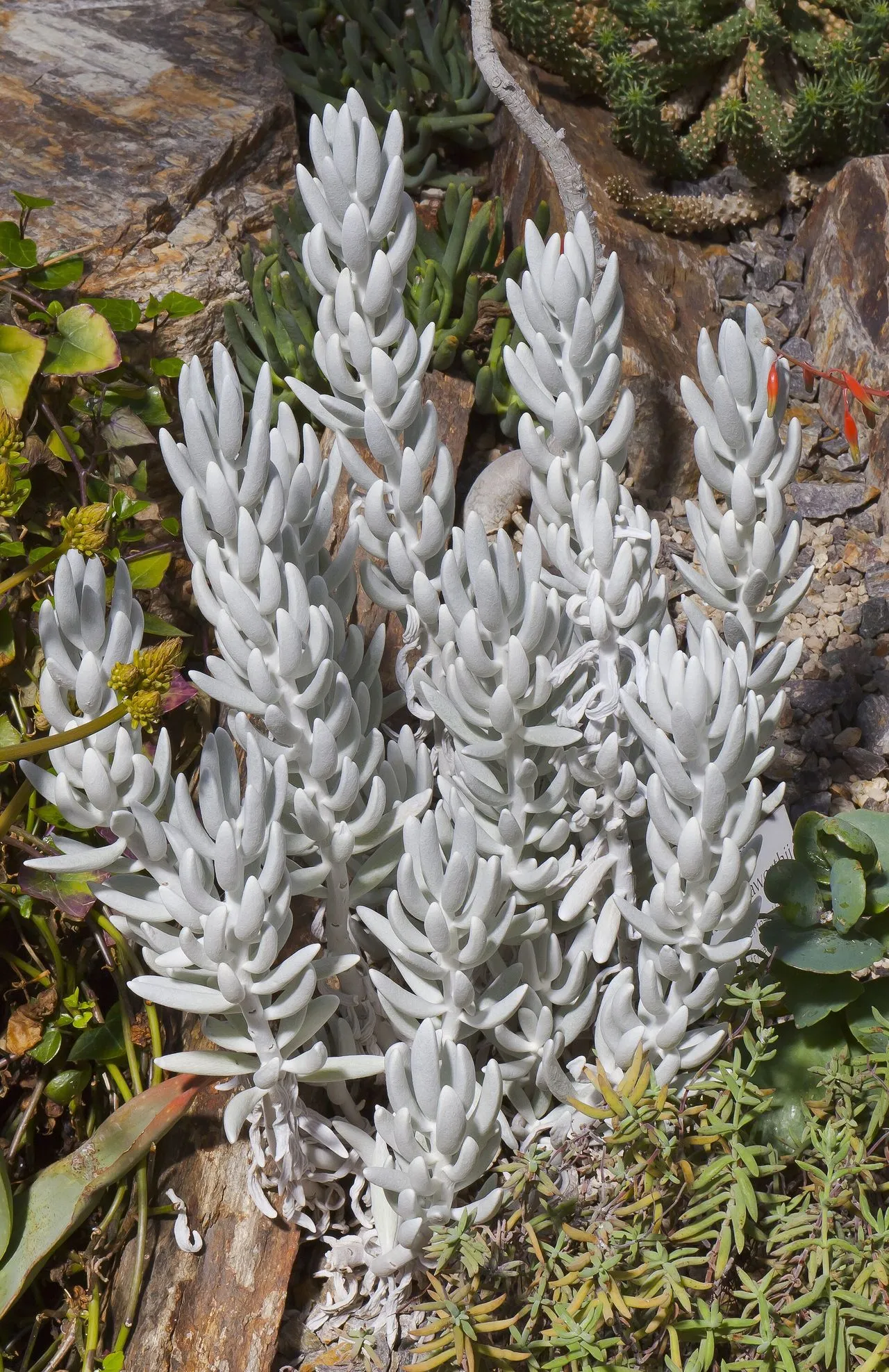
Caputia tomentosa (Haw.) B.Nord. & Pelser, widely sold as Senecio haworthii (Sweet) Sch.Bip., is the cocoon plant or woolly senecio. Recent molecular work moved it to the segregate genus Caputia, but nursery labelling remains firmly under Senecio haworthii. Both names refer to the same species.
Native to the Little Karoo of the Western Cape, where it grows on exposed shale outcrops in full sun. Part of the Complete Senecio Guide.
Identification
- Small shrublet, 20–30 cm tall at maturity.
- Leaves cylindrical, 2–3 cm long, pointed, covered in dense pure-white tomentum that completely obscures the green below.
- Capitula yellow, small, at the branch tips in summer.
- Stems equally woolly, branching freely.
The solid white wool is diagnostic. No other common succulent has this density of tomentum across both leaves and stems; the plant genuinely does resemble a cluster of spun cocoons.
Cultivation
One of the trickier Senecio in cultivation because the wool changes the rules. Divergences from the pillar:
- Light. Full sun required. The tomentum is a reflective layer and the plant expects intense exposure; in shade it thins and yellows.
- Water. Never water overhead. Water pools in the wool, sits against the leaf surface, and causes rot within hours; if stem rot has already set in, Senecio root rot covers diagnosis and recovery. Water from below, or deliver water carefully to the substrate surface only.
- Humidity. Low. Humid still air saturates the tomentum and invites fungal collapse. This species performs poorly in steamy bathrooms and greenhouses.
- Substrate. Pure mineral mix, leaning heavier on pumice than loam. Keep the crown just above the substrate line to prevent collar rot.
- Cold. Tolerates brief −2 °C if dry; the wool traps radiant heat on clear nights and the plant often survives frosts that kill less-insulated species.
The practical rule for this plant: wet wool is dead wool. If you can keep the coat dry, the rest is easy.
Propagation
Stem cuttings work reliably. Cut a 5–7 cm branch, callus for 3–5 days, and stick into dry grit. Rooting completes in 3–4 weeks. Do not water until visible new growth appears.
Leaf propagation fails; detached leaves simply dry up.
Notes and quirks
The tomentum regrows on new leaves but not on damaged existing ones, so handle the plant minimally. A specimen brushed against in daily traffic gradually loses its coat on one side.
Flowers are small and somewhat inconspicuous; this species is grown for the foliage rather than the bloom. Some growers remove the flower stalks early to conserve resources for vegetative growth.
Mildly toxic to pets and livestock.
See also
- Senecio candicans — Angel Wings, another woolly-leaved Senecio.
- Senecio cineraria — silver ragwort, the garden bedding lookalike.
- Senecio mandraliscae — blue chalksticks.
Frequently Asked Questions
What is the current name for Senecio haworthii?
The post gives Caputia tomentosa as the current name. Nursery labels still commonly use Senecio haworthii.
Why is Senecio haworthii difficult to water?
The wool traps water against the leaf surface. Overhead water can sit in the tomentum and cause rot within hours.
Can cocoon plant tolerate frost?
It tolerates brief −2 °C if dry. The wool helps trap radiant heat on clear nights, but wet cold remains dangerous.
How do you propagate Senecio haworthii?
Use 5–7 cm stem cuttings. Callus for 3–5 days, root in dry grit, and do not water until visible new growth appears.