| Question | Short Answer |
|---|---|
| Is Senecio vitalis a settled botanical name? | No. |
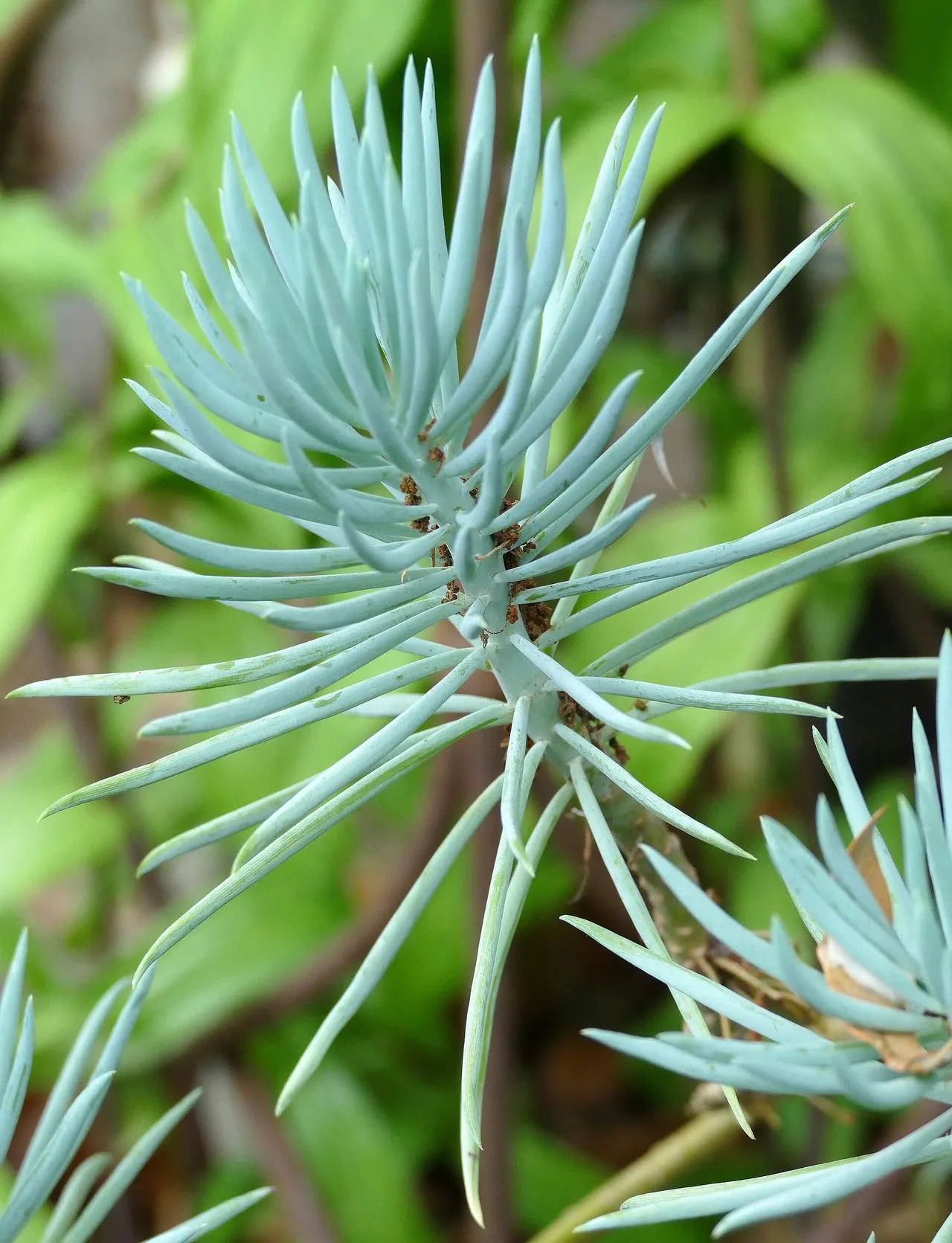
| How do you identify Senecio vitalis? | Look for upright then arching stems with pointed 5–10 cm blue-green leaves held close against the stem. |
| How is Senecio vitalis different from blue chalksticks? | Vitalis grows upright with longer pointed leaves. |
| How do you propagate Senecio vitalis? | Take 10–15 cm cuttings, remove the lower leaves, callus briefly, and root in dry substrate. |
Curio ficoides (L.) P.V.Heath, widely sold as Senecio vitalis, is the narrow-leaf or upright blue chalksticks. The name S. vitalis is used loosely in the trade for a form of Curio ficoides, and for a vigorous cultivar sometimes called 'Serpents'; the taxonomy is unsettled, but the plant on the nursery shelf is consistent enough that the cultivation advice below covers all of them.
Native to the southern Cape region of South Africa, where it grows as an upright ground cover on coastal slopes in full sun. Part of the Complete Senecio Guide.
Identification
- Upright then arching stems, 30–45 cm tall.
- Leaves linear to narrowly oblong, 5–10 cm long, pointed, blue-green with a waxy bloom, held close against the stem.
- Capitula white, on short erect peduncles, borne in summer.
- Self-rooting along creeping stem bases.
Distinguished from Curio repens / mandraliscae (blue chalksticks) by the straighter, longer, more pointed leaves and the upright habit; from Curio serpens (dwarf blue chalksticks) by overall size and leaf shape. A plant labelled "blue chalksticks" that grows strictly upright with pointed leaves is almost always S. vitalis in the broad sense.
Cultivation
Closely follows the pillar's default for farinose sun-lovers:
- Light. Full sun. Shade produces open, floppy growth and a duller leaf colour.
- Water. Moderate. Drought-tolerant once established; indoor specimens on the standard 10–14 day schedule thrive.
- Substrate. Free-draining gritty mix. Ordinary garden soil works outdoors in mild climates provided it drains.
- Cold. Frost-sensitive at sustained sub-zero temperatures, but brief light frosts are tolerated.
Tolerant of salt spray, which makes it useful in coastal plantings.
Propagation
Cuttings are trivial. Take 10–15 cm sections, remove lower leaves, callus for a couple of days, and stick into dry substrate. Rooting completes within two weeks. Mature stems lying on soil will self-root in place.
Division of established clumps also works; each division needs a growing tip and some attached roots.
Notes and quirks
S. vitalis is widely used in commercial low-water landscaping because of its upright habit, which reads architecturally where prostrate C. repens reads as simple ground cover. It pairs well with lower rosette succulents such as Echeveria or upright Crassula for layered plantings.
A common mistake in retail is labelling S. vitalis, C. repens, and C. serpens all as "blue chalksticks" without distinction. The three plants have noticeably different mature sizes and silhouettes; know which one you are buying.
Mildly toxic to livestock; pet risk is low at incidental exposure.
See also
- Senecio mandraliscae — blue chalksticks, the prostrate relative.
- Senecio serpens — dwarf blue chalksticks.
- Senecio crassissimus — vertical leaf plant.
Frequently Asked Questions
Is Senecio vitalis a settled botanical name?
No. The post says the name is used loosely in trade for forms of Curio ficoides and related vigorous cultivars.
How do you identify Senecio vitalis?
Look for upright then arching stems with pointed 5–10 cm blue-green leaves held close against the stem.
How is Senecio vitalis different from blue chalksticks?
Vitalis grows upright with longer pointed leaves. Curio repens or mandraliscae spreads low with broader chalky leaves.
How do you propagate Senecio vitalis?
Take 10–15 cm cuttings, remove the lower leaves, callus briefly, and root in dry substrate. Established clumps can also be divided.